To cut without losing muscle, run a moderate calorie deficit that loses about 0.5–1 % of your bodyweight per week, eat plenty of protein (around 2–2.4 g per kg), and keep lifting heavy with roughly the same weights you used before the diet. Those three things tell your body to burn fat and hold onto muscle. Cardio, refeeds and supplements are optional extras on top.
Why people lose muscle on a cut
When you eat less than you burn, your body needs to find energy somewhere. It takes it from fat stores and, if you give it reasons, from muscle. Three things push it toward muscle: a deficit that’s too large, too little protein, and training that stops asking muscles to stay.
The research supports each one. In elite athletes, Garthe and colleagues (2011) compared losing 0.7 % versus 1.4 % of bodyweight per week: the slower group kept or gained lean mass and improved strength, while the faster group didn’t. A meta-analysis by Murphy and Koehler (2022) found that lifting in a deficit blunted lean mass gains compared to lifting without one, with a deficit of around 500 kcal a day being where muscle gains disappeared on average. Strength, interestingly, held up much better.
Step 1: set your deficit
Start from your maintenance calories (what keeps your weight stable). If you don’t know it, track food and weight for two weeks first; the calorie deficit guide explains how.
Then subtract enough to hit your target rate:
| Rate of loss | Approximate daily deficit (80 kg person) | Best for |
|---|---|---|
| 0.5 % per week (0.4 kg) | ~400–450 kcal | Lean lifters, long cuts, keeping strength |
| 0.75 % per week (0.6 kg) | ~650 kcal | Most people |
| 1 % per week (0.8 kg) | ~850–900 kcal | Higher body fat, short cuts |
These figures use the rough rule that a kilo of body fat stores about 7,700 kcal. Real-life numbers drift, so your scale decides. Helms, Aragon and Fitschen’s (2014) review on contest prep lands on the same range: 0.5–1 % per week to maximise muscle retention.
Step 2: push protein up
Protein needs go up when calories go down. A systematic review by Helms and colleagues (2014) on lean, trained people dieting concluded that intakes around 2.3–3.1 g per kg of lean body mass were most protective, which works out to about 2–2.4 g per kg of bodyweight for most lifters.
For an 80 kg lifter: 160–190 g a day, or about 40–45 g across four meals. Protein also keeps you fuller than carbs or fat, which is a bonus when food is limited. More on targets in how much protein to build muscle.
The rest of your calories: keep fat at least around 0.6 g per kg (about 20 % of calories) for hormonal health, and give the remainder to carbs, ideally around your workouts.
Step 3: train to keep your muscle
This is the part most diets skip. The signal that says “keep this muscle” is heavy, challenging training.
- Keep the weights heavy. If you squatted 100 kg for 6 before the cut, aim to keep squatting close to that. Going “light and high reps to tone” is the fastest way to lose muscle.
- Trim volume, not intensity. If you feel run down, remove a set or two per exercise. Keep the first, heaviest sets the same.
- Stay close to failure, but not past it. One to three reps in reserve on most sets. Grinding every set to failure costs recovery you no longer have.
- Don’t add lots of new training. A cut isn’t the time to start a second daily session.
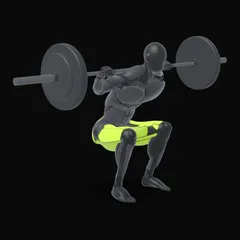
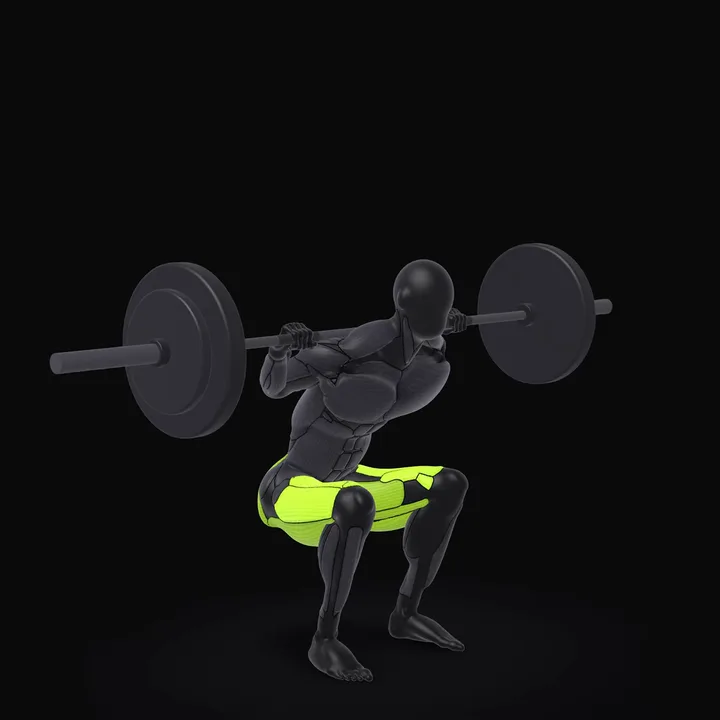 Barbell SquatPlace the bar on your upper back, not on your neck, and step out of the rack. Stand with feet slightly wider than shoulder width, toes turned out a little.How to do the Barbell Squat →
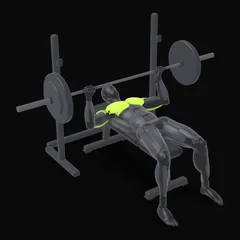
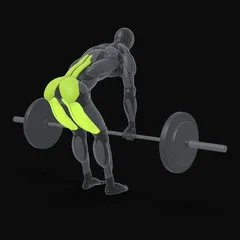
Your big lifts are the best markers. Barbell Squat, Barbell Bench Press, Barbell Romanian Deadlift or whichever compounds you use: if they’re holding steady while the scale goes down, you’re losing fat, not muscle. Our cutting workout plan puts this into a full week.
That’s also why logging matters so much on a cut. Brick shows your last session’s numbers on every set and draws an estimated 1RM trend per exercise, so you’ll spot a real strength drop (too aggressive a deficit) early, rather than three weeks later.
Step 4: add cardio sensibly
Cardio isn’t required to lose fat, but it lets you eat a bit more for the same deficit. The best options are the ones that don’t interfere with lifting:
- Daily steps. Walking is the most underrated fat-loss tool. Going from 5,000 to 9,000 steps burns a few hundred kcal a day with almost no recovery cost.
- Moderate cardio (cycling, incline walking, rowing) 2–4 times a week, 20–40 minutes.
- Hard intervals sparingly, and not right before a leg session.
See cardio and weight training for how to combine them without hurting your gains.
Step 5: track, adjust, repeat
- Weigh daily, average weekly.
- Measure your waist every 1–2 weeks.
- Watch your key lifts.
| Over 2 weeks you see | Do this |
|---|---|
| Losing at target rate, lifts stable | Nothing. It’s working. |
| Losing faster than 1 %/week, lifts dropping | Add 150–200 kcal |
| No change in weekly average | Remove 150–200 kcal or add 2,000 steps a day |
| Weight stable but waist shrinking | Be patient; water often masks fat loss for a week or two |
Refeeds and diet breaks
A refeed is a day at maintenance with the extra calories mostly from carbs. A diet break is one to two weeks at maintenance. Neither magically speeds up fat loss, and they’re not required. What they do well:
- Give you a psychological break, which helps you stick to the diet.
- Restore some glycogen, so training feels better for a day or two.
- On long cuts, make the whole process more sustainable.
A practical approach: one refeed day a week if you’re already lean, and a one-to-two-week diet break every 8–12 weeks on long cuts.
How long to cut, and how to finish
Plan 8–16 weeks. Stop when you reach your goal, when the diet starts damaging sleep, mood or relationships, or when your lifts drop noticeably for several weeks in a row.
Don’t jump straight back to bulking calories. Raise intake over one to two weeks to your new maintenance, which is likely a bit lower than before because you weigh less. Hold there for a few weeks, then decide whether to bulk or simply maintain.
Common cutting mistakes
- Crash deficits. Losing 2 kg a week feels motivating for a fortnight, then strength, mood and muscle go.
- Switching to “toning” workouts. Light weights don’t preserve muscle; heavy weights do.
- Low protein. The single most avoidable cause of muscle loss on a diet.
- Ignoring sleep. In a study by Nedeltcheva and colleagues (2010), dieters sleeping 5.5 hours instead of 8.5 lost the same weight but far less of it as fat. Aim for 7–9 hours.
- Changing everything at once. Adjust one variable at a time so you know what worked.
Frequently asked questions
How fast should I lose weight on a cut?
About 0.5 to 1 % of your bodyweight per week. For a 80 kg person, that's 0.4 to 0.8 kg (1 to 1.8 lb). The leaner you are, the closer to 0.5 % you should stay to protect muscle.
Will I lose strength when cutting?
A little, usually toward the end when you're leanest and most tired, especially on high-rep sets. Most people keep their heavy lifts within a few percent if they keep training hard. A big strength drop early on suggests the deficit is too aggressive.
Should I do cardio while cutting?
It helps, but think of it as a tool to spend a bit more energy, not as the main fat-loss method. Two to four sessions of walking or moderate cardio a week are plenty for most people, kept away from leg day where possible.
How long should a cut last?
Most cuts last 8 to 16 weeks. Longer cuts work too, but planned breaks at maintenance every couple of months make them easier to stick to.
Sources
- Helms ER, Aragon AA, Fitschen PJ (2014). Evidence-based recommendations for natural bodybuilding contest preparation: nutrition and supplementation. Journal of the International Society of Sports Nutrition
- Helms ER, Zinn C, Rowlands DS, Brown SR (2014). A systematic review of dietary protein during caloric restriction in resistance trained lean athletes: a case for higher intakes. International Journal of Sport Nutrition and Exercise Metabolism
- Garthe I, Raastad T, Refsnes PE, Koivisto A, Sundgot-Borgen J (2011). Effect of two different weight-loss rates on body composition and strength and power-related performance in elite athletes. International Journal of Sport Nutrition and Exercise Metabolism
- Murphy C, Koehler K (2022). Energy deficiency impairs resistance training gains in lean mass but not strength: a meta-analysis and meta-regression. Scandinavian Journal of Medicine & Science in Sports
- Nedeltcheva AV, Kilkus JM, Imperial J, Schoeller DA, Penev PD (2010). Insufficient sleep undermines dietary efforts to reduce adiposity. Annals of Internal Medicine