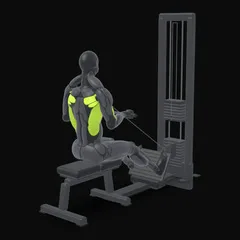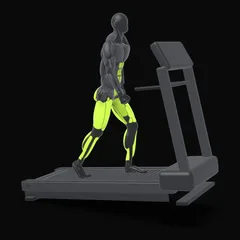
The best cutting workout plan looks a lot like the plan that built your muscle: same main lifts, same rep ranges, same effort, just a bit less total volume and some cardio on top. Heavy training is the signal that tells your body to hang on to muscle while you eat less. Lose that signal and a good share of the weight you lose will be muscle. Below are the rules for training on a cut, how to dose cardio, and a 4-day program you can run for 8–16 weeks.
Why you keep lifting heavy on a cut
The old advice was to switch to “light weights and high reps to get cut.” It’s backwards. Fat loss comes from the calorie deficit. What lifting does during a cut is protect your muscle, and the part of training that does that best is load.
Research on maintaining fitness backs this up: strength and muscle size can be held for months with substantially reduced training, as long as the relative load stays high (Spiering et al., 2021). Drop the weights and you lose the stimulus.
There’s also an honest caveat. A meta-analysis found that training in an energy deficit impaired gains in lean mass compared with training without one, and the bigger the deficit, the worse the lean mass outcome. Strength gains, however, held up (Murphy & Koehler, 2022). In plain terms: on a cut, you can usually keep getting a bit stronger, but don’t expect to build much muscle, and a smaller deficit protects more of what you have.
How fast to cut
For lean, trained lifters, a loss of about 0.5–1 % of body weight per week is the commonly recommended pace for keeping muscle (Helms et al., 2014). For an 80 kg (175 lb) person, that’s 0.4–0.8 kg (about 1–1.75 lb) a week. If you have more fat to lose, the higher end is fine early on. If you’re already lean, stay near the lower end.
The diet side, including calories and protein, is covered in how to cut without losing muscle. This article is about the training.
The rules for training on a cut
1. Keep the main lifts and their rep ranges. If you squatted 4 × 5–8 on your bulk, squat 4 × 5–8 now. Your goal is to keep the same weights on the bar for as long as possible.
2. Trim volume, not intensity. Recovery drops in a deficit. If you were doing 16–20 sets per muscle per week, 10–14 is usually enough to hold muscle. Cut accessories first: the third chest exercise, the extra arm sets.
3. Stay a bit further from failure on compounds. One to three reps in reserve on squats, deadlifts, presses and rows. Grinding to failure on heavy lifts when you’re under-fed raises the risk of form breakdown and tweaks.
4. Rest fully between heavy sets. Two to three minutes on compound lifts. Rushing rest to “burn more” lowers the weight you can lift, which is the opposite of what you want.
5. Expect strength to plateau late in the cut. Early on you’ll often still set PRs. In the final weeks, holding your numbers is a success.
The 4-day cutting program
| Mon | Tue | Wed | Thu | Fri | Sat | Sun |
|---|---|---|---|---|---|---|
| Upper A | Lower A | Cardio or rest | Upper B | Lower B | Cardio | Rest |
Upper A
| Exercise | Sets × reps | Rest |
|---|---|---|
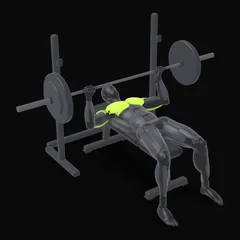
| Bench press | 3 × 5–8 | 2–3 min |
| Barbell row | 3 × 6–10 | 2 min |
| Seated dumbbell press | 2 × 8–10 | 2 min |
| Lat pulldown | 2 × 8–12 | 90 s |
| Lateral raise + pushdown | 2 × 12–15 each (superset) | 60 s |
Lower A
| Exercise | Sets × reps | Rest |
|---|---|---|
| Back squat | 3 × 5–8 | 3 min |
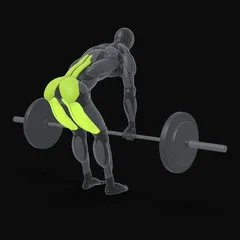
| Romanian deadlift | 3 × 6–10 | 2–3 min |
| Leg press | 2 × 10–12 | 2 min |
| Lying leg curl | 2 × 10–12 | 90 s |
| Standing calf raise | 2 × 10–15 | 60 s |
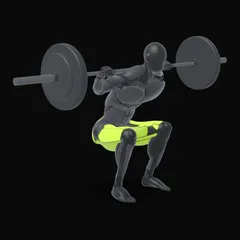
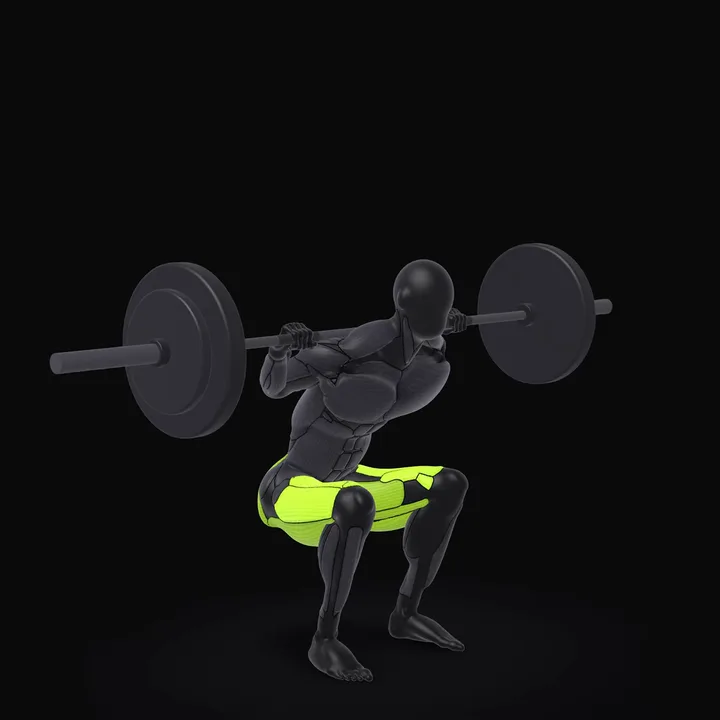 Barbell SquatPlace the bar on your upper back, not on your neck, and step out of the rack. Stand with feet slightly wider than shoulder width, toes turned out a little.How to do the Barbell Squat →
Upper B
| Exercise | Sets × reps | Rest |
|---|---|---|
| Incline dumbbell press | 3 × 6–10 | 2 min |
| Pull-up | 3 × 5–10 | 2 min |
| Seated cable row | 2 × 8–12 | 90 s |
| Face pull | 2 × 12–15 | 60 s |
| EZ-bar curl + overhead extension | 2 × 10–12 each (superset) | 60 s |
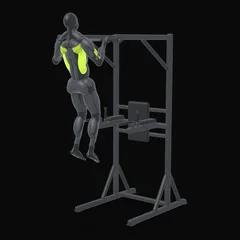
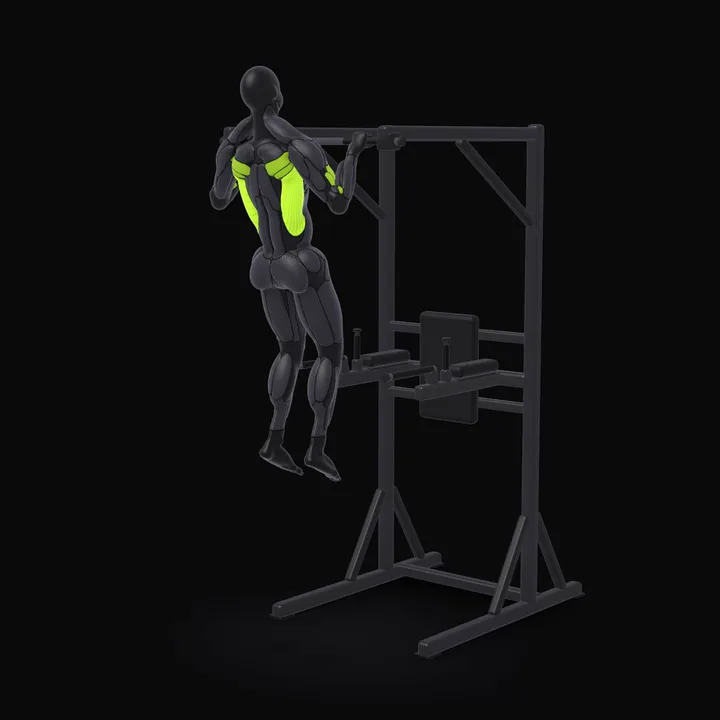 Pull-upGrab the bar with palms facing forward, hands slightly wider than your shoulders. Hang with straight arms and brace your core.How to do the Pull-up →
Lower B
| Exercise | Sets × reps | Rest |
|---|---|---|
| Deadlift or trap bar deadlift | 3 × 4–6 | 3 min |
| Bulgarian split squat | 2 × 8–10 per leg | 2 min |
| Leg extension | 2 × 10–15 | 90 s |
| Seated leg curl | 2 × 10–12 | 90 s |
| Hanging knee raise | 2 × 10–15 | 60 s |
Each session takes 45–60 minutes. That’s about 10–12 hard sets per muscle per week, enough to hold muscle for most people. If you recover well and the cut is mild, keep one extra set on the first two exercises.
Warming up when you’re under-fed
Energy is lower on a cut, so make the warm-up efficient rather than long: five minutes of easy cardio (it counts toward your steps), then ramp into the first lift with the empty bar × 8–10, about 50 % × 5, 70 % × 3 and 85 % × 1–2. Don’t skip the ramp to save energy; on a cut, a cold, heavy first set is where tweaks happen.
How to progress on a cut
Use the same double progression you’d use any other time: work up through the rep range, then add a small amount of weight (2.5 kg / 5 lb on upper-body barbell lifts, 5 kg / 10 lb on squats and deadlifts). What changes is what counts as success:
| Phase of the cut | Realistic goal on main lifts |
|---|---|
| Weeks 1–4 | Small rep or weight PRs still happen |
| Weeks 5–10 | Hold the same weights for the same reps |
| Final weeks | Hold the weights; a rep lost here and there is fine |
Here’s a typical first month on the bench press (3 × 5–8) for someone who benched 100 kg × 6 at the end of their bulk:
| Week | Weight | Reps | Verdict |
|---|---|---|---|
| 1 | 100 kg | 7, 6, 6 | Fresh start, slightly better |
| 2 | 100 kg | 7, 7, 6 | Progressing |
| 3 | 100 kg | 7, 6, 6 | Holding: fine |
| 4 | 100 kg | 8, 7, 6 | Still moving |
When you miss reps
- A single bad session: keep the weight. Low-carb days and short sleep hit hard on a cut.
- The same lift drops two weeks in a row: remove one set from that day’s accessories and recheck sleep and protein before touching the main lift.
- Most lifts dropping for two weeks: your deficit is probably too big. Add some calories (often carbs around training) for a week or two, and consider a deload week. The deload week guide explains how to run one without losing momentum.
Adapting the plan
| Situation | Adjustment |
|---|---|
| Only 3 days a week | Run Upper A, Lower A, Upper B one week and Lower B, Upper A, Lower A the next. Keep the main lifts; drop the last exercise of each day. |
| Beginner (under a year of lifting) | Keep adding weight as normal: beginners often build muscle even in a modest deficit. Don’t trim volume unless recovery suffers. |
| Home gym with a rack | Swap leg press for goblet squats or step-ups, machines and cables for dumbbell rows, presses and band work. |
| Joints achy late in the cut | Swap barbell bench for dumbbells, back squats for leg press or hack squats, and keep the reps in the 6–10 range. |
How long to run it
Run the plan for the length of your cut, usually 8–16 weeks. Longer cuts benefit from a planned week or two at maintenance calories somewhere in the middle, with training unchanged. After it, use your logbook to make sure progressive overload resumes once you’re eating at maintenance or above.
How much cardio on a cut?
Think of cardio as a tool for creating part of the deficit, not as the main event. A simple ladder:
| Step | What to add | When |
|---|---|---|
| 1 | Daily steps: 8,000–10,000 | From day one |
| 2 | 2–3 × 20–30 min easy cardio (incline walking, cycling, rower) | From day one or when fat loss slows |
| 3 | One more easy session, or 5–10 min more per session | When weight loss stalls for 2+ weeks |
| 4 | One short interval session (for example 6–8 × 30 s hard on a bike) | Only if you enjoy it and recover well |
Low-intensity work like incline treadmill walking or a stationary bike burns calories without much fatigue. The mode matters for your legs: a meta-analysis on concurrent training found that running interfered more with strength and muscle gains than cycling, and that longer and more frequent cardio sessions interfered more (Wilson et al., 2012). Keep hard sessions away from the day before a leg workout. More on combining the two is in cardio and weight training.
Tracking a cut
Check these every one to two weeks:
- Weekly average body weight: down 0.5–1 % per week.
- Main lifts: holding, or slowly improving early on.
- Waist measurement: going down.
If your lifts drop sharply for two weeks in a row, eat a little more, sleep more, or trim one more set per session. A logbook makes this easy to see; without one, you’re guessing whether you’re “weaker” or just tired today.
Common cutting mistakes in the gym
- Switching to circuits and burnout sets. They feel productive because you sweat, but they don’t protect muscle like heavy work.
- Doing more volume to “burn fat”. Extra sets on a deficit mostly add fatigue. Diet and steps do the fat burning.
- Hours of cardio from day one. Leave room to add more later when progress slows.
- Testing maxes in the last weeks. You’re at your most tired and least fed. Test after the cut.
- Letting technique slip when tired. Lower the weight before your form drops.
When the cut is done, go back to your normal volume over two or three weeks as calories come back up. If you’d like to try building and losing at the same time instead, read about body recomposition. The basics of how to build muscle apply either way.
Frequently asked questions
Should I lift lighter weights with higher reps when cutting?
No. Heavy weights are what tell your body to keep its muscle. Keep your main lifts in the same rep ranges you used to build them and try to hold the weights on the bar. High reps don't burn meaningfully more fat; your diet does that.
How much cardio should I do on a cut?
Start with a daily step target (8,000 to 10,000 is common) and two or three 20 to 30 minute sessions of low-intensity cardio a week. Add more only when fat loss stalls, and prefer cycling or incline walking over lots of running if you want to protect your leg training.
Is it normal to lose strength while cutting?
A little, late in a long or aggressive cut, yes. Early on, most people hold or even gain strength. If your lifts drop quickly in the first weeks, your deficit is probably too large or your sleep and protein need attention.
Should I train to failure on a cut?
Sparingly. Recovery is worse in a deficit, so keep compound lifts one to three reps short of failure. Taking the last set of an isolation exercise to failure is fine.
How many days a week should I lift while cutting?
Keep the same frequency you had before the cut if you can, usually three to five days. Four upper/lower sessions is a good default because it hits every muscle twice a week without long sessions.
Sources
- Murphy C, Koehler K (2022). Energy deficiency impairs resistance training gains in lean mass but not strength: A meta-analysis and meta-regression. Scandinavian Journal of Medicine & Science in Sports
- Helms ER, Aragon AA, Fitschen PJ (2014). Evidence-based recommendations for natural bodybuilding contest preparation: nutrition and supplementation. Journal of the International Society of Sports Nutrition
- Wilson JM, Marin PJ, Rhea MR, Wilson SM, Loenneke JP, Anderson JC (2012). Concurrent training: a meta-analysis examining interference of aerobic and resistance exercises. Journal of Strength and Conditioning Research
- Spiering BA, Mujika I, Sharp MA, Foulis SA (2021). Maintaining Physical Performance: The Minimal Dose of Exercise Needed to Preserve Endurance and Strength Over Time. Journal of Strength and Conditioning Research