Body recomposition means losing fat and building muscle at the same time, so your body changes while your weight stays roughly the same. It works best for beginners, people returning after a break, and anyone with a fair amount of body fat, but trained lifters can do it too, more slowly. The recipe: eat at maintenance or a small deficit, keep protein high (1.6–2.2 g/kg), and train with progressive overload. Then track your waist and your lifts, because the scale won’t tell you much.
Who can recomp?
Recomposition relies on your body having both a strong reason to build muscle and enough stored energy to fund it. Some people have more of both than others.
| Situation | Recomp potential | Why |
|---|---|---|
| New to lifting | Very high | Muscles respond strongly to a brand-new stimulus |
| Returning after months off | Very high | Muscle memory makes regaining lost muscle fast |
| Higher body fat (any level) | High | Plenty of stored energy to draw from |
| “Skinny fat” | High | Low muscle, moderate fat: the textbook case |
| Trained 1–3 years, moderate fat | Moderate | Possible with good training and high protein |
| Lean, trained for years | Low | Muscle gains are slow; bulking and cutting work better |
The review by Barakat and colleagues (2020) gathered studies showing recomposition even in resistance-trained people, as long as two things were in place: progressive resistance training and good nutrition, especially enough protein. So it’s not only for beginners, but the less advanced you are, the faster it goes.
If you think you might be skinny fat, our skinny fat guide helps you decide between recomp, bulk and cut.
How many calories for a recomp?
Two options both work:
- Maintenance calories. The easiest choice. Your body uses stored fat on some days and dietary energy on others, and over weeks, fat drifts down while muscle drifts up.
- A small deficit (up to about 10 %). Faster fat loss, slower muscle gain. Good if you have more fat to lose.
Stay away from big deficits if muscle is part of the goal. A meta-analysis by Murphy and Koehler (2022) found that lifting in an energy deficit blunted lean mass gains, and on average a deficit of around 500 kcal a day was enough to wipe them out. Strength gains were much less affected. That’s the line between recomp and a classic cut; for the latter, see how to cut without losing muscle.
To find maintenance: eat consistently for two weeks, weigh yourself every morning, and average. If the weekly average holds steady, that’s your number.
Protein: the non-negotiable
Protein supplies the material for new muscle and protects existing muscle when energy is tight. The ISSN position stand on diets and body composition (Aragon et al., 2017) highlights high protein intake, alongside resistance training, as one of the most reliable ways to improve body composition.
Practical targets:
- At maintenance: 1.6–2 g per kg of bodyweight a day.
- In a small deficit: 2–2.2 g per kg.
- If you carry a lot of fat: base it on your goal weight, not your current one.
For a 80 kg person that’s 130–175 g a day, roughly 35–45 g at each of four meals. More detail in how much protein to build muscle.
How to train for body recomposition
Diet makes recomp possible; training makes it happen. Without a reason to build muscle, maintenance calories just maintain.
- Lift 3–5 times a week. A full-body or upper/lower split covers every muscle at least twice a week.
- Do 10–20 hard sets per muscle per week, most of them 1–3 reps from failure.
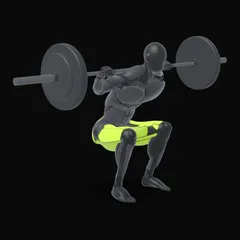
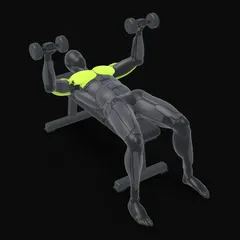
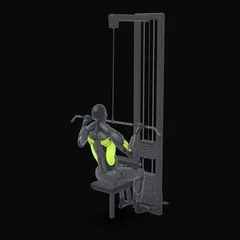
- Focus on compound lifts like the Barbell Squat, Dumbbell Bench Press, Cable Lat Pulldown and a hinge, plus a few isolation exercises.
- Progress every week or two. Add a rep or a little weight whenever you hit the top of your rep range. This progressive overload is the engine of the whole process.
- Keep cardio as a supplement. Daily walking helps with fat loss without eating into recovery.
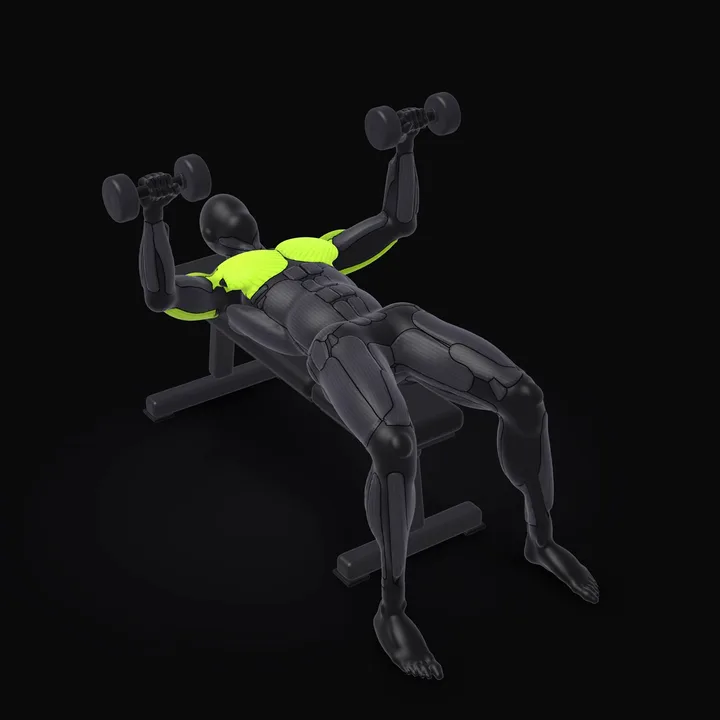 Dumbbell Bench PressSit on the end of the bench with the dumbbells on your thighs, then lie back bringing them beside your chest. Keep your feet on the floor and your shoulder blades pulled back.How to do the Dumbbell Bench Press →
A simple recomp week
| Day | Session | Main lifts |
|---|---|---|
| Monday | Upper A | Bench press, row, overhead press, curls |
| Tuesday | Lower A | Squat, Romanian deadlift, lunges, calves |
| Thursday | Upper B | Incline dumbbell press, pulldown, lateral raises, triceps |
| Friday | Lower B | Deadlift or leg press, leg curl, split squat, core |
Three sets per exercise, 6–12 reps, rest 1.5–3 minutes on the big lifts. Walk 8,000–10,000 steps on most days.
How to track a recomp
This is where most people give up, because they only watch the scale. During a recomp, losing 1 kg of fat and gaining 1 kg of muscle shows up as zero on the scale. You need other measures.
| Measure | How often | What good progress looks like |
|---|---|---|
| Bodyweight (daily, weekly average) | Weekly | Stable or slowly falling |
| Waist at the navel | Every 2 weeks | Slowly shrinking |
| Photos (same light, same pose) | Every 4 weeks | Visible change over 2–3 months |
| Strength on key lifts | Every session | Steadily rising |
| How clothes fit | Ongoing | Looser at the waist, tighter at shoulders and thighs |
Scales that estimate body fat (bioimpedance) are too noisy day to day to be useful here. Use them at most as a monthly trend, same time, same conditions.
Rising strength with a stable weight and a shrinking waist is the clearest sign a recomp is working. That’s why a training log matters as much as a food diary. Brick records every set, shows last time’s numbers so you know what to beat, and turns your sets into estimated 1RM trend lines, so you can see your strength climbing while the scale sits still. Our guide to keeping a workout log covers what else to record.
When to stop recomping
Recomp slows down as you get leaner and more trained. Signs it’s time to switch:
- Lifts have stalled for 4–6 weeks despite good training and sleep, and you’re fairly lean: a lean bulk will get you moving again; see how to bulk.
- You want to get noticeably leaner, faster: switch to a proper cut.
- Nothing changes after three months on any measure: your “maintenance” is probably a surplus or a deficit, or your training isn’t progressive. Check your log before blaming the method.
Common recomp mistakes
- Judging by the scale alone. Recomp is built to keep the scale still.
- Too big a deficit. You’ll lose fat, but muscle gains stall.
- Low protein. Without it, there’s nothing to build with.
- Random workouts. Recomp needs progression, not variety for its own sake.
- Impatience. Twelve weeks is the minimum to judge it fairly.
Frequently asked questions
Is body recomposition possible for experienced lifters?
Yes, but it's slower. Research in trained people shows it happens when training is progressive and protein is high. If you've lifted seriously for many years and are already lean, dedicated bulks and cuts are usually more efficient.
How long does a recomp take?
Expect visible change in three to six months. The scale may barely move, so judge it by your waist, photos and lifts. Beginners often see a difference in the mirror within eight to twelve weeks.
Should I eat at maintenance or in a deficit to recomp?
Maintenance or a small deficit of around 10 %. A bigger deficit makes building muscle much harder; a surplus turns it into a lean bulk.
Is recomp better than bulking and cutting?
It's simpler and more pleasant, which matters a lot. For beginners, returning lifters and anyone carrying extra fat, it's often the best choice. For lean, advanced lifters chasing maximum size, separate phases tend to work better.
Sources
- Barakat C, Pearson J, Escalante G, Campbell B, De Souza EO (2020). Body recomposition: can trained individuals build muscle and lose fat at the same time?. Strength and Conditioning Journal
- Murphy C, Koehler K (2022). Energy deficiency impairs resistance training gains in lean mass but not strength: a meta-analysis and meta-regression. Scandinavian Journal of Medicine & Science in Sports
- Aragon AA, Schoenfeld BJ, Wildman R, et al., Antonio J (2017). International Society of Sports Nutrition position stand: diets and body composition. Journal of the International Society of Sports Nutrition