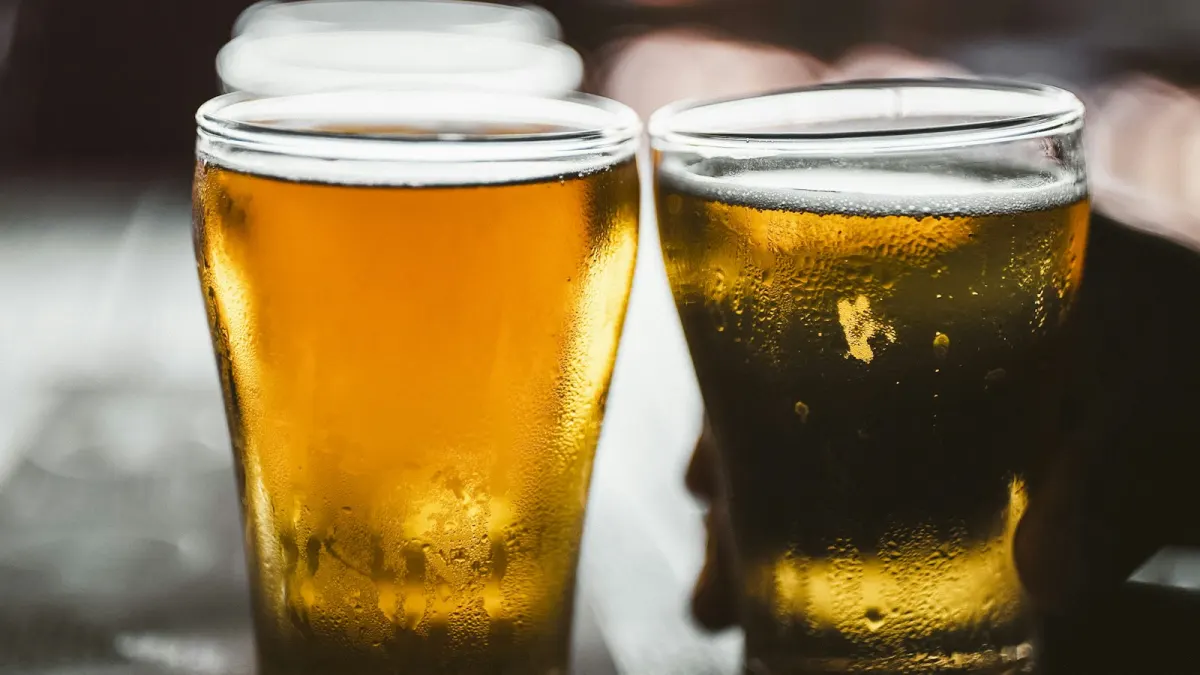
A drink or two now and then won’t hurt your muscle growth in any measurable way. Heavy drinking is different: a big night after training can reduce muscle protein synthesis by roughly a quarter, worsen strength recovery for days, and wreck the sleep your muscles grow in. Frequent heavy drinking adds empty calories and blunts progress over time. The honest summary: the dose and frequency matter far more than whether you drink at all.
What a heavy night does to muscle building
The clearest study comes from Parr and colleagues (2014). Trained men did a hard session of weights plus intervals, then drank a large amount of alcohol, about 1.5 g per kg of bodyweight. For an 80 kg man, that’s roughly 12 standard drinks over a few hours.
- With alcohol plus protein, muscle protein synthesis over the following 8 hours was about 24 % lower than with protein alone.
- With alcohol plus carbs instead of protein, it was about 37 % lower.
So eating protein helped, but didn’t fully undo the effect. That’s one session of growth signal dampened, not muscle lost. It matters if it happens every weekend.
Recovery and strength
Barnes, Mündel and Stannard (2010) had people do hard eccentric exercise (the lowering phase, which causes the most damage), then drink either orange juice or a moderate amount of alcohol (1 g/kg, about 6–7 drinks for 80 kg). The alcohol group lost significantly more strength over the following days.
In practice: a big night after leg day is a good way to make the next few sessions worse. If you’re sore and weak for longer, you’ll also train less effectively, which compounds over months. See muscle soreness after a workout for what’s normal.
Sleep: the hidden cost
Alcohol makes you fall asleep faster, so it feels like it helps. But a review by Ebrahim and colleagues (2013) found that alcohol disrupts sleep in the second half of the night and suppresses REM sleep, with bigger doses causing more disruption. You wake up less rested even after eight hours in bed.
Sleep is when much of your recovery happens. Several nights of poor sleep a week will slow your progress more than the alcohol itself; see sleep and muscle growth.
Calories: the quiet effect
Alcohol has 7 kcal per gram and provides nothing your body needs. It also tends to come with food: late-night takeaways, crisps, and the hungover breakfast.
| Drink | Approx. kcal |
|---|---|
| Pint of beer (568 ml, 4–5 %) | 200–250 |
| Can of beer (330 ml) | 140–160 |
| Glass of wine (175 ml) | 120–160 |
| Shot of spirits (25 ml) + mixer | 55 + 0–100 |
| Cocktail | 150–300+ |
A night of six pints is 1,200–1,500 kcal, plus whatever you eat. On a cut, that can wipe out several days of your deficit. On a bulk, it’s calories that don’t help you train.
Testosterone and hormones
Chronic heavy drinking lowers testosterone and is linked to muscle wasting. Occasional moderate drinking hasn’t been shown to cause meaningful hormonal changes in healthy men. If you’re worried about testosterone, your sleep, body fat and training matter more than a weekend glass of wine.
How much is “moderate”?
Guidelines vary by country, but the common threshold is that around 1–2 standard drinks on a given day, not every day, is considered low-risk for healthy adults. Health agencies increasingly stress that there’s no level of alcohol that’s completely risk-free for general health, which goes beyond gym gains.
| Drinking pattern | Likely effect on training |
|---|---|
| 1–2 drinks occasionally | Negligible |
| 3–4 drinks once a week | Slightly worse sleep that night; minimal effect on progress |
| 6+ drinks once a week | A lost recovery day or two; noticeable if weekly |
| Daily drinking or frequent binges | Slower progress, more fat gain, worse sleep and health |
How to drink smarter if you’re going to drink
- Eat a protein-rich meal beforehand. 30–40 g of protein plus carbs. You’ll drink slower and support recovery.
- Don’t schedule your hardest session right before or after. A rest day or easy session the next day is sensible; see rest days.
- Alternate with water. One glass between drinks. Fewer drinks, less dehydration.
- Choose lower-calorie drinks if you’re cutting: spirits with diet mixers, light beer, dry wine.
- Set a limit before you go out. It’s much easier than deciding at midnight.
- Have a protein snack before bed if dinner was a while ago: Greek yoghurt, a glass of milk.
- Get back to your routine the next day. One night doesn’t undo anything; a lost week does.
Myths about alcohol and the gym
- “Beer is a good post-workout drink because of the carbs.” Beer has few carbs compared with its alcohol content, and almost no protein. Water and a meal do the job far better.
- “Red wine is good for you, so it doesn’t count.” The polyphenols in wine are also in grapes, berries and tea. The alcohol still affects sleep and recovery the same way.
- “Sweating it out at the gym cures a hangover.” Training dehydrated and short on sleep mostly makes for a poor, riskier session. Hydrate, eat, and go easy.
- “Spirits don’t make you fat.” They have fewer carbs than beer, but alcohol calories still count, and the food that comes with a night out counts too.
- “If I drink, the whole week is ruined.” It isn’t. One night has a small, temporary effect. Consistency over months is what builds muscle.
Track the real effect
Everyone responds a bit differently. Some lifters notice nothing after a couple of drinks; others feel flat for two days. The easiest way to know is to look at your numbers. Brick shows last time’s weight and reps on every set, so a session that’s noticeably weaker after a night out stands out immediately. Over a few months you’ll see whether your weekend habits are costing you, without guessing.
The bottom line
Alcohol isn’t good for muscle growth, but the dose makes the poison. If you drink occasionally and moderately, train hard, eat enough protein and sleep well, you’ll still make great progress. If you drink heavily most weekends, it’s probably costing you more than you think. The fundamentals are covered in how to build muscle.
Frequently asked questions
Does one beer ruin your gains?
No. There's no evidence that one or two drinks meaningfully affect muscle growth in a healthy adult. Problems show up with heavy drinking, especially right after training, and with drinking often enough to hurt sleep and recovery.
How long after a workout should I wait to drink alcohol?
The longer the better, but the amount matters more than the timing. If you know you'll drink a lot, eat a proper protein-rich meal first, and avoid planning your hardest session for the day before or after.
Does alcohol lower testosterone?
Heavy and chronic drinking can lower testosterone. A drink or two doesn't produce meaningful drops in healthy men. The bigger issue for most lifters is poorer sleep and recovery.
Should I train the day after drinking?
If you feel fine, a normal or slightly lighter session is OK. If you're hungover, dehydrated or slept badly, do something easy or take a rest day. Heavy squats or deadlifts on four hours of bad sleep are a poor idea.
Sources
- Parr EB, Camera DM, Areta JL, Burke LM, Phillips SM, Hawley JA, Coffey VG (2014). Alcohol ingestion impairs maximal post-exercise rates of myofibrillar protein synthesis following a single bout of concurrent training. PLoS ONE
- Barnes MJ, Mündel T, Stannard SR (2010). Acute alcohol consumption aggravates the decline in muscle performance following strenuous eccentric exercise. Journal of Science and Medicine in Sport
- Ebrahim IO, Shapiro CM, Williams AJ, Fenwick PB (2013). Alcohol and sleep I: effects on normal sleep. Alcoholism: Clinical and Experimental Research