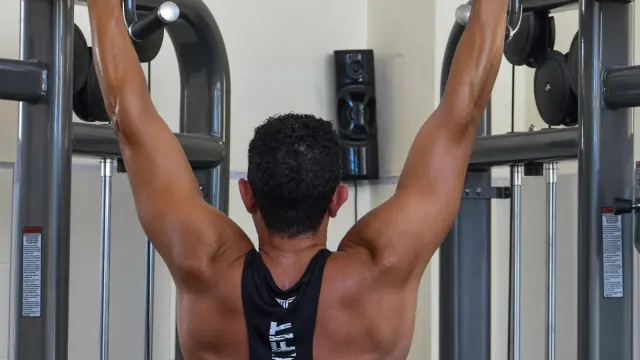
Free weights and machines build muscle about equally well. A meta-analysis comparing them found similar muscle growth, with strength gains mostly specific to the type of equipment people trained with: free-weight groups got better at free-weight tests, machine groups at machine tests. So the best choice depends on your goal, your experience and what you’ll actually train consistently. Most people do best with a mix: free weights for the big lifts, machines and cables for targeted, safe, high-effort work.
What the research says
A 2023 systematic review and meta-analysis compared free-weight and machine-based training on strength, muscle growth and jumping (Haugen et al., 2023). Its main findings:
- Muscle growth: no meaningful difference between the two.
- Strength: similar overall, but specific: free-weight training improved free-weight strength more, and machine training improved machine strength more.
- Jumping: no clear difference.
That fits what we know about muscle growth in general: muscles respond to tension and effort, not to the label on the equipment. Muscle grows across many loads and setups as long as sets are hard (Lopez et al., 2021).
Pros and cons
| Free weights (barbells, dumbbells, kettlebells) | Machines (selectorized, plate-loaded, Smith) | Cables | |
|---|---|---|---|
| Muscle growth | Excellent | Excellent | Excellent |
| Strength carryover to everyday/sport | High | Lower | Medium |
| Stability demand | High | Low | Medium |
| Learning curve | Steeper | Easy | Easy |
| Safe to train to failure | With safeties/spotter | Yes | Yes |
| Loading in small steps | Bars yes, dumbbells limited | Usually yes | Yes |
| Resistance profile | Fixed by gravity | Often designed to match the muscle | Adjustable with pulley height |
| Space and cost at home | Low | High | Medium |
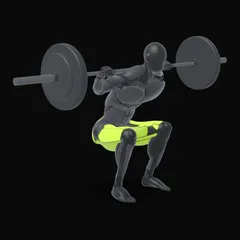
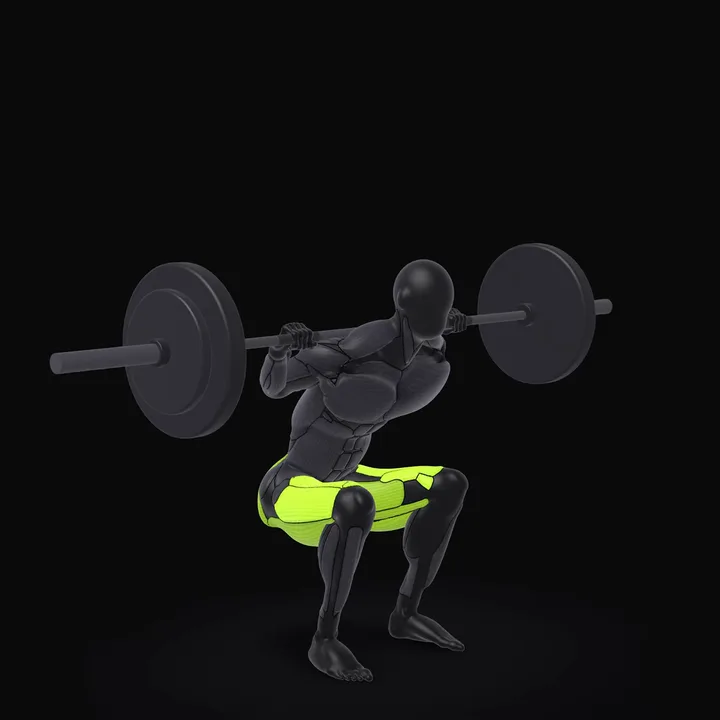 Barbell SquatPlace the bar on your upper back, not on your neck, and step out of the rack. Stand with feet slightly wider than shoulder width, toes turned out a little.How to do the Barbell Squat →
When free weights make the most sense
- You want to be strong on the barbell lifts, for powerlifting, sport or just because. Train the lifts you want to improve.
- You train at home. A barbell or adjustable dumbbells give you far more exercise options per square metre than machines.
- You want coordination and stability. Free weights train the small stabilizers around your joints and your ability to control load in space.
- You want unilateral work. Dumbbells let each side work independently and expose imbalances.
When machines make the most sense
- You’re new and still learning. Machines let you train hard while your free-weight technique develops.
- You want to train close to failure safely. No bar to get pinned under; just stop.
- You’re targeting a muscle. Leg extensions, leg curls, pec decks and lateral raise machines isolate muscles in ways free weights can’t easily match.
- Your joints or back need a break. A leg press or machine chest press lets you train legs or chest hard while your lower back or shoulders recover.
- You’re short on time. Changing a pin is faster than loading plates.
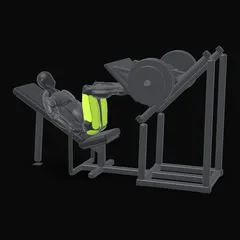
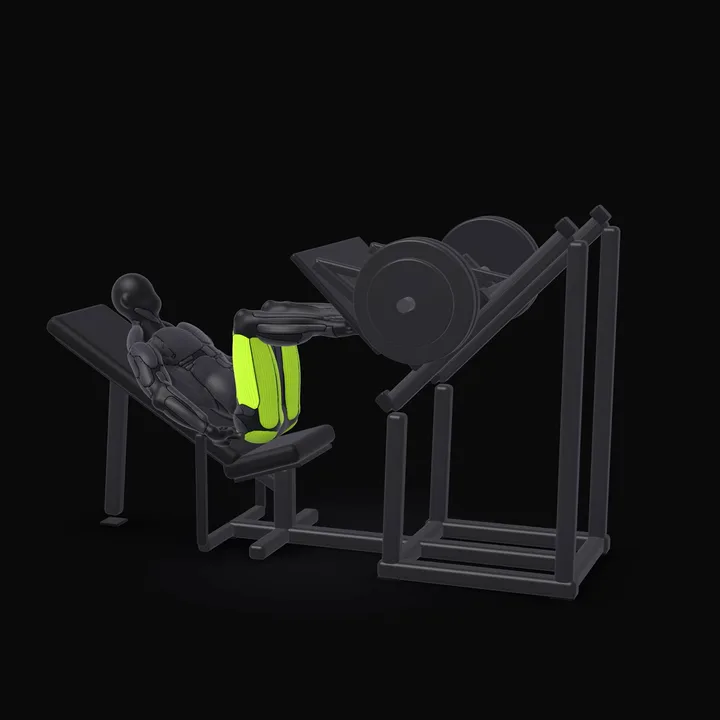 Leg PressSit in the machine with your back flat against the pad and your feet shoulder-width apart in the middle of the platform. Push the platform up and release the safety handles.How to do the Leg Press →
Cables: the middle ground
Cables give you constant tension, adjustable angles and small weight steps, with more freedom of movement than most machines. They’re excellent for flyes, lateral raises, rows, pushdowns and curls, and for loading muscles in their stretched position, where dumbbells often feel weightless.
How to mix them
A practical structure for most sessions:
- One or two free-weight compounds first, while you’re fresh: squat or deadlift variation, bench or overhead press, rows or pull-ups.
- Machines and cables next for more volume: leg press, chest press, pulldowns, cable rows.
- Machine and cable isolation work last: leg curls, extensions, raises, flyes, arm work.
Example: upper body day
| Exercise | Equipment |
|---|---|
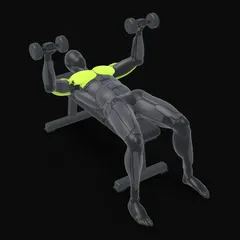
| Dumbbell bench press | Free weight |
| Barbell row | Free weight |
| Machine chest press | Machine |
| Lat pulldown | Cable machine |
| Cable lateral raise | Cable |
| Pushdown + EZ-bar curl | Cable + free weight |
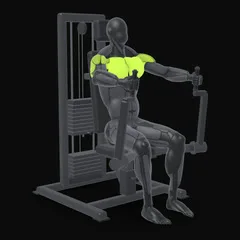
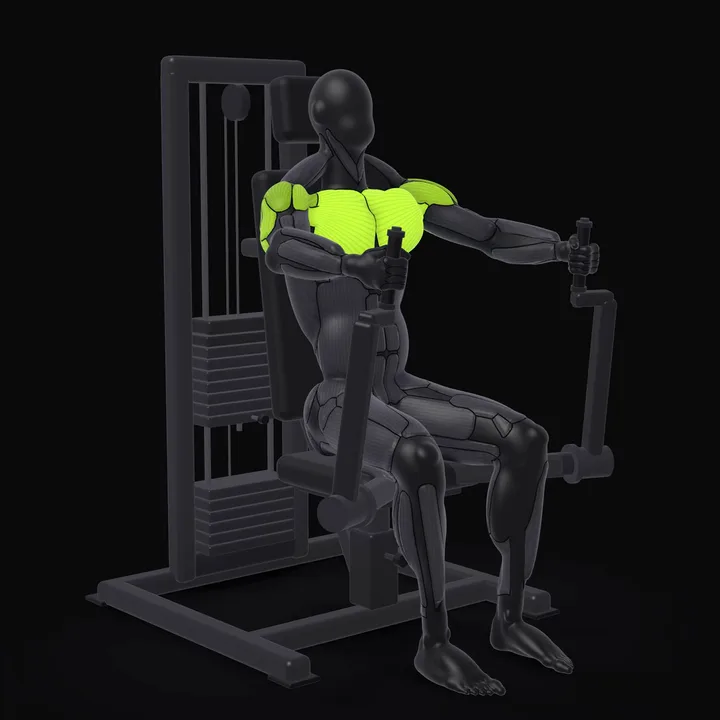 Machine Chest PressAdjust the seat so the handles are level with the middle of your chest. Sit with your back against the pad and grab the handles.How to do the Machine Chest Press →
A note on progress tracking
Machine weights aren’t standardised. 50 kg on one gym’s chest press can feel very different from 50 kg on another brand, or even on the same machine with a different seat setting. Note the machine and seat position in your log, and compare progress only on the same machine. For more on balancing exercise types, see compound vs isolation exercises.
Free weights or machines for beginners?
Both are fine. Many beginners start on machines because they feel less intimidating, and that’s a perfectly good way to build the habit and some base strength. The downside is that you’ll eventually want to learn the free-weight basics too: a squat pattern, a hinge, a press and a row. A sensible approach is a mix from the start: two or three free-weight movements you practise with light loads (goblet squats, dumbbell presses, dumbbell rows), plus machines for the rest of the session. As your technique improves, shift more of your heavy work to free weights if that suits your goals.
Does the “stabilizer” argument matter?
Free weights demand more from stabilizing muscles around your joints and trunk, and that’s useful for sport, daily life and long-term joint health. But for growing a specific muscle, stability demand can actually get in the way: if your balance limits a set, the target muscle isn’t the thing that failed. That’s why many experienced lifters use free weights for strength and machines when the only goal is pushing a muscle to its limit.
Smith machine vs free barbell
The Smith machine guides the bar on fixed rails. It’s stable and easy to set up, great for squats with a more upright or forward foot position, split squats, presses and hip thrusts. Its downsides: no stability training, and the fixed bar path doesn’t suit everyone’s body. Strength gained on the Smith doesn’t fully transfer to a free barbell. Use it as a tool, not as a replacement for barbell training if barbell strength is your goal.
Common mistakes
- Dismissing machines as “not functional”. For muscle growth, they work as well as free weights.
- Avoiding free weights forever. You’ll miss strength, coordination and stability benefits.
- Ego-loading machines. A full stack moved through half the range builds less than a lighter weight through the full range.
- Constantly switching between machines. Pick the ones that suit you and track progress on them for a full training block.
For the complete principles of muscle growth, see how to build muscle; for the free-weight technique basics, start with how to squat properly.
Frequently asked questions
Can you build muscle with only machines?
Yes. Research comparing free-weight and machine training found similar muscle growth. A well-designed machine-based program with progressive overload and hard sets builds muscle as effectively as free weights.
Are free weights better for strength?
For strength on free-weight lifts, yes, because strength is specific to what you practise. If you want a bigger barbell squat, squat with a barbell. For general strength, both work.
Are machines safer than free weights?
Machines are easier to learn and safer to take to failure because the weight can't fall on you. Free weights aren't dangerous with good technique and safeties, but they demand more skill and setup.
Is the Smith machine bad?
No. It's a useful tool for squats, presses and lunges when you want stability. It doesn't train balance and lets you lift a bit differently than a free barbell, so strength doesn't transfer perfectly between the two.
Sources
- Haugen ME, Vårvik FT, Larsen S, Haugen AS, van den Tillaar R, Bjørnsen T (2023). Effect of free-weight vs. machine-based strength training on maximal strength, hypertrophy and jump performance – a systematic review and meta-analysis. BMC Sports Science, Medicine and Rehabilitation
- Lopez P, Radaelli R, Taaffe DR, et al. (2021). Resistance Training Load Effects on Muscle Hypertrophy and Strength Gain: Systematic Review and Network Meta-analysis. Medicine & Science in Sports & Exercise