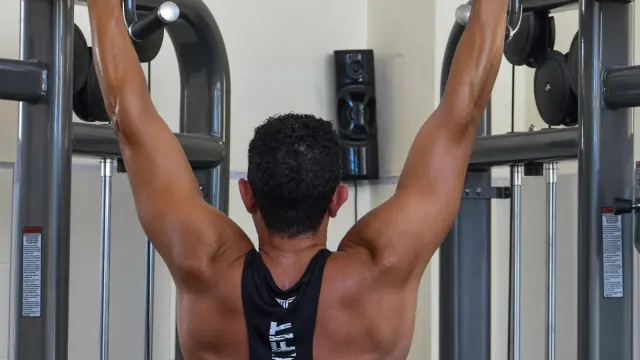
Compound exercises move several joints and train several muscles at once (squats, deadlifts, presses, rows, pull-ups); isolation exercises move one joint and target one muscle (curls, lateral raises, leg extensions). Compounds should form the base of your program because they build strength and muscle efficiently; isolation exercises fill the gaps, target muscles compounds miss and let you push close to failure safely. A good default is about two-thirds of your sets on compounds and one-third on isolation. Here’s why, with examples for every muscle.
What’s the difference?
| Compound (multi-joint) | Isolation (single-joint) | |
|---|---|---|
| Joints moving | Two or more | One |
| Muscles trained | Several at once | Mainly one |
| Load | Heavy | Light to moderate |
| Fatigue | High (local and whole-body) | Low |
| Skill demand | Higher | Lower |
| Best for | Strength, efficiency, overall muscle | Targeting, weak points, pump, safe failure |
| Examples | Squat, deadlift, bench, row, pull-up, overhead press | Curl, lateral raise, leg extension, leg curl, calf raise, fly |
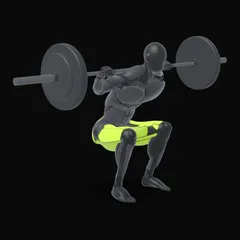
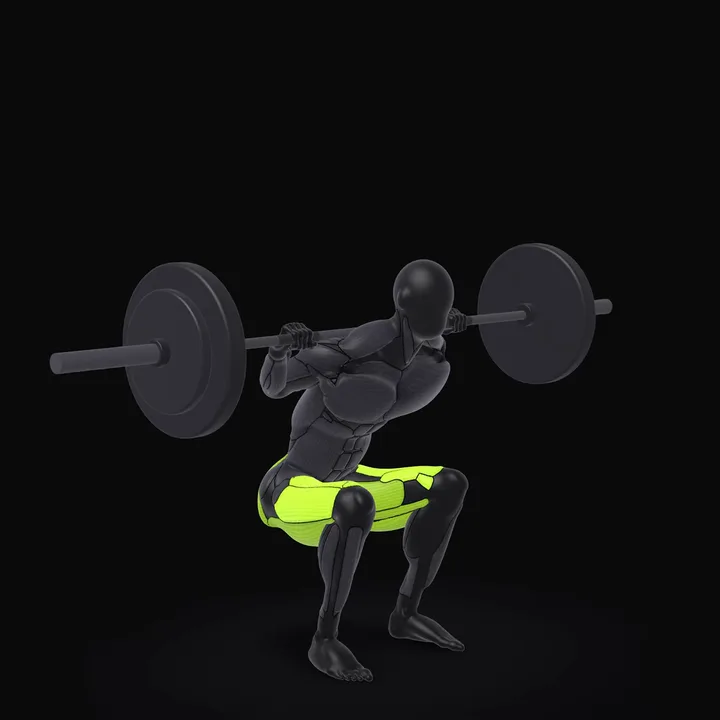 Barbell SquatPlace the bar on your upper back, not on your neck, and step out of the rack. Stand with feet slightly wider than shoulder width, toes turned out a little.How to do the Barbell Squat →
What the research says
Compounds are efficient. In a study where trained men did either multi-joint or single-joint exercises with the same total load volume for eight weeks, the multi-joint group gained more strength and improved their cardiovascular fitness more (Paoli et al., 2017).
For beginners, compounds alone grow even small muscles. In untrained men, adding curls and triceps extensions to a compound program didn’t increase arm size more than the compound exercises alone (Gentil et al., 2013). Another study found that lat pulldowns alone grew the elbow flexors about as much as biceps curls alone over ten weeks (Gentil et al., 2015).
But not every muscle gets enough from compounds. These studies were in beginners and looked at arms. Some muscles are barely trained by the big lifts:
| Muscle | Why compounds aren’t enough |
|---|---|
| Side delts | Presses mostly hit the front delts |
| Rear delts | Rows train them only partly |
| Hamstrings (knee flexion) | Squats barely train them; hinges train them at the hip only |
| Calves | Hardly trained by squats or deadlifts |
| Biceps long head, triceps long head | Benefit from stretched-position isolation work |
That’s where isolation work earns its place.
Why isolation exercises matter as you advance
- Targeting. Lateral raises are the only practical way to build wide shoulders. Leg curls train the hamstrings in a way squats and RDLs don’t.
- Low fatigue. You can add 6 sets of lateral raises without affecting your squat. You can’t add 6 sets of deadlifts.
- Safe failure. Taking a leg extension or lateral raise to failure is low-risk. Taking heavy squats to failure isn’t.
- Joint-friendly volume. When your joints are tired of heavy pressing, cable and machine isolation work still trains the muscle.
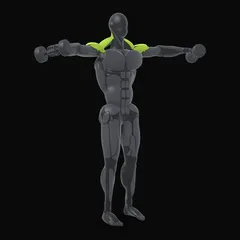
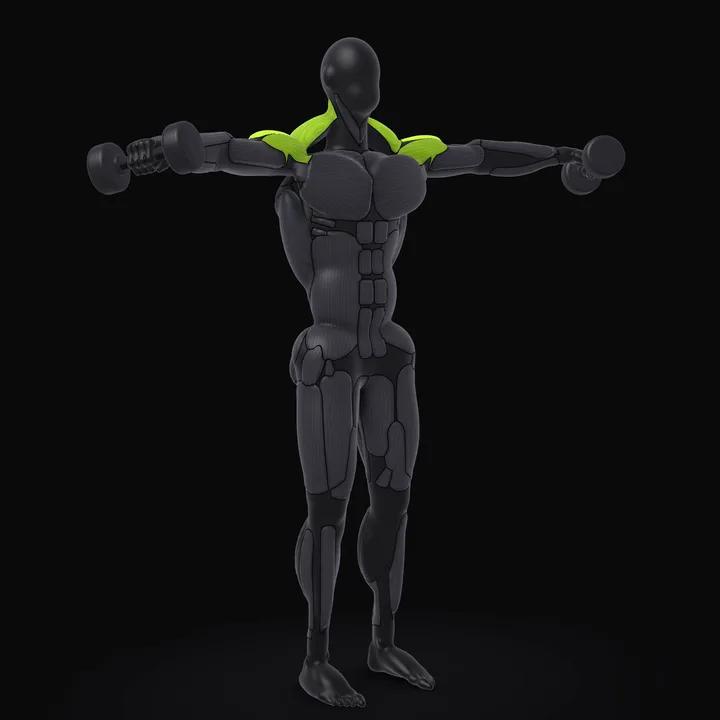 Dumbbell Lateral RaiseStand with a dumbbell in each hand at your sides and your elbows slightly bent. Raise the dumbbells out to the sides to shoulder height, leading with your elbows.How to do the Dumbbell Lateral Raise →
A simple ratio to follow
| Level | Compound sets | Isolation sets |
|---|---|---|
| Beginner | 75–85 % | 15–25 % |
| Intermediate | 60–70 % | 30–40 % |
| Advanced, size-focused | 50–60 % | 40–50 % |
In practice, a typical session might have two or three compounds followed by two or three isolation exercises.
Example: lower body session
| Exercise | Type | Sets |
|---|---|---|
| Back squat | Compound | 4 |
| Romanian deadlift | Compound | 3 |
| Bulgarian split squat | Compound | 2 |
| Leg extension | Isolation | 2 |
| Seated leg curl | Isolation | 3 |
| Calf raise | Isolation | 3 |
Nine compound sets, eight isolation sets, every muscle covered.
Compound and isolation options for every muscle
| Muscle | Compound | Isolation |
|---|---|---|
| Chest | Bench press, dips, push-ups | Cable fly, pec deck |
| Back | Pull-ups, rows | Straight-arm pulldown, pullover |
| Shoulders | Overhead press | Lateral raise, reverse fly |
| Quads | Squat, leg press, split squat | Leg extension |
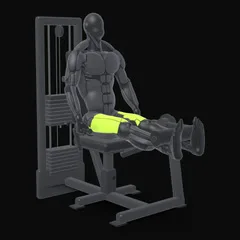
| Hamstrings | Romanian deadlift | Seated or lying leg curl |
| Glutes | Squat, hip thrust, lunges | Kickback, abduction |
| Biceps | Chin-ups, rows | Curls |
| Triceps | Close-grip bench, dips | Overhead extension, pushdown |
| Calves | (none really) | Standing and seated calf raise |
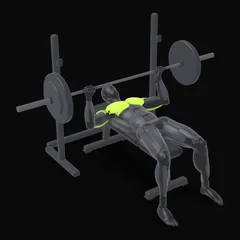
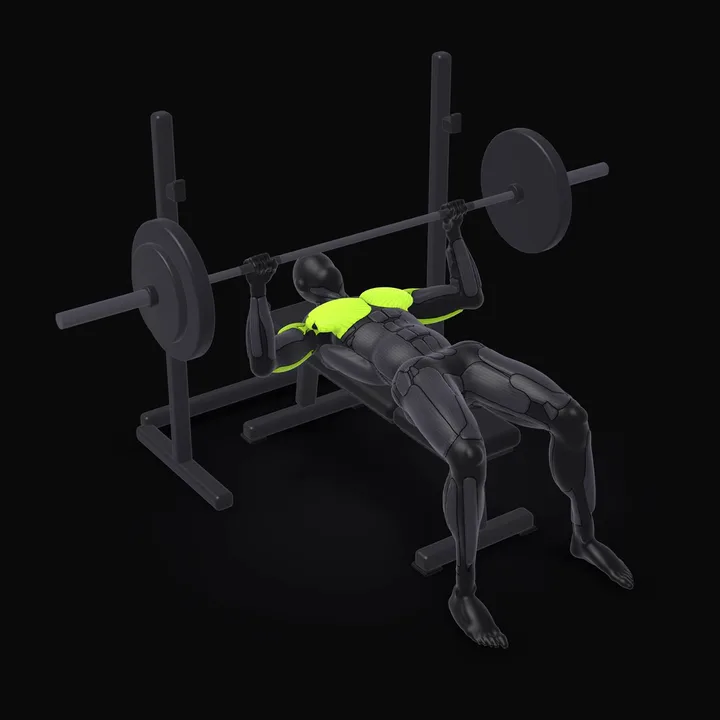 Barbell Bench PressLie on the bench with your eyes under the bar and your feet planted on the floor. Grip the bar slightly wider than shoulder width and pull your shoulder blades back and down.How to do the Barbell Bench Press →
When to lean more on compounds
- You’re a beginner. Learning the big lifts and getting stronger at them drives most of your early progress.
- You’re short on time. Three compounds cover the whole body; you’d need eight isolation exercises to do the same.
- Your goal is strength or sport. Compound lifts carry over best to real-world strength and athletic movement.
- You’re cutting. Heavy compounds are the most efficient way to keep muscle while eating less.
When to lean more on isolation
- A specific muscle is lagging. Arms, side delts and calves are the usual suspects.
- Your joints need a break. A sore lower back or elbow often tolerates machine and cable isolation work better than heavy barbells.
- You’re advanced and size-focused. Extra volume for specific muscles without extra whole-body fatigue.
- You train at home with light weights. Isolation and single-limb work make light loads more challenging for the target muscle.
Exercise order
Compounds usually go first, while you’re fresh, because they’re heavier, more technical and more fatiguing. Isolation exercises fit well at the end. The exception is a priority muscle: if your side delts or calves are lagging, doing them first in some sessions gives them your best effort.
Tracking both kinds
Compound lifts tell you about overall strength: your estimated 1RM trend on squat, bench and deadlift is a great progress indicator. Isolation lifts tell you about specific muscles: a lateral raise that’s gone from 8 kg to 12 kg for the same reps means bigger side delts. Keep both in your log.
For how many total sets to aim for, see how many sets per muscle per week. For the machines vs free weights question, which is a separate one, see free weights vs machines. And for how this fits into the big picture, the guide on how to build muscle covers it all.
Frequently asked questions
Can you build muscle with only compound exercises?
Yes, especially as a beginner. Studies in untrained people found compound exercises alone built the arms as well as compound plus isolation work. As you advance, adding isolation exercises helps bring up muscles that compounds don't fully train, like side delts, hamstrings at the knee and calves.
Are isolation exercises a waste of time?
No. They're the best way to train some muscles directly, they're easy to take close to failure safely, and they cause little overall fatigue. They just shouldn't replace your compound lifts.
Should I do compound or isolation exercises first?
Usually compounds first, when you're fresh and can lift heaviest with good technique. Put an isolation exercise first only if that muscle is a priority and you want to train it before you're tired.
What's a good ratio of compound to isolation exercises?
A practical default is roughly 60 to 70 % of your sets on compound exercises and 30 to 40 % on isolation work. Beginners can lean more toward compounds; advanced lifters focused on size often do more isolation.
Sources
- Paoli A, Gentil P, Moro T, Marcolin G, Bianco A (2017). Resistance Training with Single vs. Multi-joint Exercises at Equal Total Load Volume: Effects on Body Composition, Cardiorespiratory Fitness, and Muscle Strength. Frontiers in Physiology
- Gentil P, Soares SRS, Pereira MC, Cunha RR, Martorelli SS, Martorelli AS, Bottaro M (2013). Effect of adding single-joint exercises to a multi-joint exercise resistance-training program on strength and hypertrophy in untrained subjects. Applied Physiology, Nutrition, and Metabolism
- Gentil P, Soares S, Bottaro M (2015). Single vs. Multi-Joint Resistance Exercises: Effects on Muscle Strength and Hypertrophy. Asian Journal of Sports Medicine