A back workout for width and thickness needs two kinds of pulling: vertical pulls (pull-ups, pulldowns) that build the lats and make your back look wider from the front, and rows that build the upper and middle back muscles that make it look thick from the side. Do both every week, around 12–20 hard sets in total, with a full range of motion and your elbows doing the work. Below is how each type works, which variations matter, and a back day you can run tomorrow.
What “width” and “thickness” really mean
Width is mostly your lats (latissimus dorsi), the big fan-shaped muscles that run from your lower back and pelvis up to your upper arm. Well-developed lats create the V-taper you see from the front and back.
Thickness is the depth of your back from the side and the detail you see when someone turns around: the middle and lower traps, the rhomboids, the rear delts, the teres muscles, the spinal erectors and, yes, the lats again.
There’s no exercise that only builds width or only builds thickness. But the direction you pull in shifts the emphasis:
| Pull | Main movement | Emphasis |
|---|---|---|
| Vertical (pull-ups, pulldowns) | Elbows travel down to your sides | Lats, teres major: width |
| Horizontal with elbows tucked | Elbows travel back to your hips | Lats and middle back |
| Horizontal with elbows out | Elbows travel back and out, at about 45–70° | Upper back, rear delts, traps: thickness |
Vertical pulls for width
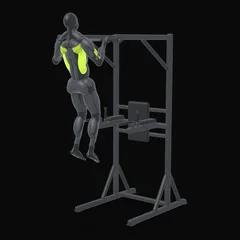
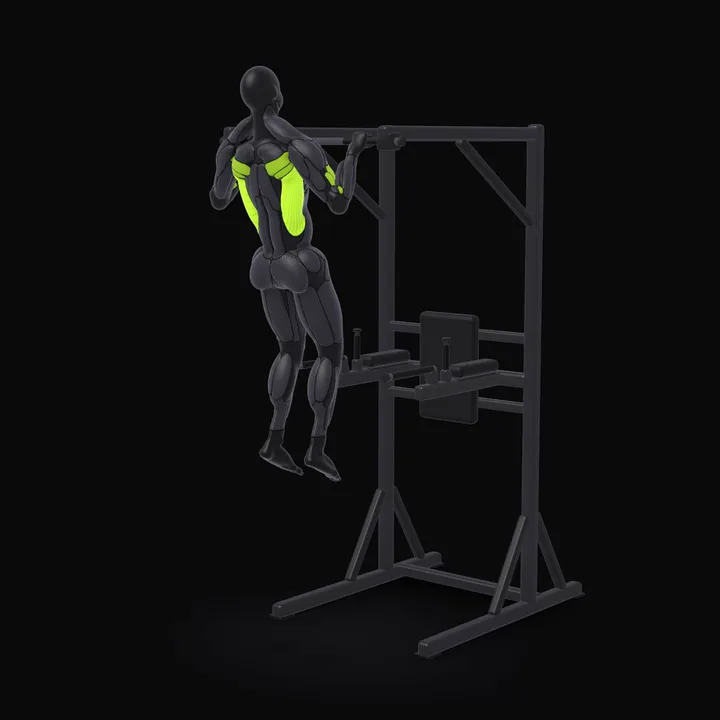 Pull-upGrab the bar with palms facing forward, hands slightly wider than your shoulders. Hang with straight arms and brace your core.How to do the Pull-up →
The pull-up is the king of width builders: lots of load, a big range of motion, easy to progress with a belt and plates. If you can’t do 6–8 good reps yet, the lat pulldown or assisted pull-up does the same job. The guide on how to do pull-ups takes you from zero to double digits.
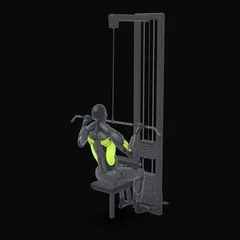
Grip choice: an EMG study comparing pulldown grips found higher lat activity with an overhand (pronated) grip than an underhand one, whatever the grip width (Lusk et al., 2010). In practice, a grip a bit wider than your shoulders lets you get a full stretch at the top and pull the bar to your upper chest. Super-wide grips shorten the range and often bother the shoulders. Neutral-grip (palms facing) pulldowns and chin-ups are good variations too; use the one that feels best.
Single-arm options like the single-arm pulldown or kneeling high-pulley row let you get a deeper stretch and a stronger squeeze at the bottom. The straight-arm pulldown isolates the lats without your biceps getting involved, which makes it useful as a finisher.
Cues for vertical pulls
- Start every rep from a full stretch: arms long, shoulders allowed to rise slightly.
- Drive your elbows down toward your back pockets.
- Keep your chest up and lean back only slightly (10–20°) on pulldowns.
- Pause for a beat with the bar near your upper chest, then control it back up.
Rows for thickness
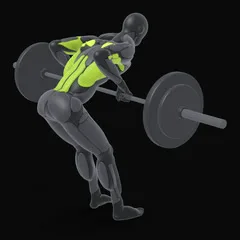
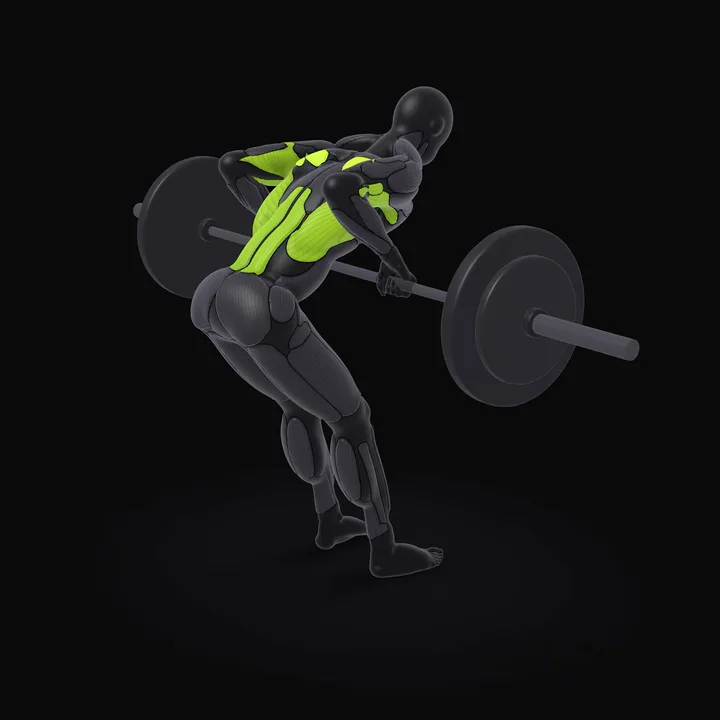 Barbell Bent-over RowGrip the bar slightly wider than your shoulders and bend your knees slightly. Hinge at the hips until your torso is nearly parallel to the floor, with a flat back.How to do the Barbell Bent-over Row →
Rows build the upper and middle back and add lat thickness. Each type has its strengths:
| Row | Strength | Trade-off |
|---|---|---|
| Barbell row | Heavy loading, whole back | Lower back works hard to hold the position |
| Chest-supported row | Isolates the back, no lower-back fatigue | Lighter loads |
| Seated cable row | Constant tension, easy to adjust grip | Easy to cheat with body swing |
| One-arm dumbbell row | Big range, one side at a time | Twisting if too heavy |
| T-bar row | Heavy, comfortable neutral grip | Needs the setup |
Elbow path decides the emphasis. Tuck your elbows and pull toward your hips for more lats. Flare them to about 45–70° and pull toward your lower chest for more upper back and rear delts. A good back program uses both. Technique details for the barbell version are in barbell row form.
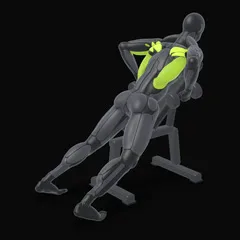
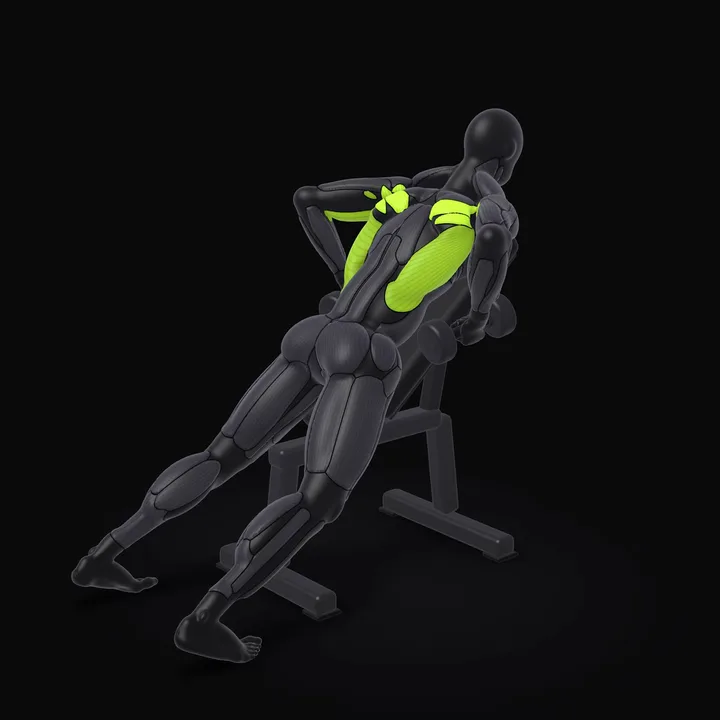 Dumbbell Chest-supported RowSet the bench to 30–45 degrees and lie face down with your chest on the pad. Hold a dumbbell in each hand with your arms hanging toward the floor.How to do the Dumbbell Chest-supported Row →
Cues for rows
- Brace and keep your torso still; the weight should move, not you.
- Let your shoulder blades spread at the bottom, then pull them together as your elbows travel back.
- Pause for a second at the top on cable and machine rows.
- If your lower back gives out before your upper back, switch to a chest-supported row.
How much back training per week?
More weekly volume generally means more growth, with 10 or more sets per muscle a week outperforming lower volumes in meta-analytic data (Schoenfeld et al., 2017). The back is several muscles that work together, so most people do well with a bit more:
| Level | Hard back sets per week | Split |
|---|---|---|
| Beginner | 8–12 | Half vertical, half rows |
| Intermediate | 12–20 | Spread over 2 sessions |
| Advanced | 16–24 | 2–3 sessions |
Deadlifts and Romanian deadlifts train the spinal erectors and traps but aren’t usually counted as back sets for lats and upper back. Rear delt work counts partly. For how to count sets in general, see how many sets per muscle per week.
A complete back day
This is built for one long back session or the pulling half of an upper or pull day. Run it once or twice a week depending on your split.
| Exercise | Sets × reps | Rest | Purpose |
|---|---|---|---|
| Pull-up (weighted if possible) or pulldown | 4 × 6–10 | 2–3 min | Width, heavy |
| Barbell row or T-bar row | 3 × 6–10 | 2 min | Thickness, heavy |
| Single-arm pulldown | 3 × 10–12 per side | 90 s | Lat stretch and squeeze |
| Chest-supported row, elbows out | 3 × 10–12 | 90 s | Upper back |
| Straight-arm pulldown | 2 × 12–15 | 60 s | Lat isolation |
| Face pull | 2 × 12–20 | 60 s | Rear delts and mid traps |
That’s 17 sets: a full week’s worth for many intermediates in one day. If you train back twice a week, split it: the first three exercises on day 1, the rest plus one heavy row on day 2. Rear delts get their own article in rear delt workout.
Grip, straps and your forearms
Your grip often fails before your back does, especially on heavy rows and high-rep pull-downs. Two solutions:
- Use lifting straps for your heaviest pulling sets. Your back gets the full set; your grip doesn’t decide when it ends.
- Train grip separately with carries and hangs. The guide on grip strength exercises has a simple routine.
How to progress your back training
Back exercises progress like anything else: add reps until you hit the top of the range on every set, then add weight. Pull-ups progress from bodyweight reps to added weight with a dip belt. Track your numbers on the first two exercises especially; they’re your best indicators of back growth.
Mistakes that keep your back small
- Swinging the weight. Heavy, sloppy rows mostly train momentum. If your torso moves more than 15° on a row, the weight is too heavy.
- Short range. Not letting the arms straighten on pulldowns, or stopping rows halfway, loses the stretch where much of the growth stimulus comes from.
- Only one type of pull. Pulldowns only, or rows only, leave half your back undertrained.
- Pulling with the arms. Elbows lead; hands are just hooks.
- Skipping the upper back. Strong traps and rear delts make a back look thick from every angle. See how to build traps for that part.
Frequently asked questions
Do rows or pulldowns build a wider back?
Both train the lats, but vertical pulls like pull-ups and pulldowns are the classic width builders, while rows add thickness to the upper and middle back. Most programs include at least one of each every week.
Does grip width matter for back width?
Less than people think. An EMG study found lat activity was higher with an overhand grip than an underhand one, regardless of grip width. Pick a grip that lets you pull through a full range without shoulder discomfort.
How many sets for back per week?
Around 12 to 20 hard sets for most intermediates, split between vertical pulls and rows. The back is a large group of muscles and usually recovers well, so it often tolerates more volume than smaller muscles.
Why can't I feel my back working?
Usually because your arms are doing the pulling. Think about driving your elbows down or back rather than pulling with your hands, pause briefly at the end of each rep, and use a weight you can control. Straps can help if your grip gives out first.
Sources
- Lusk SJ, Hale BD, Russell DM (2010). Grip Width and Forearm Orientation Effects on Muscle Activity During the Lat Pull-Down. Journal of Strength and Conditioning Research
- Schoenfeld BJ, Ogborn D, Krieger JW (2017). Dose-response relationship between weekly resistance training volume and increases in muscle mass: A systematic review and meta-analysis. Journal of Sports Sciences