If you’re a “hardgainer,” the problem is almost never your metabolism. It’s that you don’t eat enough, consistently, every day. To gain weight, eat about 300–500 kcal above maintenance and aim for 0.25–0.5 kg (0.5–1 lb) a week. Make it easier by eating more often, choosing calorie-dense foods, and drinking some of your calories, then pair it with a simple strength program so the weight you gain is muscle.
Why you’re not gaining weight
Most hardgainers share a few patterns:
- Irregular eating. One big meal, then nothing for hours. It feels like a lot but the daily total is low.
- Low appetite. Feeling full quickly, especially with high-fibre, low-calorie foods like salads and vegetables.
- High daily movement. Active jobs, walking or cycling everywhere, fidgeting. Some people burn hundreds of extra calories a day without exercising.
- Overestimating intake. “I eat loads” often means two or three big meals on good days and skipped meals on busy ones.
The fix is boring: measure for a week, then eat more, on purpose, every day.
Step 1: find your numbers
Weigh yourself every morning for two weeks and track roughly what you eat. If your weekly average is flat, that’s your maintenance intake. Add 300–500 kcal. A review on off-season nutrition by Iraki and colleagues (2019) recommends gaining about 0.25–0.5 % of bodyweight per week for most lifters; for a 65 kg (143 lb) person that’s 0.15–0.3 kg (0.3–0.7 lb) per week. If you’re very thin and new to training, you can aim slightly higher.
Check the weekly average every two weeks:
| Over 2 weeks | Do this |
|---|---|
| No gain | Add 200–300 kcal a day |
| Gaining at target rate | Keep going |
| Gaining much faster than target | Remove 100–200 kcal a day |
Step 2: eat more without feeling stuffed
Eat more often
Four to five meals or snacks a day are easier than three huge plates. Set reminders if you forget to eat.
Choose calorie-dense foods
| Food | Portion | Approx. kcal |
|---|---|---|
| Peanut butter | 2 tbsp (32 g) | 190 |
| Mixed nuts | Handful (40 g) | 250 |
| Olive oil | 1 tbsp | 120 |
| Granola | 80 g | 360 |
| Whole milk | 500 ml | 330 |
| Cheese | 40 g | 160 |
| Dried fruit | 50 g | 150 |
| Rice (cooked) | 250 g | 325 |
| Avocado | 1 medium | 240 |
| Dark chocolate | 30 g | 170 |
Small tweaks add up: olive oil on vegetables and pasta, whole milk instead of skimmed, granola instead of plain cereal, cheese on everything.
Drink some of your calories
Liquid calories are less filling than solid food. DiMeglio and Mattes (2000) found people didn’t compensate for calories from drinks by eating less later, unlike with solid snacks, and gained weight as a result. That’s a problem for most people and a solution for hardgainers.
DIY weight gainer shake (about 900 kcal, 50 g protein):
- 400 ml whole milk
- 60 g oats
- 1 banana
- 2 tbsp peanut butter
- 1 scoop whey protein
- Optional: 1 tbsp honey
Blend and drink it between meals or after training. One shake a day can cover your whole surplus.
Keep fibre and vegetables reasonable
They’re healthy, but very high-fibre meals fill you up. Keep some vegetables at most meals, and use more refined carbs (white rice, pasta, bread) to make calories easier.
Appetite tricks that actually help
- Eat on a schedule, not on hunger. If you wait until you’re hungry, you’ll eat too little. Set fixed meal times.
- Start with the calorie-dense part of the plate. Eat the rice, meat and sauce first, the salad last.
- Don’t drink lots of water just before or during meals; it fills you up. Drink between meals instead.
- Use bigger plates and bowls. Portions look smaller, so you serve more.
- Keep snacks within reach: nuts in your bag, a bar in your desk, milk in the office fridge.
- Train before a big meal. Many people are hungrier a couple of hours after a session.
Step 3: hit your protein
Aim for about 1.6–2 g per kg of bodyweight a day: 105–130 g for a 65 kg person. In a surplus, the lower end is enough. More in how much protein to build muscle, and food ideas in high-protein foods.
Sample day for a 65 kg hardgainer (~3,100 kcal)
| Meal | Food |
|---|---|
| Breakfast | 3 eggs, 2 slices toast with butter, glass of whole milk |
| Mid-morning | Greek yoghurt with granola and honey |
| Lunch | Big plate of pasta with lean mince and cheese, olive oil |
| Afternoon | DIY gainer shake |
| Dinner | Chicken thighs, rice, vegetables with olive oil |
| Evening | Peanut butter on toast, or a handful of nuts and dried fruit |
Step 4: train to turn food into muscle
Without the right training, extra calories just become fat. Focus on heavy compound lifts and progressive overload:
| Day A | Day B |
|---|---|
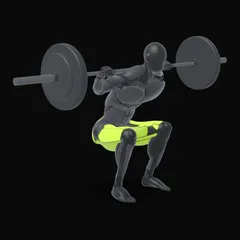
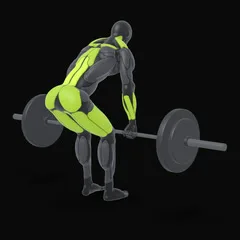
| Barbell Squat 3 × 5–8 | Barbell Deadlift 3 × 5 |
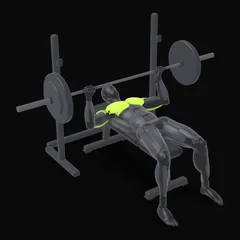
| Barbell Bench Press 3 × 5–8 | Barbell Overhead Press 3 × 6–8 |
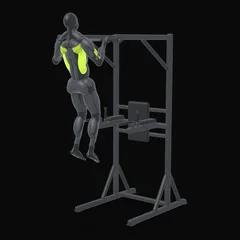
| Barbell Bent-over Row 3 × 8 | Pull-up 3 × as many as possible |
| Dips or push-ups 2 × 8–12 | Dumbbell Lunge 2 × 10 per leg |
| Curls 2 × 10–12 | Lateral raises 3 × 12–15 |
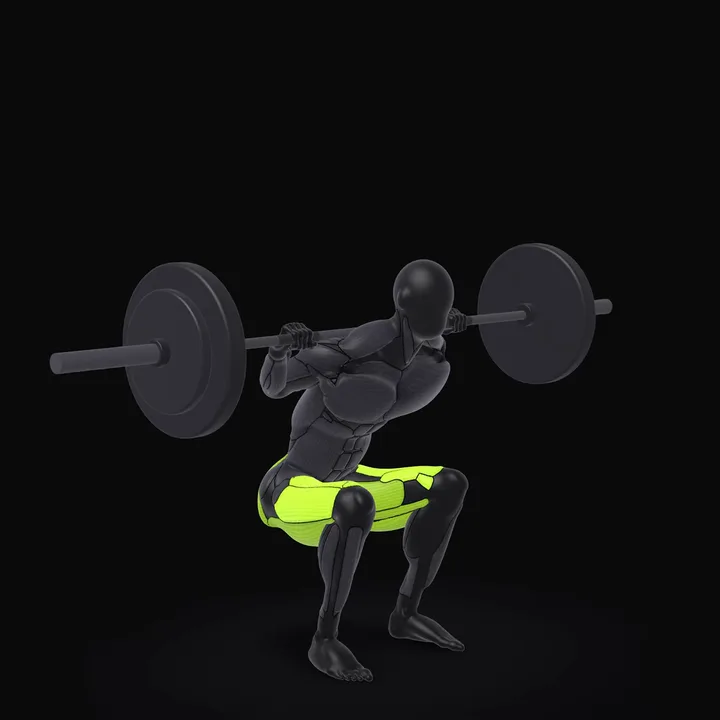 Barbell SquatPlace the bar on your upper back, not on your neck, and step out of the rack. Stand with feet slightly wider than shoulder width, toes turned out a little.How to do the Barbell Squat →
Alternate A and B, three or four sessions a week. Add weight whenever you hit the top of your rep range. Keep cardio modest: daily walking is fine, but long runs make the job harder. For a complete program, see the bulking workout plan, and for the full nutrition picture, how to bulk.
The scale tells you whether you’re eating enough; your lifts tell you whether that weight is muscle. Brick shows last time’s weight and reps on every set, flags PRs and draws strength trends for each exercise. If your bodyweight and your squat are both climbing, you’re doing it right.
Common hardgainer mistakes
- Eating big on Monday, forgetting by Thursday. Consistency beats big days.
- Too much cardio or sport without eating for it.
- Program-hopping. Stick with one program for at least 8–12 weeks.
- Relying on “healthy” low-calorie foods. Salads and chicken breast alone won’t get you there.
- Expecting fast results. Building muscle is slow; a couple of kilos of weight a month is great progress.
Frequently asked questions
Why can't I gain weight even though I eat a lot?
Almost always because you eat less than you think, or you burn more than you think through daily movement. Many 'big eaters' have one large meal and then barely eat for the rest of the day. Track your food for a week and you'll usually find you're at maintenance.
How fast should a hardgainer gain weight?
About 0.25–0.5 kg (0.5–1 lb) per week. Slower if you've trained for a few years. Faster gains are mostly fat and water, even for very thin people.
Are weight gainer shakes worth it?
They work, but you're mostly paying for cheap carbs. A homemade shake with milk, oats, banana, peanut butter and a scoop of whey gives similar calories for less money and better ingredients.
Is 'ectomorph' a real body type?
Somatotypes are an old classification without much scientific support for training or diet decisions. Some people do find it harder to gain weight because of appetite, daily activity and build. The solution is the same: eat enough, train well, be patient.
Sources
- Iraki J, Fitschen P, Espinar S, Helms E (2019). Nutrition recommendations for bodybuilders in the off-season: a narrative review. Sports
- DiMeglio DP, Mattes RD (2000). Liquid versus solid carbohydrate: effects on food intake and body weight. International Journal of Obesity