“Skinny fat” describes someone at a normal bodyweight who looks slim in clothes but soft without them: little muscle, some fat around the belly. The fix is not more cardio or a crash diet; it’s building muscle. For most skinny-fat beginners, the best approach is a recomposition: eat around maintenance, get 1.6–2.2 g of protein per kg, and follow a solid strength program three times a week. Only go for a cut or a bulk first if you’re clearly on one side of the line.
What skinny fat actually is
It’s not a medical term, but the pattern is familiar: normal BMI, thin arms and shoulders, a bit of a belly or “love handles,” little visible definition. It usually comes from years of little resistance exercise, sometimes combined with dieting that removed muscle along with fat.
The trap is trying to “lose the belly” by eating very little and doing lots of cardio. You lose weight, including the little muscle you have, and end up a smaller version of the same shape. The opposite trap is “bulking” hard and gaining mostly fat. Both miss the point: you need more muscle.
Recomp, bulk or cut? How to decide
Use your waist and how you look, not just the scale.
| Your situation | Best first step | Why |
|---|---|---|
| Normal weight, some belly, new to lifting | Recomp at maintenance | Beginners can build muscle and lose fat at the same time |
| Clearly significant belly fat (waist above about half your height) | Moderate cut with heavy lifting, then recomp | Lose some fat first without losing muscle |
| Lean, thin, little belly, struggle to gain | Slow lean bulk | You need surplus energy to build muscle |
| Unsure | Recomp for 3 months, then reassess | Lowest-risk option |
A quick rule of thumb used by many coaches: if your waist measured at the navel is above about half your height, start with fat loss; if it’s well below, start building.
Why recomp works so well for skinny fat
Beginners respond strongly to lifting, and having some fat to draw on means your body can fund new muscle even without a big surplus. A review by Barakat and colleagues (2020) showed that body recomposition happens even in trained people with progressive training and adequate protein; in untrained, skinny-fat beginners, it’s the textbook case. More details in body recomposition.
The nutrition side
- Calories: around maintenance for a recomp. If you choose a cut, a small deficit (about 10–20 %); see how to cut without losing muscle. If you choose a bulk, a small surplus (about 10 %); see how to bulk.
- Protein: 1.6–2.2 g per kg of bodyweight per day. A meta-analysis by Morton and colleagues (2018) found muscle gains with training levelled off around 1.6 g/kg on average. For a 70 kg person, that’s about 115–155 g a day. See how much protein to build muscle.
- Food quality: mostly whole foods, plenty of vegetables and fruit, limited alcohol and ultra-processed snacks. Not perfection; consistency.
The training plan: 3 full-body days
Skinny-fat lifters need to build muscle everywhere, especially the upper body (shoulders, back, chest, arms) and legs. A full-body program three times a week is ideal.
Day A
| Exercise | Sets × reps |
|---|---|
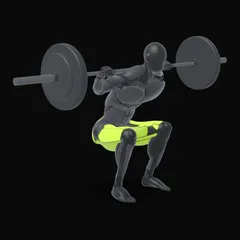
| Barbell Squat | 3 × 6–8 |
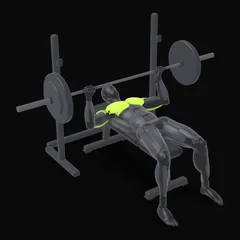
| Barbell Bench Press | 3 × 6–8 |
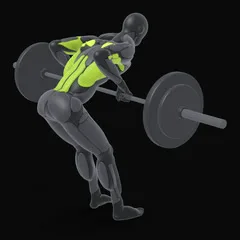
| Barbell Bent-over Row | 3 × 8–10 |
| Dumbbell Lateral Raise | 3 × 12–15 |
| Dumbbell Biceps Curl | 2 × 10–12 |
Day B
| Exercise | Sets × reps |
|---|---|
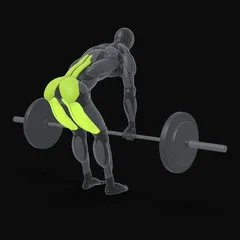
| Barbell Romanian Deadlift | 3 × 8 |
| Barbell Overhead Press | 3 × 6–8 |
| Cable Lat Pulldown or pull-ups | 3 × 8–10 |
| Dumbbell Lunge | 2 × 10 per leg |
| Cable Triceps Pushdown | 2 × 10–12 |
Alternate A/B/A one week, B/A/B the next. Rest 2–3 minutes on the big lifts, 60–90 seconds on smaller ones. Stop most sets 1–2 reps before failure.
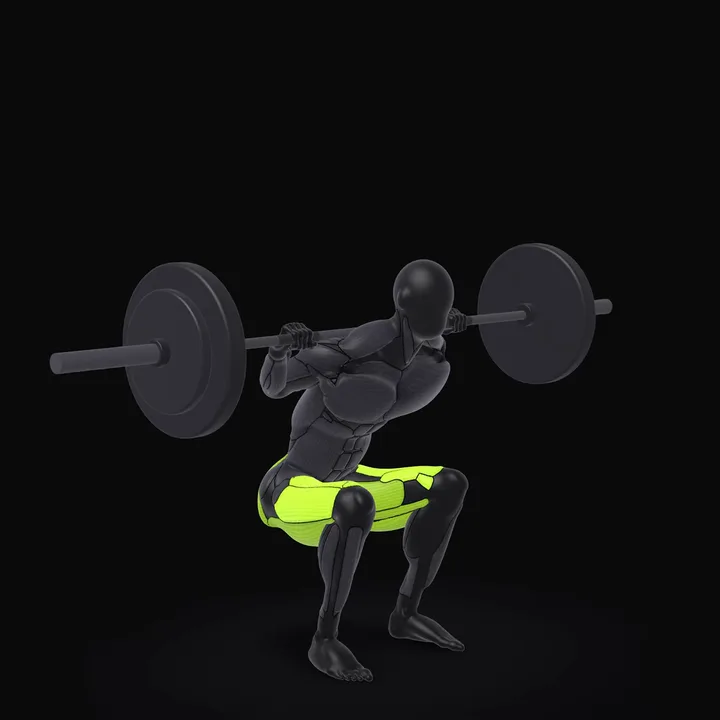 Barbell SquatPlace the bar on your upper back, not on your neck, and step out of the rack. Stand with feet slightly wider than shoulder width, toes turned out a little.How to do the Barbell Squat →
Progression: when you hit the top of the rep range on all sets, add weight next session (2.5 kg on upper-body lifts, 2.5–5 kg on lower-body lifts). That’s the engine. If you want more structure, our full-body workout plan goes further.
Cardio: daily walks (8,000–10,000 steps) are plenty. Extra cardio is optional, not the main tool.
Why your upper body matters most
Skinny-fat physiques usually lack muscle most visibly in the shoulders, upper back and arms. Building those areas changes your shape faster than anything else: wider shoulders and a thicker upper back make the waist look smaller even before you lose much fat. That’s why the plan above includes overhead pressing, rows, pulldowns and lateral raises every week, plus a little direct arm work.
Legs still matter. Squats, lunges and Romanian deadlifts build a lot of muscle quickly, raise your daily energy expenditure a little, and make you stronger for everything else. Skipping them to “focus on the upper body” is a common beginner mistake.
How to track progress
Skinny fat improves in ways the scale doesn’t show. Track:
| What | How often | Good sign |
|---|---|---|
| Lifts | Every session | Steady increases |
| Waist at the navel | Every 2 weeks | Stable or shrinking |
| Bodyweight (weekly average) | Weekly | Stable on a recomp |
| Photos | Monthly | Broader shoulders, flatter stomach |
| Shoulder or chest measurement | Monthly | Increasing |
The most motivating signal early on is strength. Brick shows your last weights and reps on every set, flags PRs automatically and draws estimated 1RM trends, so you can see your bench and squat climbing week by week even when the scale says nothing. With Premium, progress photos sit next to your training history.
Timeline: what to expect
- Weeks 1–4: strength rises quickly; clothes may feel slightly different.
- Months 2–3: shoulders and arms fill out a bit; waist starts shrinking.
- Months 4–6: visible change in photos; others start noticing.
- Months 6–12: a different physique. At that point, decide whether to keep recomping or move to a lean bulk.
Common mistakes
- Endless cardio and eating less. You’ll lose the muscle you need.
- Dirty bulking. Gaining 1 kg a week mostly adds to the belly.
- Random workouts without progression.
- Too little protein.
- Judging success by the scale. The goal is changing composition, not weight.
For the broader principles behind all of this, see how to build muscle.
Frequently asked questions
Should a skinny fat person bulk or cut first?
Usually neither, at first. Most skinny-fat beginners do best with a recomposition: eating around maintenance with high protein and lifting hard. If you're clearly carrying significant belly fat, a short, moderate cut can come first; if you're quite lean but small, a slow lean bulk.
How long does it take to fix skinny fat?
Expect visible change in three to six months of consistent training, and a real transformation in about a year. Strength improves within weeks, and the mirror follows.
Can cardio fix skinny fat?
Not on its own. Cardio can help with fat loss and health, but the core problem of skinny fat is too little muscle. Only resistance training with progressive overload fixes that.
Is skinny fat genetic?
Genetics influence where you store fat and how easily you build muscle, but skinny fat mostly reflects low muscle from inactivity, plus diet. It responds very well to lifting.
Sources
- Barakat C, Pearson J, Escalante G, Campbell B, De Souza EO (2020). Body recomposition: can trained individuals build muscle and lose fat at the same time?. Strength and Conditioning Journal
- Morton RW, Murphy KT, McKellar SR, et al., Phillips SM (2018). A systematic review, meta-analysis and meta-regression of the effect of protein supplementation on resistance training-induced gains in muscle mass and strength in healthy adults. British Journal of Sports Medicine