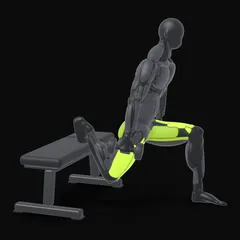
Good Bulgarian split squat form starts with the setup: rear foot laces-down on a bench about knee height, front foot one long stride in front, torso tall or slightly leaning forward. From there, lower straight down until your back knee is just above the floor and your front thigh is about parallel, then drive up through your front foot. A shorter stance and upright torso work the quads more; a longer stance and slight forward lean work the glutes more. Below is how to dial in your stance, stay balanced, load it and compare it with lunges.
Step-by-step Bulgarian split squat
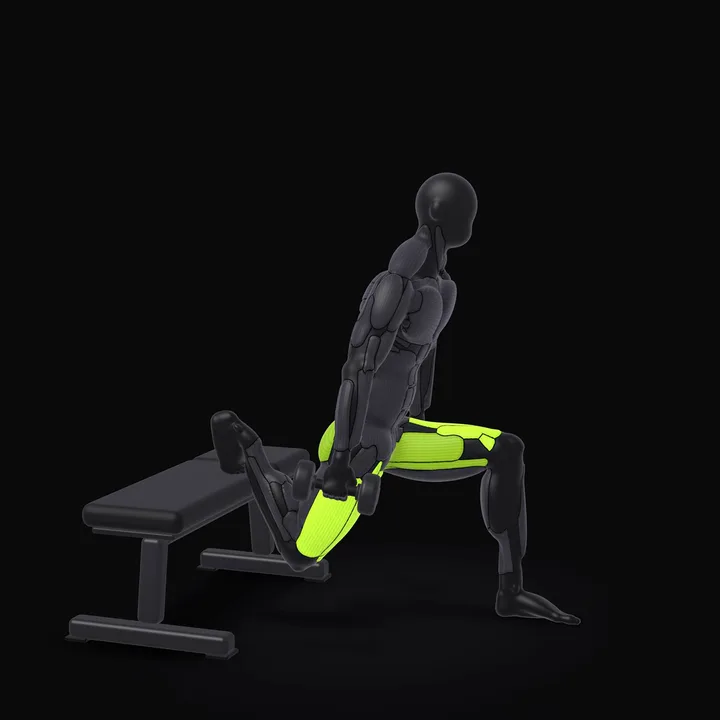 Dumbbell Bulgarian Split SquatStand in front of a bench and rest the top of your rear foot on it, holding a dumbbell in each hand. Lower straight down by bending your front knee until your thigh is nearly parallel to the floor.How to do the Dumbbell Bulgarian Split Squat →
1. Set the bench
Use a flat bench or box about knee height or a bit lower (35–45 cm / 14–18 in). Higher benches stretch the front of your back hip more and make balance harder.
2. Find your stance
Stand about one long stride in front of the bench, facing away from it. Reach one foot back and rest the top of your foot (laces down) on the bench. Your front foot points forward, with your weight spread over the whole foot.
A quick way to find your stance: do one slow bodyweight rep. If your front heel lifts at the bottom, step further forward. If your back knee lands far behind you and you feel stretched out like a lunge, step closer.
3. Brace and lower
Stand tall, brace your midsection, and lower straight down by bending both knees. Your back knee goes toward the floor; your front knee travels forward over your toes. Keep your front heel down.
4. Reach the bottom
Go down until your back knee is just above the floor (or touches a pad lightly) and your front thigh is about parallel to the floor. Pause briefly.
5. Drive up
Push through your front foot, mainly the heel and midfoot, to stand back up. Your back leg is mostly along for the ride; if it does a lot of pushing, shift more weight forward.
Do all your reps on one leg, then switch. Start with your weaker leg and match the reps on your stronger leg.
Warm-up
Bulgarian split squats are hard on the hip flexors of the back leg and the knee and ankle of the front leg. Before your first set: 10 bodyweight squats, a 30-second kneeling hip flexor stretch per side, 10 bodyweight reverse lunges per leg, then one set of 6–8 Bulgarian split squats per leg with no weight. If they come after heavy squats, the bodyweight set alone is usually enough.
Quads vs glutes: how to shift the emphasis
| Setup | Emphasis |
|---|---|
| Shorter stance, upright torso, front knee travels forward | Quads |
| Longer stance, slight forward lean (about 20–30°), shin more vertical | Glutes and adductors |
| Front foot raised on a small plate | More range of motion, more glute stretch |
Neither is “correct”. Pick the version that matches your goal, or do one of each in a week. For glute-focused training, the how to grow glutes guide shows where split squats fit with hip thrusts and hinges.
Balance tips
Balance is the main complaint with Bulgarian split squats. These help:
- Widen your stance sideways. Your feet shouldn’t be on a tightrope; leave a hand’s width between them side to side.
- Hold onto something. A rack upright or a single dumbbell in the opposite hand with the other hand on a support lets you push hard without wobbling.
- Slow down. Rushed reps are wobbly reps. Two seconds down, a brief pause, then up.
- Look at a fixed point on the floor a couple of metres ahead.
- Use the Smith machine. The Smith machine split squat removes the balance demand entirely, which lets you load the legs more.
When mobility gets in the way
- The front of your back hip pulls hard. Your hip flexors are tight. Lower the bench (a 20–30 cm step works), and do the kneeling hip flexor stretch between sets. Range usually improves within a few weeks.
- Your front heel lifts even with a long stance. Ankle mobility is the limit. Put a small plate under your front heel for now, and add calf stretches to your routine.
- Your back foot cramps. Put a folded towel or pad under the top of the foot, or use a roller pad if your gym has a split-squat stand.
- You can’t get your back knee near the floor. Go as deep as you can with control. Depth will come, and partial reps still build the legs.
Loading options
| Load | Pros | Cons |
|---|---|---|
| Bodyweight | Learn the movement | Becomes easy quickly |
| Dumbbells at your sides | Easy, natural, stable | Grip can limit heavy sets (use straps) |
| Goblet (one dumbbell at the chest) | Upright torso, quad focus | Limited by how much you can hold |
| Barbell on your back | Heaviest loading | Harder to balance and to get into position |
| Smith machine | Very stable | Fixed bar path |
Most people do well with dumbbells. Start with bodyweight for a week or two before adding weight; Bulgarian split squats produce a lot of soreness at first. In Brick, dumbbells are logged as the total in your hands, so two 20 kg dumbbells count as 40 kg.
Split squats vs lunges
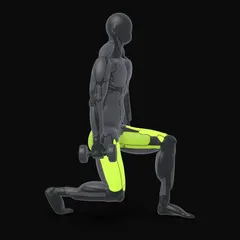
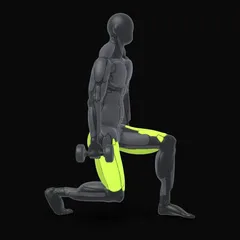
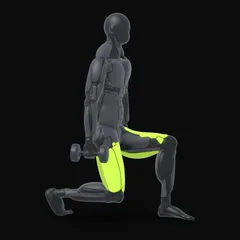
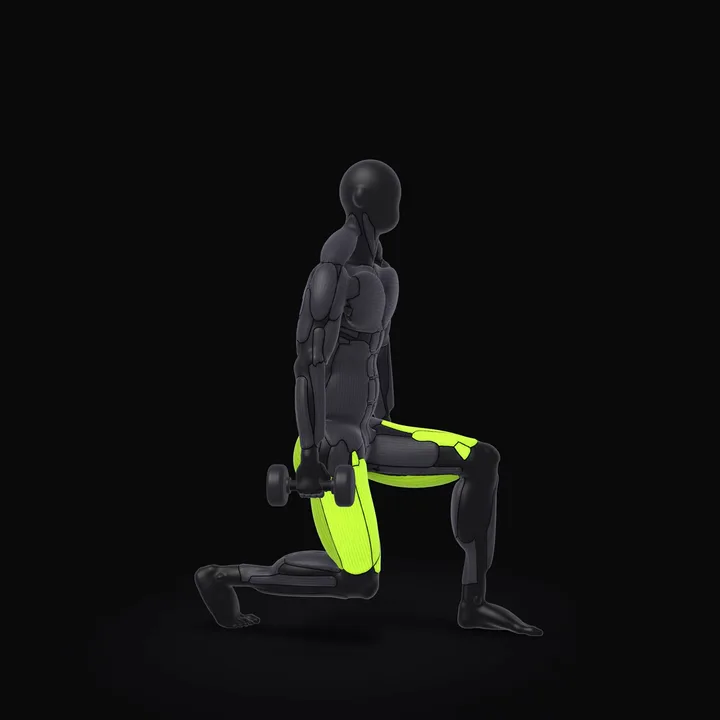 Dumbbell Reverse LungeStand holding a dumbbell in each hand. Take a big step back and lower until your back knee nearly touches the floor.How to do the Dumbbell Reverse Lunge →
| Exercise | What’s different | Good for |
|---|---|---|
| Split squat (both feet on the floor) | Easiest to balance | Learning the pattern |
| Bulgarian split squat | Rear foot elevated, more load on the front leg, deeper range | Hypertrophy, single-leg strength |
| Reverse lunge | Step back each rep | Knee-friendly, balance |
| Walking lunge | Step forward continuously | Conditioning, glutes, needs space |
The Bulgarian version puts the most load on the front leg of all of them, which is why it’s such a good muscle builder even with modest weights.
Sets, reps and programming
| Goal | Sets × reps per leg | Rest between legs |
|---|---|---|
| Learning the movement | 2 × 8, bodyweight | 30–60 s |
| Muscle | 3–4 × 8–12 | 60–90 s |
| Strength | 3–4 × 5–8, heavier dumbbells or Smith machine | 90 s–2 min |
| Conditioning, home training | 2–3 × 15–20 | 45–60 s |
- Reps: 8–12 per leg for most people; 6–8 with heavier dumbbells or a barbell.
- Sets: 2–4 per session.
- Rest: 60–90 seconds between legs is usually enough, as one leg rests while the other works. Take 2 minutes between full rounds.
- Where: after your main squat or hinge on a leg day, or as the main exercise on a dumbbell or home program. The leg day workout includes them in its hinge-focused session.
Progress with double progression: work up to the top of your rep range on both legs, then go to the next pair of dumbbells. If one leg is weaker, let it set the reps for both.
Picking your starting weight
After a week or two of bodyweight sets, pick dumbbells you could do about 15 times and do 10. Most people are surprised how light that is: often 2 × 8 kg to 2 × 14 kg (16–28 kg in total) at first, even for people who squat much more. That’s normal, because one leg is doing most of the work and balancing at the same time.
A worked example
| Week | Load (total) | Reps per leg | Next step |
|---|---|---|---|
| 1 | 2 × 10 kg (20 kg) | 10, 9, 8 | Same weight |
| 2 | 20 kg | 11, 10, 10 | Same weight |
| 3 | 20 kg | 12, 12, 11 | Same weight |
| 4 | 20 kg | 12, 12, 12 | Next: 2 × 12 kg (24 kg) |
The jump from 20 to 24 kg is a 20 % increase, so expect your reps to drop to around 8–9 at first. If they drop further than that, keep the heavier dumbbells for the first set only and finish with the old pair.
Common mistakes
| Mistake | Fix |
|---|---|
| Front heel lifting | Step further from the bench |
| Front knee caving inward | Push the knee out over your toes; lighter weight |
| Pushing off the back leg | Shift weight forward onto the front foot |
| Bench too high | Use a lower bench or a stack of plates |
| Toes curled under on the bench | Rest the top of the foot (laces down) |
| Bouncing out of the bottom | Pause briefly; control the descent |
Safety with heavy loads
The main risk on Bulgarian split squats is losing your balance with weight in your hands. Dumbbells are the safest choice: if you wobble, you put your back foot down and the weights stay in your hands or go to the floor beside you. A barbell on your back is harder to get into and out of position with, so use it only once your balance is solid, and set the rack safeties just below the bar’s lowest point. Getting out of the position is part of the rep: bring your back foot down to the floor first, then stand up with both feet before setting the weights down.
Who should do Bulgarian split squats?
Almost everyone who trains legs. They’re especially useful if you:
- train at home with dumbbells only (see the dumbbell only workout plan),
- have a lower back that doesn’t tolerate heavy barbell squats,
- have a noticeable strength difference between your legs,
- want more glute work without adding more hip thrusts.
Frequently asked questions
Should I lean forward on Bulgarian split squats?
A slight forward lean is natural and shifts more work to your glutes. Staying more upright keeps the focus on your quads. Both are fine; just keep your back neutral and your front foot flat.
How far should my front foot be from the bench?
Far enough that, at the bottom, your front shin is roughly vertical to slightly angled forward and your back knee lands just behind your front heel. For most people that's about one long stride from the bench.
Why do Bulgarian split squats hurt my back knee or hip?
Usually because the bench is too high or your stance is too short, which stretches the front of the back hip and puts pressure on the knee. Lower the bench, lengthen your stance slightly, and rest the top of your foot rather than your toes.
Should I finish one leg before switching, or alternate?
Finish all the reps on one leg, then switch. It keeps you in position and lets each leg work hard. Start with your weaker leg, and don't do more reps on the stronger leg than the weaker one managed.
Are Bulgarian split squats better than squats?
They're different tools. Split squats load each leg hard with much less weight on your spine and fix side-to-side differences. Barbell squats let you lift heavier overall loads. Many good leg programs use both.