To grow your glutes, train them two or three times a week with a mix of three movement types: a hip thrust or bridge, a deep squat or lunge, and a hip hinge like the Romanian deadlift. Aim for about 10–16 hard sets a week, push close to failure, and make the weights heavier over time. The research doesn’t crown one “best” glute exercise; it shows that hard, progressive training through different ranges works.
How your glutes work
The gluteus maximus is the biggest muscle in your body. Its main job is hip extension: driving your hips forward from a bent position, as when you stand up from a squat, climb stairs or sprint. The gluteus medius and minimus sit on the side of your hip and pull the leg out to the side (abduction) and keep your pelvis level when you’re on one leg.
Different exercises load the glutes at different hip angles:
| Pattern | Glutes hardest when… | Examples |
|---|---|---|
| Thrust / bridge | Hips fully extended (top) | Hip thrust, glute bridge |
| Squat / lunge | Hips deeply bent (bottom) | Deep squat, Bulgarian split squat, walking lunge |
| Hinge | Hips bent with legs fairly straight | Romanian deadlift, 45° back extension |
| Abduction | Leg out to the side | Abduction machine, cable abduction |
Hip thrusts vs squats: what the research says
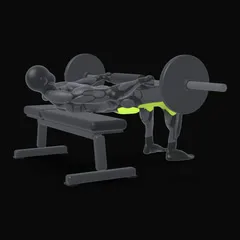
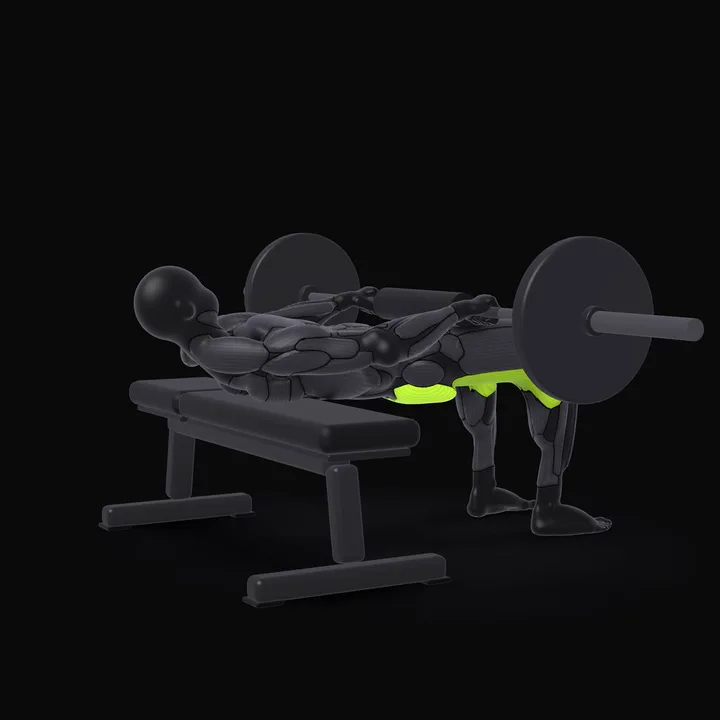 Barbell Hip ThrustSit on the floor with your upper back against the edge of a bench and the bar over your hips, using a pad. Bend your knees and plant your feet flat on the floor.How to do the Barbell Hip Thrust →
Hip thrusts became famous partly because of EMG data: in trained women, the barbell hip thrust produced higher glute activation than the back squat (Contreras et al., 2015). Higher activation suggested more growth.
When researchers finally measured growth directly, the picture changed. In a 9-week study, untrained participants doing either hip thrusts or back squats gained similar glute muscle, while the squat group also grew more quad and adductor muscle (Plotkin et al., 2023). Each group got stronger mostly at the exercise it trained.
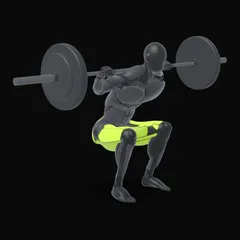
Squat depth matters for the glutes too. A 10-week study found full-depth squats grew the glutes significantly more than half squats (Kubo et al., 2019). The glutes are stretched at the bottom of a deep squat, and that seems to matter for growth.
The practical answer: use both. Hip thrusts load the glutes at the top with less fatigue for your back and quads; deep squats and lunges load them in a stretch. Technique details are in hip thrust form and how to squat properly.
The best glute exercises by role
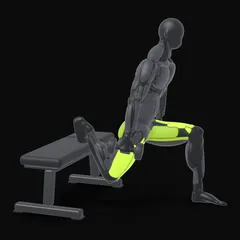
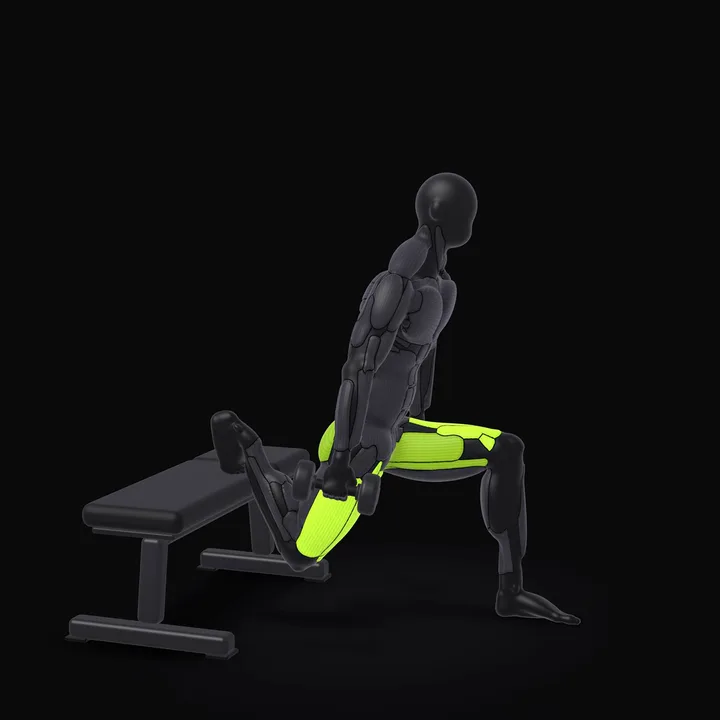 Dumbbell Bulgarian Split SquatStand in front of a bench and rest the top of your rear foot on it, holding a dumbbell in each hand. Lower straight down by bending your front knee until your thigh is nearly parallel to the floor.How to do the Dumbbell Bulgarian Split Squat →
- Main thrust: barbell hip thrust, or a hip thrust machine if your gym has one.
- Main squat or lunge: deep back squat, Bulgarian split squat with a longer stance and slight forward lean, or reverse lunges. See Bulgarian split squat form for the glute-biased setup.
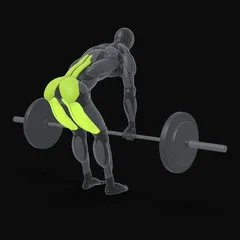
- Hinge: Romanian deadlift, 45° back extension with a rounded upper back and the movement coming from your hips.
- Side glutes: abduction machine or cable abduction, 15–25 reps.
- Extras: cable kickbacks, step-ups, kettlebell swings.
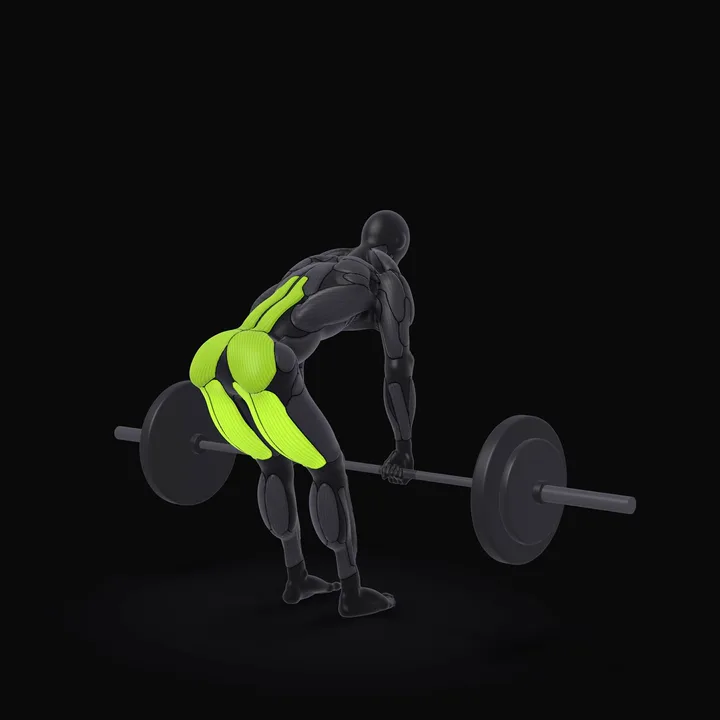 Barbell Romanian DeadliftStand holding the bar in front of your thighs with your knees slightly bent. Push your hips back and lower the bar close to your legs with a flat back.How to do the Barbell Romanian Deadlift →
How much and how often
| Level | Hard glute sets per week | Sessions |
|---|---|---|
| Beginner | 6–10 | 2 |
| Intermediate | 10–16 | 2–3 |
| Advanced, glute priority | 14–20 | 3 |
Count squats, lunges, hip thrusts, Romanian deadlifts and back extensions as glute sets. Abduction work counts for the side glutes. Most sets should end 1–2 reps short of failure; isolation exercises can go to failure.
A glute-focused training week
This is a three-session lower body week with a glute priority. Pair it with two upper body sessions (for example, Monday, Wednesday and Friday for these days, and Tuesday and Thursday for upper body), or run the first two days only within a four-day upper/lower split.
Day 1: thrust focus
| Exercise | Sets × reps | Rest |
|---|---|---|
| Hip thrust | 4 × 6–10 | 2 min |
| Bulgarian split squat | 3 × 8–12 per leg | 90 s |
| Seated leg curl | 3 × 10–12 | 90 s |
| Hip abduction | 3 × 15–25 | 60 s |
Day 2: squat focus
| Exercise | Sets × reps | Rest |
|---|---|---|
| Back squat (full depth) | 4 × 6–10 | 2–3 min |
| Romanian deadlift | 3 × 8–10 | 2 min |
| Walking lunge | 2 × 10–12 per leg | 90 s |
| Calf raise | 3 × 10–15 | 60 s |
Day 3: hinge and pump
| Exercise | Sets × reps | Rest |
|---|---|---|
| 45° back extension (glute bias) | 3 × 12–15 | 90 s |
| Machine or dumbbell hip thrust | 3 × 12–15 | 90 s |
| Step-up | 2 × 10–12 per leg | 90 s |
| Cable kickback | 2 × 15 per leg | 60 s |
That’s roughly 16–18 glute sets a week, at the high end for an intermediate. Start with two sets per exercise for the first two weeks, then build up. If you’d like a full-body plan with balanced upper body work, see the gym workout plan for women, which works for anyone with a glute goal.
How to progress glute training
Hip thrusts progress fast. Many people add 5 kg (10 lb) every week or two for months. Use double progression: hit the top of the rep range on every set, then add weight. On single-leg exercises, add reps first, then dumbbells.
Watch for one trap: hip thrust numbers can climb while range of motion shrinks. Keep a full lockout with your ribs down and a one-second squeeze at the top. A rep that doesn’t reach full hip extension doesn’t count.
Why your glutes aren’t growing
If you’ve trained for a few months without much change, go through this list:
- The weights haven’t changed. Compare your hip thrust and squat numbers with two months ago. If they’re the same, your glutes have had no reason to grow.
- Too few hard sets. Lots of band work and light kickbacks feel like training but rarely add up to 10 genuinely hard sets.
- Shallow range. Half squats, short lunges and hip thrusts that stop short of lockout all reduce the stimulus.
- Not enough food. Building muscle in a big calorie deficit is slow. If you’re also trying to lose fat, expect slower glute growth and focus on keeping your strength.
- Too little protein. Spread protein across your meals; muscle needs the material.
- Not enough time. Glute development takes months to show and years to build fully. Track your lifts and measurements rather than daily mirror checks.
Most stalls come down to the first two points, and both are easy to see in a training log.
Glute training myths
- “You need to activate your glutes first.” A few bridges or band walks as a warm-up are fine. They don’t replace hard, heavy sets.
- “Squats don’t work glutes.” Deep squats are one of the best glute builders there is.
- “High reps and bands are best for shape.” Muscle grows with hard sets across a wide rep range. Load matters.
- “Glutes need daily training.” Two or three good sessions beat seven half-hearted ones.
For more lower body sessions that hit everything, the leg day workout has two complete templates.
Frequently asked questions
How long does it take to grow glutes?
With consistent training two or three times a week and enough protein, most people see a visible change in two to three months. Significant growth builds over a year or more, faster for beginners.
Are hip thrusts better than squats for glutes?
Not clearly. A 9-week study found similar glute growth from hip thrusts and back squats, while squats also grew the quads and adductors. Both are excellent; using both covers the glutes through different ranges.
How many times a week should I train glutes?
Two or three times. Glutes are a big muscle that recovers well, and spreading the work lets you do more quality sets. One very long glute day is less effective than two or three shorter ones.
Can I grow my glutes without weights?
Yes, at first. Single-leg hip thrusts, Bulgarian split squats, step-ups and single-leg Romanian deadlifts are hard enough to build the glutes for months. Over time you'll need added load, even a backpack or a pair of dumbbells, to keep progressing.
Why do I feel squats only in my quads?
Usually because the squat is shallow or very upright. Squatting deeper, with a slightly wider stance and your hips sitting back, increases glute involvement. Squats also work the glutes hard even when you don't feel them much.
Sources
- Plotkin DL, Rodas MA, Vigotsky AD, McIntosh MC, Breeze E, Ubrik R, Robitzsch C, Agyin-Birikorang A, et al. (2023). Hip thrust and back squat training elicit similar gluteus muscle hypertrophy and transfer similarly to the deadlift. Frontiers in Physiology
- Contreras B, Vigotsky AD, Schoenfeld BJ, Beardsley C, Cronin J (2015). A Comparison of Gluteus Maximus, Biceps Femoris, and Vastus Lateralis Electromyographic Activity in the Back Squat and Barbell Hip Thrust Exercises. Journal of Applied Biomechanics
- Kubo K, Ikebukuro T, Yata H (2019). Effects of squat training with different depths on lower limb muscle volumes. European Journal of Applied Physiology