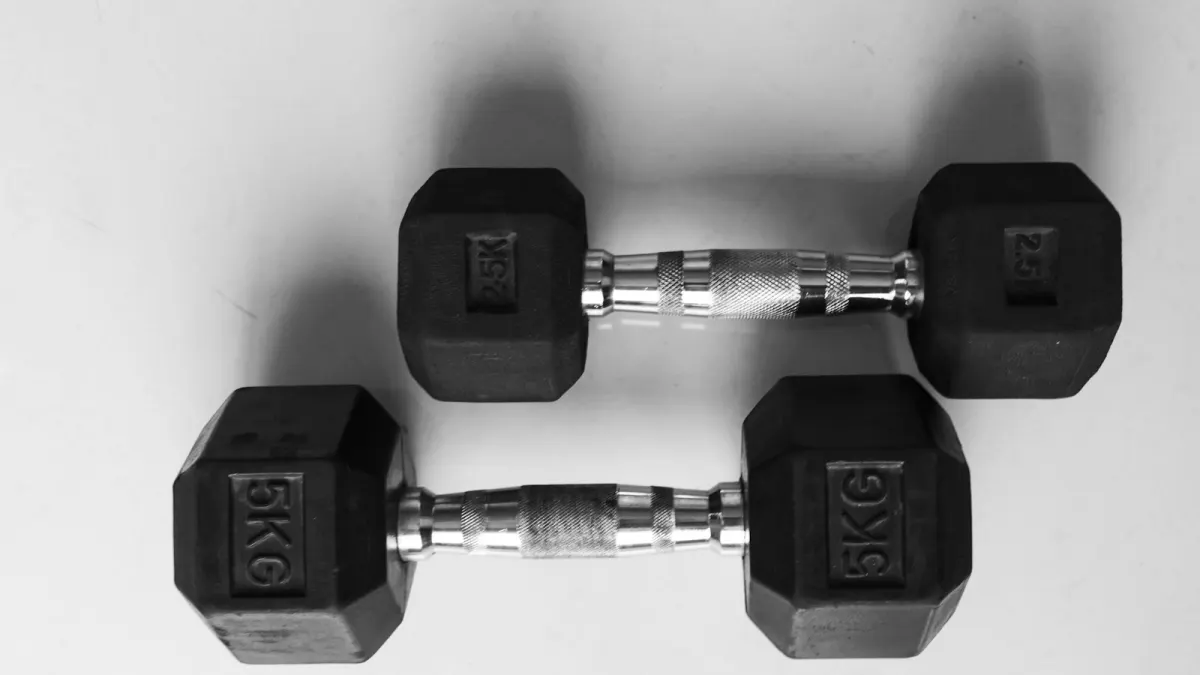
A dumbbell only workout plan can build just as much muscle as a gym full of machines, as long as you organize it well and keep progressing. The best setup for most people is four days a week, upper body and lower body twice each, with presses, rows, split squats and Romanian deadlifts at the core. Below is that complete program, a 3-day full-body version, and the tricks that keep you progressing when the next pair of dumbbells is a big jump.
Why dumbbells are enough
Dumbbells let you train every movement pattern you’d do with a barbell or machine: horizontal and vertical pressing, rowing, squatting, lunging, hinging and isolation work for arms, shoulders and calves. Each side works independently, which evens out left-right differences, and most people find dumbbell presses kinder on their shoulders and elbows than a straight bar.
The worry is usually about load: “my dumbbells only go to 24 kg.” For muscle growth, that matters less than you’d think. A network meta-analysis found similar hypertrophy across low, moderate and high loads, with heavy loads mainly helping maximal strength (Lopez et al., 2021). What you need is sets that end close to failure, and a way to make them harder over time. The plan below gives you both.
The 4-day dumbbell program
| Mon | Tue | Wed | Thu | Fri | Sat | Sun |
|---|---|---|---|---|---|---|
| Upper A | Lower A | Rest | Upper B | Lower B | Rest | Rest |
Hitting each muscle twice a week has consistently produced more growth than once a week in the research (Schoenfeld et al., 2016), and this layout does it in four sessions of about an hour.
You’ll need a pair of adjustable dumbbells (or a range of fixed pairs) and ideally an adjustable bench. No bench? Use the floor press instead of the bench press and a chest-supported row against a sturdy sofa back or a one-arm row braced on a chair.
Upper A
| Exercise | Sets × reps | Rest |
|---|---|---|
| Dumbbell bench press | 4 × 6–10 | 2 min |
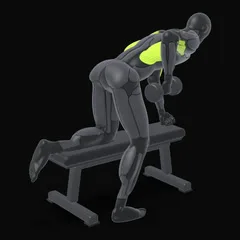
| One-arm dumbbell row | 4 × 8–12 per side | 90 s |
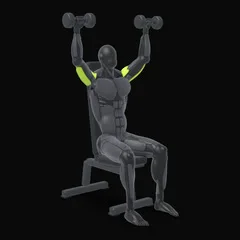
| Seated dumbbell shoulder press | 3 × 8–12 | 2 min |
| Dumbbell pullover | 2 × 10–15 | 90 s |
| Lateral raise | 3 × 12–20 | 60 s |
| Incline dumbbell curl | 3 × 10–12 | 60 s |
| Overhead triceps extension | 3 × 10–15 | 60 s |
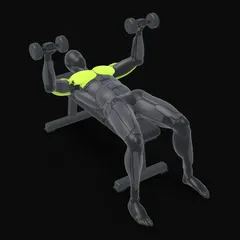
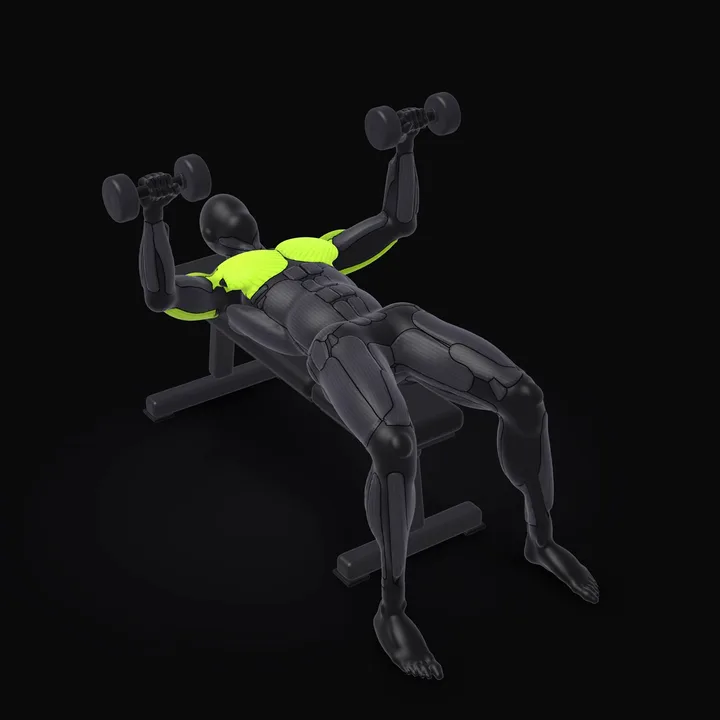 Dumbbell Bench PressSit on the end of the bench with the dumbbells on your thighs, then lie back bringing them beside your chest. Keep your feet on the floor and your shoulder blades pulled back.How to do the Dumbbell Bench Press →
Lower A
| Exercise | Sets × reps | Rest |
|---|---|---|
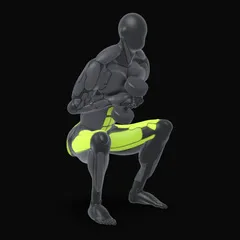
| Goblet squat | 3 × 10–15 | 2 min |
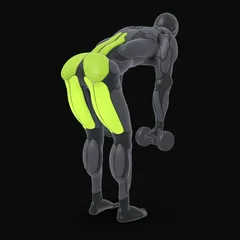
| Dumbbell Romanian deadlift | 4 × 8–12 | 2 min |
| Bulgarian split squat | 3 × 8–12 per leg | 90 s |
| Dumbbell hip thrust | 3 × 10–15 | 90 s |
| Single-leg calf raise | 3 × 10–15 per leg | 60 s |
| Dead bug | 2 × 8 per side | 45 s |
Upper B
| Exercise | Sets × reps | Rest |
|---|---|---|
| Incline dumbbell press | 4 × 8–12 | 2 min |
| Chest-supported dumbbell row | 4 × 10–12 | 90 s |
| Arnold press | 3 × 10–12 | 90 s |
| Dumbbell fly | 2 × 12–15 | 60 s |
| Rear delt fly | 3 × 12–20 | 60 s |
| Hammer curl | 3 × 10–12 | 60 s |
| Dumbbell skull crusher | 3 × 10–12 | 60 s |
Lower B
| Exercise | Sets × reps | Rest |
|---|---|---|
| Walking lunge or reverse lunge | 3 × 10–12 per leg | 2 min |
| Single-leg Romanian deadlift | 3 × 8–12 per leg | 90 s |
| Dumbbell step-up | 3 × 10–12 per leg | 90 s |
| Dumbbell sumo squat | 2 × 12–20 | 90 s |
| Standing calf raise | 3 × 15–20 | 60 s |
| Suitcase carry | 3 × 30 m per side | 60 s |
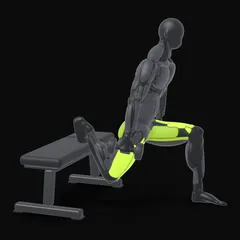
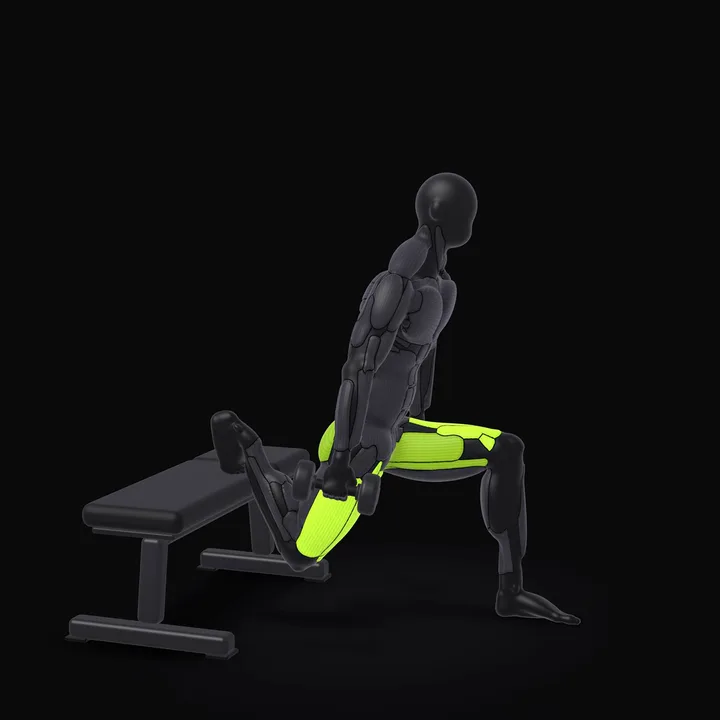 Dumbbell Bulgarian Split SquatStand in front of a bench and rest the top of your rear foot on it, holding a dumbbell in each hand. Lower straight down by bending your front knee until your thigh is nearly parallel to the floor.How to do the Dumbbell Bulgarian Split Squat →
The 3-day full-body dumbbell option
If four days won’t happen, train three non-consecutive days and alternate two sessions (A–B–A one week, B–A–B the next):
| Full body A | Full body B |
|---|---|
| Dumbbell bench press 3 × 8–10 | Incline dumbbell press 3 × 8–12 |
| One-arm row 3 × 8–12 per side | Chest-supported row 3 × 10–12 |
| Goblet squat 3 × 10–15 | Bulgarian split squat 3 × 8–12 per leg |
| Dumbbell Romanian deadlift 3 × 8–12 | Dumbbell hip thrust 3 × 10–15 |
| Lateral raise 3 × 12–20 | Seated shoulder press 3 × 8–12 |
| Curl + overhead extension, 2 × 10–12 each | Hammer curl + skull crusher, 2 × 10–12 each |
Warming up for dumbbell sessions
You don’t need a long warm-up, but don’t skip it either: dumbbell presses and split squats feel much better on warm joints. Five minutes is plenty:
- Two minutes of anything that raises your heart rate: brisk walking, a bike, jumping jacks.
- Ten bodyweight squats, ten hip hinges, ten band pull-aparts or arm circles.
- For the first exercise of the day, ramp up: one set of 10 with about half your working weight, one set of 5 with about 75 %, then start your working sets. Later exercises usually need one lighter set at most.
Full routines for different days are in how to warm up before lifting.
Your first 4 weeks: a worked example
Say you’re new-ish to lifting, you have adjustable dumbbells that go up in 2 kg steps per hand, and on day one you find that 2 × 14 kg (28 kg total) on the bench press gets you 9 reps with two left in the tank. Here’s how Upper A’s bench press might go:
| Week | Weight (total) | Reps (4 sets) | Decision |
|---|---|---|---|
| 1 | 28 kg | 9, 8, 8, 7 | Keep the weight |
| 2 | 28 kg | 10, 9, 9, 8 | Keep |
| 3 | 28 kg | 10, 10, 10, 9 | Keep, one set left to fill |
| 4 | 28 kg | 10, 10, 10, 10 | Top of range on all sets: go to 32 kg next week |
Week 5 at 32 kg might start at 7, 6, 6, 6. That’s fine: you’re back at the bottom of the range and climbing again. Run every exercise the same way, and start the first week a little conservatively. Sets should end with one to three reps in reserve, not in a grind.
What to do when you miss reps
Bad sessions happen. A simple set of rules keeps you from overreacting:
- Missed the bottom of the range once? Keep the same weight next session. One bad day is noise: sleep, stress or food.
- Missed it two sessions in a row? Drop to the previous dumbbell and work back up through the range. You’ll usually pass your old numbers within two or three weeks.
- Stalled on most lifts at once? That’s fatigue, not weakness. Take a deload week (below).
Deload, how long to run it, and what’s next
Every 6–8 weeks, or sooner if your joints ache and numbers drop across the board, take a deload week: same exercises, same weights, but half the sets and stop each set with three or four reps in reserve. You’ll come back fresher, and often stronger. More on timing in the deload week guide.
Run this program for 3–6 months, as long as most lifts are still moving up. When progress slows to a crawl even after a deload, change something meaningful: swap the main lifts for close variations (incline for flat, reverse lunges for split squats), move the rep ranges, or add a fifth day. If you get access to a gym, the dumbbell work transfers directly to a barbell program.
Swaps for common situations
| Situation | Swap | Instead of |
|---|---|---|
| No bench | Dumbbell floor press | Dumbbell bench press |
| No bench | One-arm row braced on a chair | Chest-supported row |
| Heaviest pair is too light for legs | Bulgarian split squat with a 3-second lowering | Goblet squat |
| Shoulders cranky overhead | Incline press at about 45° | Seated shoulder press |
| Lower back tired from RDLs | Hip thrust or single-leg RDL | Dumbbell Romanian deadlift |
| Very limited time | Pair a press and a row as a superset | Straight sets |
Beginners can start with 3 sets on everything and skip the pullovers and flyes for the first month. Intermediates who recover well can add a set to the first two exercises of each day.
How to progress when dumbbell jumps are big
This is the hard part of dumbbell training. Going from 10 kg to 12 kg per hand on lateral raises is a 20 % jump. On a barbell you’d never add 20 % in one go.
The answer is to progress in more ways than load. Use them in this order:
- Reps within the range. Most exercises have a wide range (8–12, 10–15). Fill it before going heavier.
- Reps above the range. If the next pair is too heavy, keep going to 15, 18 or 20 reps with the current pair. Higher-rep sets still build muscle when they’re hard. A study comparing adding load to adding reps found similar muscle growth in both groups (Plotkin et al., 2022).
- Tempo and pauses. A 3-second lowering and a 1–2 second pause in the stretched position (bottom of a press, bottom of a split squat) make the same weight much harder.
- An extra set. Add one set to the exercise for a few weeks.
- Then the heavier pair, starting at the bottom of the rep range, even if you only get 6 reps on the first set.
On legs, single-leg work does a lot of the progression for you. A Bulgarian split squat with two 20 kg dumbbells puts far more load on each leg than a goblet squat with one 20 kg dumbbell. For the principles behind all this, see how to apply progressive overload.
Log dumbbell weights consistently
A common source of confusion: is a “20 kg dumbbell press” 20 kg or 40 kg? It doesn’t matter which you choose, but you need to choose. Brick logs the total in your hands: two 20 kg dumbbells on a bench press are 40 kg, one 20 kg dumbbell on a one-arm row is 20 kg. That keeps dumbbell and barbell numbers comparable, and your progress charts make sense over time.
Choosing dumbbells for home
- Adjustable dumbbells save space and give you small steps. Look for a range of roughly 2.5–25 kg (5–55 lb) per hand, more if you’re already strong.
- Fixed pairs are durable and fast to switch between. If buying a few, pick light (for raises and rear delts), medium (for arms and shoulders) and heavy (for rows, presses and legs).
- An adjustable bench roughly doubles what you can do: flat and incline presses, chest-supported rows, hip thrusts and step-ups.
The rest of a home setup is covered in home gym essentials.
Tips for dumbbell-only training
- Getting heavy dumbbells into position. For presses, sit on the end of the bench with the dumbbells on your thighs, then kick them up one at a time as you lie back. Safer and easier than lifting them from the floor.
- Grip limiting your rows and RDLs? Use lifting straps. Your back and hamstrings can handle more than your hands can hold.
- Rest long enough on the big moves. Two minutes for presses, rows and split squats. Rushing makes the next set lighter and the session less productive.
- Balance pushing and pulling. The program has matching sets of rows for every press. Keep it that way if you add exercises.
If you have no dumbbells at all yet, the home workout without equipment gets you started until you do. And if you’re training to put on size, pair this plan with the bulking workout plan guidelines on volume and food.
Frequently asked questions
Can you build muscle with only dumbbells?
Yes. Dumbbells cover every movement pattern, from presses and rows to squats, lunges and hinges. The only real limit is how heavy your dumbbells go, which mostly affects legs once you're strong. Single-leg exercises and slower tempos push that limit back a long way.
What weight dumbbells should I buy for a home program?
Adjustable dumbbells that go from about 2.5 to 25 kg (5 to 55 lb) per hand cover most people for the first couple of years. If you buy fixed pairs, three pairs (light, medium and heavy) are enough to run this program, using reps and tempo to fill the gaps.
How do I log dumbbell weight: per dumbbell or total?
Pick one way and stick to it. Brick logs the total in your hands, so two 20 kg dumbbells are 40 kg and a single 20 kg dumbbell on a one-arm row is 20 kg. What matters is that you can compare this week's numbers with last week's.
Is a dumbbell bench press as good as a barbell bench press?
For building chest muscle, yes. Dumbbells allow a longer range of motion and let each arm work on its own. You'll typically handle a bit less total weight than on a barbell, which is normal and doesn't mean less growth.
How long should I run a dumbbell program before changing it?
As long as your numbers keep going up, usually 3 to 6 months with a deload every 6 to 8 weeks. Change exercises or rep ranges when progress stalls even after a deload, not just because you're bored after a few weeks.
How many days a week should I do a dumbbell workout?
Four days with the upper/lower version below, or three with the full-body option. Both train each muscle about twice a week, which is a solid target for muscle growth.
Sources
- Lopez P, Radaelli R, Taaffe DR, et al. (2021). Resistance Training Load Effects on Muscle Hypertrophy and Strength Gain: Systematic Review and Network Meta-analysis. Medicine & Science in Sports & Exercise
- Schoenfeld BJ, Ogborn D, Krieger JW (2016). Effects of Resistance Training Frequency on Measures of Muscle Hypertrophy: A Systematic Review and Meta-Analysis. Sports Medicine
- Plotkin D, Coleman M, Van Every D, Maldonado J, Oberlin D, Israetel M, et al., Schoenfeld BJ (2022). Progressive overload without progressing load? The effects of load or repetition progression on muscular adaptations. PeerJ