Knee pain when squatting is usually an overload problem, not a sign that squats are bad for you. The most common pattern is pain at the front of the knee, around or below the kneecap, after a jump in squat volume, load, depth or other activity like running. Most people improve by reducing the load to a level the knee tolerates, adjusting depth and stance, swapping in knee-friendly exercises for a few weeks, and strengthening the quads and hips before building back. Swelling, locking, giving way or pain after a twist needs a professional check.
What’s causing your knee pain?
| Where it hurts | Common name | Typical pattern |
|---|---|---|
| Around or behind the kneecap | Patellofemoral pain | Worse with squats, stairs, sitting long with bent knees |
| Just below the kneecap | Patellar tendon pain | Worse with jumping, heavy squats, the first reps of a session |
| Inner or outer joint line | Possible meniscus or ligament issue | Often after a twist; swelling, catching, locking |
| Outside of the knee, above the joint | Iliotibial band irritation | Common in runners and cyclists |
The first two are by far the most common in lifters and respond well to load management and exercise. The third needs a professional assessment.
The usual triggers
- A sudden jump in squat volume, frequency or weight.
- New exercises: lots of lunges, jumping, or a new program with more leg work.
- Adding running or sport on top of leg training.
- Very heavy partial squats with a lot of load.
- Fatigue: technique slipping in the last sets.
Squat myths that worry people
“Knees should never go past your toes.” In a deep squat with an upright torso, your knees have to travel forward. A biomechanics review by Escamilla (2001) noted that restricting forward knee travel reduces knee stress but increases stress at the hips and lower back. For healthy knees, letting them travel naturally is fine.
“Deep squats ruin your knees.” Hartmann, Wirth and Klusemann (2013) reviewed squat depth and found no evidence that deep squats with proper technique are more harmful than partial squats. In fact, the heavier loads used in quarter squats may expose the knees and spine to more stress. Depth isn’t the enemy; too much load too soon is.
Step 1: manage the load
Your knee is irritated because it’s doing more than it can currently tolerate. Lower the demand without stopping altogether:
| During exercise | Next morning | Action |
|---|---|---|
| 0–3/10 | Back to normal | Continue, progress slowly |
| 4–5/10 | Slightly worse | Reduce load, sets or depth |
| Over 5/10 | Clearly worse | Stop that exercise; use swaps below |
In practice, many lifters can keep squatting at 50–70 % of their usual weight, or to a box at a depth that doesn’t hurt, while the knee calms down.
Step 2: adjust technique and setup
Small changes often reduce pain right away. Try one at a time:
- Stance width and toe angle. Slightly wider with toes turned out 15–30° suits many people.
- Knees following toes. Let your knees track in line with your feet rather than caving in.
- Control the descent. 2–3 seconds down, no bouncing at the bottom.
- Depth. Temporarily squat to a box or bench at a pain-free height. A Barbell Box Squat makes depth consistent.
- Heel elevation or squat shoes can help if ankle mobility limits you, though they shift slightly more work to the knees: test how it feels.
- Bar position. A low-bar squat moves some load from knees to hips.
More detail in our guide on how to squat properly.
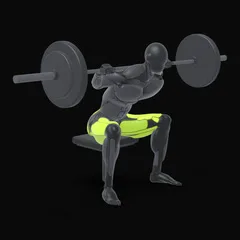
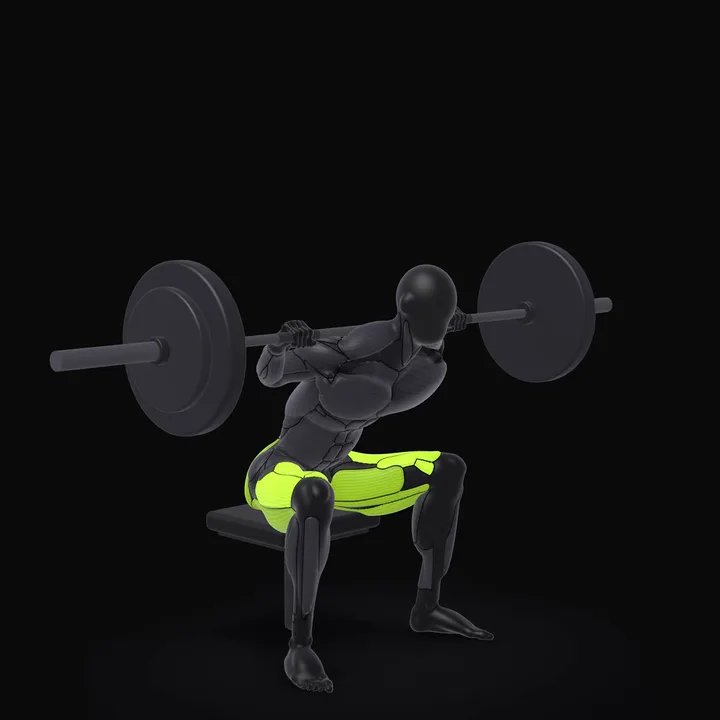 Barbell Box SquatThe box squat allows you to squat to desired depth and develop explosive strength in the squat movement. Begin in a power rack with a box at the appropriate height behind you. Typically, you would aim for a box height that brings you to a parallel squat, but you can train higher or lower if desired. Begin by stepping under the bar and placing it across the back of the shoulders. Squeeze your shoulder blades together and rotate your elbows forward, attempting to bend the bar across your shoulders. Remove the bar from the rack, creating a tight arch in your lower back, and step back into position. Place your feet wider for more emphasis on the back, glutes, adductors, and hamstrings, or closer together for more quad development. Keep your head facing forward.How to do the Barbell Box Squat →
Step 3: swap exercises for a few weeks
| Instead of | Try | Why |
|---|---|---|
| Deep back squat | Box squat to a pain-free height | Controls depth and speed |
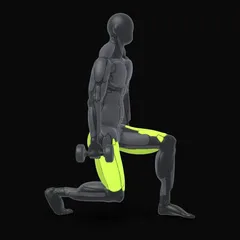
| Jumping, lunges with forward step | Dumbbell Reverse Lunge | Less shear on the front of the knee |
| Heavy leg press | Wall Sit at a pain-free angle | Isometrics often calm tendon pain |
| Many quad-heavy sets | Romanian deadlifts, hip thrusts, leg curls | Keep training the legs, offload the knee |
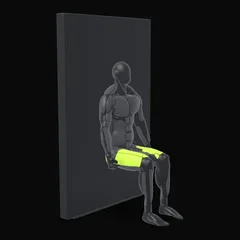
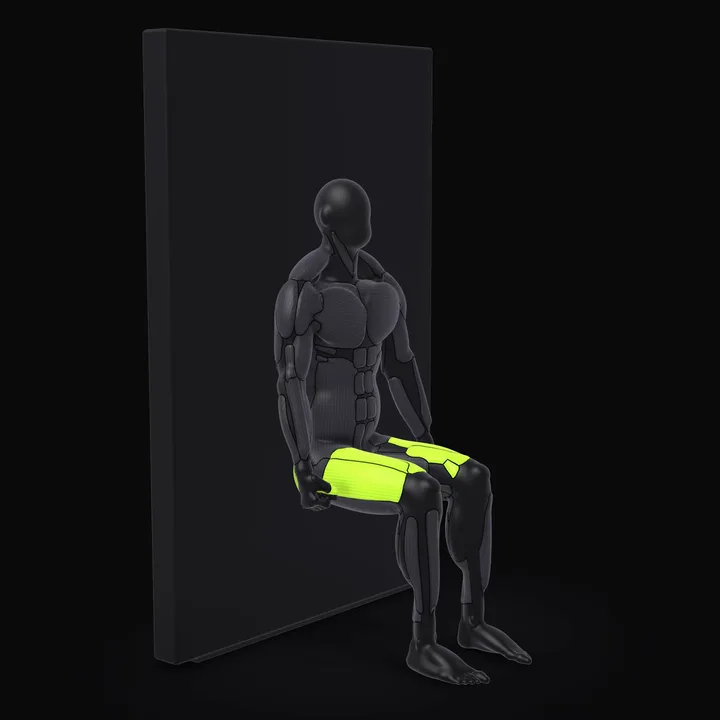 Wall SitLean your back against a wall and slide down until your thighs are parallel to the floor. Keep your knees over your ankles at 90 degrees.How to do the Wall Sit →
Isometric holds such as wall sits or a static leg extension (30–45 seconds, 3–5 sets) are often comfortable and can reduce pain in the short term for some people.
Step 4: strengthen the quads and hips
For kneecap-related pain, exercise is the main treatment. The 2018 consensus statement on patellofemoral pain (Collins et al.) recommends exercise therapy, particularly combined hip and knee strengthening, as the core of treatment.
A simple routine, two to three times a week:
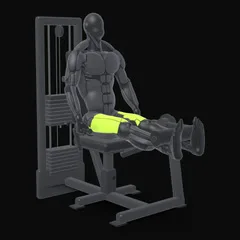
- Leg Extension in a pain-free range: 3 × 12–15, slow
- Box squat or leg press at a comfortable depth: 3 × 8–12
- Side-lying hip abduction or banded lateral walks: 3 × 15–20
- Glute Bridge or hip thrust: 3 × 10–12
- Step-ups on a low box: 3 × 8–10 per leg
Increase load or depth week by week as long as the pain rule stays green.
Step 5: return to full squats
- When box squats at your usual depth are pain-free for two weeks, return to free squats at about 60 % of your old working weight.
- Add 2.5–5 kg (5–10 lb) a week if your knee stays settled.
- Reintroduce deeper ranges gradually.
- Keep some knee-strengthening work in your program afterwards.
Track the rebuild so you don’t jump back too fast on a good day. Brick shows last time’s weight and reps on every set and an estimated strength trend for each exercise, so steady small steps are easy to plan and see. To get your squat back to where it was and beyond, see how to increase your squat.
Prevention
- Increase leg volume and intensity gradually.
- Warm up properly with lighter squat sets; see how to warm up before lifting.
- Plan leg days around running, football or other sports.
- Keep strengthening quads and hips year-round, not only when it hurts.
- Take a lighter week when knees start grumbling, rather than waiting for pain. For a full leg session that balances knee- and hip-dominant work, see our leg day workout.
Frequently asked questions
Is it bad if my knees go past my toes when squatting?
No. For most people, knees travelling forward past the toes is normal and necessary for a deep, upright squat. Restricting it shifts load to the hips and lower back. If your knees hurt, it's worth experimenting with stance and depth, but the knees-past-toes rule isn't a law.
Are deep squats bad for your knees?
Not for healthy knees with good technique. Research hasn't shown deep squats to be more harmful than partial squats; very heavy half squats can actually create high stress. If deep squats hurt right now, use a depth you tolerate and gradually work back down.
Should I wear knee sleeves or wraps?
Knee sleeves add warmth and some people feel more comfortable in them; they're fine to use. Tight knee wraps are a powerlifting tool for maximal attempts, not a fix for pain.
What does it mean if my knee clicks when I squat?
Painless clicking or cracking is very common and usually harmless. If clicking comes with pain, swelling, locking or the knee giving way, get it checked.
Sources
- Escamilla RF (2001). Knee biomechanics of the dynamic squat exercise. Medicine & Science in Sports & Exercise
- Hartmann H, Wirth K, Klusemann M (2013). Analysis of the load on the knee joint and vertebral column with changes in squatting depth and weight load. Sports Medicine
- Collins NJ, Barton CJ, van Middelkoop M, Callaghan MJ, Rathleff MS, Vicenzino BT, et al. (2018). 2018 Consensus statement on exercise therapy and physical interventions (orthoses, taping and manual therapy) to treat patellofemoral pain. British Journal of Sports Medicine