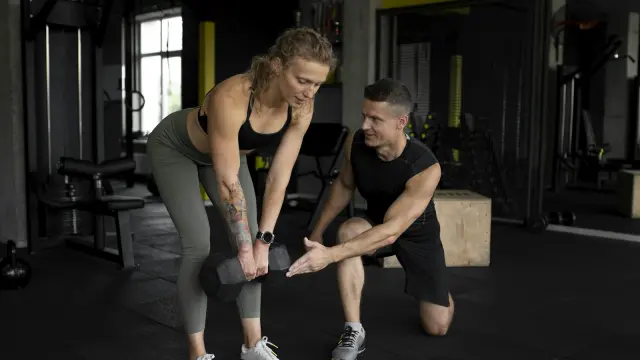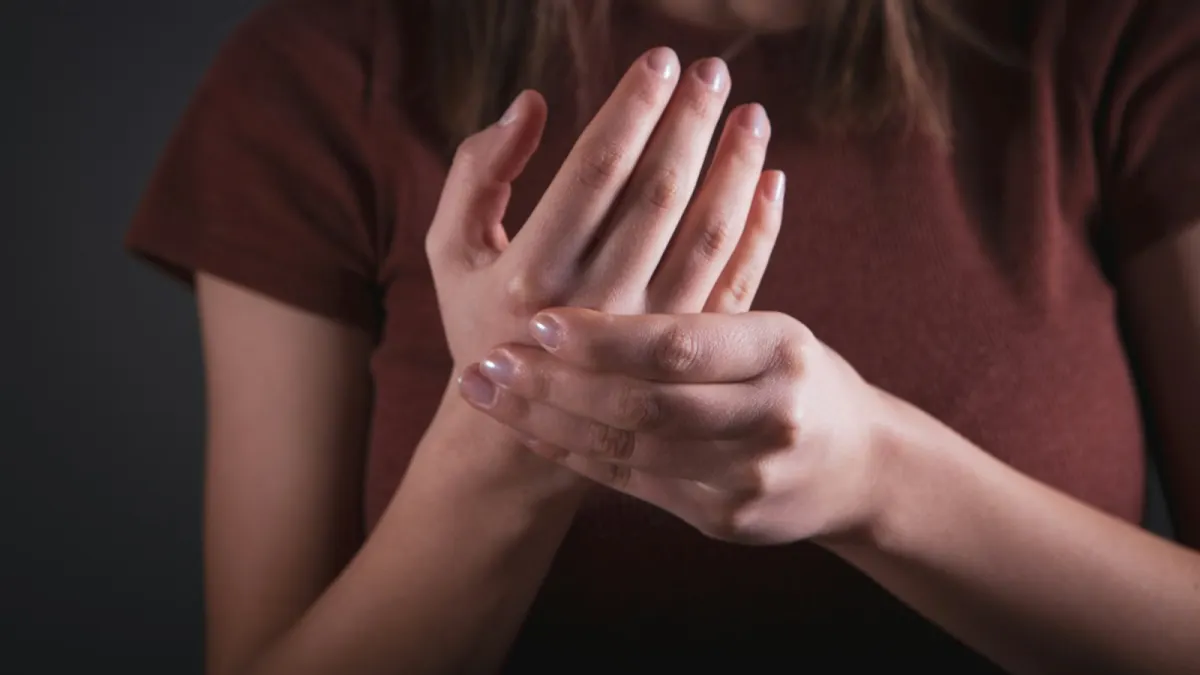
Elbow pain from lifting is most often a tendon problem: pain on the outside of the elbow (tennis elbow, lateral epicondylalgia) or the inside (golfer’s elbow, medial epicondylalgia). It usually builds gradually from too much gripping, curling or pressing volume too quickly, or awkward grips like a straight bar. The fix is rarely total rest: reduce the painful load, change grips, swap exercises, and strengthen the forearm gradually. Sudden pain with a pop, swelling or bruising needs a doctor quickly.
Where does it hurt?
| Location | Common name | Often aggravated by |
|---|---|---|
| Outside of the elbow | Tennis elbow (lateral) | Gripping, reverse curls, pull-ups, rows, wrist extension, carrying |
| Inside of the elbow | Golfer’s elbow (medial) | Curls, chin-ups, pull-ups, heavy grip work, pressing with a strong wrist flex |
| Back of the elbow | Triceps tendon | Skull crushers, dips, heavy close-grip bench |
| Front, deep | Biceps tendon (distal) | Heavy curls, chin-ups; sudden pain + bruising needs urgent care |
Despite the names, you don’t need to play tennis or golf. In lifters, these are overuse problems: the tendon is asked to do more than it’s adapted to.
Why lifters get elbow pain
- Rapid jumps in volume. A new program with lots of pull-ups, rows and curls; adding an “arm day” on top of everything else.
- Grip-intensive training. Heavy deadlifts without straps, farmer’s carries, thick bars.
- Straight-bar exercises that lock the wrists and forearms into one rotation, like straight-bar curls and skull crushers.
- Lots of new exercises at once, especially after a break.
- Outside activities: a weekend of DIY, climbing, or hours of typing and mouse use.
Managing the load
Coombes, Bisset and Vicenzino (2015) describe tennis elbow management as education, load modification and progressive exercise, rather than rest or passive treatments. The same principle applies to the other elbow tendons.
Use the pain rule:
| During exercise | Next morning | Verdict |
|---|---|---|
| Up to 3/10 | Back to baseline | Fine, continue |
| 4–5/10 | Slightly worse | Reduce load or swap |
| Over 5/10, or sharp | Worse | Stop that exercise for now |
Short-term pain relief methods (ice, a counterforce strap) can make training more comfortable but don’t fix the cause. Injections are often tempting: in a trial by Bisset and colleagues (2006), corticosteroid injections gave the fastest short-term relief for tennis elbow, but had higher recurrence and worse results at one year than physiotherapy with exercise. Talk this through with your doctor.
Exercise swaps for sore elbows
| Instead of | Try | Why |
|---|---|---|
| Straight-bar curls | EZ Bar Biceps Curl or hammer curls | Wrists and forearms in a more natural position |
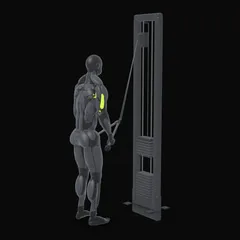
| Skull crushers | Cable Rope Pushdown | Less stress at the elbow; adjustable hand position |
| Heavy overhead triceps work | Pushdowns with a light, controlled load | Reduces load at the stretched position |
| Wide pull-ups | Neutral-grip pulldowns or pull-ups | Less forearm strain |
| Heavy grip-dependent pulls | Use lifting straps | Takes the forearm out of it |
| Barbell bench with a tight grip | Dumbbells, neutral grip | Lets the wrist and elbow find their path |
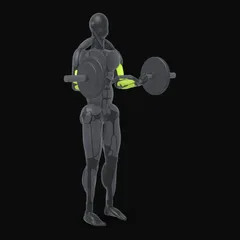
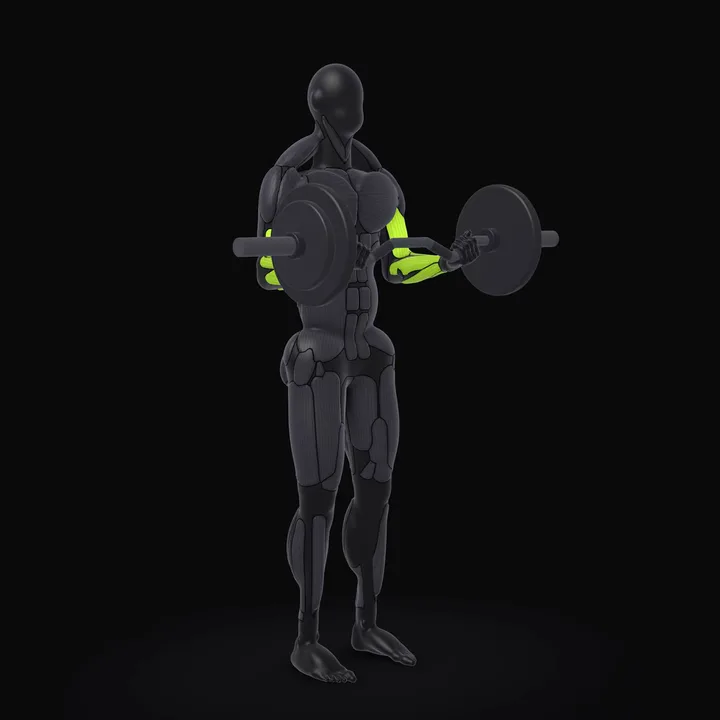 EZ Bar Biceps CurlGrip the EZ bar on its angled sections with palms facing up. Stand tall with your elbows close to your sides.How to do the EZ Bar Biceps Curl →
Reduce total arm isolation volume temporarily too. Your biceps and triceps get plenty of work from rows and presses while the elbow settles.
Strengthening the forearm
Progressive loading is the core of tendon rehab. Start light enough that pain stays at or below 3/10.
For tennis elbow (outside):
- Dumbbell Reverse Wrist Curl, slow on the way down (3–4 s): 3 × 12–15
- Isometric wrist extension holds (push the back of your hand against your other hand or a table): 5 × 30–45 s
- Reverse curls with a light EZ bar: 2–3 × 12
For golfer’s elbow (inside):
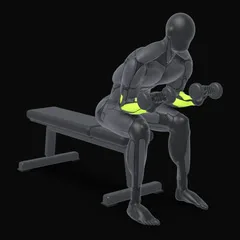
- Dumbbell Wrist Curl, slow lowering: 3 × 12–15
- Isometric wrist flexion holds: 5 × 30–45 s
- Light pronation and supination with a hammer or a dumbbell held at one end: 2–3 × 12
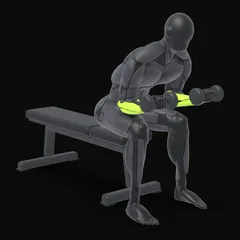
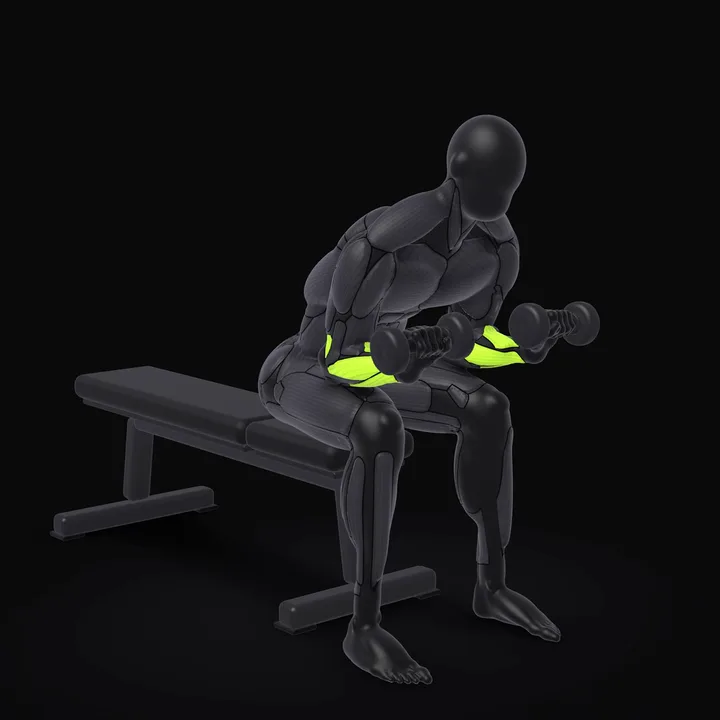 Dumbbell Reverse Wrist CurlSit with your forearms on your thighs and a dumbbell in each hand, palms facing down. Let your wrists hang past your knees.How to do the Dumbbell Reverse Wrist Curl →
Do these 3–4 times a week. Increase weight slowly, every week or two, as long as pain stays within the rule. Isometric holds are useful early on or before training, as they’re often comfortable even when other exercises aren’t.
Returning to normal training
- When your swaps feel good and daily activities are pain-free, reintroduce the original exercise with a light load and fewer sets.
- Add weight or sets gradually over a few weeks.
- Keep the forearm work in your program for at least a couple of months after the pain goes.
Tendons adapt more slowly than muscles, so expect weeks to months. Recording what you did helps you avoid jumping too fast on a good day. In Brick, last session’s weight and reps appear on every set, you can see how your total arm volume changes week to week, and notes on an exercise help you remember which grip felt best.
How to prevent elbow pain
- Add new exercises and volume gradually, especially pulling and arm work.
- Use straps for heavy pulling when grip isn’t the goal.
- Vary grips: EZ bars, dumbbells, cables, neutral handles.
- Warm up the forearms before heavy pulling or arm sessions; see how to warm up before lifting.
- Build grip strength progressively; see grip strength exercises.
- Watch total arm volume: if you train arms hard twice a week plus heavy rows and pull-ups, that adds up. Our guide on how to get bigger arms covers sensible volume, and how to grow biceps has curl variations that are kinder to the elbows.
When to see a professional
- No improvement after 6–8 weeks of load changes and exercises
- Pain at rest or at night
- Numbness or tingling in the fingers
- Weakness that doesn’t match the pain
- Pain after a sudden injury
A physiotherapist can confirm which tendon is involved, rule out nerve problems, and build a loading plan matched to your training.
Frequently asked questions
Should I stop lifting with tennis or golfer's elbow?
Usually not completely. Tendons respond best to the right amount of load, not to total rest. Reduce or swap the exercises that hurt, keep training everything else, and add specific forearm strengthening. Stop and get it checked if pain is severe or getting steadily worse.
How long does elbow tendinopathy take to heal?
It's often slow: several weeks to a few months with good load management, sometimes longer. Most cases do improve. If there's no progress after six to eight weeks of sensible changes, see a physiotherapist.
Do elbow braces or straps help?
A counterforce strap just below the elbow can reduce pain during activity for some people. It's a short-term comfort tool, not a fix; the long-term solution is managing load and strengthening the forearm.
Is a cortisone injection a good idea for tennis elbow?
Injections can reduce pain quickly, but research shows higher recurrence and worse long-term outcomes compared with physiotherapy or simply waiting. Discuss the trade-offs with your doctor.
Sources
- Coombes BK, Bisset L, Vicenzino B (2015). Management of lateral elbow tendinopathy: one size does not fit all. Journal of Orthopaedic & Sports Physical Therapy
- Bisset L, Beller E, Jull G, Brooks P, Darnell R, Vicenzino B (2006). Mobilisation with movement and exercise, corticosteroid injection, or wait and see for tennis elbow: randomised trial. BMJ