To warm up before lifting, spend 3–5 minutes moving easily (bike, rower, brisk walk or a few bodyweight movements), then do 3–5 progressively heavier warm-up sets of your first exercise, starting with the empty bar and ending just below your working weight, with fewer reps as the weight climbs. That’s it: about 10 minutes. Skip long static stretching and elaborate activation routines; they take time and don’t make your lifting better. Below is the full routine, a warm-up set table you can copy, and how to adjust it.
Part 1: general warm-up (3–5 minutes)
The goal is simple: raise your body temperature and get blood moving. Any of these work:
- 3–5 minutes on a bike, rower or cross-trainer at an easy pace.
- A brisk incline walk.
- A short circuit: 10 bodyweight squats, 10 arm circles each way, 10 band pull-aparts, 5 lunges per leg, repeated twice.
You should feel warm, maybe slightly sweaty, but not tired.
Add mobility only where you need it
If a joint is stiff and limits a lift, add one or two targeted drills for it:
| Stiff area | Quick drill |
|---|---|
| Ankles (heels lift in squats) | Knee-to-wall ankle rocks, 10 per side |
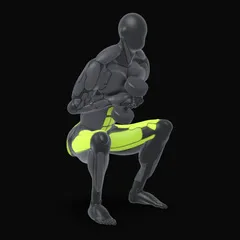
| Hips (can’t reach depth) | Goblet squat hold at the bottom, 30–60 s |
| Upper back and shoulders | Band pull-aparts, arm circles, wall slides |
| Hamstrings | Leg swings, a few slow bodyweight good mornings |
A full routine for chronic stiffness is in mobility routine for lifters. Most people don’t need it before every session.
Part 2: warm-up sets for your first lift
This is the important part. Warm-up sets prepare the exact muscles, joints and movement pattern you’re about to load, and give you a chance to check technique. A systematic review on upper body warm-ups found good evidence that warm-ups including sets with resistance improve performance in the work that follows (McCrary et al., 2015).
Warm-up set table
| Working weight | Warm-up sets (weight × reps) |
|---|---|
| 40 kg (95 lb) | Bar × 10, 30 kg × 5 |
| 60 kg (135 lb) | Bar × 10, 40 kg × 5, 50 kg × 3 |
| 80 kg (175 lb) | Bar × 10, 40 kg × 5, 60 kg × 3, 70 kg × 2 |
| 100 kg (225 lb) | Bar × 10, 50 kg × 5, 70 kg × 3, 85 kg × 2, 92.5 kg × 1 |
| 140 kg (315 lb) | Bar × 10, 60 kg × 5, 90 kg × 3, 110 kg × 2, 125 kg × 1, 132.5 kg × 1 |
A rule of thumb: start with the empty bar, then go up in roughly even jumps to about 90 % of your working weight. Reps drop as the weight rises, so you don’t tire yourself out. Rest 30–60 seconds between the early sets and 1–2 minutes before your first work set.
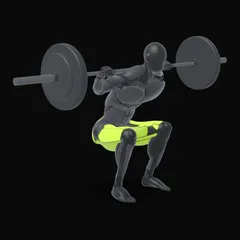
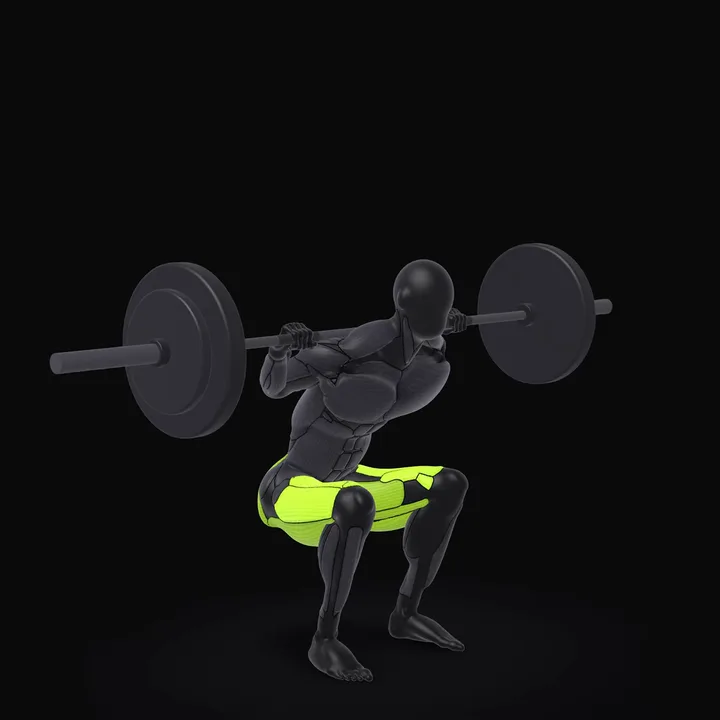 Barbell SquatPlace the bar on your upper back, not on your neck, and step out of the rack. Stand with feet slightly wider than shoulder width, toes turned out a little.How to do the Barbell Squat →
Later exercises
- Second compound lift (for example rows after bench): one set at about 50–60 % of your working weight for 5–8 reps.
- Machines and isolation work: no warm-up sets. Do the first few reps of the first set with extra control, or start a little lighter.
What to skip
Long static stretching
Holding stretches for a minute or more right before lifting can cause small, short-lived drops in strength and power. A review of the research found these impairments were mostly seen with long stretch durations, while short static stretches had minor effects and dynamic stretching tended to be neutral or helpful (Behm & Chaouachi, 2011). If a quick 15–30 second stretch helps a stiff area feel better, that’s fine. Save longer stretching for after your session or a separate day; should you stretch before or after a workout goes deeper.
Elaborate activation routines
Twenty minutes of band walks, foam rolling and activation drills before every session isn’t necessary. A couple of drills for a specific problem can help; a long routine mostly eats training time.
Warming up to fatigue
If your warm-up leaves you out of breath or your legs burn before the first work set, it’s too much. Fewer reps on the heavier warm-up sets fix this.
Adjusting your warm-up
| Situation | Adjustment |
|---|---|
| Cold gym, winter, early morning | Add 2–3 minutes of cardio and one extra warm-up set |
| Heavy day or max attempts | More warm-up sets with smaller jumps and singles near the top |
| Light or high-rep day | 2–3 warm-up sets are enough |
| Old injury that’s sensitive | Add a specific drill and an extra light set for that exercise |
| Short on time | Skip the cardio; do bodyweight movement and your ramp-up sets |
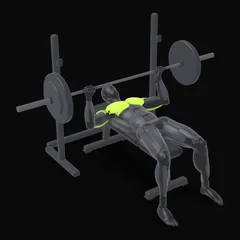
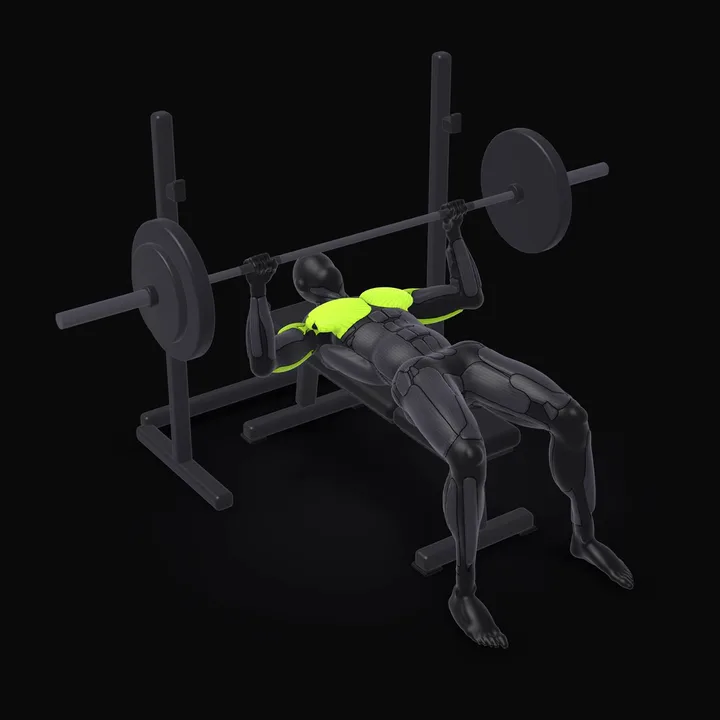 Barbell Bench PressLie on the bench with your eyes under the bar and your feet planted on the floor. Grip the bar slightly wider than shoulder width and pull your shoulder blades back and down.How to do the Barbell Bench Press →
Warm-up sets don’t count as work sets
Warm-up sets aren’t hard enough to count toward your weekly volume, and they shouldn’t be. Log your work sets separately so your training numbers reflect the real work. That’s also why your rest timer matters most between work sets, not during the warm-up.
A complete 10-minute example (squat day)
- 4 minutes on a bike, easy pace.
- 10 bodyweight squats, 10 leg swings per leg, 30-second goblet squat hold.
- Bar × 10, 50 kg × 5, 70 kg × 3, 85 kg × 2.
- First work set at 100 kg.
Then, before your second exercise (say, Romanian deadlifts), one set at about half your working weight. Done. For more on technique during those warm-up sets, see how to squat properly.
Frequently asked questions
How long should a warm-up before lifting be?
About 5 to 15 minutes in total: a few minutes of easy cardio or dynamic movement, then progressively heavier warm-up sets of your first exercise. Heavier sessions and colder days need the longer end.
Should I stretch before lifting weights?
Long static stretches (holding each for a minute or more) right before lifting can slightly reduce strength and aren't needed. Short dynamic movements are better. If a brief static stretch helps a stiff area feel better, 15 to 30 seconds is fine.
How many warm-up sets should I do?
For your first heavy compound lift, usually 3 to 5 sets that build up from the empty bar to just below your working weight, with reps decreasing as the weight rises. For later exercises, one lighter set is usually enough.
Do I need to warm up for isolation exercises?
Usually not separately. By the time you get to curls or lateral raises, you're already warm. Use your first set at a slightly lighter weight or just do the first few reps with extra control.
Does warming up prevent injuries?
It likely helps, and it clearly improves performance in your first sets. More important for injury risk are sensible loads, good technique and gradual increases in training.
Sources
- McCrary JM, Ackermann BJ, Halaki M (2015). A systematic review of the effects of upper body warm-up on performance and injury. British Journal of Sports Medicine
- Behm DG, Chaouachi A (2011). A review of the acute effects of static and dynamic stretching on performance. European Journal of Applied Physiology