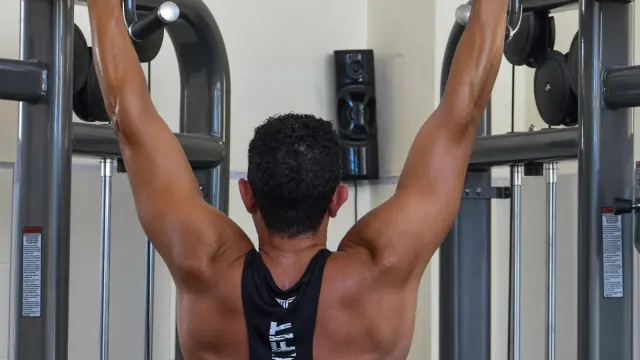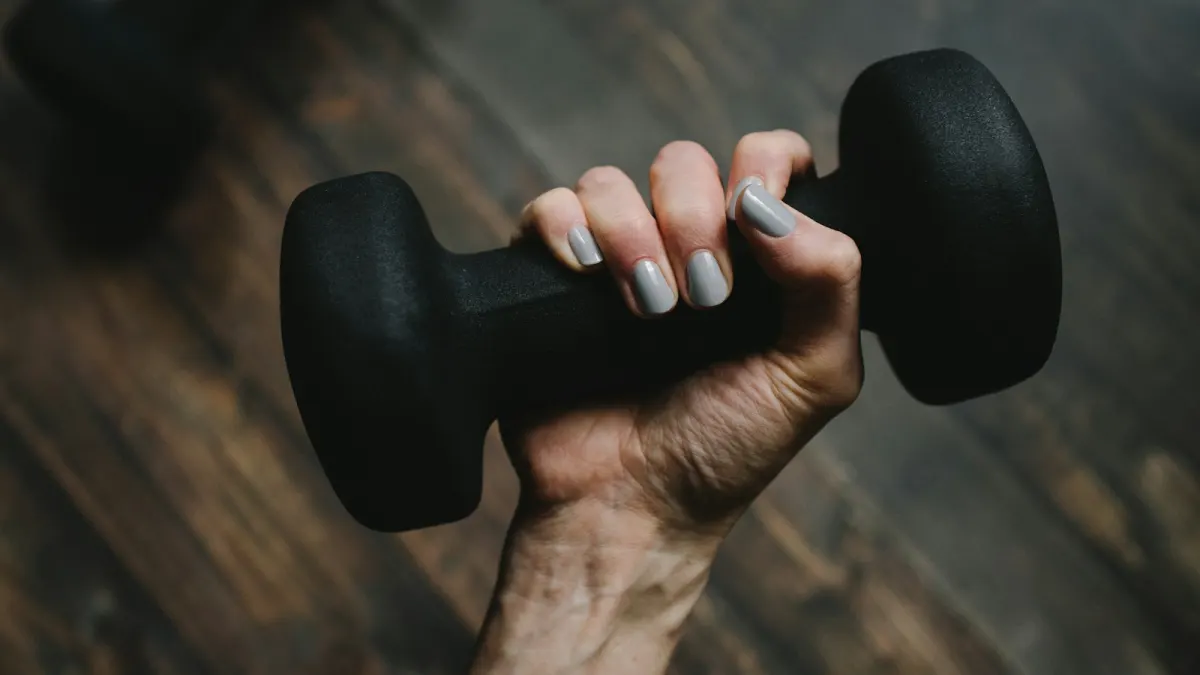
The best grip strength exercises are the ones that make you hold heavy things for time: farmer’s carries, dead hangs, and holds at the top of a deadlift. Add pinch grips for your fingers and thumb, and wrist curls and reverse curls for forearm size, two or three times a week, and your grip will stop limiting your rows, deadlifts and pull-ups within a few weeks. Below is why grip gives out first, the exercises worth doing, and a simple routine.
Why your grip limits your pulling
Your back and legs are much stronger than your hands. On a heavy deadlift, row or set of pull-ups, the bar is trying to open your fingers the whole time. When your grip tires, your nervous system reduces how hard the bigger muscles can pull, and the set ends before your back is done. That’s why so many people find their deadlift “sticks” with the bar slipping, or their last pull-up reps fail at the hands, not the lats.
Is grip strength important beyond the gym?
Grip is one of the simplest markers of overall strength. In a study of nearly 140,000 adults across 17 countries, each 5 kg lower grip strength was linked to about 16 % higher risk of death from any cause over four years (Leong et al., 2015). This is an association, not proof that grip training extends life; people with strong grips tend to be stronger and more active overall. But a strong grip is useful for carrying shopping, opening jars, climbing and every pulling exercise in the gym.
The three types of grip
| Type | What it is | Trained by |
|---|---|---|
| Supporting | Holding a load for time | Carries, hangs, deadlift holds |
| Crushing | Squeezing something closed | Thick handles, grippers, towel pull-ups |
| Pinching | Thumb against fingers | Plate pinches, holding dumbbell heads |
Wrist and forearm strength (wrist curls, extensions, rolling) supports all three and builds forearm size.
The best grip strength exercises
Farmer’s carry
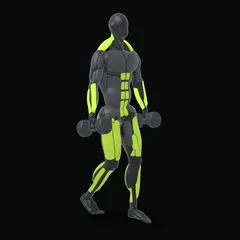
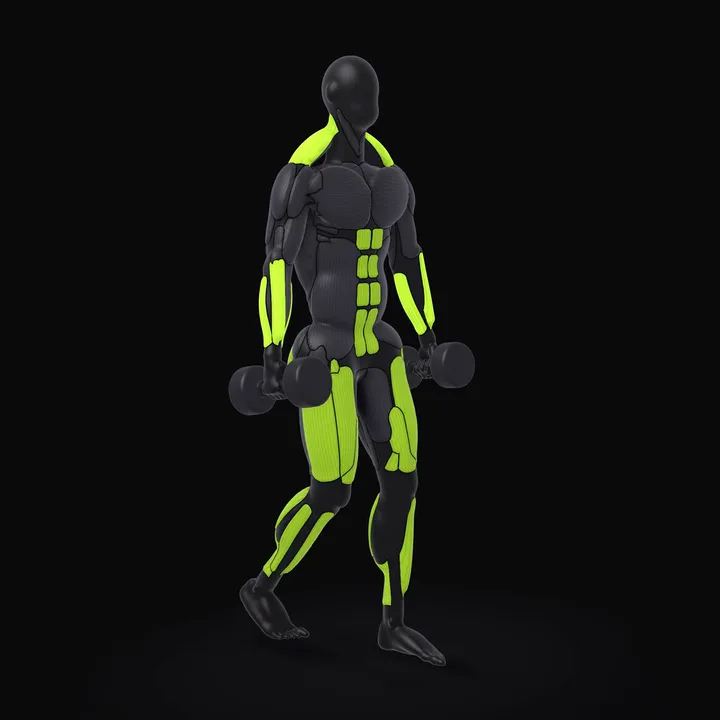 Dumbbell Farmer's WalkPick up a heavy dumbbell in each hand, lifting with a flat back. Stand tall with your chest up, shoulders down and core braced.How to do the Dumbbell Farmer's Walk →
Pick up two heavy dumbbells, kettlebells or trap-bar handles and walk with them. Stand tall, shoulders back, short quick steps. Farmer's carries train grip, traps, core and posture at once, which is why they’re the first exercise on this list. Start with a total weight around your body weight (both hands combined) for 30–40 metres, and build up.
The one-sided version, the suitcase carry, adds a strong core challenge as you resist leaning to the side.
Dead hang
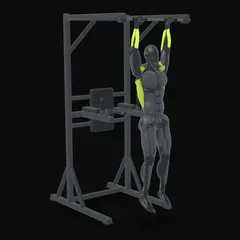
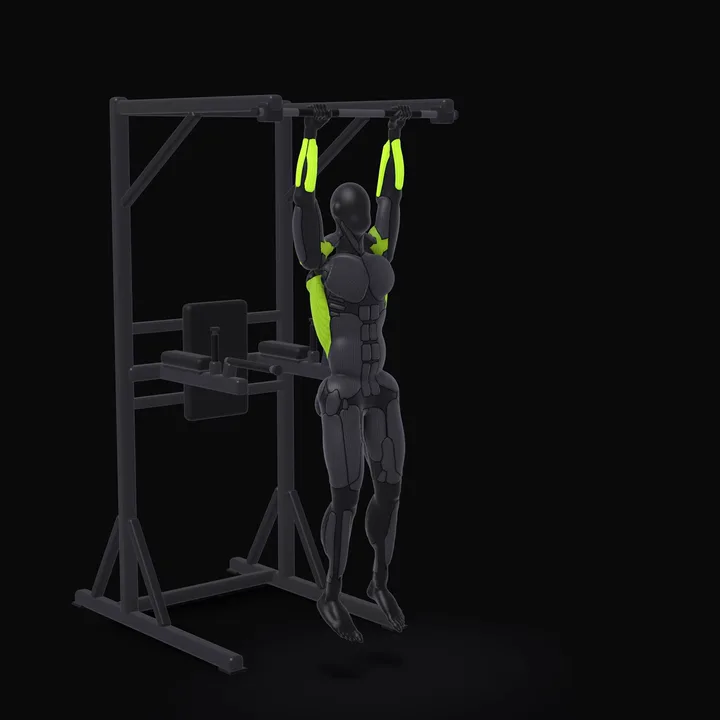 Dead HangGrab the bar with palms facing forward at shoulder width. Hang with straight arms and your feet off the floor.How to do the Dead Hang →
Hang from a pull-up bar with straight arms for as long as you can. Dead hangs build supporting grip and are great for pull-up endurance. When you can hang for 60 seconds, add weight with a belt, or progress to one-arm hangs (assisted with your other hand on a strap).
Holds at the top of a deadlift
After your last deadlift set, or as a separate exercise, hold a heavy barbell at lockout for 10–20 seconds. Use a weight above your working weight, with a double overhand grip (both palms facing you). It’s direct practice for the exact position that fails in heavy pulls. A farmer's hold with dumbbells or a trap bar does the same.
Plate pinch
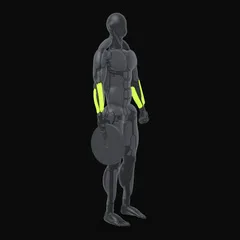
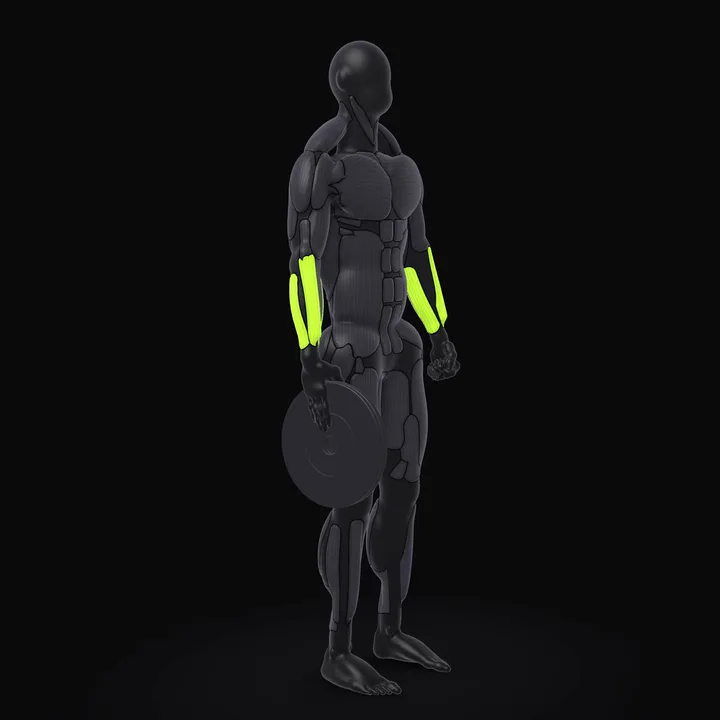 Plate Pinch HoldGrab two wide-rimmed plates and put them together with the smooth sides facing outward Use your fingers to grip the outside part of the plate and your thumb for the other side thus holding both plates together. This is the starting position.How to do the Plate Pinch Hold →
Hold two plates together, smooth sides out, between your fingers and thumb, for time. Plate pinches build thumb strength, which is often the weak link in grip. Start with two 5 kg (10 lb) plates and work up.
Wrist and forearm work
- Wrist curls (palms up) and reverse wrist curls (palms down) for 12–20 reps.
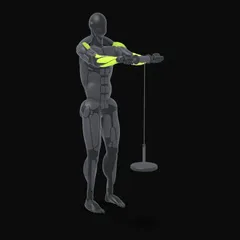
- Wrist roller: roll a weight up and down on a rope. Simple and brutally effective.
- Hammer curls and reverse curls for the brachioradialis, the big muscle on top of the forearm.
- Finger curls with a barbell: let the bar roll down to your fingertips, then curl it back into your palm.
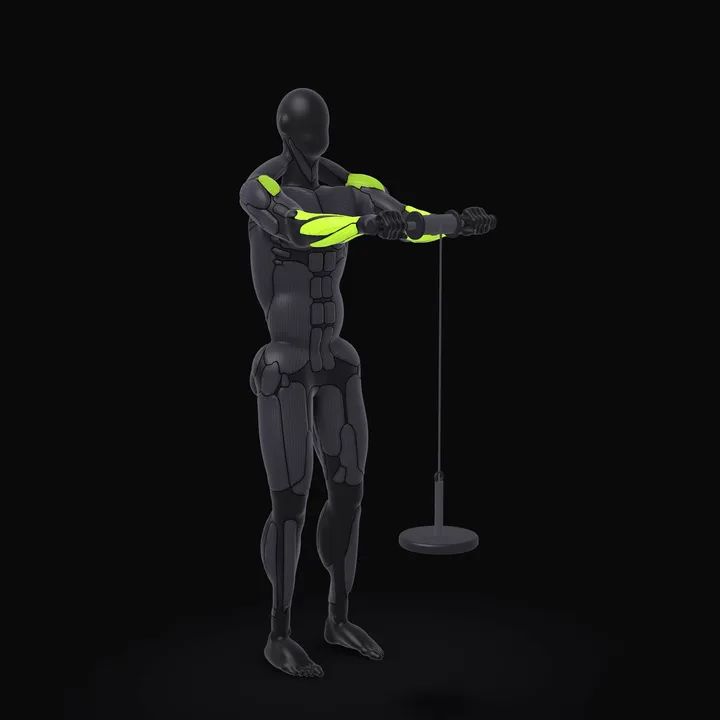 Wrist RollerTo begin, stand straight up grabbing a wrist roller using a pronated grip (palms facing down). Your feet should be shoulder width apart. Slowly lift both arms until they are fully extended and parallel to the floor in front of you. Note: Make sure the rope is not wrapped around the roller. Your entire body should be stationary except for the forearms. This is the starting position.How to do the Wrist Roller →
A simple grip routine
Add one of these blocks to the end of two or three sessions a week. Alternate A and B.
Grip block A (supporting grip)
| Exercise | Sets × time or reps | Rest |
|---|---|---|
| Farmer’s carry | 3 × 30–40 m | 90 s |
| Dead hang | 2 × max time | 90 s |
Grip block B (pinch and forearms)
| Exercise | Sets × time or reps | Rest |
|---|---|---|
| Plate pinch | 3 × 20–30 s | 60 s |
| Wrist curl + reverse wrist curl (superset) | 2 × 15–20 each | 60 s |
That’s about 10 minutes per session. Progress the carries by adding weight or distance, the hangs and pinches by adding time, and the curls with double progression.
Grip tricks for your main lifts
- Squeeze hard. Crushing the bar on deadlifts and rows improves both grip and how tight your upper back stays.
- Use chalk. It’s the cheapest way to add kilos to your deadlift grip. Check your gym’s rules first.
- Hook grip or mixed grip for very heavy deadlifts. The hook grip (thumb under fingers) is secure but uncomfortable at first. The mixed grip (one palm up, one down) works but loads the biceps of the underhand arm unevenly, so alternate sides.
- Straps for heavy rows, shrugs and high-rep pulldowns. Those exercises are about your back. Use straps there and train grip separately. The back workout for width and thickness suggests where straps help.
For deadlift-specific grip setup, see how to deadlift. If your grip gives out on high-rep pull-ups, dead hangs will help more than anything else; how to do pull-ups shows how to build up the reps. Carries also build the upper traps, covered in how to build traps.
How often to train grip
Two or three times a week works for most people. Forearms and grip recover quickly, but they also work in every pulling exercise, so don’t add daily grip training on top of a heavy pulling program. Put grip work at the end of a session; a fried grip before deadlifts or rows ruins those lifts.
Common grip mistakes
- Straps on everything. Your grip never gets the stimulus.
- No straps ever. Your back never gets the full stimulus on heavy pulling.
- Only using grippers. Crushing strength doesn’t fully carry over to holding a heavy bar.
- Training grip before pulling. Always do it last.
Frequently asked questions
How long does it take to improve grip strength?
Most people notice a clear difference within four to six weeks of training grip two or three times a week. Your deadlift and pull-up grip often improve even faster, because part of it is learning to squeeze hard.
Should I use straps for deadlifts?
Use them for your heaviest sets or high-rep pulling where grip would end the set before your back does. Do your warm-ups and some work sets without straps, and add direct grip work, so your hands keep getting stronger.
Do grip trainers (hand grippers) work?
They train crushing grip, which is one type of grip strength, and they're convenient. For lifting, supporting grip (holding heavy things for time) matters more, so carries and hangs should come first.
How do I get bigger forearms?
Combine heavy holding (carries, hangs, deadlifts without straps) with direct work: wrist curls, reverse wrist curls, hammer curls and reverse curls for 10 to 20 reps. Forearms respond well to frequent training.
Is grip strength linked to health?
Large studies have found that people with weaker grips have higher rates of death and cardiovascular disease. That's an association, not proof that training grip makes you live longer, but grip is a good marker of overall strength.
Sources
- Leong DP, Teo KK, Rangarajan S, Lopez-Jaramillo P, Avezum A, Orlandini A, Seron P, Ahmed SH, et al. (2015). Prognostic value of grip strength: findings from the Prospective Urban Rural Epidemiology (PURE) study. The Lancet