Getting back into the gym after a break is easier than starting from scratch. You lose very little in the first few weeks, and thanks to muscle memory, lost muscle and strength come back much faster than they took to build. The key is to restart lighter than you think, around 50–70 % of your old weights, with fewer sets, then build back over about four weeks. Jumping straight back to your old numbers is the classic way to end up sore for a week and quit again.
How much do you lose when you stop training?
Less than you fear, especially early on. A meta-analysis by Bosquet and colleagues (2013) looked at what happens to strength and power when trained people stop. Strength was well maintained for the first few weeks, and losses grew with longer breaks.
A rough guide:
| Time off | What typically happens |
|---|---|
| 1–2 weeks | Nothing meaningful. Often you come back feeling stronger thanks to the rest. |
| 3–4 weeks | Slight drop in strength and work capacity; muscles may look a bit flatter (less glycogen and water). |
| 2–3 months | Noticeable loss of strength and some muscle, especially if inactive overall. |
| 6+ months | Significant losses, but still a big head start compared with a true beginner. |
Muscles looking smaller after a couple of weeks is mostly glycogen and water, not lost muscle tissue. It returns within days of training and eating normally.
What speeds up losses: complete inactivity (bed rest, illness), low protein intake, a big calorie deficit, and older age. What slows them down: staying active, keeping protein high, and doing even a small amount of training.
Muscle memory: why the comeback is faster
Several mechanisms help you:
- Your nervous system remembers. Coordination and technique return within a few sessions.
- Muscle cells keep extra nuclei gained during training, which may help them regrow faster.
- Epigenetic memory. Seaborne and colleagues (2018) had people train, stop for seven weeks, then train again. During retraining, muscle grew more than in the first training period, and the researchers found genetic “marks” from the first period that persisted through the break.
Even planned breaks don’t seem to cost much over the long term. Ogasawara and colleagues (2013) compared people who trained continuously for six months with people who took three weeks off after every six weeks of training. By the end, muscle growth was similar in both groups.
Before you start: why did you stop?
- Busy life or lost motivation: follow the plan below.
- Injury: get the all-clear from your doctor or physiotherapist and avoid the injured area until you have a plan for it.
- Illness: wait until you’re symptom-free; after a fever or a significant illness, start even lighter. See working out when sick.
- Pregnancy or surgery: follow the advice of your medical team for when and how to restart.
The 4-week return plan
Three full-body sessions a week, on non-consecutive days. Use the main exercises you did before, or the ones below. Weights are percentages of what you used for the same reps before your break.
| Week | Sets per exercise | Reps | Load (vs before your break) | Effort |
|---|---|---|---|---|
| 1 | 2 | 8–10 | 50–60 % | Stop 4+ reps before failure |
| 2 | 2–3 | 8–10 | 60–70 % | Stop 3 reps before failure |
| 3 | 3 | 6–10 | 70–85 % | Stop 2–3 reps before failure |
| 4 | 3 | 6–10 | 85–100 % | Stop 1–2 reps before failure |
If you’ve been off for less than a month, you can compress it into two weeks. If you’ve been off for more than six months, stretch each step to two weeks. “Reps before failure” is explained in RPE and RIR.
Sample session
| Exercise | Week 1 | Week 4 |
|---|---|---|
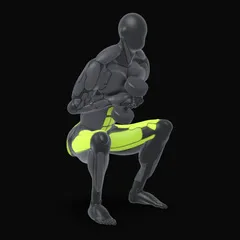
| Dumbbell Goblet Squat or back squat | 2 × 10 | 3 × 6–8 |
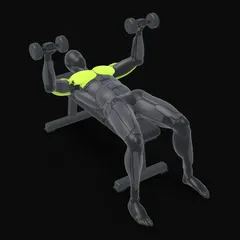
| Dumbbell Bench Press | 2 × 10 | 3 × 8 |
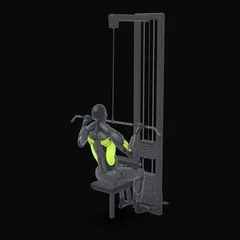
| Cable Lat Pulldown or pull-ups | 2 × 10 | 3 × 8–10 |
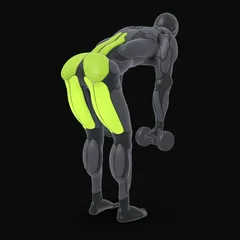
| Dumbbell Romanian Deadlift | 2 × 10 | 3 × 8 |
| Shoulder press | 2 × 10 | 3 × 8–10 |
| Plank | 2 × 20–30 s | 3 × 30–45 s |
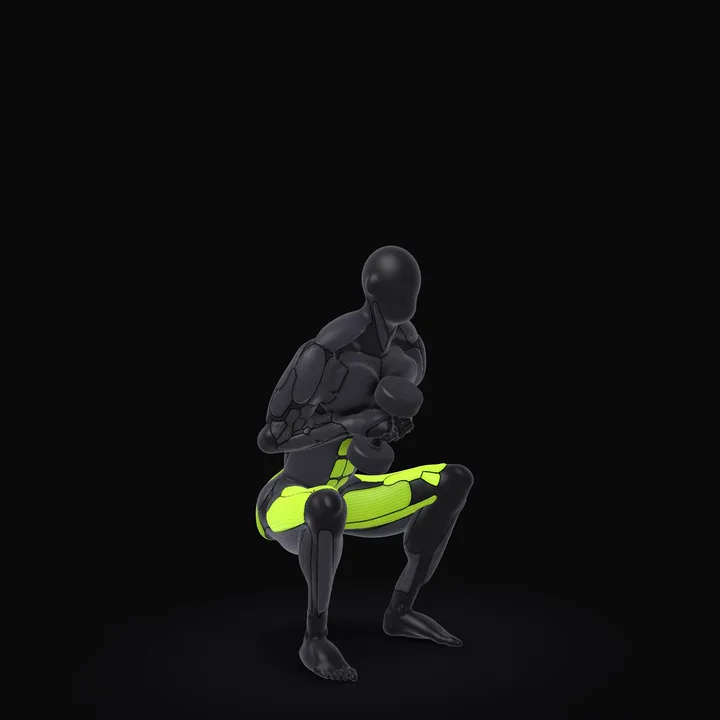 Dumbbell Goblet SquatHold one dumbbell vertically against your chest with both hands. Stand with feet slightly wider than shoulder width.How to do the Dumbbell Goblet Squat →
After week 4, return to your normal program or pick a new one. If you’ve been out for a long time, a structured plan like a full-body workout plan is a good bridge.
Dealing with comeback soreness
The first sessions back will likely make you sore, because the repeated-bout protection fades during a break. Keeping volume low in week 1 is the best fix. Walk, sleep, eat protein, and train again two days later: light movement helps more than resting until it’s gone. More in muscle soreness after a workout.
Eat and sleep for the comeback
- Protein: 1.6–2.2 g per kg of bodyweight a day helps rebuild lost muscle quickly.
- Calories: maintenance or a small surplus speeds regaining. If you also want to lose fat gained during the break, a small deficit works too, especially for returning lifters.
- Sleep: 7–9 hours. It’s the cheapest recovery tool there is.
Use your old numbers, but carefully
Knowing what you lifted before helps you pick starting weights and see how fast you’re returning. If you logged in Brick, your previous weights and reps are right there on every set. If you used another log, CSV or Excel, or have photos of a paper notebook or screenshots, Brick can import that history, so your old PRs and trends carry over. Watching the estimated strength trend line climb back toward your previous peak is a powerful motivator.
Making it stick this time
Breaks happen: work, kids, moving, illness. The goal isn’t to never stop; it’s to get back quickly. A few habits help:
- Have a minimum version of your training for busy weeks (two 30-minute sessions).
- Book your sessions like appointments.
- Count weeks rather than days: two sessions a week, every week, beats five sessions for three weeks and then nothing.
More ideas in how to stay consistent at the gym.
Frequently asked questions
How long does it take to lose muscle when you stop training?
Very little is lost in the first two to three weeks; strength is especially well preserved. Noticeable losses build up over several weeks to months, and depend on how active you stay, how much protein you eat and why you stopped (illness and injury speed it up).
How fast will I get my strength back?
Usually much faster than it took to build. After a few weeks off, most people are back near their previous numbers within two to four weeks. After many months off, expect a couple of months, still far quicker than the first time.
Should I start with the same weights I used before?
No. Start around 50–70 % of your previous working weights, depending on how long you were away. You'll climb back quickly, and you'll avoid the extreme soreness and joint aches that make many people quit again.
Is muscle memory real?
Yes. Muscles retain adaptations from previous training, and your nervous system remembers the movements. Research also suggests an epigenetic memory in muscle cells that helps them respond faster to retraining.
Sources
- Bosquet L, Berryman N, Dupuy O, Mekary S, Arvisais D, Bherer L, Mujika I (2013). Effect of training cessation on muscular performance: a meta-analysis. Scandinavian Journal of Medicine & Science in Sports
- Ogasawara R, Yasuda T, Ishii N, Abe T (2013). Comparison of muscle hypertrophy following 6-month of continuous and periodic strength training. European Journal of Applied Physiology
- Seaborne RA, Strauss J, Cocks M, Shepherd S, O'Brien TD, van Someren KA, et al. (2018). Human skeletal muscle possesses an epigenetic memory of hypertrophy. Scientific Reports