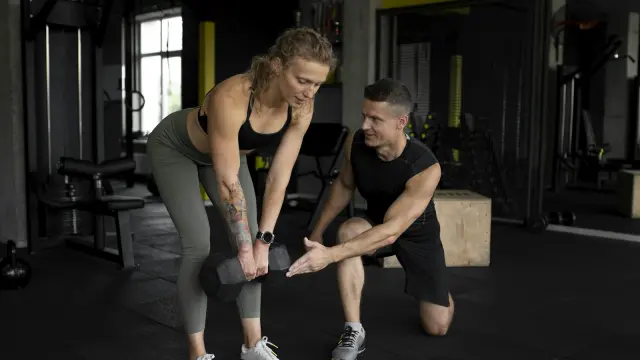
Lower back pain after deadlifts is common and, in most cases, not serious. Typical causes are a sudden jump in load or volume, fatigue late in a session, lifting with a technique that drifts as the weight gets heavy, or simply a muscle that isn’t used to the work yet. Most cases settle within a few weeks if you stay active, reduce what hurts, and build back gradually. See a doctor straight away if you have any of the red-flag symptoms listed below.
Is it soreness or an injury?
| Normal muscle soreness | Something to take seriously | |
|---|---|---|
| When it starts | 12–48 h after training | During a rep, or right after |
| How it feels | Dull, achy, both sides, stiff | Sharp, stabbing, catching, one side |
| Movement | Eases as you warm up | Gets worse with bending, coughing, sitting |
| Spread | Stays in the muscles | Radiates into the buttock or down the leg |
| Course | Fades in 2–5 days | Stays the same or worsens |
Soreness after a heavy deadlift, good mornings or Romanian deadlifts is normal when the exercise is new or volume went up. See muscle soreness after a workout.
Red flags: see a doctor now
Go to a doctor or emergency department urgently if you have back pain together with:
- Numbness around the groin, genitals or inner thighs (“saddle” area)
- New difficulty controlling your bladder or bowels
- Weakness in a leg or foot (foot drop, tripping)
- Pain with fever, unexplained weight loss, or a history of cancer
- Severe pain at night that doesn’t change with position
- Pain after a significant fall or accident
These are rare, but they need medical attention quickly.
Common causes of lower back pain from lifting
Back pain is rarely about a single structure. The Lancet series on low back pain (Hartvigsen et al., 2018) describes most cases as “non-specific”: no single tissue can be identified as the cause, and imaging often shows changes that are common in people without pain too. For lifters, the usual contributors are:
- Doing too much too soon. A new program, more sets, a big jump in weight, or returning after a break at your old numbers.
- Fatigue. The last sets of a long session, or deadlifting after squats and lunges, when technique starts to slip.
- Inconsistent setup. The bar drifting away from your legs, hips shooting up first, or not bracing before the pull.
- Life load. Poor sleep, high stress, long days sitting or driving. Pain sensitivity goes up when recovery is poor.
- A movement you’re not prepared for. A twist while picking up plates, or catching a bar awkwardly.
What about a rounded back?
Many lifters believe any spinal flexion during a lift will injure them. A systematic review by Saraceni and colleagues (2020) found no clear evidence that lumbar flexion during lifting is linked to developing or worsening low back pain. Your spine is designed to bend. That said, controlled positions let you lift heavier weights more consistently, so good technique still matters for performance. Don’t panic over a slightly rounded rep; do reduce the weight if your form changes a lot from rep to rep. Our deadlift technique guide covers setup step by step.
What to do in the first days
The Lancet review on treatment (Foster et al., 2018) is clear that for most low back pain, staying active and returning to normal activities is better than bed rest.
- Keep moving. Walking is excellent. Short, frequent walks often help more than lying down.
- Stop the provoking exercise, not all training. Upper-body work and pain-free leg exercises can usually continue.
- Use heat if it makes you more comfortable.
- Over-the-counter pain relief can help in the short term if appropriate for you; follow the label or ask a pharmacist.
- Avoid long periods of sitting; get up every 30–45 minutes.
Training around back pain
Use pain as your guide. A useful rule: mild discomfort up to about 3 out of 10 during an exercise is acceptable if it doesn’t worsen afterwards or the next morning. More than that, or worse the next day, means scale back.
| Instead of | Try for now | Why |
|---|---|---|
| Barbell deadlift from the floor | Trap Bar Deadlift from raised handles, or a light RDL with limited range | More upright torso, shorter range |
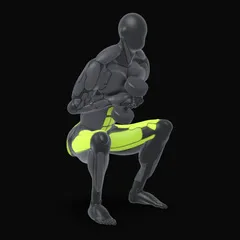
| Back squat | Dumbbell Goblet Squat, leg press | Less load on the spine |
| Bent-over row | Dumbbell Chest-supported Row | Chest support removes the need to hold the hinge |
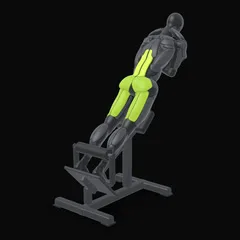
| Heavy good mornings | Back Extension with bodyweight, slow and controlled | Easy to scale, builds tolerance |
| Standing overhead press | Seated dumbbell press | Less demand on the lower back |
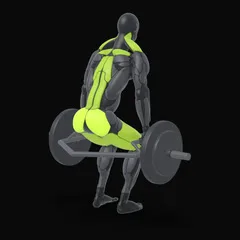
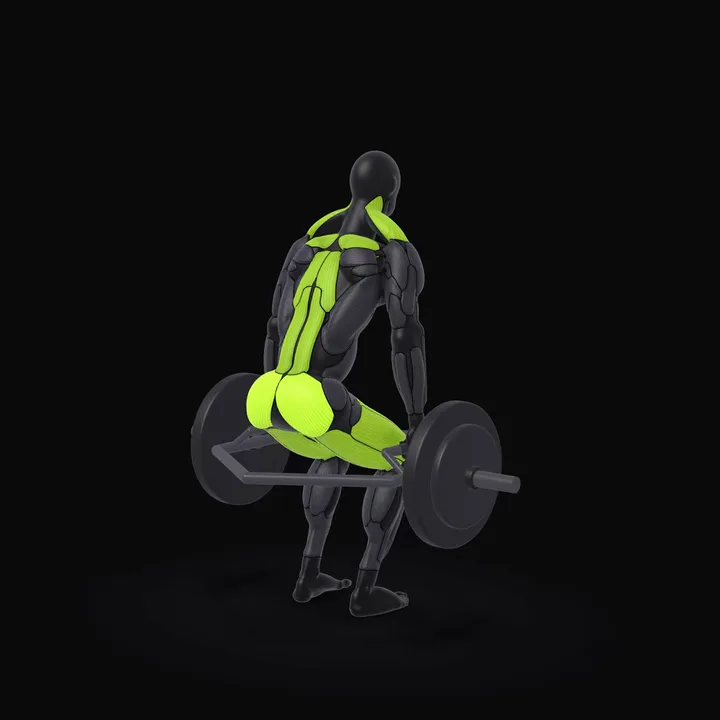 Trap Bar DeadliftStand in the middle of the trap bar with feet hip-width apart. Bend your knees and hips and grab the handles with a flat back and chest up.How to do the Trap Bar Deadlift →
Add gentle, low-load core and back work most days:
- Bird Dog: 2–3 sets of 6–8 slow reps per side
- Dead Bug: 2–3 sets of 8 per side
- Glute Bridge: 2–3 sets of 10–12
- Side Plank: 2–3 holds of 15–30 seconds per side
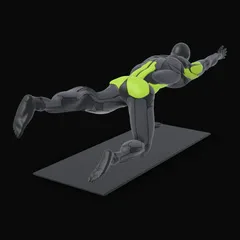
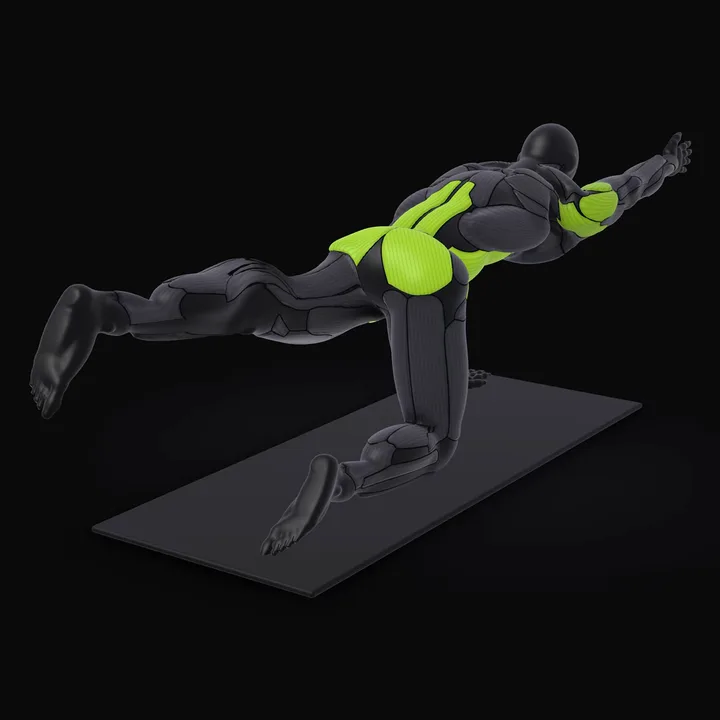 Bird DogGet on all fours with hands under your shoulders and knees under your hips. Extend one arm forward and the opposite leg back at the same time, level with your torso.How to do the Bird Dog →
Building back up
Once everyday movements are comfortable:
- Reintroduce the original lift at about 50 % of your previous working weight, with perfect, unhurried reps.
- Add 5–10 % per week as long as pain stays low during and after.
- Keep sets in the 5–8 rep range, stopping 2–3 reps before failure, for the first few weeks.
- Put deadlifts early in the session, when you’re fresh.
Most lifters are back to their previous numbers within a few weeks to a couple of months. Logging your sets helps you build back steadily instead of jumping straight to your old weights on a good day. Brick shows last session’s weight and reps on every set, so you can add a small step each week and see the progression clearly.
How to prevent it from coming back
- Increase load gradually: small jumps, consistently. See how to progressive overload.
- Warm up properly, with lighter ramp-up sets before heavy pulls; see how to warm up before lifting.
- Strengthen your back progressively with back extensions, RDLs and rows; see how to strengthen your lower back.
- Plan deloads and reduce volume during stressful, sleep-short weeks.
- Get technique feedback from a coach or by filming your sets from the side.
When to see a physiotherapist
- Pain isn’t clearly improving after two weeks
- It keeps recurring every time you return to a lift
- Pain or tingling travels below the knee
- You’re scared to move or lift because of it
A good physiotherapist, ideally one who works with lifters, will help you find a load you tolerate and a plan back to full training, rather than telling you never to deadlift again.
Frequently asked questions
Is it normal for my lower back to be sore after deadlifts?
Some muscle soreness in the lower back a day or two after heavy deadlifts or RDLs is normal, especially when the exercise is new. It should feel like ordinary muscle soreness on both sides and fade within a few days. Sharp pain, pain on one side that radiates, or pain during the lift is different.
Should I stop lifting if my lower back hurts?
Usually you don't need to stop moving or training altogether. Guidelines for most low back pain recommend staying active. Drop or modify the exercises that provoke pain, keep the rest of your training going, and build back gradually. If you have any red-flag symptoms, see a doctor first.
How long does a pulled lower back muscle take to heal?
Most acute lifting-related back pain improves a lot within one to two weeks and settles within about six weeks. If it isn't clearly improving after two weeks, or keeps coming back, have it assessed by a physiotherapist or doctor.
Does a rounded back when deadlifting cause back pain?
Research hasn't found a clear link between how much the lower back bends during lifting and developing back pain. That doesn't make heavy, uncontrolled rounding a good idea; it means fear of any spinal movement isn't helpful, and that load, fatigue and sudden jumps in training matter too.
Sources
- Saraceni N, Kent P, Ng L, Campbell A, Straker L, O'Sullivan P (2020). To flex or not to flex? Is there a relationship between lumbar spine flexion during lifting and low back pain? A systematic review with meta-analysis. Journal of Orthopaedic & Sports Physical Therapy
- Foster NE, Anema JR, Cherkin D, Chou R, Cohen SP, Gross DP, et al. (2018). Prevention and treatment of low back pain: evidence, challenges, and promising directions. The Lancet
- Hartvigsen J, Hancock MJ, Kongsted A, Louw Q, Ferreira ML, Genevay S, et al. (2018). What low back pain is and why we need to pay attention. The Lancet