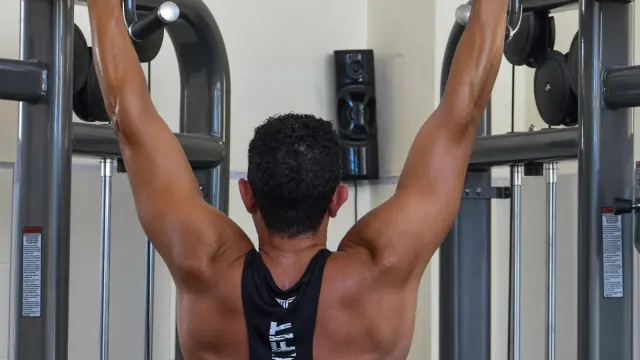
To build traps, train all three parts of the trapezius: the upper traps with shrugs and heavy carries, the middle traps with rows that pull your shoulder blades together, and the lower traps with Y-raises and face pulls. Shrugs work best done straight up and down with a pause at the top, not rolled. Most people do well with 6–12 hard sets a week of direct trap work on top of their deadlifts and rows. Here’s how each part works and a routine to put it together.
The three parts of the trapezius
The trapezius is a large, diamond-shaped muscle that runs from the base of your skull down to the middle of your back, and out to each shoulder.
| Part | What it does | Best exercises |
|---|---|---|
| Upper traps | Lift (elevate) your shoulder blades | Shrugs, carries, deadlifts, high pulls |
| Middle traps | Pull your shoulder blades together (retraction) | Rows with elbows out, reverse flyes, face pulls |
| Lower traps | Pull your shoulder blades down and rotate them as you raise your arms | Y-raises, face pulls, pull-ups |
An EMG study comparing ten exercises found the highest upper trap activity in a one-arm shrug, the highest middle trap activity in prone arm raises (lying face down, lifting the arms out and back with the thumbs up), and the highest lower trap activity in a prone overhead arm raise in a Y position (Ekstrom et al., 2003). EMG isn’t growth, but it’s a good guide for picking exercises for each region.
Big upper traps make your neck and shoulders look powerful from the front. Strong middle and lower traps make your upper back look thick from behind and help your shoulders move well overhead.
Upper traps: shrugs done right
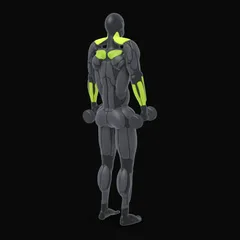
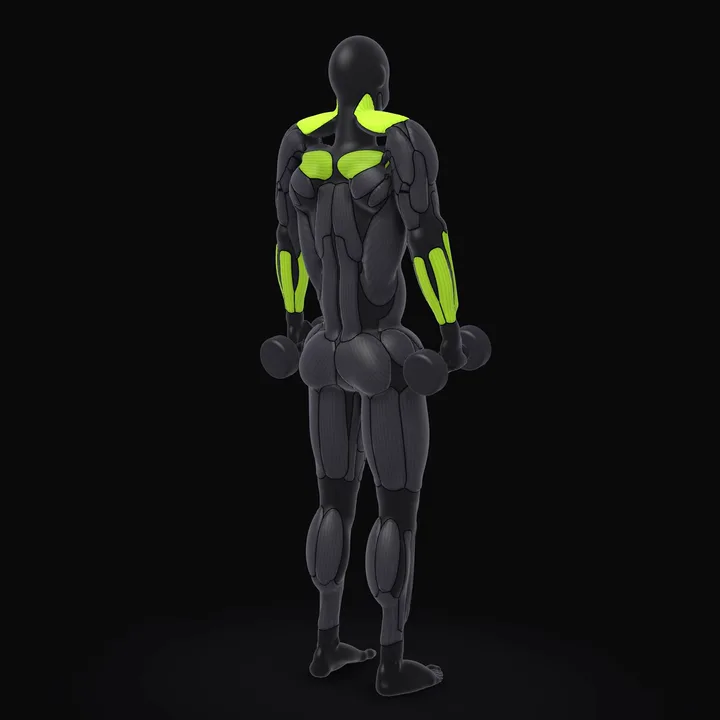 Dumbbell ShrugStand with a dumbbell in each hand at your sides, palms facing in. Keep your arms straight and chest up.How to do the Dumbbell Shrug →
Most people shrug badly: too heavy, tiny range, rolling the shoulders. Here’s how to do a dumbbell shrug or barbell shrug properly:
- Stand tall holding the weights at your sides (dumbbells) or in front (barbell), arms straight.
- Let your shoulders drop fully at the bottom for a stretch.
- Lift your shoulders straight up toward your ears, as high as you can.
- Pause for one second at the top.
- Lower under control to the full stretch.
Keep your arms straight; shrugs aren’t an upright row. A slight forward lean of the torso (5–10°) can help you feel the traps more. Rolling the shoulders forward or back adds nothing.
Dumbbells let your shoulders move naturally; a barbell or Smith machine shrug lets you load heavier. Cable shrugs keep constant tension. Use straps if your grip gives out before your traps do.
Carries and heavy holds
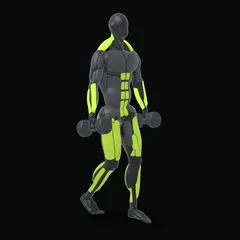
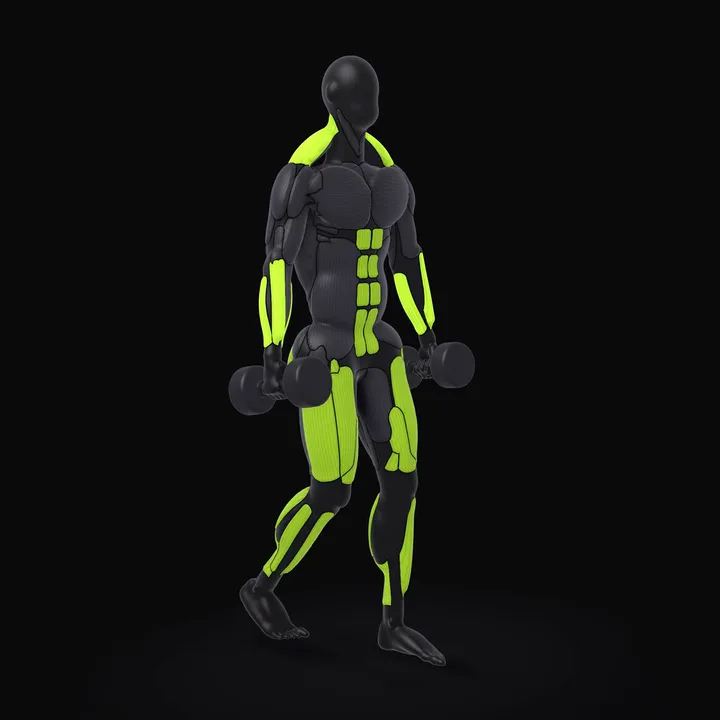 Dumbbell Farmer's WalkPick up a heavy dumbbell in each hand, lifting with a flat back. Stand tall with your chest up, shoulders down and core braced.How to do the Dumbbell Farmer's Walk →
Farmer's carries are trap builders in disguise. Your upper traps work hard the whole time to stop the weight pulling your shoulders down, and you’re holding the load for 20–40 seconds at a time. The same is true of heavy deadlifts and rack pulls. Many lifters with impressive traps did very few shrugs; they did a lot of heavy pulling and carrying. The carry also trains your grip, covered in grip strength exercises.
Middle traps: rows and reverse flyes
The middle traps squeeze your shoulder blades together. They work in every row, but more when your elbows travel out at about 45–70° and you hold the squeeze at the end.
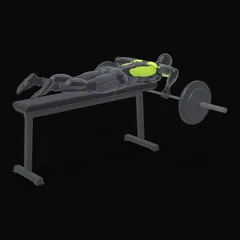
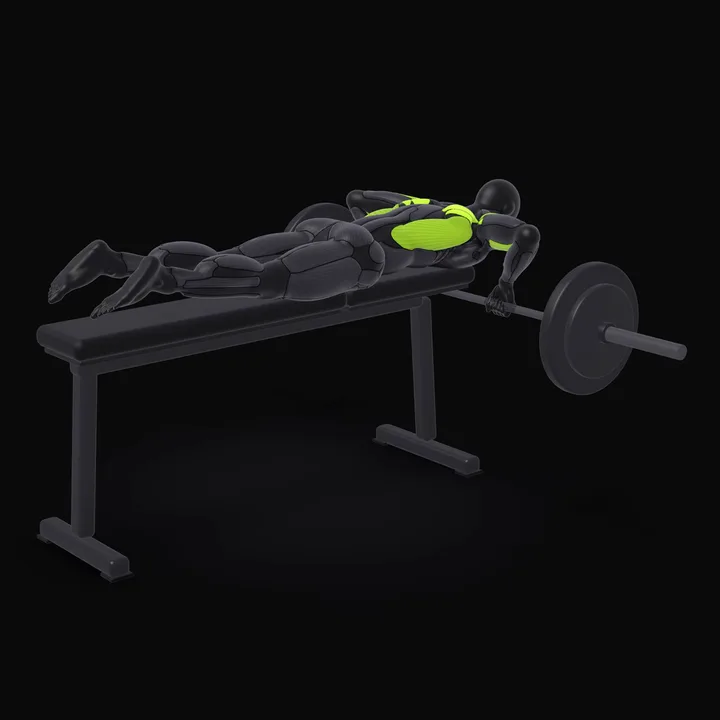 Barbell Seal RowLie face down on a raised flat bench with the barbell on the floor directly under your shoulders. Grip the bar overhand slightly wider than your shoulders, arms straight.How to do the Barbell Seal Row →
Good choices:
- Seal row or chest-supported row with elbows out: no lower back involvement, so your upper back does all the work.
- Reverse pec deck and rear delt flyes: middle traps and rear delts together.
- Face pulls: middle and lower traps plus rear delts.
Pause for a full second with your shoulder blades squeezed on every rep. More on rowing in the back workout for width and thickness.
Lower traps: Y-raises and face pulls
The lower traps are the smallest part and the easiest to neglect. They pull your shoulder blades down and help them rotate upward when you raise your arms, which matters for healthy overhead pressing.
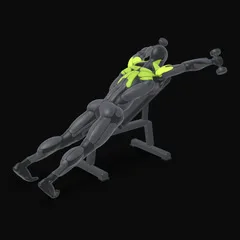
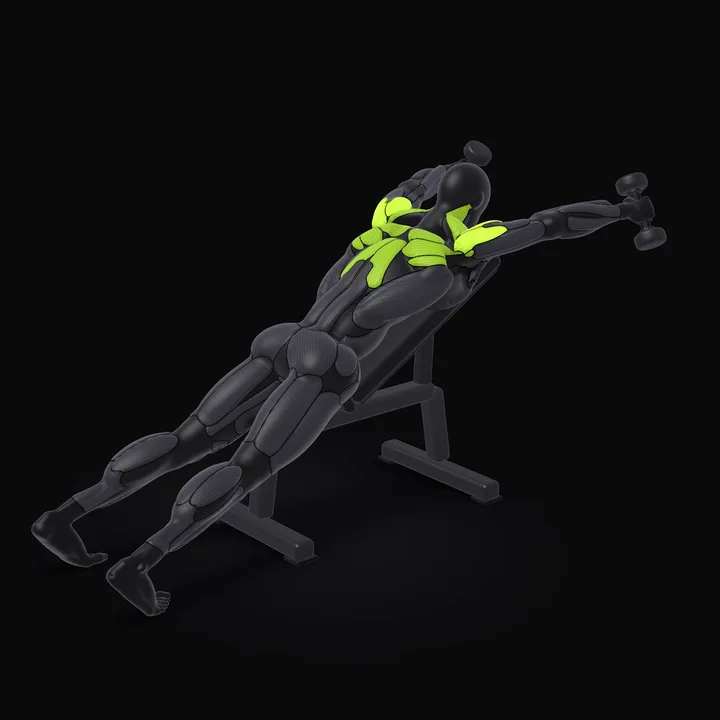 Dumbbell Chest-supported Y RaiseLie face down on a bench set to about 30 degrees, holding light dumbbells with your arms hanging. Turn your thumbs up and keep your elbows almost straight.How to do the Dumbbell Chest-supported Y Raise →
- Chest-supported Y-raise: lie face down on an incline bench, light dumbbells, raise your arms up and out in a Y with thumbs pointing up.
- Cable Y-raise: same idea standing, with constant tension.
- Pull-ups and pulldowns where you start each rep by pulling your shoulder blades down.
Use light weights (often 2–5 kg / 5–10 lb dumbbells) for 12–20 controlled reps. If your upper traps or lower back take over, go lighter.
How many sets for traps?
More weekly sets generally produce more growth, with 10 or more sets per muscle per week outperforming lower volumes (Schoenfeld et al., 2017). But your traps already get a lot of indirect work from deadlifts, rows and pulldowns, so direct work can be modest:
| Goal | Direct trap sets per week |
|---|---|
| General development | 4–6 (shrugs or carries) + rows and face pulls you already do |
| Traps as a priority | 8–12 shrugs and carries + 4–6 Y-raises |
A simple trap routine
Add these to two sessions a week, for example a pull day and a leg day:
Session 1
| Exercise | Sets × reps | Rest |
|---|---|---|
| Dumbbell or barbell shrug | 3 × 10–15, 1 s pause | 90 s |
| Face pull | 3 × 12–20 | 60 s |
Session 2
| Exercise | Sets × reps or distance | Rest |
|---|---|---|
| Farmer’s carry | 3 × 30–40 m | 90 s |
| Chest-supported Y-raise | 2 × 12–20 | 60 s |
Pair this with your normal rows and deadlifts and your traps will be well covered. For balanced shoulders around them, see how to get bigger shoulders and the rear delt workout.
How to progress
Shrugs and carries progress well with load: add 2.5–5 kg (5–10 lb) when you hit the top of your rep range or distance with a full range and a pause. Y-raises progress slowly; add reps first and move up in the smallest steps available. Tracking matters because trap work is easy to do on autopilot, with the same dumbbells every week.
Common trap training mistakes
- Ego shrugs. Huge weight, two centimetres of movement. Use a full range and pause.
- Rolling the shoulders. Adds risk, not results.
- Only training the upper traps. Middle and lower traps make your back look thick and keep your shoulders healthy.
- No straps when grip fails. The traps should end the set, not your hands.
Frequently asked questions
Should I roll my shoulders when doing shrugs?
No. Rolling adds nothing for the traps and puts extra stress on the shoulder joint. Lift straight up toward your ears, pause, and lower straight down.
How heavy should shrugs be?
Heavy enough that 8 to 15 reps are hard, but light enough that you can lift your shoulders through a full range and pause at the top. If you can only move the bar a couple of centimetres, it's too heavy.
Do deadlifts build traps?
Yes. Holding a heavy bar works the upper traps hard as they keep your shoulders from being pulled down. Deadlifts, rack pulls and carries all build traps, and many lifters with big traps owe more to them than to shrugs.
How do I train my lower traps?
Use exercises where your arms move overhead or your shoulder blades move down and back: prone or incline Y-raises, face pulls and pull-ups with the shoulder blades pulled down. The lower traps are small, so use light weights and controlled reps.
Sources
- Ekstrom RA, Donatelli RA, Soderberg GL (2003). Surface Electromyographic Analysis of Exercises for the Trapezius and Serratus Anterior Muscles. Journal of Orthopaedic & Sports Physical Therapy
- Schoenfeld BJ, Ogborn D, Krieger JW (2017). Dose-response relationship between weekly resistance training volume and increases in muscle mass: A systematic review and meta-analysis. Journal of Sports Sciences