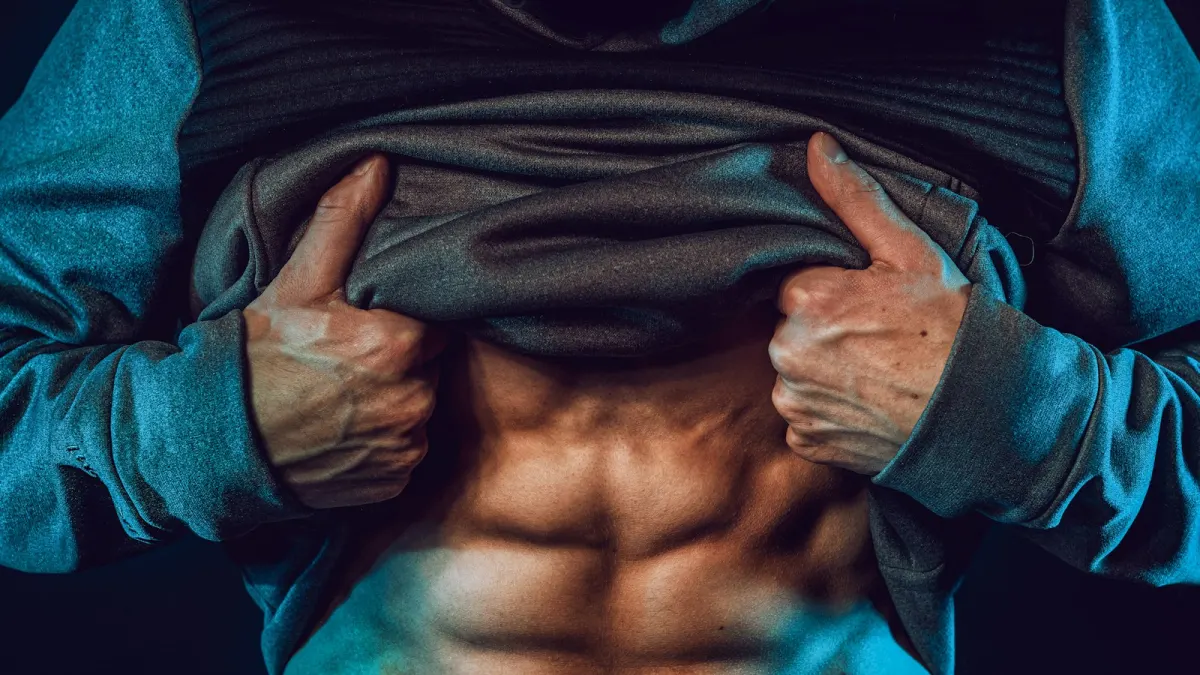
Getting abs takes two things: enough ab muscle to see, and low enough body fat to see it. Everyone already has abs; for most people they’re simply covered by a layer of fat, and no number of crunches removes it. You lose that layer with a sustained calorie deficit, and you build the muscle underneath with progressive ab training two or three times a week. Below is how to do both, plus an honest timeline.
Why ab exercises alone don’t give you abs
The idea that crunches burn belly fat (“spot reduction”) is one of the most persistent fitness myths. In a controlled study, participants did seven ab exercises five days a week for six weeks while keeping their diet the same. They got better at curl-ups, but their belly fat, waist measurement and body fat percentage didn’t change compared with a control group (Vispute et al., 2011).
Your body decides where it loses fat, and for most people the belly and lower back are among the last places to lean out. The only lever you control is total fat loss.
Step 1: lose the fat on top
You need to eat fewer calories than you burn, consistently, for long enough. The details of setting that up are in calorie deficit to lose fat, but the key rules are:
- Lose slowly. For lean lifters, losing about 0.5–1 % of body weight per week is a commonly recommended pace to keep muscle while dieting (Helms et al., 2014). Faster usually means losing muscle, including some of the ab muscle you want to see.
- Keep lifting heavy. Strength training tells your body to keep its muscle while you diet. The cutting workout plan shows how to train during a cut.
- Eat plenty of protein. It protects muscle and keeps you fuller.
- Walk. Daily steps add to your deficit without wrecking your recovery.
How lean do you need to be?
It varies a lot, but as a rough guide many men see their abs somewhere around 10–15 % body fat and many women around 18–22 %. Some people see outlines at higher levels because they carry less fat on their belly or have thicker abs; others need to get leaner. Body fat estimates from scales and calipers are rough anyway, so use the mirror, photos and your waist measurement as your guide.
Step 2: build the muscle underneath
Thicker ab muscles show through at a slightly higher body fat. That’s why training them matters. Your “six-pack” is the rectus abdominis, which curls your spine forward. The obliques at your sides rotate and bend your torso and resist twisting. The deep transversus abdominis stabilizes your trunk but doesn’t show.
The ab exercises worth doing
| Exercise | Main target | How to progress |
|---|---|---|
| Cable crunch | Rectus abdominis | Add weight on the stack |
| Hanging leg raise (or knee raise) | Rectus abdominis, hip flexors | Knees → straight legs → slower |
| Ab wheel rollout | Whole front of the trunk | Longer range, from knees to standing |
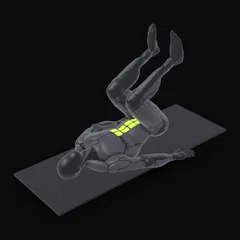
| Reverse crunch | Lower rectus emphasis | Incline bench, slower tempo |
| Weighted crunch or machine crunch | Rectus abdominis | Add load |
| Pallof press | Obliques (anti-rotation) | Heavier cable, longer hold |
| Side plank | Obliques | Longer holds, feet stacked, add a weight |
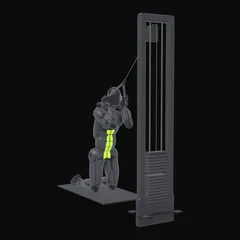
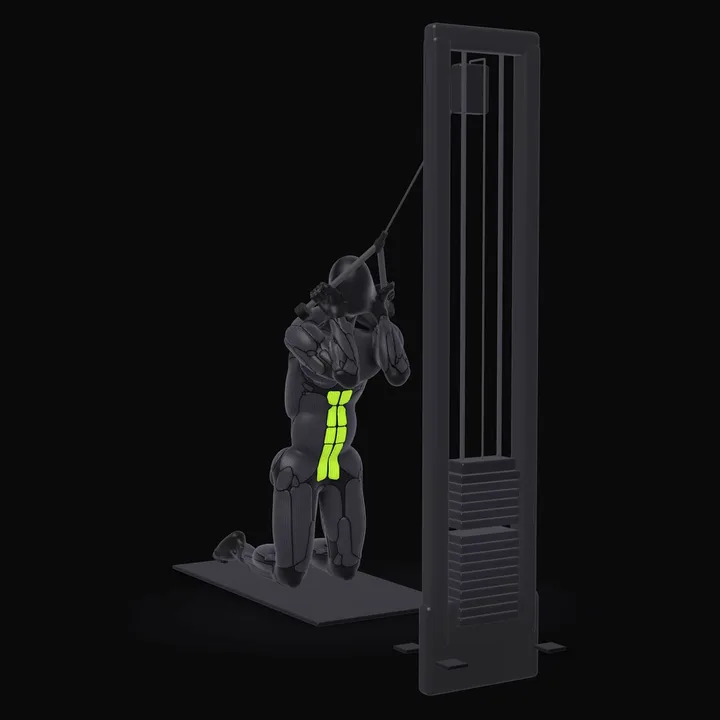 Cable CrunchAttach the rope to a high pulley and kneel in front of it, holding the ends beside your head. Keep your hips still.How to do the Cable Crunch →
The cable crunch deserves special mention: it’s one of the few ab exercises you can load heavily and progress like a curl or a leg extension. Kneel facing the cable with a rope behind your head, and curl your ribs toward your hips. The movement comes from your spine, not from your hips bending.
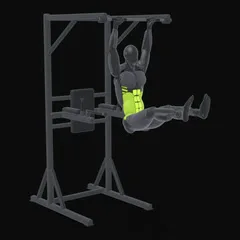
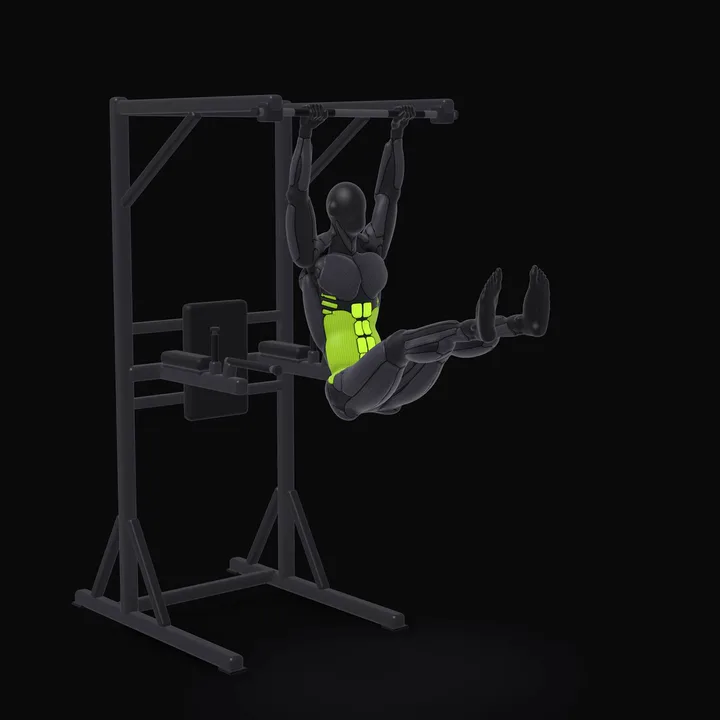 Hanging Leg RaiseHang from the pull-up bar with straight arms. Brace your core so you don't swing.How to do the Hanging Leg Raise →
On hanging leg raises, curl your pelvis up toward your ribs at the top. If your legs just swing up while your lower back stays arched, it’s mostly hip flexor work.
How much ab training?
Treat your abs like other muscles:
- Frequency: 2–3 sessions a week, at the end of your normal workouts.
- Volume: 6–12 hard sets a week in total.
- Reps: 8–15 on loaded exercises (cable crunch, weighted crunch), 8–20 on bodyweight movements.
- Effort: close to failure. A set of 50 easy crunches does less than 12 hard cable crunches.
A simple ab routine
Add this to two or three of your weekly sessions, alternating A and B:
Routine A
| Exercise | Sets × reps | Rest |
|---|---|---|
| Cable crunch | 3 × 10–15 | 60 s |
| Hanging knee or leg raise | 3 × 8–15 | 60 s |
Routine B
| Exercise | Sets × reps | Rest |
|---|---|---|
| Ab wheel rollout | 3 × 6–12 | 60–90 s |
| Pallof press | 2 × 10–12 per side | 45 s |
| Side plank | 2 × 30–45 s per side | 45 s |
Ten minutes, two or three times a week. Big compound lifts like squats and deadlifts also train your trunk to brace hard, which helps everything else.
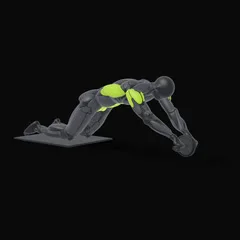
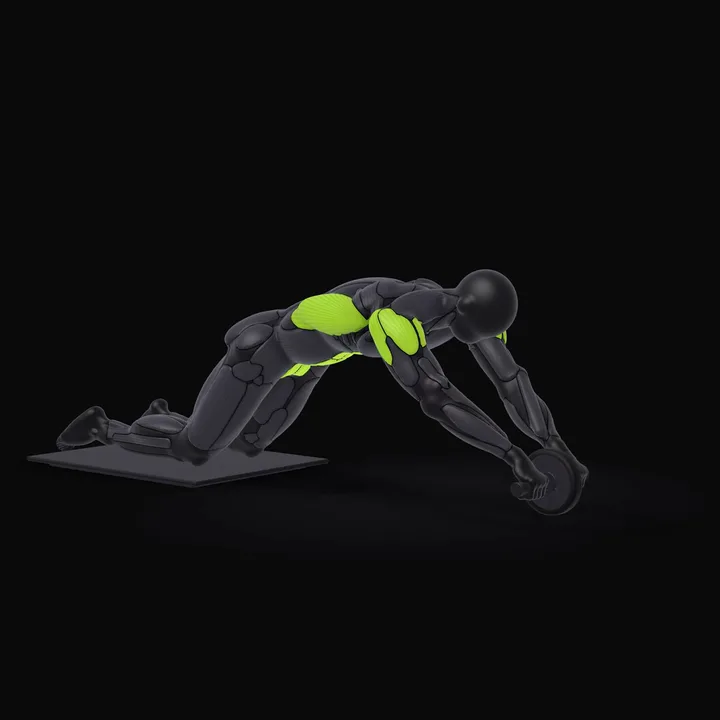 Ab Wheel RolloutKneel on a mat holding the wheel with both hands under your shoulders. Squeeze your abs and glutes.How to do the Ab Wheel Rollout →
An honest timeline
How long it takes depends on how much fat you need to lose. A rough guide, assuming steady fat loss of 0.5–1 % of body weight per week:
| Starting point | What you see now | Typical time to visible abs |
|---|---|---|
| Lean, faint outline | Upper abs when flexed in good light | 4–8 weeks |
| Average, flat-ish stomach | No ab outline | 3–6 months |
| Carrying extra fat | Soft stomach | 6–12 months or more |
These are estimates, not promises. Progress isn’t linear: some weeks the scale doesn’t move, and water retention can hide a few weeks of fat loss. Track weekly average weight, waist measurement and photos in the same light every two weeks.
Keeping abs once you have them
Very low body fat is hard to maintain and isn’t necessary for health. Many people find they’d rather sit slightly higher, with abs visible in good lighting, than fight to stay shredded year-round. If you want to build more muscle after your cut, a slow lean bulk or body recomposition keeps you close to lean while you grow.
Common ab mistakes
- Doing hundreds of reps a day. Endurance, not visible abs.
- Crash dieting. You lose muscle and rebound. Slow and steady wins.
- Ignoring the rest of your training. Heavy compound lifting keeps your muscle during the diet.
- Relying on the scale alone. Waist measurement and photos tell you more.
- Comparing yourself with edited photos. Lighting, pump, tanning and dehydration make a huge difference on social media.
Frequently asked questions
Can I get abs in 30 days?
Only if you're already close: lean, with some ab muscle, and just a little fat covering it. For most people, getting visible abs takes several months of consistent fat loss. A 30-day plan can get you started, not finished.
Do crunches burn belly fat?
No. A study where people did ab exercises five days a week for six weeks found no reduction in belly fat compared with a group that didn't. Ab training builds the muscle; a calorie deficit removes the fat on top of it.
How often should I train abs?
Two or three times a week, with 6 to 12 hard sets in total. Treat them like any other muscle: progressive, controlled sets, not hundreds of quick reps every day.
What body fat percentage do you need to see abs?
It varies a lot between people, but as a rough guide, many men start to see their abs somewhere around 10 to 15 % body fat and many women around 18 to 22 %. Genetics, fat distribution and how developed your abs are all shift that range.
Why can I see my upper abs but not my lower abs?
Many people store more fat below the belly button, so the lower abs are usually the last to show. It's about fat loss, not a weak lower ab. Keep losing fat slowly and they'll appear.
Sources
- Vispute SS, Smith JD, LeCheminant JD, Hurley KS (2011). The Effect of Abdominal Exercise on Abdominal Fat. Journal of Strength and Conditioning Research
- Helms ER, Aragon AA, Fitschen PJ (2014). Evidence-based recommendations for natural bodybuilding contest preparation: nutrition and supplementation. Journal of the International Society of Sports Nutrition