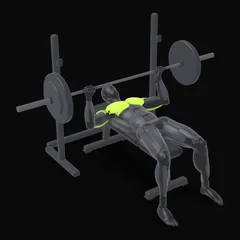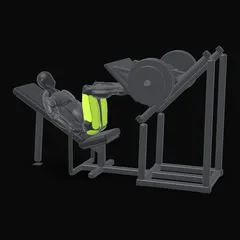
On the RPE scale for lifting, you rate each set from 1 to 10 based on how many more reps you could have done with good form: RPE 10 means none left (failure), RPE 9 means one left, RPE 8 means two left, and so on. That “reps left” number is called RIR, reps in reserve. Together, RPE and RIR let you choose the right weight for the day and make sure your sets are hard enough to count. Below are the tables, how to calibrate your ratings, and how to use them in your training log.
The RPE / RIR table
The lifting-specific RPE scale based on reps in reserve was introduced in research in 2016 (Zourdos et al., 2016) and has since become standard in strength training.
| RPE | Reps in reserve (RIR) | Description |
|---|---|---|
| 10 | 0 | Maximal effort; no more reps possible |
| 9.5 | 0–1 | Maybe one more rep, maybe not; couldn’t add weight |
| 9 | 1 | One more rep was possible |
| 8.5 | 1–2 | Definitely one, maybe two |
| 8 | 2 | Two more reps possible |
| 7.5 | 2–3 | Two for sure, maybe three |
| 7 | 3 | Three more reps; bar moving with speed |
| 5–6 | 4–6 | Moderate; warm-up feel |
| 1–4 | — | Very light |
Why RPE is useful
- It makes sure sets are hard enough. A set of 10 that could have been 20 does much less than a set of 10 at RPE 8–9.
- It adapts to your day. Slept badly? Your RPE 8 weight might be 5 % lighter today. Feeling great? Heavier. Percentages can’t do that.
- It manages fatigue. Keeping heavy compound lifts at RPE 7–9 avoids the fatigue of grinding to failure every set.
- It adds information to your log. “100 kg × 5 at RPE 7” and “100 kg × 5 at RPE 9.5” are very different sessions.
Which RPE to train at
| Goal / exercise | Typical RPE | Notes |
|---|---|---|
| Heavy compound lifts (squat, bench, deadlift) | 7–9 | Leave 1–3 reps in reserve |
| Hypertrophy, machines and dumbbells | 8–9.5 | Close to failure, safely |
| Isolation, last set | 9.5–10 | Failure is fine here |
| Technique work, deloads | 5–7 | Practice without fatigue |
| Warm-up sets | 3–6 | Easy |
How close to failure matters for growth; see training to failure for the research.
RPE and percentages
RPE also connects to percentages of your one-rep max. A common approximate chart:
| Reps | RPE 10 | RPE 9 | RPE 8 | RPE 7 |
|---|---|---|---|---|
| 1 | 100 % | 96 % | 92 % | 89 % |
| 3 | 94 % | 91 % | 88 % | 85 % |
| 5 | 89 % | 86 % | 84 % | 81 % |
| 8 | 81 % | 79 % | 76 % | 74 % |
| 10 | 76 % | 74 % | 71 % | 68 % |
Treat this as a rough guide. People differ, and the numbers shift between exercises and with training experience. It’s useful to estimate your max or choose a starting weight; how to calculate one rep max goes further.
How to calibrate your RPE
Accuracy improves with practice, but most people start off underestimating how many reps they have left. In the original study, more experienced lifters rated their efforts more accurately than novices (Zourdos et al., 2016). Ways to get better:
- Test on safe exercises. On a machine, leg press or dumbbell exercise, predict your RIR at a certain rep, then keep going to failure and see if you were right.
- Watch the bar speed. When reps start to slow down noticeably, you’re usually around RPE 8. When they grind, around 9+.
- Rate immediately. Rate the set right after you rack the weight, before you forget how the last rep felt.
- Be honest. Rating a set “8” because you want it to be easy defeats the purpose.
- Film occasionally. Video shows slowing reps you didn’t notice.
Using RPE in a program
Two common ways:
1. RPE targets. The program says “bench press 3 × 5 at RPE 8”. You warm up, pick a weight you think is right, do the first set and adjust: if it felt like RPE 7, add 2.5–5 kg; if it felt like RPE 9, drop a little.
2. Top set and back-off sets. “Squat: 1 × 5 at RPE 8, then 3 × 5 at 90 % of that weight.” You work up to a heavy set at the target RPE, then do volume work slightly lighter. Practical guidelines for using RIR-based RPE this way are laid out in a 2016 review (Helms et al., 2016).
Either way, RPE pairs naturally with progressive overload: if the same weight and reps feel easier (lower RPE) than last week, you’ve progressed even if the numbers didn’t change.
Logging RPE
A complete set entry has three parts: weight, reps and effort. Writing “80 kg × 8 @ 8” in your notes takes two seconds and makes your log far more useful. Over a few weeks, you’ll see whether your effort is creeping down (good: you’re getting stronger) or up (watch out for fatigue).
Common RPE mistakes
- Rating every set as 8. Some sets were 6, some were 10. Be precise.
- Ignoring form breakdown. If the last rep needed a back rounding or a bounce, the set was RPE 10, whatever it felt like.
- Using RPE to go easy. RPE 7 every set, every week, rarely builds much.
- Never testing. Without the occasional set to failure on a safe exercise, your ratings drift.
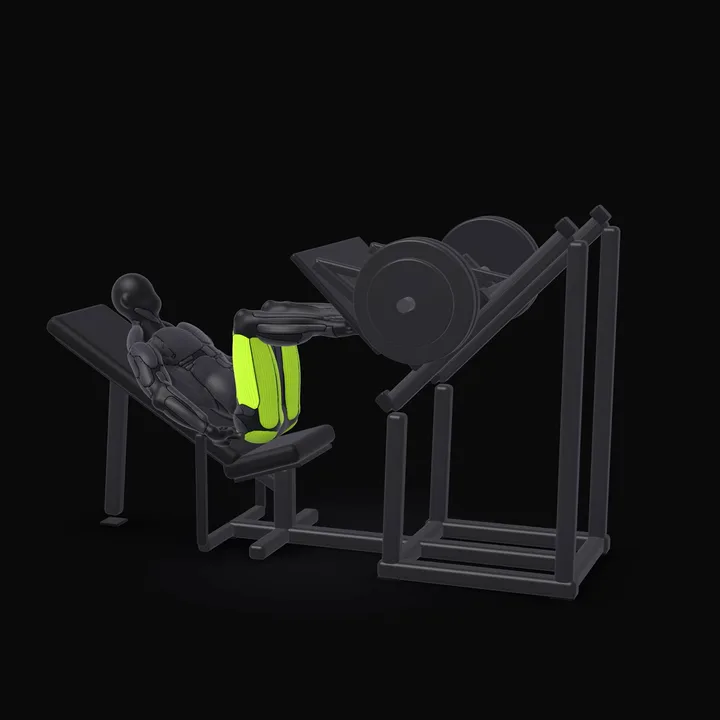 Leg PressSit in the machine with your back flat against the pad and your feet shoulder-width apart in the middle of the platform. Push the platform up and release the safety handles.How to do the Leg Press →
Frequently asked questions
What does RPE 8 mean in lifting?
RPE 8 means you could have done about two more reps with good form when you stopped the set. It's a common target for hard working sets on compound lifts.
What's the difference between RPE and RIR?
They measure the same thing from opposite ends. RIR counts the reps you had left; RPE rates the effort on a 1 to 10 scale. For lifting, RPE 10 equals 0 RIR, RPE 9 equals 1 RIR, RPE 8 equals 2 RIR and so on.
Are beginners accurate with RPE?
Not very, at first. Research found that newer lifters rate their sets less accurately than experienced lifters, and many underestimate how many reps they have left. Accuracy improves with practice, particularly when you occasionally test your estimates.
What RPE should I train at for hypertrophy?
Most working sets between RPE 7 and 10 (3 to 0 reps in reserve). Heavy compound lifts around RPE 7 to 9, isolation exercises up to RPE 10 on the last set.
Can I use RPE instead of percentages?
Yes, or together with them. Percentages give you a starting weight; RPE adjusts it to how you feel on the day. Many programs prescribe something like '3 sets of 5 at RPE 8' and let you pick the load.
Sources
- Zourdos MC, Klemp A, Dolan C, et al. (2016). Novel Resistance Training-Specific Rating of Perceived Exertion Scale Measuring Repetitions in Reserve. Journal of Strength and Conditioning Research
- Helms ER, Cronin J, Storey A, Zourdos MC (2016). Application of the Repetitions in Reserve-Based Rating of Perceived Exertion Scale for Resistance Training. Strength and Conditioning Journal