Training to failure means continuing a set until you can’t complete another rep. It isn’t necessary for building muscle: sets stopped about one to three reps short of failure produce nearly the same growth with less fatigue, and strength gains are similar either way. Going to failure is most useful on the last set of isolation and machine exercises, and least useful (and riskiest) on heavy squats, deadlifts and barbell presses. Here’s what the research shows and how to use failure in your own training.
What “failure” means
There are a few definitions, and they matter:
| Term | What it means |
|---|---|
| Technical failure | You can’t do another rep with good form |
| Momentary muscular failure | You try, but can’t complete the rep at all |
| Reps in reserve (RIR) | How many more good reps you could have done when you stopped |
| Beyond failure | Forced reps, drop sets, partials after failure |
For most training, technical failure is the most useful definition. A rep that only goes up because your back rounds or you bounce the bar isn’t building what you want.
What the research says
For muscle growth
A 2023 meta-analysis found that training to failure didn’t produce clearly more growth than stopping short, while a meta-regression suggested growth increased as sets got closer to failure (Refalo et al., 2023). A 2024 series of meta-regressions reached a similar conclusion: hypertrophy improved as sets were taken closer to failure, while strength gains changed little across a wide range of proximity to failure (Robinson et al., 2024).
An earlier meta-analysis comparing failure and non-failure training found no significant difference in either strength or muscle growth overall (Grgic et al., 2022).
Put together: being close to failure matters; whether you take the very last rep matters much less.
For strength
Strength gains depend more on heavy loads and practice than on reaching failure. Grinding a failed rep on a heavy squat adds a lot of fatigue for little extra strength. Strength-focused lifters usually stop 1–3 reps short on their main lifts.
How close is “close enough”?
| Reps in reserve | What it feels like | Use it for |
|---|---|---|
| 0 (failure) | You couldn’t do another rep | Last set of isolation and machine work |
| 1 | One more rep possible, with effort | Most hypertrophy sets on machines and dumbbells |
| 2–3 | Hard, but with a little room | Heavy compound lifts, most strength work |
| 4+ | Moderate | Warm-ups, technique work, deloads |
Most hypertrophy sets should land between 0 and 3 reps in reserve. Beyond 4 reps in reserve, sets become noticeably less effective for growth. If you’re not sure how to judge this, RPE and RIR explained shows how to calibrate.
Which exercises are suited to failure
Good candidates:
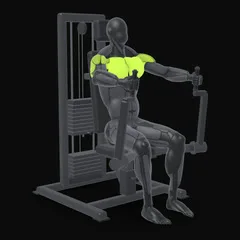
- Machines: chest press, leg press, leg extension, leg curl.
- Cables: lateral raises, pushdowns, flyes, curls.
- Dumbbell isolation work: curls, lateral raises, rear delt flyes.
These are safe to fail on, use small muscles or stable paths, and don’t cause much whole-body fatigue.
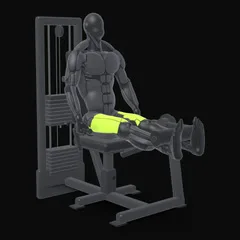
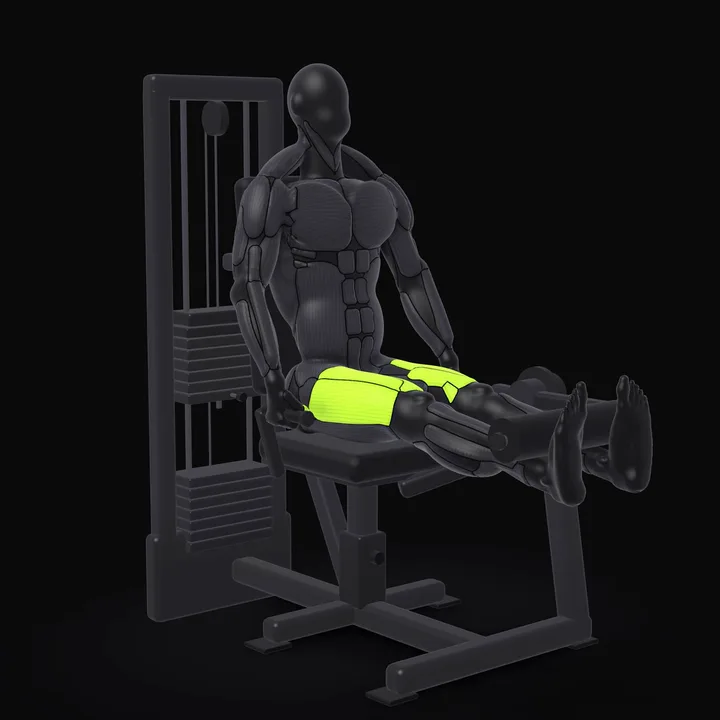 Leg ExtensionAdjust the seat so your knees line up with the pivot and the pad sits just above your ankles. Sit with your back against the pad and hold the handles.How to do the Leg Extension →
Poor candidates:
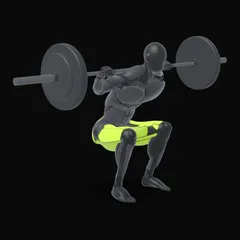
- Heavy squats, deadlifts and barbell rows: technique breaks down near failure, and the fatigue cost is high.
- Barbell bench press without safeties or a spotter: failure can mean being pinned.
- Olympic lifts and other technical movements.
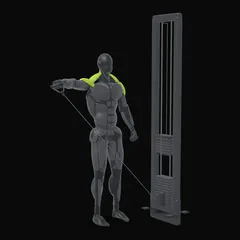
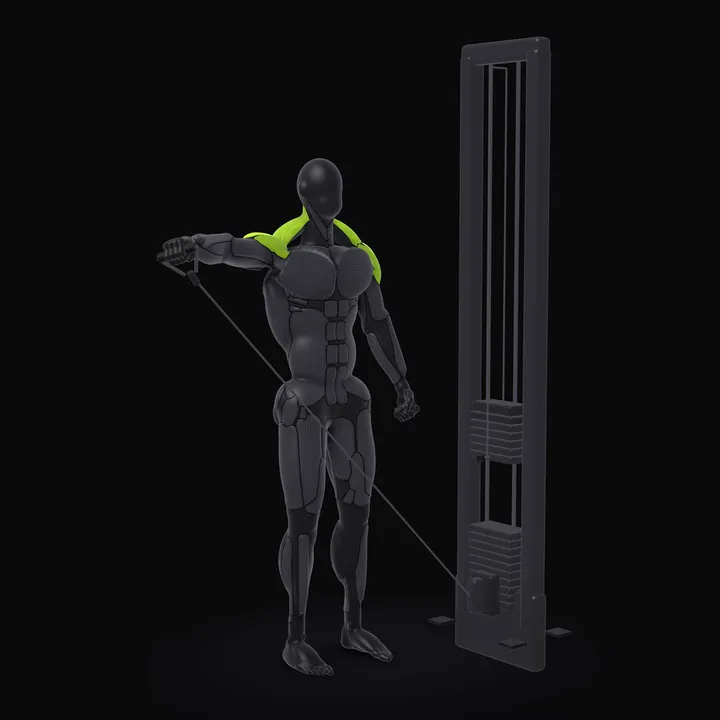 Cable Lateral RaiseStand side-on to a low pulley and grab the handle with your far hand. Raise your arm out to the side to shoulder height, elbow slightly bent.How to do the Cable Lateral Raise →
How often to go to failure
A practical approach:
- Compound lifts: stop 1–3 reps short. Maybe take the last set to technical failure once in a while to check your estimates.
- Isolation and machines: take the last set of each exercise to failure; keep earlier sets at about 1 rep in reserve.
- Deload weeks: stay far from failure.
- Watch fatigue. If your performance drops for two weeks, pull back from failure before cutting sets.
Why failure on every set backfires
Going to failure on your first set makes your second and third sets much weaker. Over a whole session, you often end up with less total quality work than if you’d left a rep in the tank. Across a week, constant failure training adds up to more fatigue, more aches and slower recovery.
That’s also why techniques that go beyond failure, such as drop sets and rest-pause, are best used sparingly, on the last set of an isolation exercise. Supersets and drop sets covers when they’re worth it.
Failure and beginners
Beginners don’t need failure training. They grow from almost any reasonably hard training, and they’re still learning technique. But it’s useful to take a few sets on safe exercises (machines, push-ups) to failure early on, simply to learn what a hard set feels like. Most beginners underestimate how many reps they have left.
When to stay further from failure
Some situations call for more reps in reserve than usual:
- During a cut. Recovery is worse when you eat less. Keep compounds at 2–3 reps in reserve and use failure only on a few isolation sets.
- High-volume phases. If you’re doing 18–20 sets per muscle per week, failure on every set is too much. More sets at 1–2 in reserve work better.
- Older lifters and returning lifters. Joints and tendons need time to adapt; build up effort over a few weeks.
- Technique work. When you’re changing your squat stance or bench setup, stay well short of failure until the new pattern is solid.
Track it
Writing down your reps in reserve, or at least marking sets you took to failure, helps you see whether your effort is consistent from week to week. If your leg press set went from 12 reps at “1 left” to 12 reps at “3 left”, you got stronger even though the numbers look the same.
Safety notes
- Always use safeties or a spotter for barbell presses and squats near failure.
- On machines, control the last rep down rather than letting the weight crash.
- Stop if a rep causes sharp pain, not just effort.
For the bigger picture of how effort fits with volume, food and sleep, see how to build muscle, and for applying effort week to week, how to apply progressive overload.
Frequently asked questions
Is training to failure necessary for muscle growth?
No. Sets stopped one to three reps short of failure build nearly as much muscle as sets taken to failure. Going all the way can add a little, especially for experienced lifters, but it also adds fatigue.
Should I go to failure on every set?
Usually not. Going to failure on every set of every exercise piles up fatigue and makes later sets worse. Save it for the last set of an exercise, mostly on machines and isolation movements.
Is it bad to train to failure on squats and deadlifts?
It's riskier. Technique tends to break down near failure, and getting stuck under a heavy barbell is dangerous without safeties. Leave one to three reps in reserve on heavy compound lifts.
What counts as failure?
Technical failure is when you can't do another rep with good form. Momentary muscular failure is when you can't complete the rep at all. For most training, technical failure is the better stopping point.
Does training to failure help strength?
Not much. Strength gains seem to be similar whether you train to failure or stop a few reps short, as long as loads are heavy. Strength responds more to heavy loads and practice than to grinding out the last rep.
Sources
- Refalo MC, Helms ER, Trexler ET, Hamilton DL, Fyfe JJ (2023). Influence of Resistance Training Proximity-to-Failure on Skeletal Muscle Hypertrophy: A Systematic Review with Meta-analysis. Sports Medicine
- Robinson ZP, Pelland JC, Remmert JF, Refalo MC, Jukic I, Steele J, Zourdos MC (2024). Exploring the Dose-Response Relationship Between Estimated Resistance Training Proximity to Failure, Strength Gain, and Muscle Hypertrophy: A Series of Meta-Regressions. Sports Medicine
- Grgic J, Schoenfeld BJ, Orazem J, Sabol F (2022). Effects of resistance training performed to repetition failure or non-failure on muscular strength and hypertrophy: A systematic review and meta-analysis. Journal of Sport and Health Science