Supersets, drop sets, rest-pause and myo-reps are ways to get more hard work done in less time. A superset pairs two exercises back to back; a drop set continues a set with a lighter weight after you reach failure; rest-pause and myo-reps use short breaks to squeeze extra reps out of the same weight. None of them build more muscle per hard set than normal sets, but they save time, and used sparingly on the right exercises they’re very effective. Here’s how each works and when to use it.
Why use these techniques at all?
Muscle grows from hard sets: sets taken reasonably close to failure. Normal straight sets with full rest are the simplest way to do that. These techniques are tools for when you want the same stimulus in less time, or a bit more stimulus without extra sets.
A review on time-efficient training concluded that supersets, drop sets and similar techniques can cut session time substantially while producing similar gains in strength and muscle compared with traditional sets (Iversen et al., 2021). The trade-off: they feel harder.
Supersets
A superset is two exercises done back to back with little or no rest between them, then a rest before repeating.
| Type | Example | Use for |
|---|---|---|
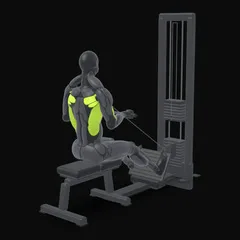
| Antagonist (opposing muscles) | Dumbbell bench press + cable row | Saving time with minimal performance loss |
| Upper + lower | Leg press + shoulder press | Saving time, spreading fatigue |
| Agonist / compound set (same muscle) | Dumbbell press + push-ups | Intensity technique, not time-saving |
| Unrelated small muscles | Lateral raises + calf raises | Efficient finishing work |
In a study comparing traditional sets, supersets and tri-sets with the same exercises, the superset and tri-set structures got the work done much faster, but felt harder and produced more markers of fatigue (Weakley et al., 2017).
How to do it: set up both stations before you start. Do a set of exercise A, rest 30–60 seconds, do a set of exercise B, rest 60–90 seconds, repeat. For heavy compound pairs, a little rest between the two exercises keeps your performance up.
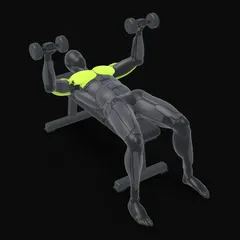
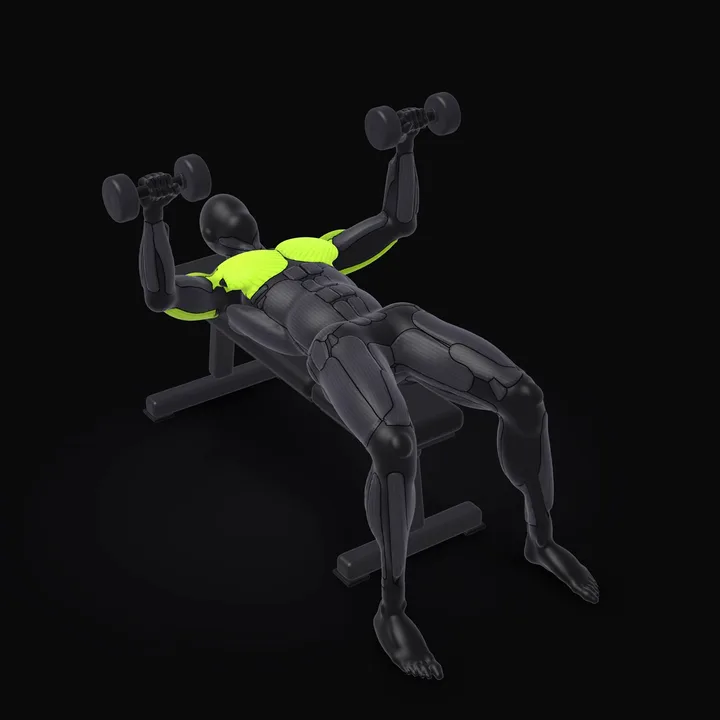 Dumbbell Bench PressSit on the end of the bench with the dumbbells on your thighs, then lie back bringing them beside your chest. Keep your feet on the floor and your shoulder blades pulled back.How to do the Dumbbell Bench Press →
Drop sets
A drop set continues a set past failure by reducing the weight. Do a set to failure or near failure, immediately drop the weight by about 20–30 %, and continue to failure again. Repeat one or two more times.
Example on a cable lateral raise: 10 kg × 12 (failure) → 7.5 kg × 6 → 5 kg × 5.
Best for: machines, cables and dumbbell racks, where changing the weight takes seconds. Isolation exercises for small muscles such as delts, arms and calves.
Avoid on: heavy barbell squats, deadlifts, bench presses and rows. Technique near failure with heavy barbells is risky.
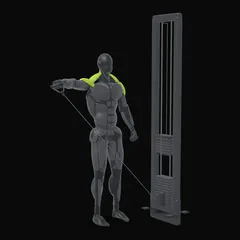
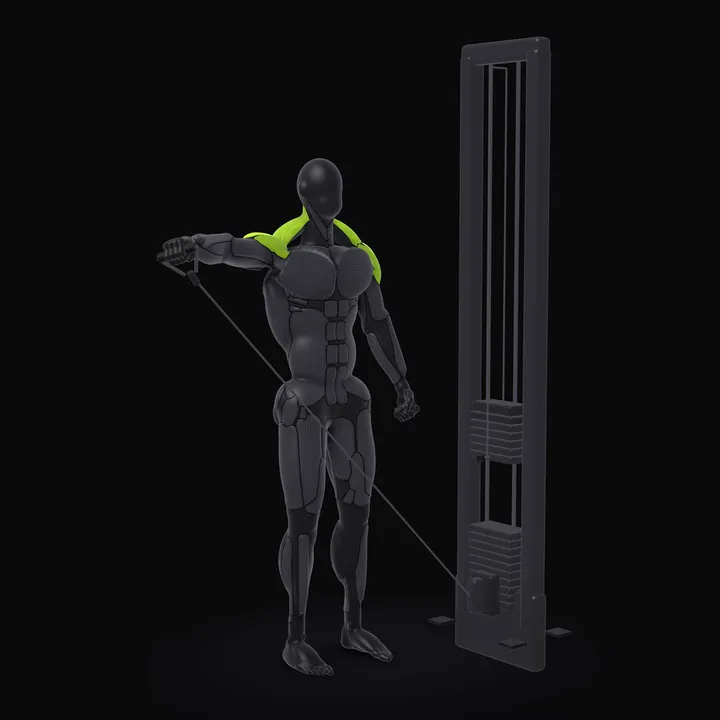 Cable Lateral RaiseStand side-on to a low pulley and grab the handle with your far hand. Raise your arm out to the side to shoulder height, elbow slightly bent.How to do the Cable Lateral Raise →
Rest-pause sets
A rest-pause set uses one weight with short breaks to squeeze out more reps.
Example on a machine chest press: do a set to about 1 rep short of failure (say 10 reps), rest 15–20 seconds, do as many as you can (maybe 3–4), rest 15–20 seconds, do a few more (maybe 2). That’s roughly three sets’ worth of hard reps in about one minute.
Best for: machines and dumbbell exercises in the 8–15 rep range, at the end of a session.
Myo-reps
Myo-reps are a structured form of rest-pause. Do an “activation set” of 12–20 reps close to failure, rest about 3–5 deep breaths, then do mini-sets of 3–5 reps with the same short rests until you can’t complete the target reps.
Example on an EZ-bar curl: 15 reps → 5 breaths → 4 → 5 breaths → 4 → 5 breaths → 4 → 5 breaths → 3 (stop). Five “effective” sets in about two minutes.
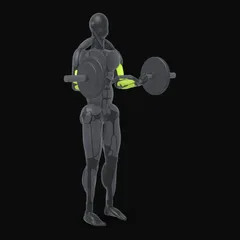
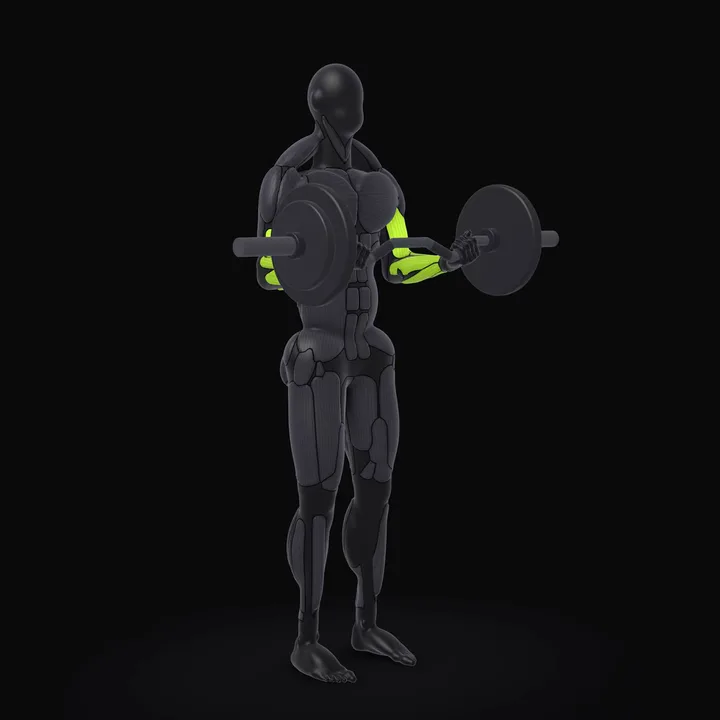 EZ Bar Biceps CurlGrip the EZ bar on its angled sections with palms facing up. Stand tall with your elbows close to your sides.How to do the EZ Bar Biceps Curl →
Which technique for which situation?
| Situation | Best technique |
|---|---|
| Short on time, full session | Antagonist supersets |
| Last set of an isolation exercise | Drop set or myo-reps |
| Home with one pair of dumbbells | Rest-pause or myo-reps (no weight changes needed) |
| Heavy strength work | None; use straight sets with full rest |
| Beginner | Mostly straight sets; antagonist supersets are fine |
Ready-made short sessions built on supersets are in the 30 minute gym workout.
How often to use them
- Supersets: as often as you like, if they don’t hurt your performance on key lifts.
- Drop sets, rest-pause, myo-reps: one or two exercises per session, on the last set. More than that adds fatigue quickly.
- Deload weeks: skip them.
They all push you to or past failure. For how close to failure you should normally train, read training to failure.
Logging intensity techniques
A drop set or a myo-rep set doesn’t fit neatly into “weight × reps”. Write it out (for example “10 kg × 12, 7.5 × 6, 5 × 5”), or note the technique next to the set. Otherwise next week’s comparison is meaningless, and you lose track of whether you’re actually progressing.
Common mistakes
- Using drop sets on everything. Fatigue piles up; sessions get worse.
- Supersetting two heavy compound lifts for the same muscle. The second one suffers.
- Shortening rest on your main strength lift to fit a superset. Keep full rest on the first exercise; superset the accessories.
- Treating them as a replacement for progression. Getting stronger over time still matters most; see how to apply progressive overload.
Frequently asked questions
Are supersets good for building muscle?
Yes, especially antagonist supersets that pair opposing muscles, like chest and back. They let you do the same amount of work in less time without hurting performance much. They don't build more muscle per set; they save time.
Do drop sets build more muscle?
Not more per unit of effort, but they pack a lot of hard work into a short time. They're useful on the last set of an isolation exercise, especially when time is limited. Using them on every set adds fatigue without clear extra benefit.
What's the difference between rest-pause and myo-reps?
Both use short rests to squeeze more hard reps out of one weight. Rest-pause is usually a heavy set to near failure, 15 to 20 seconds of rest, then a few more reps, repeated once or twice. Myo-reps start with a longer activation set, then several mini-sets of 3 to 5 reps with very short rests.
Can I superset the same muscle?
You can, as a compound set (for example dumbbell press then flyes), but it's an intensity technique, not a time-saver. The second exercise will be much weaker. Pairing different muscles is better for most purposes.
Sources
- Iversen VM, Norum M, Schoenfeld BJ, Fimland MS (2021). No time to lift? Designing time-efficient training programs for strength and hypertrophy: a narrative review. Sports Medicine
- Weakley JJS, Till K, Read DB, Roe GAB, Darrall-Jones J, Phibbs PJ, Jones B (2017). The effects of traditional, superset, and tri-set resistance training structures on perceived intensity and physiological responses. European Journal of Applied Physiology