A 30 minute gym workout can build muscle as long as it’s dense: four to six exercises paired into supersets, a two-minute warm-up instead of ten, and sets that end close to failure. Do that three or four times a week and every muscle gets enough hard sets to grow. Below are the principles that make short sessions work and three ready-made templates for 30 to 45 minutes.
Why short workouts work
Most of a typical hour in the gym isn’t lifting. It’s warm-ups that run long, rest periods that stretch into scrolling, and walking around looking for free equipment. The actual hard sets often take less than 20 minutes.
A narrative review on time-efficient training put it plainly: you can build strength and muscle with relatively short sessions by prioritizing compound and machine exercises, using supersets and similar techniques, and training close to failure (Iversen et al., 2021). Muscle grows across a wide range of loads as long as sets are hard (Lopez et al., 2021), so you don’t need long rests between very heavy sets to get results.
The five rules for a 30-minute session
1. Superset non-competing exercises. Do a set of exercise A, rest about 45–60 seconds, do a set of exercise B, rest again, and repeat. While one muscle group rests, the other works. A study comparing traditional sets with supersets and tri-sets found that the superset structures got the same work done in much less time, at the cost of feeling harder (Weakley et al., 2017). Good pairs: bench press + row, shoulder press + pulldown, leg press + leg curl, curls + pushdowns.
2. Pick exercises that are fast to set up. Machines and cables let you change the weight in two seconds. Dumbbells too. A barbell squat with plate loading and unloading eats minutes.
3. Warm up inside the workout. Two minutes on a bike or a few bodyweight squats and arm swings, then one or two lighter sets of your first exercise. Later exercises use the first light set as the warm-up.
4. Go close to failure. With fewer sets, each needs to count. Finish sets with 0–2 reps in reserve, especially on machines and isolation exercises.
5. Train often enough. Short sessions three or four times a week beat one long session. Each muscle should be hit at least twice a week.
Where the 30 minutes actually go
It helps to see the clock. Here’s how Workout A below fits into half an hour:
| Minutes | What you’re doing |
|---|---|
| 0–3 | Bike or rower, then 10 bodyweight squats and arm swings |
| 3–6 | Two ramp-up sets on the leg press, one light set of dumbbell bench |
| 6–15 | Superset A: leg press and dumbbell bench, 3 rounds |
| 15–24 | Superset B: Romanian deadlift and lat pulldown, 3 rounds |
| 24–30 | Superset C: lateral raises and cable crunches, 2 rounds |
Each round of a superset takes about three minutes: roughly 40 seconds per set and 45–60 seconds of rest after each one. If you keep landing at 38 minutes, you’re resting too long or chatting between rounds. A rest timer fixes both.
Template 1: 30-minute full body (3 days a week)
Alternate Workout A and B on three non-consecutive days.
Workout A
| Block | Exercise | Sets × reps | Rest |
|---|---|---|---|
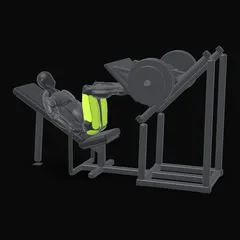
| A1 | Leg press | 3 × 8–12 | 45–60 s |
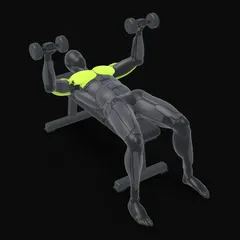
| A2 | Dumbbell bench press | 3 × 8–12 | 45–60 s |
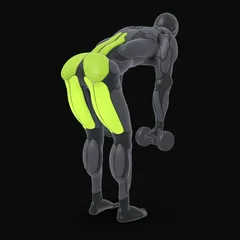
| B1 | Dumbbell Romanian deadlift | 3 × 8–12 | 45–60 s |
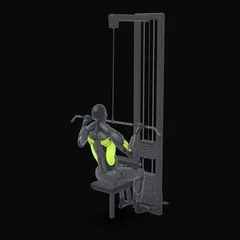
| B2 | Lat pulldown | 3 × 8–12 | 45–60 s |
| C1 | Lateral raise | 2 × 12–20 | 30 s |
| C2 | Cable crunch | 2 × 10–15 | 30 s |
Workout B
| Block | Exercise | Sets × reps | Rest |
|---|---|---|---|
| A1 | Goblet squat or hack squat | 3 × 8–12 | 45–60 s |
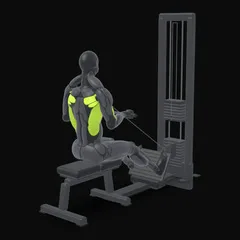
| A2 | Seated cable row | 3 × 8–12 | 45–60 s |
| B1 | Seated leg curl | 3 × 10–12 | 45–60 s |
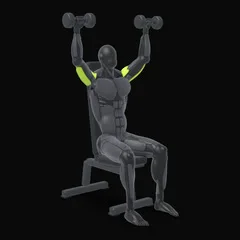
| B2 | Seated dumbbell press | 3 × 8–12 | 45–60 s |
| C1 | EZ-bar curl | 2 × 10–12 | 30 s |
| C2 | Triceps pushdown | 2 × 10–12 | 30 s |
That’s 16 hard sets in about 30 minutes. Over three sessions, each major muscle gets roughly 8–10 direct sets a week.
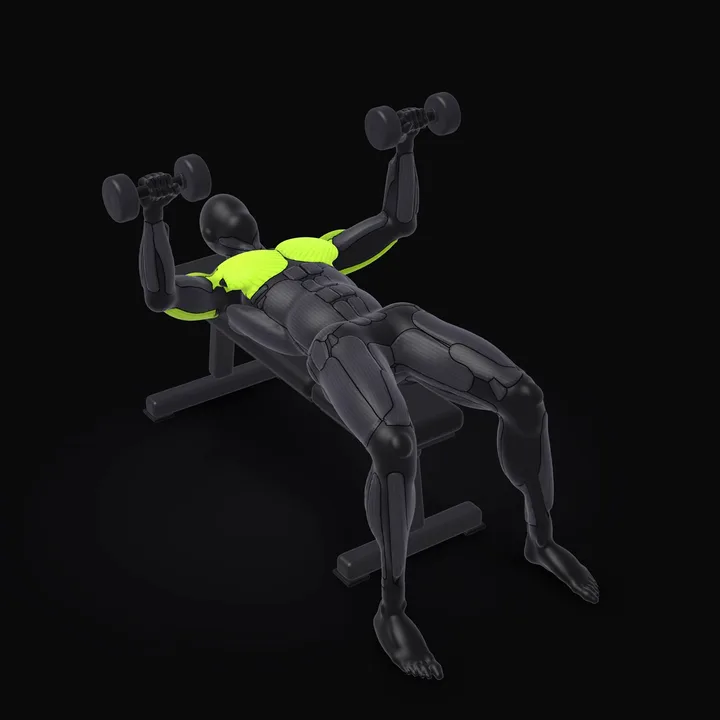 Dumbbell Bench PressSit on the end of the bench with the dumbbells on your thighs, then lie back bringing them beside your chest. Keep your feet on the floor and your shoulder blades pulled back.How to do the Dumbbell Bench Press →
Template 2: 30-minute upper/lower (4 days a week)
| Upper (Mon, Thu) | Lower (Tue, Fri) |
|---|---|
| A1 Incline dumbbell press 3 × 8–12 | A1 Hack squat or leg press 3 × 8–12 |
| A2 Chest-supported row 3 × 8–12 | A2 Hanging knee raise 3 × 10–15 |
| B1 Machine shoulder press 3 × 8–12 | B1 Romanian deadlift 3 × 8–12 |
| B2 Lat pulldown 3 × 8–12 | B2 Leg extension 2 × 12–15 |
| C1 Cable lateral raise 2 × 12–15 | C1 Leg curl 2 × 10–12 |
| C2 Incline curl + pushdown 2 × 10–12 | C2 Calf raise 3 × 10–15 |
Four of these sessions give most muscles 6–12 hard sets a week. That’s enough for steady progress; if chest or quads need more, add a fourth set to the first superset, which costs about two minutes.
Template 3: 45 minutes with a heavy lift
If you have 45 minutes and want strength as well, start with one heavy compound at full rest, then switch to supersets:
| Block | Exercise | Sets × reps | Rest |
|---|---|---|---|
| 1 | Back squat, bench press or trap bar deadlift (rotate each session) | 3 × 4–6 | 2–3 min |
| A1 / A2 | A press + a row (whichever wasn’t the main lift) | 3 × 8–12 each | 60 s |
| B1 / B2 | A leg exercise + a vertical pull | 3 × 8–12 each | 60 s |
| C1 / C2 | Two isolation exercises (arms, delts or calves) | 2 × 12–15 each | 30–45 s |
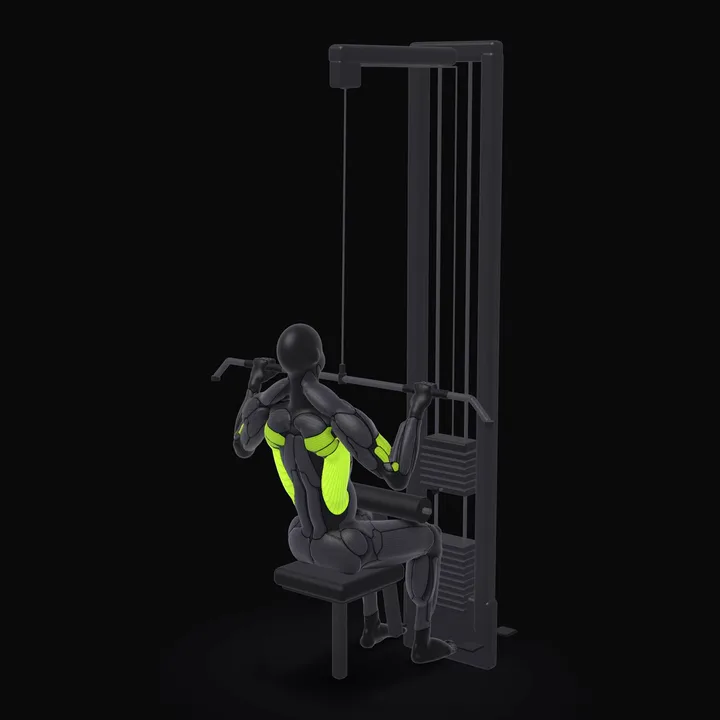 Cable Lat PulldownAdjust the thigh pad to lock your legs in and grab the wide bar slightly wider than your shoulders. Sit with your chest up and lean back slightly.How to do the Cable Lat Pulldown →
Other time savers
- Plan the session before you arrive. Know your exercises, weights and target reps. Deciding in the gym wastes minutes.
- Train at quieter times if you can, or pick exercises you can do in one corner with a pair of dumbbells and a bench.
- Use rest-pause or a drop set on the last set of isolation exercises. They add effective reps in seconds. There’s more on these in supersets and drop sets.
- Keep your phone for the timer and your log, not your feed.
How to progress on short workouts
The same way as on any program: add reps until you hit the top of the rep range on every set, then add a little weight. Because supersets shorten rest, your numbers may be a little lower than on a traditional setup. That’s fine as long as they keep going up over time. Compare each session with the same session last week; that’s progressive overload in practice.
Short sessions leave no time to wonder what you did last week, so have the numbers ready.
A worked example: four weeks of Workout A
Say you start the leg press at 100 kg and the dumbbell bench at 2 × 18 kg (36 kg in total), both for 3 × 8–12.
| Week | Leg press | Dumbbell bench |
|---|---|---|
| 1 | 100 kg: 12, 11, 10 | 36 kg: 10, 9, 8 |
| 2 | 100 kg: 12, 12, 12 → add weight | 36 kg: 11, 10, 9 |
| 3 | 110 kg: 10, 9, 9 | 36 kg: 12, 11, 10 |
| 4 | 110 kg: 11, 11, 10 | 36 kg: 12, 12, 12 → add weight |
Legs usually move faster than upper-body pressing. Each exercise follows its own pace, and both are progressing.
When you miss reps or feel flat
- Reps drop on one session: repeat the same weight next time. Short sleep, a skipped meal or a stressful day is usually the cause.
- Reps drop two sessions in a row: check your rest. Superset rest tends to creep down as you get efficient. Go back to a full 60 seconds before you lower the weight.
- Stalled for three weeks on an exercise: swap it for a close variation (incline for flat, hack squat for leg press) and start a new run of progress.
- Everything feels heavy after 6–8 weeks: take a deload week with the same exercises, two sets each, and about two reps further from failure.
When the machine you need is taken
A busy gym kills a short workout faster than anything. Have a backup ready for each slot:
| Planned | Quick swap |
|---|---|
| Leg press | Goblet squat or Bulgarian split squat with dumbbells |
| Dumbbell bench press | Machine chest press or push-ups |
| Lat pulldown | Assisted pull-up machine or a single-arm cable pulldown |
| Seated cable row | One-arm dumbbell row on any bench |
| Seated leg curl | Lying leg curl or dumbbell Romanian deadlift |
You can also run a superset as a “one corner” pair: a bench and one set of dumbbells covers press, row, split squat and Romanian deadlift. If your training is mostly at home, the dumbbell-only workout plan is built around exactly that setup.
How long to run a template
Stay on one template for 8–12 weeks, as long as your numbers keep climbing. Changing exercises every week makes it impossible to tell if you’re getting stronger. When progress stalls across most lifts, keep the structure and swap two or three exercises for close variations. If your schedule opens up later, the same supersets slot straight into a longer session: add a fourth round to the first two blocks and a heavy lift at the start, like Template 3.
Common mistakes with quick workouts
- Turning it into a cardio circuit. Rushing from station to station with 10-second breaks turns strength work into conditioning. Keep 45–60 seconds between sets of the same superset.
- Pairing two exercises for the same muscle. Bench press then push-ups is a burnout, not a time-saving superset; the second exercise suffers.
- Too many exercises. Four to six is the sweet spot. Eight exercises in 30 minutes means one hurried set of each.
- Skipping legs because they take time. Leg press and leg curl supersets are fast.
If you’re wondering whether short sessions are a compromise, how long should a workout be breaks down where the time in a long session actually goes. And if two sessions a week is all you can manage, see the 2 day workout plan.
Frequently asked questions
Is a 30 minute workout enough to build muscle?
Yes, if it's dense and hard. Three or four 30-minute sessions a week can give each muscle 8 to 12 hard sets, which is enough for steady muscle gain, especially for beginners and intermediates. Supersets and short warm-ups make the difference.
How many exercises should I do in 30 minutes?
Four to six, organized as two or three supersets. That gives you about 12 to 15 hard sets in the session. More exercises than that and you'll spend your time moving between stations.
Should I do full body or a split with 30 minute workouts?
Full body if you train three times a week, upper/lower if you train four. Both hit each muscle at least twice a week, which matters more when sessions are short.
Do I need to warm up for a 30 minute workout?
Yes, but briefly: two or three minutes of easy movement and one or two lighter sets of the first exercise. Skip long cardio warm-ups and static stretching; they eat your time without making the session better.
Can I build strength with short workouts?
Yes. Keep one heavier compound exercise early in each session with full rest, and use supersets for the rest. Strength responds well to relatively low volume as long as the sets are heavy.
Sources
- Iversen VM, Norum M, Schoenfeld BJ, Fimland MS (2021). No time to lift? Designing time-efficient training programs for strength and hypertrophy: a narrative review. Sports Medicine
- Weakley JJS, Till K, Read DB, Roe GAB, Darrall-Jones J, Phibbs PJ, Jones B (2017). The effects of traditional, superset, and tri-set resistance training structures on perceived intensity and physiological responses. European Journal of Applied Physiology
- Lopez P, Radaelli R, Taaffe DR, et al. (2021). Resistance Training Load Effects on Muscle Hypertrophy and Strength Gain: Systematic Review and Network Meta-analysis. Medicine & Science in Sports & Exercise