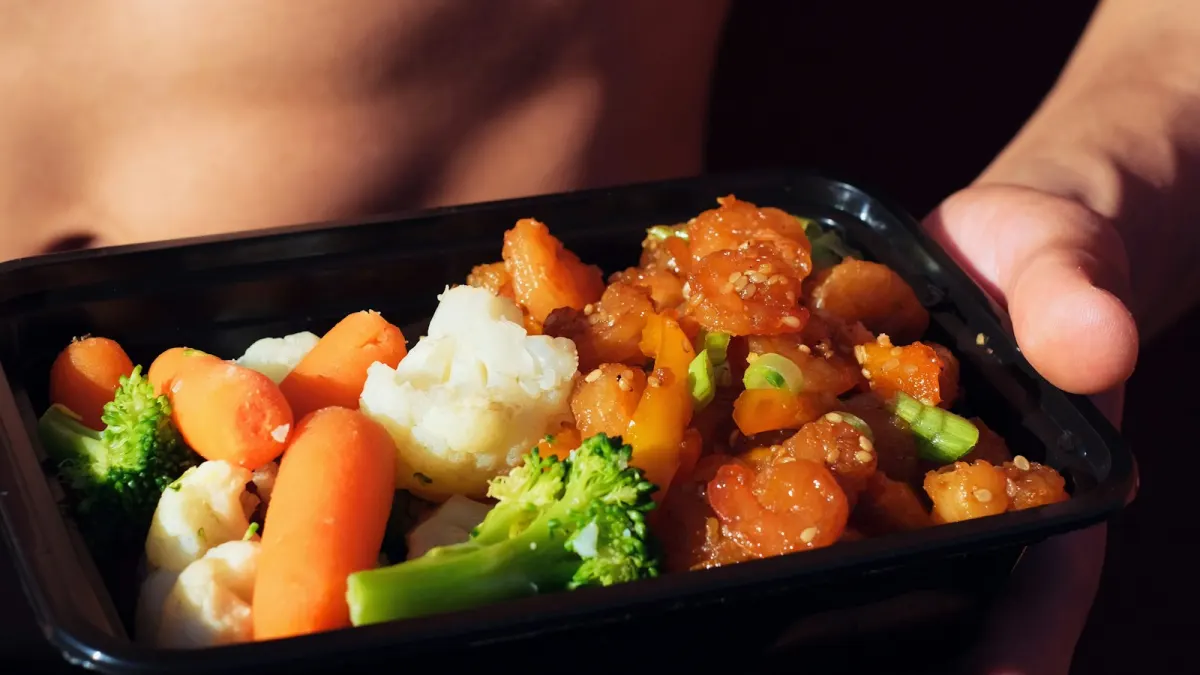
Before a workout, eat a normal meal with protein and carbs 2–3 hours before, or a small, easy-to-digest snack 30–60 minutes before if you’re short on time. After a workout, have a meal with 20–40 g of protein within a few hours. That’s it. The “30-minute anabolic window” is mostly a myth: your total protein and calories for the day matter far more than the exact minute you eat.
Does workout nutrition timing matter?
Less than supplement ads suggest. The idea that you must drink a shake within 30 minutes of your last set comes from short-term lab studies measuring muscle protein synthesis for a few hours. When researchers looked at actual muscle growth over weeks, the picture changed.
A meta-analysis by Schoenfeld, Aragon and Krieger (2013) found that the apparent benefit of protein timing disappeared once total daily protein was accounted for. In other words, people who took protein around their workouts grew more mainly because they ate more protein overall. Their companion review (Aragon & Schoenfeld, 2013) suggested a practical rule: keep the gap between your pre- and post-workout protein meals to about 3–4 hours or less, and you’re covered.
The ISSN position stand on nutrient timing (Kerksick et al., 2017) agrees that timing can help in some situations (fasted training, multiple sessions a day, endurance events), but total intake comes first.
What to eat before a workout
The goal before lifting: enough energy to train hard, nothing that sits heavy in your stomach.
2–3 hours before: a normal meal
A balanced meal with protein, carbs, some fat and vegetables. Examples:
- Chicken, rice and vegetables
- Omelette with toast and fruit
- Pasta with tuna or lean mince and tomato sauce
- Greek yoghurt bowl with oats, berries and honey
- A wrap with turkey, cheese and salad, plus a piece of fruit
30–60 minutes before: a light snack
If your last meal was a while ago, have something small, mostly carbs, low in fat and fibre so it digests fast:
| Snack | Why it works |
|---|---|
| Banana | Quick carbs, easy on the stomach |
| Rice cakes with honey or jam | Fast carbs, almost no fat |
| Small yoghurt or skyr | Some protein, light |
| A slice of toast with a bit of peanut butter | Carbs plus a little protein |
| Glass of milk or a small shake | Liquid, quick to digest |
Training first thing in the morning
Fasted training is fine for many people, especially for sessions under an hour. Some feel weaker on heavy sets without food. Try both. If you train fasted, a banana or a glass of milk on the way to the gym is a reasonable compromise, and caffeine can help; see does pre-workout work for doses.
What to eat after a workout
The goal after training: protein to support muscle repair and growth, and normal meals to refuel.
Protein: 20–40 g
About 0.4 g of protein per kg of bodyweight per meal is a good target, which is 25–40 g for most people. Larger people, older lifters and those who trained the whole body may benefit from the upper end. Total daily protein of 1.6–2.2 g/kg matters most; see how much protein to build muscle.
Carbs: refuel at your normal meals
Carbs refill the glycogen used during training. For most lifters training once a day, normal carb-containing meals over the following hours are enough. If you train twice a day or the same muscles again the next day, getting carbs in sooner is more useful.
Post-workout meal ideas
| Meal | Protein (approx.) |
|---|---|
| 200 g chicken breast, potatoes, salad | 50 g |
| 3-egg omelette, 2 slices of toast, a glass of milk | 28 g |
| Salmon, rice and green beans | 35 g |
| 250 g Greek yoghurt with granola and fruit | 25 g |
| Lentil and chickpea curry with rice (big portion) | 25 g |
| Whey shake with milk and a banana | 30–35 g |
A shake isn’t magic, just convenient. If you’re heading straight to work or won’t eat for several hours, it’s useful. More on choosing one in our whey protein guide.
Timing examples for real days
Train at 7:00, before work: a banana or nothing → train → breakfast with eggs or yoghurt at 8:15.
Train at 12:30, lunch break: breakfast at 8:00 with protein → snack at 11:30 if hungry → train → lunch at 13:45.
Train at 18:30, after work: lunch at 12:30 → snack with some protein at 16:00–17:00 (yoghurt and fruit, a sandwich) → train → dinner at 20:00.
Train at 21:00, late: dinner at 18:30 → train → a protein snack or small meal before bed if dinner was light.
None of these needs a shaker bottle in your gym bag.
Does what you eat change on a bulk or cut?
The structure stays the same; portions change.
- On a bulk: pre- and post-workout meals are an easy place to add calories, especially carbs. See how to bulk.
- On a cut: place a bigger share of your carbs around training so sessions feel better, and keep protein high at every meal. See how to cut without losing muscle.
Hydration and supplements
- Water: start training hydrated. A glass or two of water in the hour before is plenty for most sessions; sip during.
- Caffeine: 3–6 mg per kg about 45–60 minutes before training improves performance for many people, according to the ISSN position stand on caffeine (Guest et al., 2021). Watch the timing if you train late.
- Creatine: timing barely matters; take it daily whenever you’ll remember. See our creatine guide.
Eat for the session you have planned
Nutrition shows up in your performance. If your top sets keep feeling flat on certain days, look at what and when you ate before them. Brick lets you see last time’s weights and reps for each set, so a dip on a particular day stands out, and you can add a quick note to the workout to connect it to a missed meal or short night.
Common mistakes
- Panicking about the window. If you ate in the last few hours, you have time.
- Training on an empty tank by accident. Skipping lunch and lifting at 18:00 often leads to a bad session.
- A huge meal right before squats. Leave at least 2 hours after a big meal.
- Relying on shakes and bars. Real meals cover more nutrients for less money.
- Forgetting the rest of the day. Pre- and post-workout meals are two of your meals, not the whole plan.
Frequently asked questions
Is it bad to lift weights on an empty stomach?
Not necessarily. Many people train well fasted in the morning, especially for shorter sessions. If you feel weak, dizzy or your performance drops, eat a small snack like a banana or yoghurt 30–60 minutes before. Make sure to eat a proper protein-rich meal afterwards.
How soon after a workout should I eat?
Within a few hours is fine. If you ate a meal with protein in the 2–3 hours before training, there's no rush. If you trained fasted, eating within an hour or so is a sensible habit.
Is a protein shake after the gym necessary?
No. A shake is a convenient way to get 20–40 g of protein, but a normal meal does the same job. Use one if it fits your day or helps you hit your daily protein.
Should I eat carbs after a workout to build muscle?
Carbs aren't needed to switch on muscle building when protein is adequate. They do refill muscle glycogen, which matters if you train the same muscles again within a day or do a lot of endurance work. For most lifters, carbs at your normal meals are enough.
Sources
- Aragon AA, Schoenfeld BJ (2013). Nutrient timing revisited: is there a post-exercise anabolic window?. Journal of the International Society of Sports Nutrition
- Schoenfeld BJ, Aragon AA, Krieger JW (2013). The effect of protein timing on muscle strength and hypertrophy: a meta-analysis. Journal of the International Society of Sports Nutrition
- Kerksick CM, Arent S, Schoenfeld BJ, Stout JR, Campbell B, et al. (2017). International society of sports nutrition position stand: nutrient timing. Journal of the International Society of Sports Nutrition
- Guest NS, VanDusseldorp TA, Nelson MT, Grgic J, Schoenfeld BJ, Jenkins NDM, et al. (2021). International society of sports nutrition position stand: caffeine and exercise performance. Journal of the International Society of Sports Nutrition