The best workout split is the one that lets you train each muscle about twice a week with enough hard sets, on the number of days you can really show up. In practice: full body for 2–3 days a week, upper/lower for 4, a hybrid for 5 and push pull legs for 6. Research shows that when weekly volume is the same, the split itself makes little difference, so choose for your schedule first and your preferences second.
What is a workout split?
A split is how you divide your muscles across the training week. Every split answers the same two questions: which muscles do you train in each session, and how often does each muscle come back?
The four classic options:
- Full body: every session trains the whole body, usually with one exercise per major muscle group.
- Upper/lower: you alternate upper-body days (chest, back, shoulders, arms) and lower-body days (quads, hamstrings, glutes, calves).
- Push/pull/legs (PPL): pushing muscles (chest, shoulders, triceps), then pulling muscles (back, biceps, rear delts), then legs.
- Body-part or “bro” split: one or two muscle groups per day, for example chest Monday, back Tuesday, shoulders Wednesday, and so on.
Does the split actually matter?
Less than gym forums suggest. What matters is the total amount of hard work each muscle gets per week and whether you add weight or reps over time.
A 2024 meta-analysis compared split routines and full-body routines head to head and found similar gains in both strength and muscle size (Ramos-Campo et al., 2024). That fits the bigger picture: weekly volume is the main lever for muscle growth, with more weekly sets producing more growth up to a point. An early meta-analysis put the threshold for better results at around 10 or more sets per muscle per week (Schoenfeld et al., 2017).
So the split is a tool for distributing those sets. A good split makes it easy to reach your weekly volume with sessions short enough that you’re still fresh at the end. A bad split forces you to cram, skip or repeat.
How often should you train each muscle?
Twice a week is the sensible default. The first meta-analysis on the question found that training a muscle twice a week beat once a week for hypertrophy (Schoenfeld et al., 2016). A follow-up that looked only at studies with equal weekly volume found no meaningful difference between frequencies (Schoenfeld et al., 2019). Higher frequency mostly helps because it makes higher volume practical.
For strength, frequency matters a little more. Strength gains rise with frequency, but mainly because frequent training lets you do more total work: when volume was matched, the advantage largely disappeared (Grgic et al., 2018). A 2025 set of meta-regressions with 67 studies reached the same split verdict: frequency showed clear effects on strength, while for muscle size weekly volume did most of the work (Pelland et al., 2025).
The 2026 ACSM position stand, which pooled 137 systematic reviews, keeps the practical message simple: train every major muscle group at least two days a week (Currier et al., 2026).
Here is why twice a week is easier in practice. Suppose your chest needs 12 hard sets a week:
| Frequency | Chest sets per session | What it feels like |
|---|---|---|
| 1× per week | 12 | The last 6 sets are done tired, form and load drop |
| 2× per week | 6 | Every set is done reasonably fresh |
| 3× per week | 4 | Short, focused work, great for practising technique |
Full body vs upper/lower vs push pull legs vs bro split
| Split | Days per week | Each muscle trained | Best for | Watch out for |
|---|---|---|---|---|
| Full body | 2–3 | 2–3× per week | Beginners, busy schedules | Sessions get long once you need more volume |
| Upper/lower | 4 | 2× per week | Intermediates, most people with 4 days | Upper days can run long if arms get a lot of work |
| Push/pull/legs | 3 or 6 | 1× (3 days) or 2× (6 days) | Advanced lifters with time to train often | Only 1× per muscle when run over 3 days |
| Bro split | 5 | 1× per week | People who love long single-muscle sessions | Low frequency, a missed day = muscle untrained for 2 weeks |
Full body
The best workout split for beginners. You squat, press and pull several times a week, so technique improves quickly, and each muscle gets 2–3 sessions. If you miss a day, nothing goes untrained. The downside appears later: once you need 15 sets for legs and 15 for back, a full-body session can stretch past 90 minutes.
Upper/lower
The workhorse split for 4 days a week. Each muscle gets hit twice, sessions stay around an hour, and you get a full day between the same session type. It also adapts easily to 3 days (upper, lower, full body) or 5 days.
Push pull legs vs upper/lower
This is the most common question, and the honest answer is that they’re cousins. Run over 6 days, push pull legs trains each muscle twice a week, exactly like upper/lower over 4 days. The difference is in session size: PPL spreads the same weekly volume over more, shorter sessions. If you have 6 days and recover well, PPL feels great. If you have 4 days, upper/lower wins easily. Running PPL over only 3 days drops every muscle to once a week, which puts it back in bro-split territory.
The bro split
Chest day, back day, shoulder day, arm day, leg day. It can build muscle when volume is high and you push hard, and some people simply enjoy it. But it trains each muscle only once a week, piles every set into one session, and a missed leg day means two weeks without leg training. For most people, the same five days are better spent on a hybrid split.
Which split for your goal and experience?
- Beginner (less than about 1 year of consistent training): full body, 2–3 days. Learning the lifts is the priority, and you don’t yet need high volume. This 3-day beginner full-body program is a ready-to-run example.
- Intermediate: upper/lower on 4 days, or full body on 3 days with a bit more volume per session.
- Advanced: upper/lower, a 5-day hybrid or push pull legs on 6 days. Your choice depends mostly on how much volume you need and how much time you have.
- Goal: muscle size. Any split that reaches your weekly sets per muscle works. Choose the one with sessions short enough to keep effort high.
- Goal: strength. Favour splits that let you practise your main lifts 2–3 times a week, like full body or upper/lower.
- Goal: general fitness or fat loss. Full body, 2–3 days, leaves room for cardio and recovery.
Sample weekly schedules for 2 to 6 days
Rest days can move around. What matters is avoiding the same muscle on back-to-back days when it was trained hard.
2 days a week: full body
| Day | Session |
|---|---|
| Monday | Full body A |
| Thursday | Full body B |
With only two sessions, each one carries a lot: plan around 6–7 exercises and keep rest periods honest.
3 days a week: full body
| Day | Session |
|---|---|
| Monday | Full body A |
| Wednesday | Full body B |
| Friday | Full body A (then B, A, B the next week) |
Alternative for intermediates: upper, lower, full body.
4 days a week: upper/lower
| Day | Session |
|---|---|
| Monday | Upper A |
| Tuesday | Lower A |
| Thursday | Upper B |
| Friday | Lower B |
The A and B days can share exercises with a different rep range, or swap in variations (for example flat bench on A, incline on B).
5 days a week: upper/lower + push pull legs
| Day | Session |
|---|---|
| Monday | Upper |
| Tuesday | Lower |
| Wednesday | Rest |
| Thursday | Push |
| Friday | Pull |
| Saturday | Legs |
Every muscle still gets trained twice, without the length of a full-body day.
6 days a week: push pull legs
| Day | Session |
|---|---|
| Monday | Push |
| Tuesday | Pull |
| Wednesday | Legs |
| Thursday | Push |
| Friday | Pull |
| Saturday | Legs |
Six days is a lot of gym time. Only choose it if your sleep, food and schedule can keep up, and plan a lighter week when fatigue builds.
How to pick exercises for each day
Once the days are set, fill each session with the same simple logic.
1. Start with one or two compound lifts. They train several muscles at once and let you lift the heaviest loads, so they go first while you’re fresh.
2. Cover the main movement patterns over the week: a squat, a hip hinge, a horizontal push, a vertical push, a horizontal pull and a vertical pull.
3. Add isolation work for what compounds miss. Side delts, hamstrings (knee flexion), calves, biceps and triceps rarely get enough from compounds alone.
4. Keep it to 4–7 exercises per session. Beyond that, quality drops and sessions drag on.
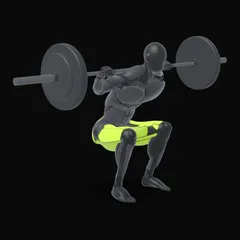
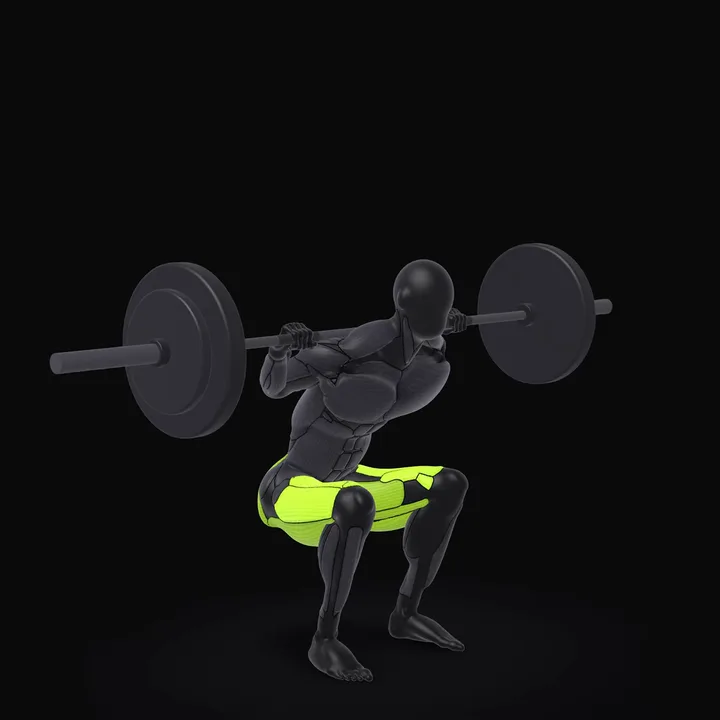 Barbell SquatPlace the bar on your upper back, not on your neck, and step out of the rack. Stand with feet slightly wider than shoulder width, toes turned out a little.How to do the Barbell Squat →
Here’s how that looks in practice:
Full body A: Barbell Squat, Barbell Bench Press, Barbell Bent-over Row, Machine Lying Leg Curl, Dumbbell Lateral Raise.
Full body B: Barbell Romanian Deadlift, Barbell Overhead Press, Cable Lat Pulldown, Dumbbell Bulgarian Split Squat, Dumbbell Biceps Curl, Cable Triceps Pushdown.
Upper: Barbell Bench Press, Barbell Bent-over Row, Dumbbell Shoulder Press, Cable Lat Pulldown, Dumbbell Lateral Raise, Cable Triceps Pushdown, Dumbbell Biceps Curl.
Lower: Barbell Squat, Barbell Romanian Deadlift, Leg Press, Machine Seated Leg Curl, Standing Calf Raise.
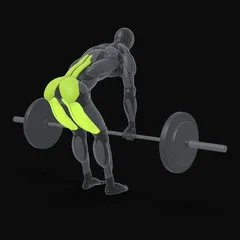
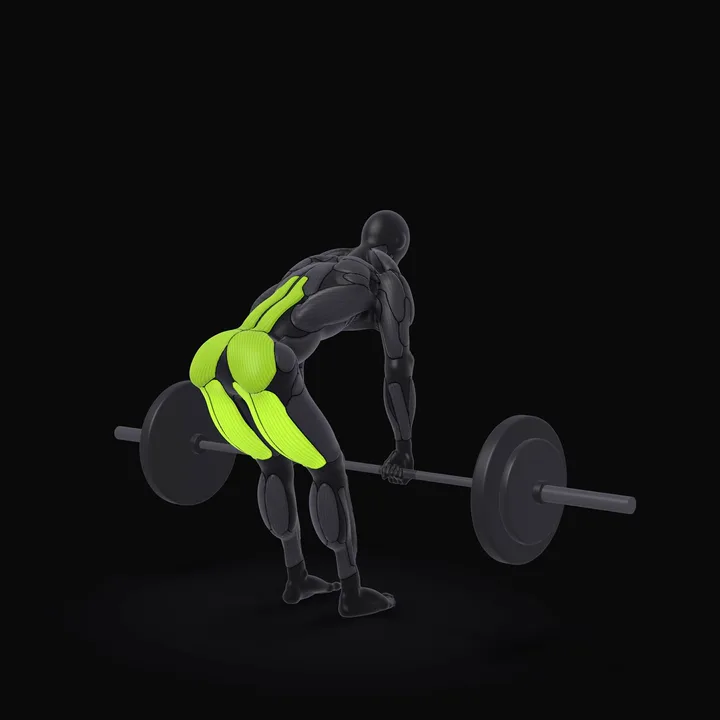 Barbell Romanian DeadliftStand holding the bar in front of your thighs with your knees slightly bent. Push your hips back and lower the bar close to your legs with a flat back.How to do the Barbell Romanian Deadlift →
Push: Barbell Bench Press, Dumbbell Incline Bench Press, Barbell Overhead Press, Dumbbell Lateral Raise, Cable Overhead Triceps Extension.
Pull: Pull-up, Barbell Bent-over Row, Cable Seated Row, Cable Face Pull, Dumbbell Hammer Curl.
Legs: Barbell Squat, Barbell Hip Thrust, Leg Extension, Machine Lying Leg Curl, Standing Calf Raise.
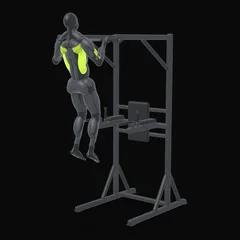
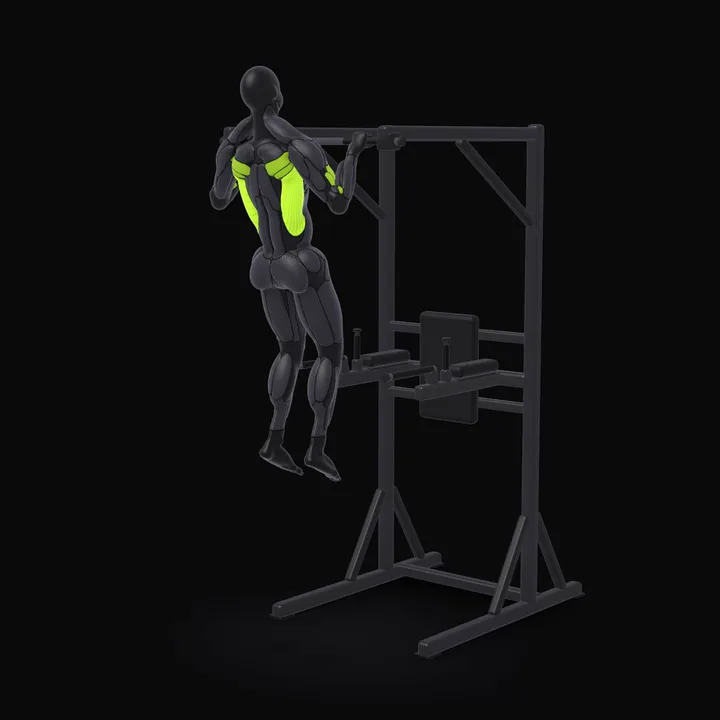 Pull-upGrab the bar with palms facing forward, hands slightly wider than your shoulders. Hang with straight arms and brace your core.How to do the Pull-up →
Training at home with dumbbells? The same structure works: Dumbbell Goblet Squat for the squat, Dumbbell Romanian Deadlift for the hinge, Dumbbell Bench Press or Push-up for the push, Dumbbell Single-arm Row for the pull.
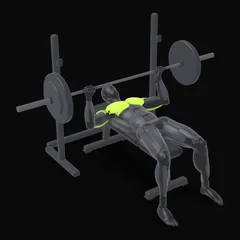
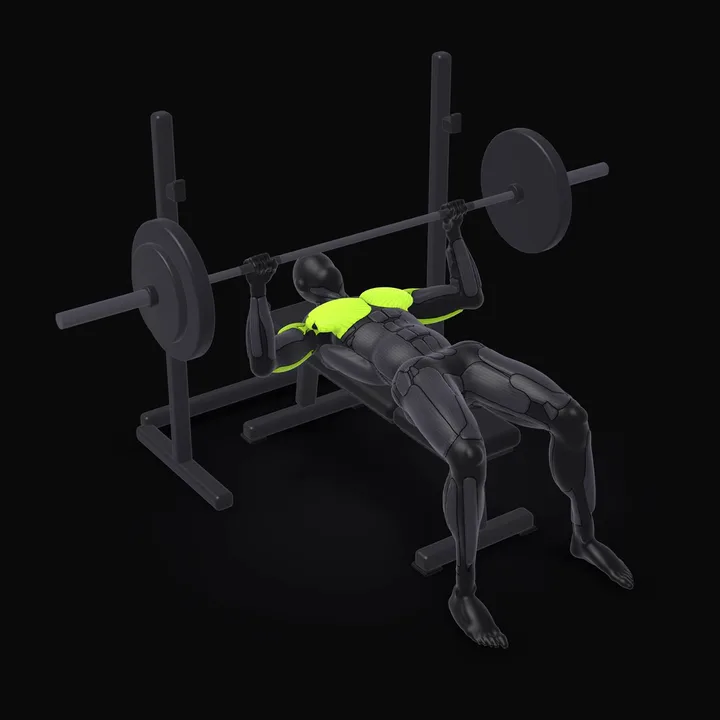 Barbell Bench PressLie on the bench with your eyes under the bar and your feet planted on the floor. Grip the bar slightly wider than shoulder width and pull your shoulder blades back and down.How to do the Barbell Bench Press →
How many sets per exercise?
Count backwards from your weekly target. If you want about 12 sets a week for back on an upper/lower split, that’s 6 per upper session: for example 3 sets of rows and 3 of pulldowns. Most hard sets should end with 1–3 reps left in the tank. Start at the lower end of volume and add sets only when progress stalls and you recover well.
Common mistakes when choosing a split
- Copying a pro’s 6-day split with a 3-day schedule. You’ll miss sessions and some muscles will go untrained for weeks.
- Too many exercises per muscle. Four chest exercises on push day is rarely better than two done with full effort.
- Forgetting legs or back. Split by movement pattern rather than by mirror muscles, and every pattern gets its turn.
- Changing program every two weeks. You can’t see whether a split works without tracking the same lifts for 6–8 weeks.
- Ignoring recovery. If your lifts drop for two weeks running, cut volume or take an easier week before adding days.
The short version
Count the days you can train week in, week out. Pick full body for 2–3, upper/lower for 4, a hybrid for 5, push pull legs for 6. Make sure each muscle gets at least two sessions and around 10 or more hard sets a week, put the heavy compounds first, and add weight or reps over time. The split is the frame; progressive overload is what builds the house.
Frequently asked questions
Is push pull legs better than upper/lower?
Not by itself. Both train each muscle about twice a week when you run them properly: upper/lower over 4 days, push pull legs over 6. Pick the one that matches how many days you can actually train. With 4 days, upper/lower wins; with 6, push pull legs fits better.
What is the best workout split for beginners?
Full body, 2 or 3 times a week. You practise the main lifts often, which speeds up learning, each muscle gets trained 2–3 times a week, and missing a session costs you little. Move to upper/lower when full-body sessions start getting too long.
Is a bro split bad?
It isn't useless, but it is rarely the best use of your time. Training each muscle once a week means stacking all its weekly sets into one session, where the last sets are done tired. Research slightly favours hitting each muscle at least twice a week, so most people do better on another split.
How many days a week should I work out to build muscle?
Three to four sessions a week is enough for most people to make excellent progress, as long as each muscle gets around 10 or more hard sets a week. Two well-built full-body sessions still work. Five or six days only help if you recover well and enjoy the extra time in the gym.
Can I change my split every few weeks?
You can, but there is little to gain from changing often. Progress comes from adding weight or reps on the same exercises over time, which is easier to track when the program stays stable for at least 6–8 weeks.
Sources
- Schoenfeld BJ, Ogborn D, Krieger JW (2016). Effects of Resistance Training Frequency on Measures of Muscle Hypertrophy: A Systematic Review and Meta-Analysis. Sports Medicine
- Schoenfeld BJ, Grgic J, Krieger J (2019). How many times per week should a muscle be trained to maximize muscle hypertrophy? A systematic review and meta-analysis of studies examining the effects of resistance training frequency. Journal of Sports Sciences
- Grgic J, Schoenfeld BJ, Davies TB, Lazinica B, Krieger JW, Pedisic Z (2018). Effect of Resistance Training Frequency on Gains in Muscular Strength: A Systematic Review and Meta-Analysis. Sports Medicine
- Ramos-Campo DJ, Benito-Peinado PJ, Andreu-Caravaca L, Rojo-Tirado MA, Rubio-Arias JÁ (2024). Efficacy of Split Versus Full-Body Resistance Training on Strength and Muscle Growth: A Systematic Review With Meta-Analysis. Journal of Strength and Conditioning Research
- Pelland JC, Remmert JF, Robinson ZP, Hinson SR, Zourdos MC (2025). The Resistance Training Dose Response: Meta-Regressions Exploring the Effects of Weekly Volume and Frequency on Muscle Hypertrophy and Strength Gains. Sports Medicine
- Schoenfeld BJ, Ogborn D, Krieger JW (2017). Dose-response relationship between weekly resistance training volume and increases in muscle mass: A systematic review and meta-analysis. Journal of Sports Sciences
- Currier BS, D'Souza AC, Fiatarone Singh MA, Lowisz CV, Rawson ES, Schoenfeld BJ, et al. (2026). Resistance Training Prescription for Muscle Function, Hypertrophy, and Physical Performance in Healthy Adults: An Overview of Reviews. Medicine & Science in Sports & Exercise