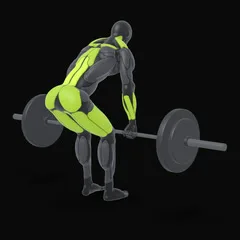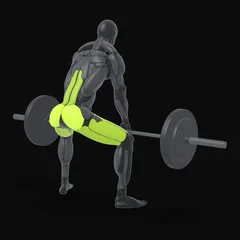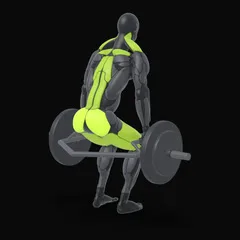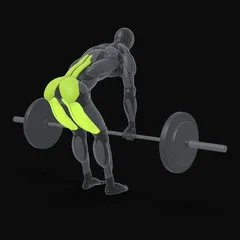
To deadlift, stand with the bar over the middle of your feet, grip it just outside your legs, pull the slack out of the bar while you brace your midsection, then push the floor away with your legs and stand up tall, keeping the bar against your body the whole way. The back stays in the same position from start to finish; the hips and knees do the moving. Below is the five-step setup, how to pull and lock out, the most common mistakes, and how conventional, sumo and trap bar deadlifts compare.
The five-step deadlift setup
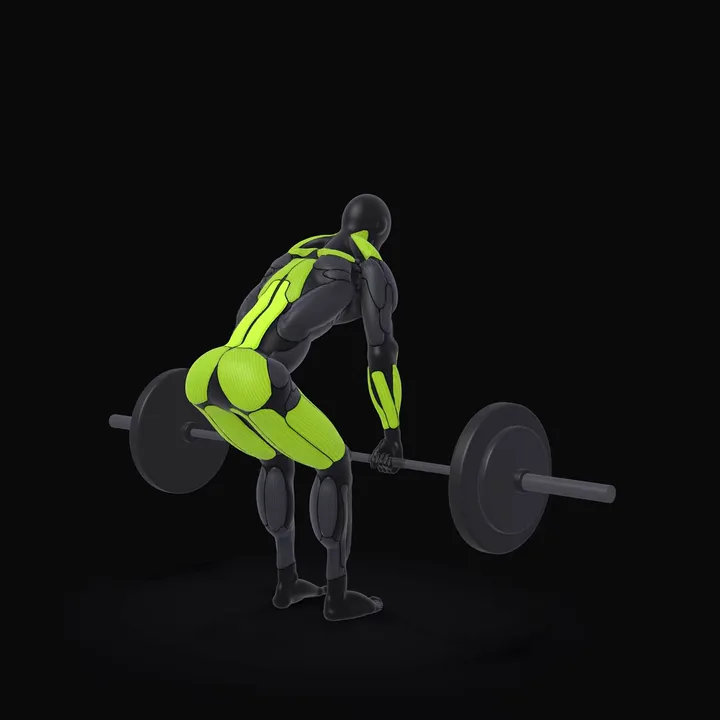 Barbell DeadliftStand with feet hip-width apart and the bar over the middle of your feet. Bend down and grip the bar just outside your knees, with a flat back and chest up.How to do the Barbell Deadlift →
1. Feet
Stand with your feet about hip-width apart, toes pointing forward or slightly out. The bar should be over the middle of your foot, about 2–3 cm from your shins when you look down. Most people stand too far from the bar.
2. Grip
Bend over (without moving the bar) and grip it just outside your legs. Start with a double overhand grip: both palms facing you. Arms are straight and long; they’re hooks, not levers.
3. Shins to the bar
Bend your knees until your shins touch the bar. Don’t let the bar roll forward. Your hips are now somewhere between your knees and shoulders, which is normal; where exactly depends on your proportions.
4. Chest up, back set
Lift your chest and squeeze your shoulder blades slightly down, as if you’re trying to put them in your back pockets. Your back should be neutral: not rounded, not over-arched. Keep your neck in line with your back; look at the floor a couple of metres ahead.
5. Brace and pull the slack out
Take a big breath into your belly, brace hard, and pull up on the bar until you hear the “click” of the bar against the plates and feel your whole body tighten. The bar shouldn’t leave the floor yet. This is the step most people skip, and it’s what makes the first centimetres of the pull smooth instead of jerky.
The pull
- Push the floor away with your legs. Think “leg press the floor” rather than “pull the bar up”.
- Keep the bar touching your legs. It should travel in a straight vertical line over your mid-foot, sliding up your shins and thighs.
- Hips and shoulders rise together. If your hips shoot up first, your back ends up doing the work.
- Once the bar passes your knees, drive your hips forward into the bar.
The lockout
Finish standing tall: knees straight, hips fully extended, glutes squeezed, shoulders back but not shrugged. Don’t lean backward; hyperextending your lower back at the top adds stress for no benefit.
The way down
Reverse the movement under control: push your hips back first, slide the bar down your thighs, and bend your knees once the bar passes them. You don’t need to lower super slowly, but don’t drop the bar from the top either. Reset your setup before each rep, or do touch-and-go reps with a brief, controlled touch on the floor.
If you can’t get into a good starting position
Some people can’t reach the bar with a neutral back, however hard they try. That’s usually a hip and hamstring mobility limit, or simply long legs and short arms. Don’t force it:
- Raise the bar. Put the plates on blocks or bumper plates so the bar sits 5–10 cm higher. Lower it gradually over a few months as your position improves, or keep it there; it’s still a great lift.
- Try sumo or the trap bar. Both let you start with a more upright torso.
- Widen your stance slightly and point your toes out a little to give your hips more room.
- Mobility work helps a bit, mostly hip hinges with a stick and hamstring stretches after training. The mobility routine for lifters has a short daily version.
How to pick your starting weight
If you’ve never deadlifted, start with the bar on blocks or with a trap bar at a weight you could lift 15 times, and do 3 sets of 5. Add 5–10 kg each session while every rep looks the same as the first. When the bar starts slowing down or your back position changes on the last rep, switch to 2.5–5 kg jumps per week. Most beginners progress for several months this way before they need anything fancier.
Common deadlift mistakes and fixes
| Mistake | What it looks like | Fix |
|---|---|---|
| Bar too far forward | Bar swings out, you get pulled forward | Bar over mid-foot; keep it touching your legs |
| Jerking the bar | Bar clanks, back rounds at the start | Pull the slack out, then push |
| Hips shooting up | Legs straighten first, back takes the load | Chest up, push the floor, keep hips and shoulders rising together |
| Lower back rounding | Back changes shape as you pull | Lighter weight, stronger brace, practise Romanian deadlifts |
| Leaning back at the top | Exaggerated arch at lockout | Stand tall and squeeze glutes; stop there |
| Squatting the deadlift | Hips too low, knees in front of the bar | Bar over mid-foot, shins just touching, hips higher |
Conventional vs sumo vs trap bar
| Conventional | Sumo | Trap bar | |
|---|---|---|---|
| Stance | Hip-width, hands outside legs | Wide, hands inside legs | Hip-width, inside a hexagonal bar |
| Torso | More forward lean | More upright | More upright |
| Emphasis | Hamstrings, glutes, back | Quads, adductors, glutes | Quads more, back less |
| Range of motion | Longest | Shorter | Medium |
| Best for | Most lifters, long arms | Long torsos, mobile hips | General strength, beginners, back-friendly |
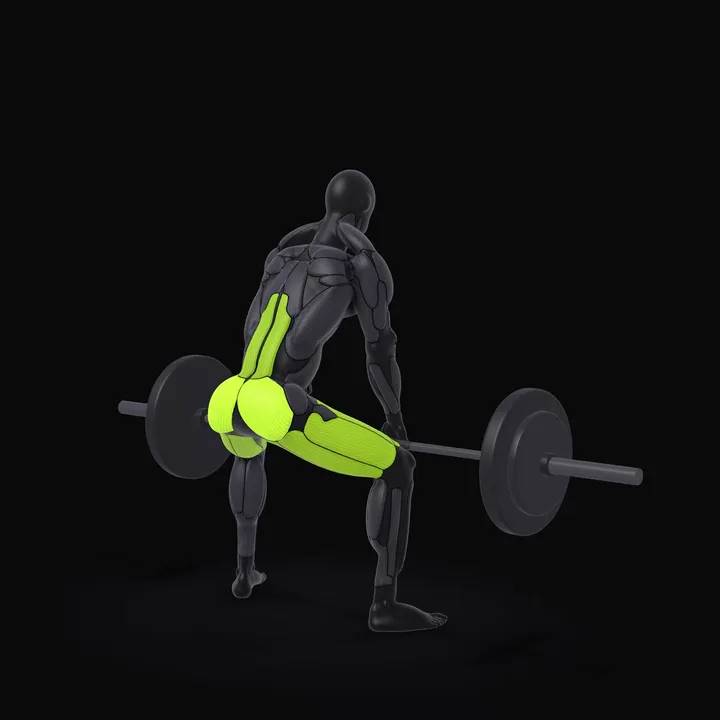 Barbell Sumo DeadliftTake a wide stance with toes pointed out and the bar over the middle of your feet. Squat down and grip the bar between your legs at shoulder width, with a flat back.How to do the Barbell Sumo Deadlift →
An EMG study comparing the two barbell styles found that the sumo deadlift produced more activity in the quads (vastus medialis and lateralis), while the conventional style produced more calf activity (Escamilla et al., 2002). Both train the glutes, hamstrings and back hard. Many people lift more with one style than the other because of their proportions; try both with moderate weight for a few weeks.
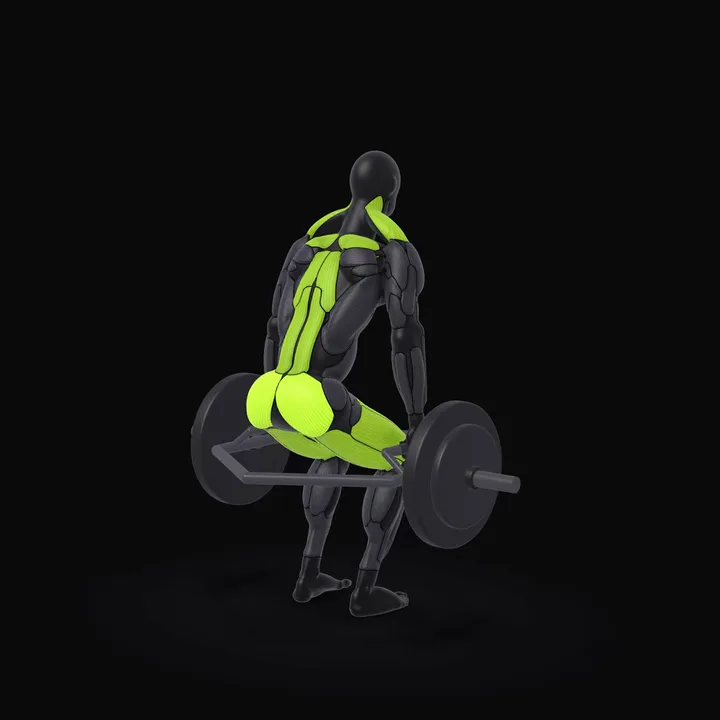 Trap Bar DeadliftStand in the middle of the trap bar with feet hip-width apart. Bend your knees and hips and grab the handles with a flat back and chest up.How to do the Trap Bar Deadlift →
The trap bar deadlift deserves special mention. A biomechanics study in powerlifters found the hexagonal bar reduced the load on the lower back and hips, increased the load on the knees, and let lifters handle a heavier one-rep max and produce more power than with a straight bar (Swinton et al., 2011). If you don’t compete in powerlifting, it’s a great main deadlift.
Deadlift variations and who they suit
| Variation | What it does | Good for |
|---|---|---|
| Rack pull | Starts from knee height, shorter range | Lockout strength, lifters with limited hip mobility |
| Deficit deadlift | Stands on a 2–5 cm platform, longer range | Lifters slow off the floor |
| Paused deadlift | 2-second pause just below the knee | Learning to keep the bar close and back set |
| Stiff-leg deadlift | Knees stay almost straight, from the floor | Hamstring strength |
| Dumbbell deadlift | Same hinge with lighter loads | Home training, learning the pattern |
Pick one variation at a time, use it as your second deadlift of the week for 6–8 weeks, and keep the competition-style deadlift as your main lift.
How to warm up and program the deadlift
Warm-up: 5 minutes of easy cardio, then a few bodyweight hip hinges, then ramp up: for example, 60 kg × 5, 80 kg × 3, 100 kg × 2, 110 kg × 1 before work sets at 120 kg. More in how to warm up before lifting.
Sets and reps by goal:
| Goal | Sets × reps | Effort |
|---|---|---|
| Learning the lift | 3 × 5 | Easy to moderate, every rep identical |
| Strength | 3–5 × 1–5 | 1–3 reps in reserve |
| Muscle | 3–4 × 5–8 | 1–3 reps in reserve |
| Maintenance (busy weeks) | 2 × 3–5 | Moderate |
Most people do best with the deadlift once or twice a week. Deadlifts are tiring; high-rep sets of 15 tend to end with a rounded back. Use the Romanian deadlift for higher-rep hamstring and glute work; Romanian deadlift form explains the difference.
Progression: add 5 kg (10 lb) when all reps are clean, smaller jumps as you get stronger. If you’re following a structured block, the powerlifting program for beginners builds the deadlift alongside the squat and bench.
Grip, belts and straps
- Chalk improves grip more than anything else. Check your gym allows it.
- Straps are fine for back and hamstring-focused work and for very heavy sets, but train grip too; see grip strength exercises.
- Mixed grip (one palm up, one down) holds heavy weights well. Alternate sides, and keep the underhand arm straight to protect the biceps.
- A belt gives you something to brace against on heavy sets. It’s a tool, not a requirement.
How to miss a deadlift safely
The deadlift is one of the safest lifts to fail because the bar starts on the floor. If a rep stalls or your back starts to round, don’t fight it: put the bar down with control and end the set. Never twist to drop the bar or try to “save” a rep by yanking on it. Use collars so plates don’t slide, keep the area around the bar clear, and leave a rep or two in the tank on most sets so missing rarely comes up.
Film yourself
Set your phone at hip height, side-on, a few metres away. Check three things: is the bar moving in a straight vertical line, are your hips and shoulders rising together, and does your back keep its shape? One honest look at a video fixes more than any cue.
Frequently asked questions
Should my back be completely flat when deadlifting?
It should be neutral and stay the same shape from the floor to lockout. Small amounts of upper back rounding are common in strong lifters, but your lower back shouldn't round as you pull. If it does, the weight is too heavy for your current technique.
How often should I deadlift?
Once or twice a week is plenty for most people. Deadlifts are tiring, and squats, Romanian deadlifts and rows already train the same muscles.
Should I deadlift with a mixed grip?
Use a double overhand grip for as long as you can hold the bar. For heavier sets, use straps, a hook grip or a mixed grip. If you use mixed grip, alternate which hand faces up to stay balanced.
Should I wear a belt for deadlifts?
It isn't required, but many lifters find a belt helps them brace on heavy sets. Learn to brace without one first, then use it for your heaviest work if you like.
Why do I feel deadlifts in my lower back?
Some lower-back work is normal: those muscles hold your spine still. If it's the main thing you feel, your hips are probably shooting up first or the bar is drifting forward. Lower the weight, pull the slack out before each rep and keep the bar against your legs.
Is the trap bar deadlift as good as the regular deadlift?
For most people, yes. The trap bar lets you stand inside the weight, which reduces the load on the lower back and lets most people lift a bit more. If you don't plan to compete in powerlifting, it's an excellent main deadlift.
Sources
- Escamilla RF, Francisco AC, Kayes AV, Speer KP, Moorman CT (2002). An electromyographic analysis of sumo and conventional style deadlifts. Medicine & Science in Sports & Exercise
- Swinton PA, Stewart A, Agouris I, Keogh JW, Lloyd R (2011). A Biomechanical Analysis of Straight and Hexagonal Barbell Deadlifts Using Submaximal Loads. Journal of Strength and Conditioning Research