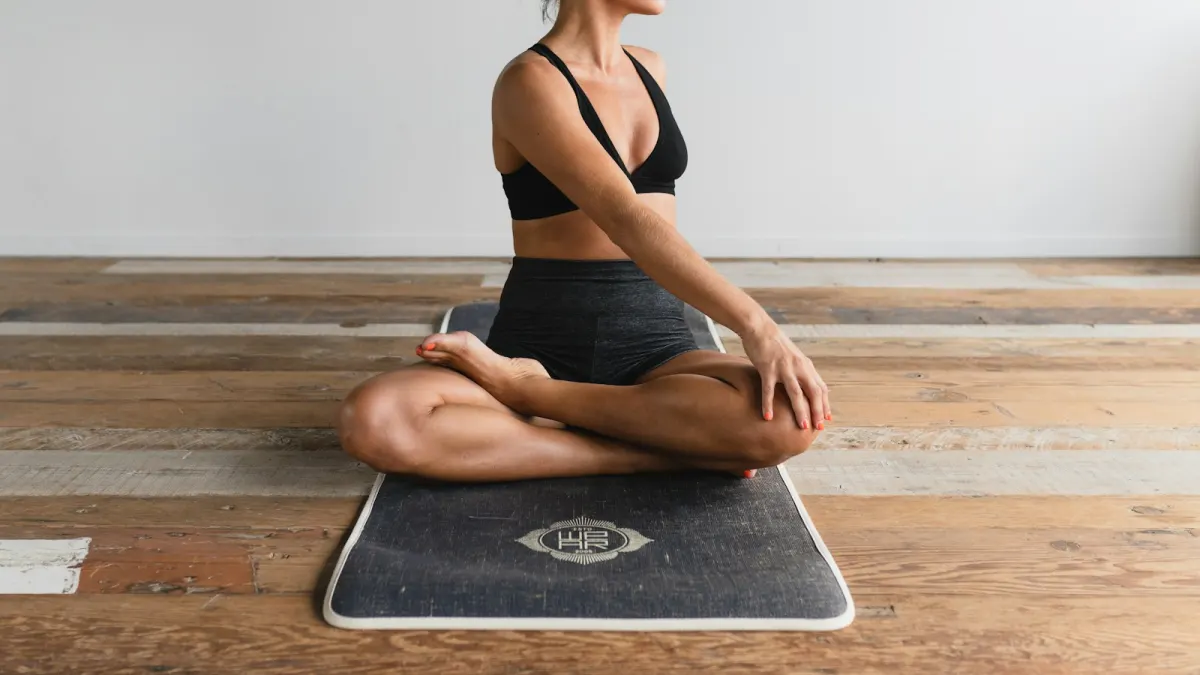
For lifting, do dynamic movements and lighter warm-up sets before your workout, and save longer static stretching for after training or a separate time. Short static stretches before lifting are fine and barely affect strength, but long holds right before heavy sets can make you slightly weaker. Stretching doesn’t meaningfully reduce soreness or prevent injuries on its own; its real benefit is improving flexibility in areas that limit your lifts or your daily life.
Stretching before a workout: what the research says
The worry about stretching before lifting comes from studies showing that long static stretches reduce strength and power right afterwards. A meta-analysis by Simic, Sarabon and Markovic (2013) found static stretching reduced maximal strength by about 5 % on average, with smaller effects when stretches were held under 45 seconds.
The bigger review by Behm and colleagues (2016) put it in context. Many earlier studies used very long holds and no other warm-up, which isn’t how people actually train. When static stretches lasted less than about 60 seconds per muscle and were followed by dynamic activity, the effect on performance was trivial.
What that means in practice
| Before lifting | Verdict |
|---|---|
| 5 min easy cardio | Good: raises body temperature |
| Dynamic drills (leg swings, inchworms, arm circles) | Good: prepares joints and muscles |
| Short static stretches, 15–30 s, on tight areas | Fine, especially if followed by dynamic work |
| Long static holds (60 s+ per muscle) right before heavy sets | Avoid: may reduce strength slightly |
| Ramp-up sets of your first exercise | Essential: the most specific warm-up there is |
For a ready-made routine, see the mobility routine for lifters, and for ramp-up sets, how to warm up before lifting.
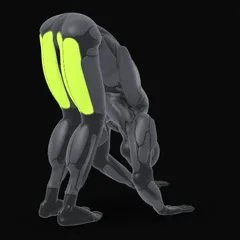
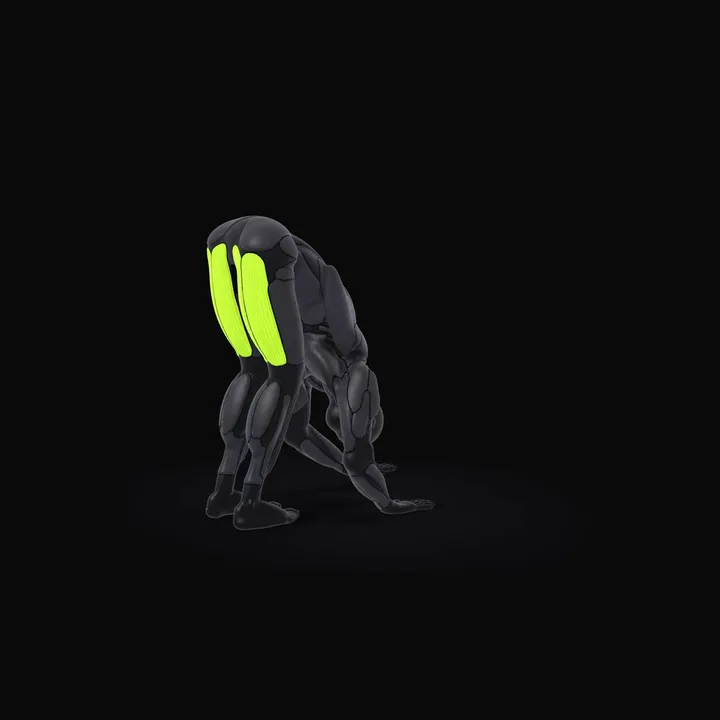 InchwormStand with your feet close together. Keeping your legs straight, stretch down and put your hands on the floor directly in front of you. This will be your starting position. Begin by walking your hands forward slowly, alternating your left and your right. As you do so, bend only at the hip, keeping your legs straight.How to do the Inchworm →
Stretching after a workout
After training, there’s no performance to protect, so static stretching is a good fit if you want to improve flexibility. Your muscles are warm and you’re already in the gym.
But two common beliefs don’t hold up:
“Stretching reduces soreness.” A Cochrane review by Herbert, de Noronha and Kamper (2011) found that stretching before or after exercise reduced soreness by only a trivial amount, about 1 point on a 100-point scale. If you want to understand soreness, see muscle soreness after a workout.
“Stretching prevents injuries.” A meta-analysis by Lauersen, Bertelsen and Andersen (2014) of injury prevention trials found that stretching programs had no meaningful protective effect, while strength training reduced sports injuries substantially. If injury prevention is your goal, lifting is already the better tool.
Does stretching help build muscle?
Not in the way people hope. Typical post-workout stretching (a few 30-second holds) doesn’t add measurable muscle. Some recent research has looked at very long, intense stretches (several minutes per muscle, many times a week) and found small effects on muscle size in some cases, but the protocols are uncomfortable and impractical, and the effects are much smaller than those of lifting.
What does matter: training muscles through a full range of motion, including the stretched position. Deep squats, full-range Romanian deadlifts, incline curls and dumbbell flyes load muscles while they’re lengthened, which appears to be good for growth. See how to build muscle.
Does lifting improve flexibility?
Yes. A meta-analysis by Afonso and colleagues (2021) found that strength training improved range of motion about as much as stretching programs did, as long as exercises were done through a full range. That’s good news for lifters who don’t enjoy stretching: lifting well already does much of the job.
When stretching is worth it
- A specific area limits a lift. Tight hip flexors or calves limiting squat depth, tight lats making overhead pressing hard.
- Another sport requires flexibility: martial arts, dance, gymnastics, climbing.
- You sit all day and feel stiff.
- You enjoy it. A calm 10 minutes after training to slow your heart rate down is perfectly valid.
A simple stretching plan for lifters
After training, or on rest days, 2–4 times a week:
| Stretch | Target | Dose |
|---|---|---|
| Kneeling Hip Flexor Stretch | Front of hips | 2–3 × 30 s per side |
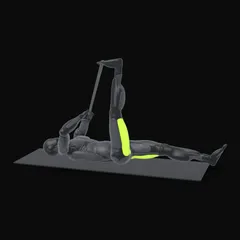
| Hamstring Stretch | Hamstrings | 2–3 × 30 s per side |
| Calf stretch against a wall (knee straight, then bent) | Calves, ankles | 2 × 30 s each version |
| Doorway pec stretch | Chest, front shoulders | 2 × 30 s per side |
| Lat stretch on a bench or bar | Lats | 2 × 30 s per side |
| Child's Pose | Back, hips | 1–2 × 45 s |
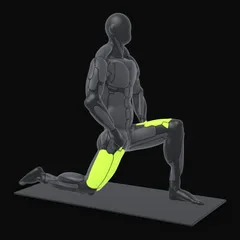
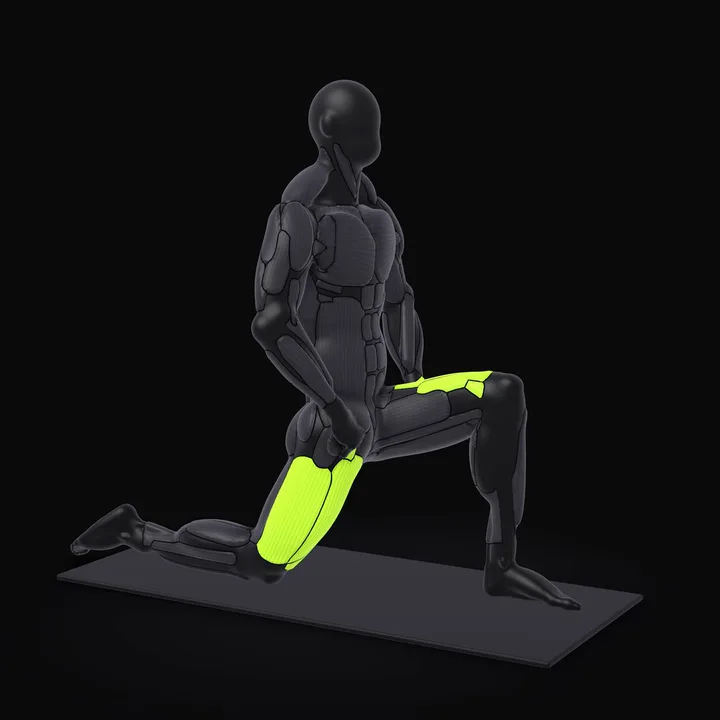 Kneeling Hip Flexor StretchKneel on a mat and bring your right knee up so the bottom of your foot is on the floor and extend your left leg out behind you so the top of your foot is on the floor. Shift your weight forward until you feel a stretch in your hip. Hold for 15 seconds, then repeat for your other side.How to do the Kneeling Hip Flexor Stretch →
How to stretch: move into the position until you feel a clear stretch, around 5–7 out of 10, never sharp pain. Breathe slowly. Ease a little further as the tension fades. Weekly consistency matters more than intensity: research generally finds that accumulating a few minutes per muscle across the week is what drives flexibility gains.
Common stretching mistakes
- Long static holds just before a max attempt. Save them for after the session.
- Bouncing into a stretch to go further. Ease in and breathe instead.
- Stretching through sharp pain. A stretch should feel strong, not painful.
- Stretching everything equally. Focus on the one or two areas that actually limit you.
- Expecting quick results. Flexibility changes over weeks of regular practice, not in one session.
- Replacing a warm-up with stretching. Stretching doesn’t raise your body temperature or rehearse the lift. Ramp-up sets do.
Building the habit
The best plan is the one you actually do. Put your stretches into your routine so they don’t get skipped. In Brick you can add stretches to a routine like any exercise (the library has 800+ exercises with 3D animations, including stretches and mobility drills) so they appear at the end of every session.
Frequently asked questions
Is it bad to stretch before lifting weights?
Short static stretches (under about 60 seconds per muscle) within a full warm-up have little effect on strength. Long holds right before heavy lifting can reduce strength slightly. A dynamic warm-up and lighter ramp-up sets prepare you better.
Does stretching after a workout reduce soreness?
Barely. A Cochrane review found that stretching before or after exercise reduced soreness by a trivial amount. Stretch after training if you enjoy it or want more flexibility, not to avoid soreness.
How long should I hold a stretch?
For improving flexibility, 30–60 seconds per muscle per session, accumulated over 2–4 sets, done most days of the week, works well. Consistency over weeks matters more than holding any single stretch longer.
Do I need to stretch at all if I lift weights?
Not necessarily. Lifting through a full range of motion improves flexibility about as well as stretching. Stretch if a specific area limits your lifts, if you need flexibility for another sport, or simply because it feels good.
Sources
- Behm DG, Blazevich AJ, Kay AD, McHugh M (2016). Acute effects of muscle stretching on physical performance, range of motion, and injury incidence in healthy active individuals: a systematic review. Applied Physiology, Nutrition, and Metabolism
- Simic L, Sarabon N, Markovic G (2013). Does pre-exercise static stretching inhibit maximal muscular performance? A meta-analytical review. Scandinavian Journal of Medicine & Science in Sports
- Herbert RD, de Noronha M, Kamper SJ (2011). Stretching to prevent or reduce muscle soreness after exercise. Cochrane Database of Systematic Reviews
- Lauersen JB, Bertelsen DM, Andersen LB (2014). The effectiveness of exercise interventions to prevent sports injuries: a systematic review and meta-analysis of randomised controlled trials. British Journal of Sports Medicine
- Afonso J, Ramirez-Campillo R, Moscão J, et al. (2021). Strength training versus stretching for improving range of motion: a systematic review and meta-analysis. Healthcare