Shoulder pain when bench pressing usually comes from a combination of setup (grip too wide, elbows flared at 90°, shoulder blades not set), load management (too much pressing volume or a sudden jump in weight), and sometimes an underlying irritated tendon or joint. Most lifters improve by narrowing the grip, tucking the elbows to around 45–70°, setting the shoulder blades, and temporarily swapping to pain-free variations while building back. Sharp pain, weakness, or pain that keeps getting worse needs a professional assessment.
Why the bench press can irritate shoulders
In the bench press, your shoulder works through a wide range under heavy load. A review by Kolber and colleagues (2010) found that the shoulder is one of the most commonly injured joints in people who lift, and pointed to factors like wide grips, the bottom position of presses and high training volumes as common contributors.
The most frequent issues are irritation of the rotator cuff tendons or the long head of the biceps tendon (front of the shoulder), and the AC joint (the top of the shoulder, where the collarbone meets the shoulder blade). Without an examination, you can’t know which. The good news is that the first steps are similar.
Step 1: check your setup
Grip width
Very wide grips increase stress on the front of the shoulder at the bottom of the lift. Green and Comfort (2007) reviewed the evidence and suggested that a grip of no more than about 1.5 times shoulder width reduces risk while keeping performance. Practically: when the bar touches your chest, your forearms should be roughly vertical when viewed from the front.
Elbow angle
Flaring your elbows straight out to 90° from your body puts the shoulder in a more vulnerable position. Tuck them to roughly 45–70°, so from above your upper arms and torso form an arrow, not a T.
Bar path and touch point
Lower the bar to your lower chest or around the nipple line, not toward your collarbones. Touching too high usually means flared elbows.
Shoulder blades
Before unracking, squeeze your shoulder blades back and down, as if putting them in your back pockets, and keep them there. This creates a stable platform and limits how far the shoulder travels forward at the bottom.
Range of motion and control
Lower the bar under control (about 2 seconds) and touch the chest lightly. Bouncing heavy weights off the chest increases stress at the most vulnerable point. Our guide on how to bench press walks through the setup in detail.
Step 2: use pain to guide your training
A simple rule used by many physiotherapists:
| During the exercise | After the session and next morning | What to do |
|---|---|---|
| 0–3/10, stable | Settled by the next day | Continue; progress gently |
| 4–5/10, or rising set by set | Worse the next day | Reduce load or range; swap the exercise |
| Over 5/10, sharp, or catching | Lingering | Stop that exercise and get it checked |
Pain that’s tolerable and doesn’t flare up the next day isn’t a sign of damage. Pain that grows set by set or lingers is your shoulder telling you the load is too much right now.
Step 3: swap to shoulder-friendly variations
You don’t need to stop training your chest. Choose versions you can do with little or no pain:
| Exercise | Why it often helps |
|---|---|
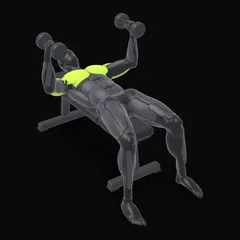
| Dumbbell Neutral-grip Bench Press | Palms facing each other tucks the elbows naturally |
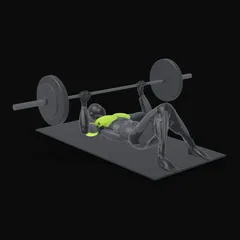
| Barbell Floor Press or Dumbbell Floor Press | The floor limits range at the bottom, where pain usually lives |
| Machine Chest Press | Fixed path, easy to adjust load in small steps |
| Push-up | Shoulder blades move freely; easy to scale with hand height |
| Cable Fly with limited stretch | Lighter loads, constant tension |
| Board press or pin press | Shortens the range of motion |
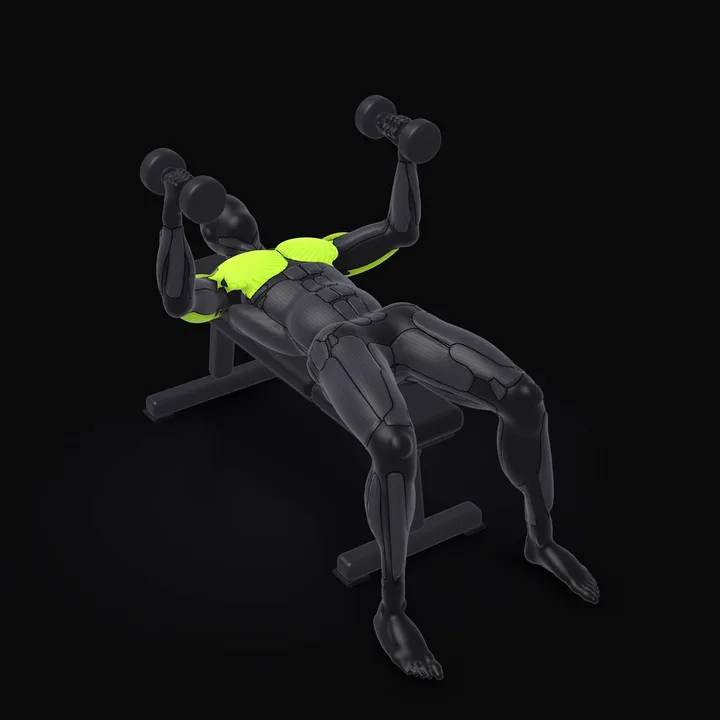 Dumbbell Neutral-grip Bench PressTake a dumbbell in each hand and lay back onto a flat bench. Your feet should be flat on the floor and your shoulder blades retracted. Maintaining a neutral grip, palms facing each other, begin with your arms extended directly above you, perpendicular to the floor. This will be your starting position.How to do the Dumbbell Neutral-grip Bench Press →
Avoid for now (if they hurt): dips, very wide-grip bench, deep dumbbell flyes, behind-the-neck presses.
Step 4: strengthen the muscles around the shoulder
Shoulders that only press tend to get cranky. Add pulling and rotator cuff work:
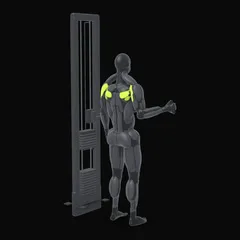
- Cable External Rotation: 2–3 sets of 12–15, light and controlled
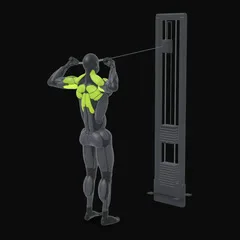
- Cable Face Pull: 3 sets of 12–15
- Band Pull-apart: 2–3 sets of 15–20 as a warm-up
- Rows of any kind: aim for at least as many pulling sets as pressing sets per week
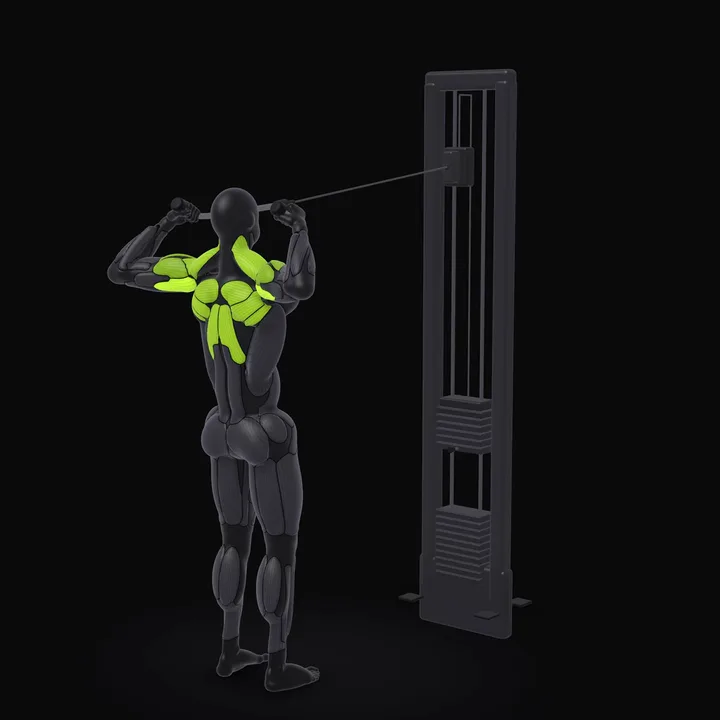 Cable Face PullSet the pulley slightly above head height and grab the rope with your thumbs pointing back. Step back one or two steps so your arms are extended in front of you.How to do the Cable Face Pull →
Our rear delt workout covers more of these. They’re not magic injury protection, but a balanced program helps keep the shoulder tolerant.
Step 5: build back to the barbell
- Once your chosen variation is pain-free for two weeks, reintroduce the barbell bench with an empty bar or light weight, using your improved setup.
- Start at about 50–60 % of your previous working weight for 3 sets of 8.
- Add weight in small steps each week (2.5 kg / 5 lb, or less), as long as the pain rule stays green.
- Keep total pressing volume moderate for a while: around 6–10 hard chest sets per week.
Many lifters find their shoulders do better long-term with a mix of barbell and dumbbell pressing rather than four barbell sessions a week. To get stronger without beating up your shoulders, see how to increase your bench press.
Logging makes the rebuild safer. With Brick you can see last session’s weight and reps on every set, add the next small step, and use notes on an exercise to record which grip or variation felt best. Over a few weeks the trend shows whether you’re really progressing or just pushing through pain.
Preventing shoulder pain from bench pressing
- Warm up with purpose: a few sets of band pull-aparts and external rotations, then ramp-up sets on the bench; see how to warm up before lifting.
- Balance push and pull in your weekly program.
- Increase pressing volume slowly: add a set or two per week at most.
- Rotate variations across training blocks: barbell, dumbbells, incline, machines.
- Respect early warning signs. A shoulder that aches after every chest day is easier to fix now than in three months.
When to see a professional
- You felt a pop, tear or sudden sharp pain under load
- Pain at night, or when lying on that side
- Weakness lifting your arm, or a feeling of the shoulder slipping
- Pain spreading down the arm with numbness or tingling
- No improvement after 3–4 weeks of sensible changes
A sports physiotherapist can identify what’s irritated and build a specific plan to get you back under the bar.
Frequently asked questions
Why does the front of my shoulder hurt when I bench?
Front-of-shoulder pain during the bench press is often linked to a very wide grip, elbows flared out at 90 degrees, lowering the bar too high on the chest, or simply too much pressing volume too quickly. Narrowing your grip, tucking your elbows slightly and reducing volume often helps. If it persists, have it assessed.
Should I keep benching with shoulder pain?
If the pain is mild (up to about 3 out of 10), doesn't get worse during the session and has settled by the next day, you can usually keep training with modifications. Sharp pain, pain that increases set by set, or pain that lingers means stop that exercise and swap it.
Are dumbbells better than a barbell for shoulder pain?
Often, yes. Dumbbells let your hands and elbows find a comfortable path, and a neutral grip (palms facing each other) is tolerated well by many people with sore shoulders. They're a good substitute while the shoulder settles.
How long does shoulder pain from benching take to heal?
Mild irritation often improves within two to six weeks of sensible load management. Tendon problems can take a few months. If you see no improvement after a few weeks, or the shoulder feels weak or unstable, see a physiotherapist or doctor.
Sources
- Kolber MJ, Beekhuizen KS, Cheng MSS, Hellman MA (2010). Shoulder injuries attributed to resistance training: a brief review. Journal of Strength and Conditioning Research
- Green CM, Comfort P (2007). The affect of grip width on bench press performance and risk of injury. Strength and Conditioning Journal