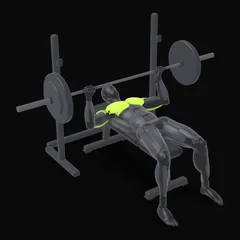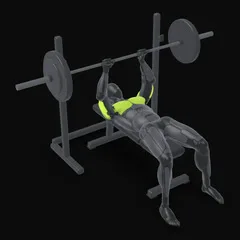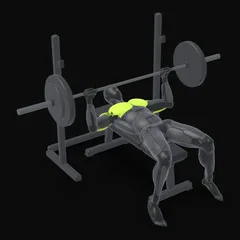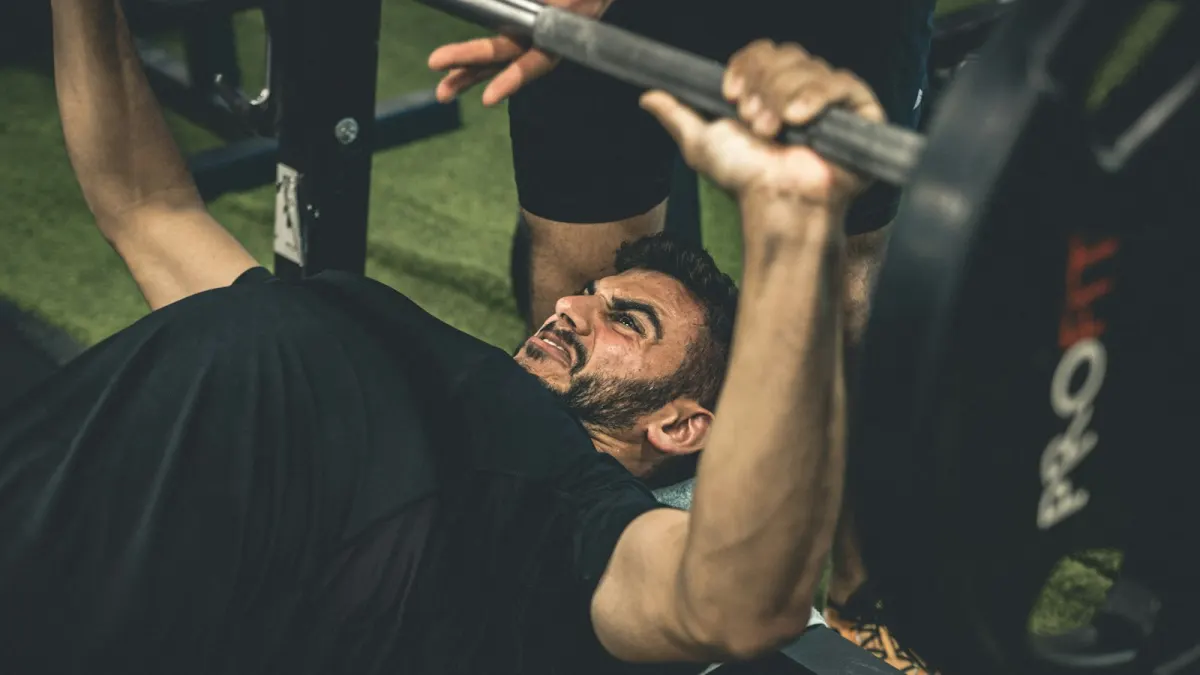
To bench press properly, lie with your eyes under the bar, pull your shoulder blades back and down, plant your feet, grip the bar a bit wider than shoulder-width, and lower it under control to your lower chest with your elbows about 45–70° from your body. Then press up and slightly back toward your face, keeping your shoulder blades pinned and your feet driving into the floor. Below is every step in detail, the most common mistakes and how to stay safe without a spotter.
Step-by-step bench press technique
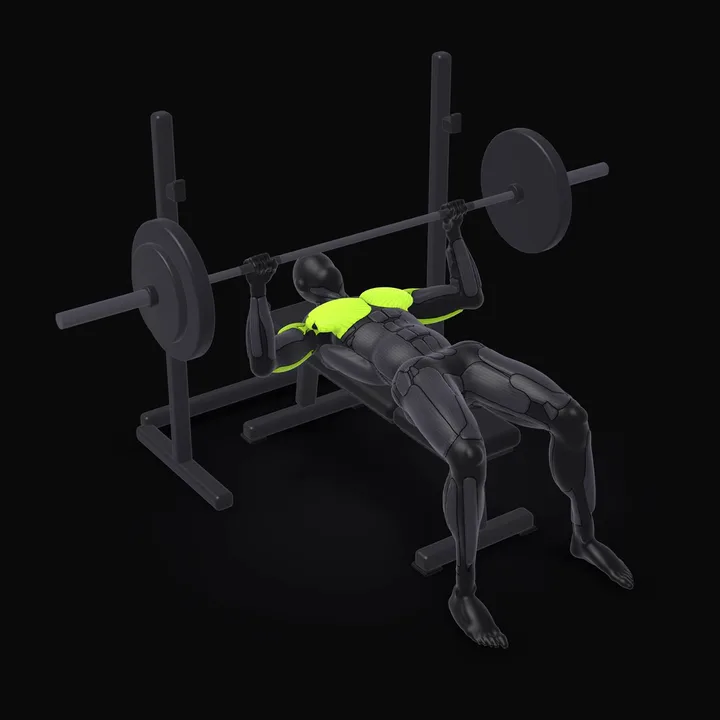 Barbell Bench PressLie on the bench with your eyes under the bar and your feet planted on the floor. Grip the bar slightly wider than shoulder width and pull your shoulder blades back and down.How to do the Barbell Bench Press →
1. Position on the bench
Lie down with your eyes directly under the bar. Too far up and you’ll hit the hooks on every rep; too far down and you’ll waste energy unracking.
2. Set your upper back
Squeeze your shoulder blades together and pull them down toward your hips, as if putting them in your back pockets. Your chest lifts slightly. This “set” is the most important part of the bench: it gives you a stable platform, keeps your shoulders in a safer position and shortens the path of the bar a little.
3. Arch (moderately)
Keep your upper back and glutes on the bench and let your lower back form a natural arch. You don’t need an extreme arch to build muscle; you do need your shoulder blades set and your chest up.
4. Feet
Plant your feet flat on the floor, roughly under or slightly behind your knees, wider than your hips. Push your heels or the balls of your feet into the floor. This is where leg drive comes from: a push that keeps you tight and planted on the bench, not one that lifts your hips.
5. Grip
Grip the bar so that when it touches your chest, your forearms are vertical when viewed from the front. For most people that’s a bit wider than shoulder-width. Wrap your thumbs around the bar. Keep your wrists stacked over your elbows, not bent far back. Squeeze the bar hard.
6. Unrack
Take a breath and brace, then press the bar off the hooks with straight arms and move it over your shoulders. A spotter can give you a lift-off. Keep your shoulder blades pinned as you unrack; this is when many people lose their setup.
7. Lower
Lower the bar in a controlled way, about 2 seconds, to your lower chest. Tuck your elbows to roughly 45–70° from your sides. The bar moves slightly down and forward as it descends. Touch your chest lightly; don’t bounce.
8. Press
Drive the bar up and slightly back toward your face, ending over your shoulders. Push your feet into the floor, keep your glutes on the bench and your shoulder blades pinned. Breathe out near the top or between reps, then take a new breath and brace again.
Your pre-set checklist
Run through this before every work set until it becomes automatic:
- Eyes under the bar.
- Shoulder blades back and down, chest up.
- Feet planted, pushing into the floor.
- Grip set, thumbs wrapped, wrists straight.
- Big breath, brace, unrack to over the shoulders.
- Pause a second with straight arms before the first rep.
If any step slips during a set, the next set starts by fixing it, even if that means racking and resetting.
The right bar path
The bar doesn’t move in a perfectly straight line. It starts over your shoulders, comes down to your lower chest, and goes back up toward your shoulders in a slight arc. Pressing straight up from your lower chest puts the bar too far over your stomach at the top, which is harder to hold and harder on your shoulders.
Grip width and elbow angle
| Grip | Emphasis | Notes |
|---|---|---|
| Close (about shoulder-width) | Triceps more | The close-grip bench press is a great triceps builder |
| Medium (forearms vertical) | Balanced chest, shoulders, triceps | Default for most lifters |
| Wide (much wider than shoulders) | Chest more, shorter range | More stress on the shoulders; competition limits apply |
Elbow angle matters as much as grip. Elbows flared out to 90° (in line with your shoulders) is the most common cause of shoulder pain on the bench. Elbows tucked to 45–70° puts the shoulder in a stronger, safer position.
Common bench press mistakes and fixes
| Mistake | Result | Fix |
|---|---|---|
| Shoulder blades not set | Shoulders roll forward, pain, weak press | Set them before unracking, keep them pinned |
| Elbows flared to 90° | Shoulder strain | Tuck to 45–70° |
| Bouncing the bar off the chest | Less muscle work, risk to ribs | Control the descent, light touch |
| Hips lifting off the bench | Shorter range, not allowed in competition | Drive feet into the floor horizontally, not upward |
| Wrists bent back | Wrist pain, power leak | Bar low in the palm, wrists stacked over elbows |
| Uneven press | One arm leads | Lighter weight; add dumbbell bench work |
When your body won’t get into position
Some setup problems are mobility, not technique:
- You can’t pull your shoulder blades back without your shoulders rolling forward on the descent. Stretch your chest in a doorway and do 2 sets of 15 band pull-aparts as part of your warm-up. Meanwhile, use a slightly narrower grip.
- Your upper back feels stiff and flat on the bench. Lie over a foam roller placed across your upper back for a minute before benching, extending gently over it at a few spots.
- Your wrists ache. The bar is probably sitting too high in your hand. Place it in the base of your palm, closer to your forearm bones. Wrist wraps help on heavier sets.
- Your feet can’t reach the floor flat. Put plates or a step under them. Stable feet matter more than the exact position.
How to pick your starting weight
Start with the empty bar (20 kg for an Olympic bar) for 2 sets of 10, focusing on the setup. If that felt easy and every rep looked the same, add 5–10 kg per set until a set of 8 feels hard but clean, with 2–3 reps left. That’s your working weight. If 20 kg is already too heavy, use dumbbells, a lighter fixed bar or a machine press for a few weeks; working up to the bar doesn’t take long.
Sets and reps by goal
| Goal | Sets × reps | Rest | Frequency |
|---|---|---|---|
| Learning the lift | 3 × 8 with a light weight | 2 min | 2–3 times a week |
| Building muscle | 3–4 × 6–12 | 2–3 min | 2 times a week |
| Strength | 3–5 × 3–6 | 3–5 min | 2–3 times a week |
| Mixed (common) | One heavy day of 4 × 5 and one lighter day of 3 × 10 | 2–4 min | 2 times a week |
Benching twice a week works better than once for most people, because it’s as much a skill as a strength test. If you want to know how your numbers compare, strength standards gives realistic benchmarks by experience level.
Bench press variations
- Dumbbell bench press: longer range of motion, each arm works independently, easy to bail out of. Excellent for building the chest.
- Incline bench press: more upper chest; see how to build chest muscle for how angles affect growth.
- Close-grip bench press: triceps focus.
- Competition-style bench: a pause on the chest before pressing, as required in powerlifting.
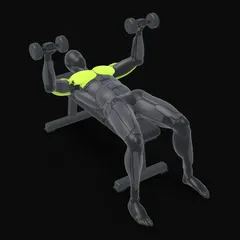
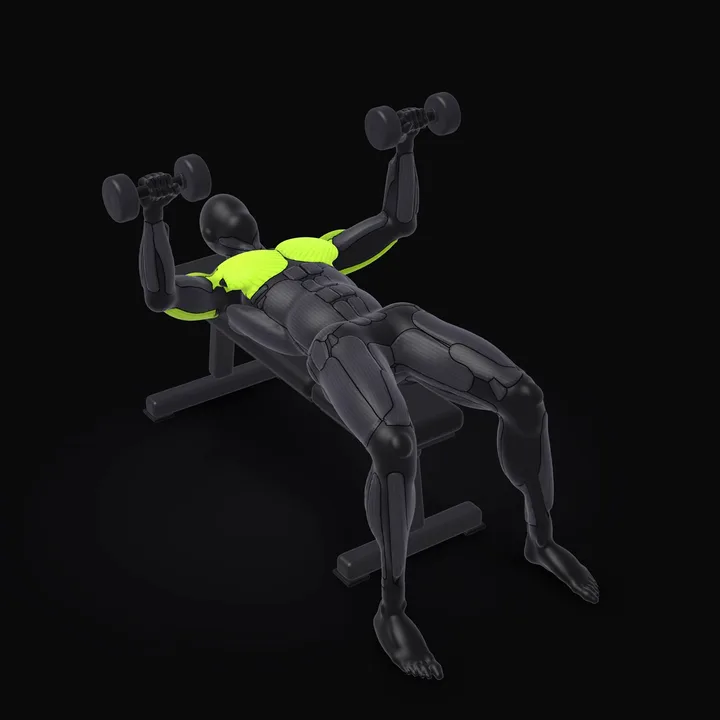 Dumbbell Bench PressSit on the end of the bench with the dumbbells on your thighs, then lie back bringing them beside your chest. Keep your feet on the floor and your shoulder blades pulled back.How to do the Dumbbell Bench Press →
How to bench press safely
The bench press is the gym lift most likely to trap you under a bar if a rep fails. A few rules make it safe:
- Use safeties. Bench inside a power rack with the safety arms set just below your chest at the bottom position, or use a bench with built-in safety catches.
- Get a spotter for heavy sets. Tell them how many reps you’re going for and whether you want a lift-off.
- No collars when benching alone without safeties. If you get stuck, you can tilt the bar and let the plates slide off one side (loud, but safe).
- The roll of shame. If stuck with no other option, lower the bar to your chest, roll it down over your stomach to your hips, and sit up.
- Stop short of failure when alone. Leave one or two reps in the tank.
- Use dumbbells if you can’t set up safely. You can always drop them to the sides.
How to warm up and progress
Warm up with 5 minutes of light cardio, a few band pull-aparts, then ramp up: empty bar × 10, then 3–4 heavier sets of 3–5 reps before your work sets. Use double progression: when you hit the top of your rep range on every set, add 2.5 kg (5 lb). When progress stalls, how to increase bench press has a 6-week plan.
Every set you log, with notes on how it felt, makes it easier to spot technique changes that work and those that don’t.
If you’re bench pressing for strength and want to compete, the powerlifting program for beginners uses competition rules from the start.
Frequently asked questions
Where should the bar touch my chest?
Around the lower part of your chest, roughly in line with your nipples or a little below. Touching too high, near the collarbones, puts your shoulders in a vulnerable position; too low makes the press awkward.
Is arching your back on bench press bad?
A moderate arch, with your upper back and glutes on the bench, is normal and helps keep your shoulders in a safe position. It isn't harmful for healthy backs. An extreme powerlifting arch shortens the range of motion, which is useful in competition but not necessary for building muscle.
How wide should my grip be on bench press?
For most people, a grip where your forearms are vertical when the bar touches your chest, usually a bit wider than shoulder-width. Very wide grips stress the shoulders more; narrower grips shift work to the triceps.
Should I pause the bar on my chest?
Pausing for a second on some sets is a great habit. It removes the bounce, teaches you to stay tight at the bottom and builds strength where most people fail. Touch-and-go reps are fine for the rest of your training as long as the touch is light.
Should I bench press with my feet up?
Feet on the floor is better for most people. Your legs help you stay stable and drive into the bench. Feet-up benching is a variation that removes leg drive, not a safer default.
How do I bench press safely alone?
Use a power rack or a bench with safety arms set just below your chest height, or use dumbbells. Never bench heavy alone with collars on and no safeties, and stop each set one or two reps short of failure.