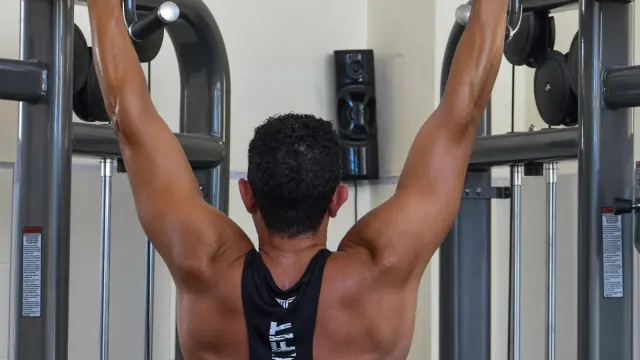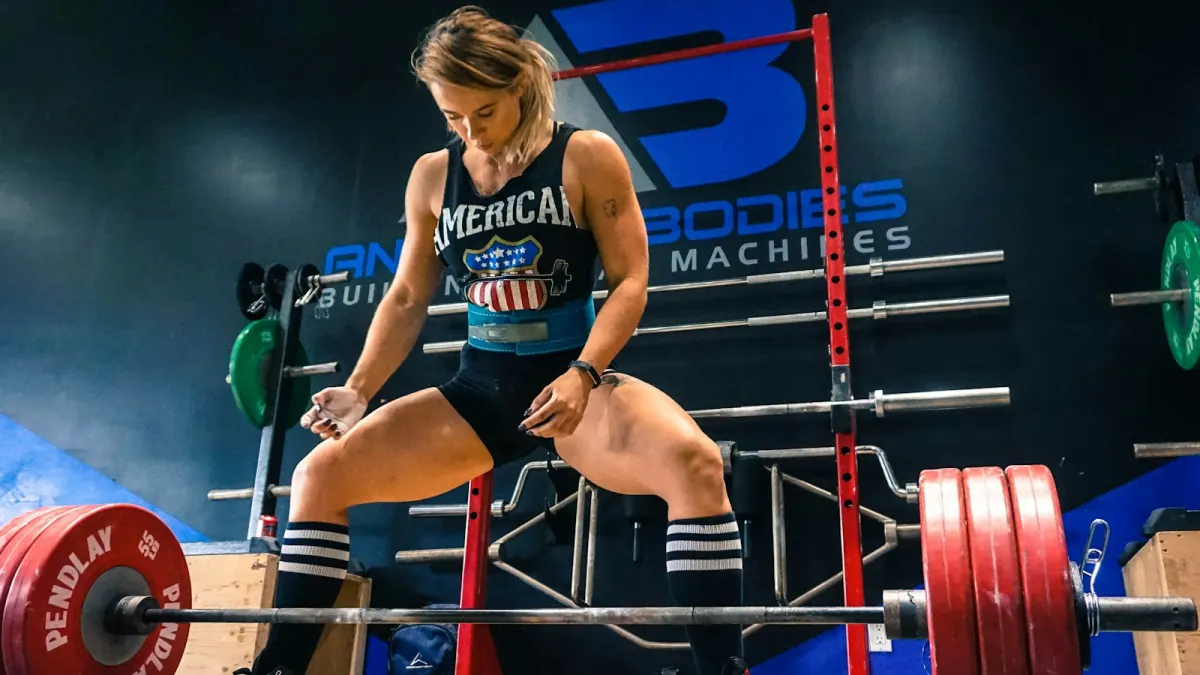
No, lifting weights won’t make you bulky by accident. Building noticeable muscle is slow for everyone, and women typically gain less absolute muscle than men because of lower testosterone levels. What strength training realistically does in the first year is make you stronger, firmer and more defined, improve your posture, bones and metabolism, and change your shape gradually. The “bulky” look in magazines takes years of deliberate training and eating, and often a very low body-fat level on top.
Why “bulky” is so unlikely
Muscle grows slowly
Even with good training, protein and enough calories, a beginner typically gains muscle at a modest rate, and the pace slows each year. Spread across your whole body (legs, glutes, back, shoulders, arms), it shows as shape and firmness, not bulk.
Hormones and starting point
Men have much higher testosterone levels, which is a big part of why they carry more muscle. Interestingly, women’s relative response to training is similar. In a meta-analysis by Roberts, Nuckols and Krieger (2020), men and women made similar relative gains in muscle size and lower-body strength on the same programs, and women actually made larger relative gains in upper-body strength. Women build muscle well; they just start from, and end at, smaller absolute amounts.
What “bulky” usually means
When people feel “bulky” in the first months of lifting, it’s rarely muscle. It’s usually:
- Water and glycogen in newly trained muscles (temporary, a kilo or so).
- Body fat that hasn’t changed while muscle grows underneath, especially if eating increased with hunger.
- Feeling different in clothes as legs and glutes firm up.
If you want a leaner look, the lever is body fat, which is about nutrition. More in body recomposition.
What strength training actually does for women
- Shape: firmer glutes, legs and arms, better posture.
- Strength: everyday life gets easier: stairs, carrying shopping, lifting kids.
- Bones: lifting is one of the best ways to maintain bone density. In the LIFTMOR trial (Watson et al., 2018), postmenopausal women with low bone mass who did supervised heavy lifting improved bone density and physical function, safely.
- Metabolism and body composition: more muscle and less fat at the same weight.
- Mood, sleep, confidence: benefits many lifters notice within weeks.
Light weights and high reps vs heavier weights
You don’t need tiny pink dumbbells to “tone” and you don’t need to fear heavier weights. Muscle responds to sets taken close to failure, whatever the weight:
| Approach | What happens |
|---|---|
| Very light, 25–30+ reps, stopping well before failure | Little change; mostly endurance |
| Light, 15–25 reps, close to failure | Builds muscle, takes longer and burns more |
| Moderate, 6–15 reps, close to failure | Efficient for muscle and strength |
| Heavy, 3–6 reps | Great for strength; combine with some higher-rep work |
Most women do well with most sets in the 6–15 rep range, stopping 1–3 reps before failure.
Your menstrual cycle and training
You’ll see plenty of advice telling you to train hard only in certain phases. The research doesn’t support strict cycle-syncing:
- A meta-analysis by McNulty and colleagues (2020) found that exercise performance might be trivially reduced in the early follicular phase (around your period), but the effect was so small and inconsistent that general guidelines weren’t justified.
- A review by Colenso-Semple and colleagues (2023) concluded that current evidence shows no influence of cycle phase on acute strength or on long-term training adaptations.
So: train normally and listen to your body. If cramps, fatigue or heavy bleeding make a session miserable, reduce load or volume, swap to lighter work, or take a rest day. Tracking how you feel across your cycle can help you plan around your own pattern.
How to start lifting
A whole-body plan two or three times a week covers everything:
| Exercise | Sets × reps |
|---|---|
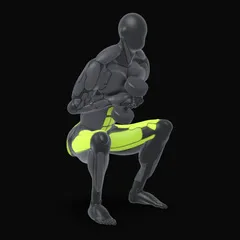
| Dumbbell Goblet Squat | 3 × 8–12 |
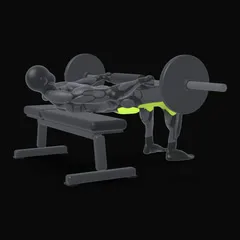
| Barbell Hip Thrust | 3 × 8–12 |
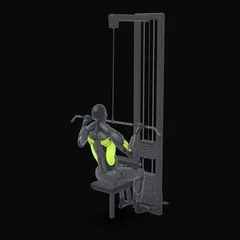
| Cable Lat Pulldown | 3 × 8–12 |
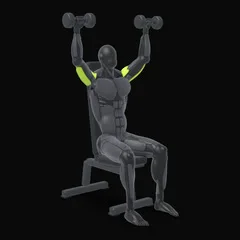
| Dumbbell Shoulder Press | 3 × 8–12 |
| Dumbbell Romanian deadlift | 3 × 10 |
| Push-ups (any level) | 2–3 × as many as possible with good form |
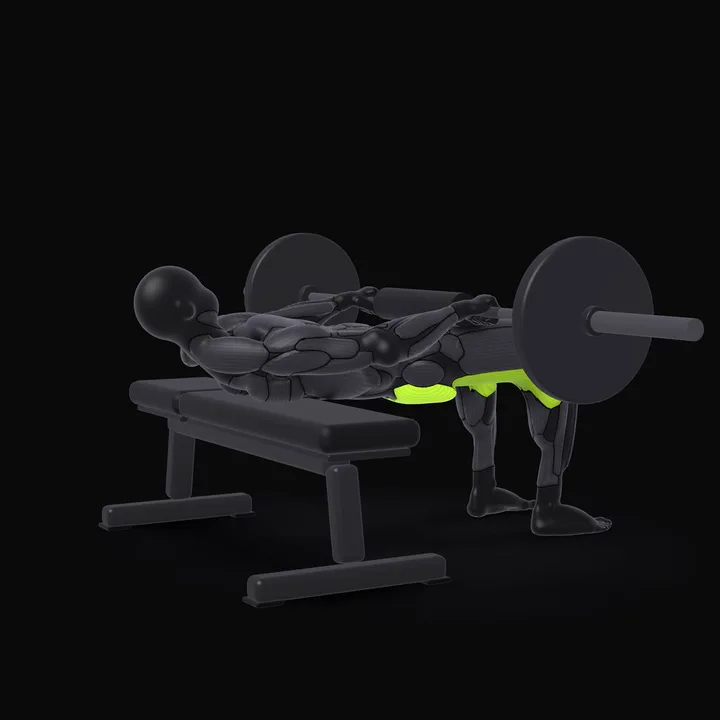 Barbell Hip ThrustSit on the floor with your upper back against the edge of a bench and the bar over your hips, using a pad. Bend your knees and plant your feet flat on the floor.How to do the Barbell Hip Thrust →
Add a little weight or a rep whenever sets feel easier. For a full plan, see the gym workout plan for women. For glute-specific programming, see how to grow glutes. Protein helps too: about 1.6 g per kg of bodyweight a day; see how much protein to build muscle.
Track strength, not just the scale
The scale is a poor judge of strength training. Many women gain a little muscle and lose a little fat, so the number barely moves while their body changes. Measure what matters: your lifts, your waist and hip measurements, photos, and how clothes fit.
Brick makes the strength side easy: every set shows last time’s numbers, PRs are flagged as they happen, and an estimated 1RM trend shows how far you’ve come. With Premium you can also keep progress photos alongside your training. Watching your hip thrust go from 40 kg to 80 kg is far more motivating than any number on a scale. Curious where you stand? See our strength standards.
Other myths, quickly
- “Lifting turns fat into muscle.” They’re different tissues. You can lose one and gain the other.
- “If you stop lifting, muscle turns to fat.” Muscle shrinks slowly; fat changes depend on what you eat.
- “Cardio is better for fat loss.” Both help; lifting keeps your muscle while you lose fat.
- “Women should avoid upper-body training.” Strong backs and shoulders improve posture and make every lift better.
Frequently asked questions
Should women lift heavy or light weights?
Both build muscle if sets are taken close to failure. Heavier weights (roughly 5–12 reps) are more efficient for strength and time, and they won't make you bulky. Very light weights only work if you push the sets hard, which takes longer.
How do I 'tone' my arms or legs?
'Toning' is a combination of building some muscle and losing some body fat so it's visible. Strength training does the first part; a modest calorie deficit, if needed, does the second. There's no special toning exercise or rep range.
Should I train differently during my period?
Not necessarily. Research hasn't found consistent effects of cycle phase on strength or training results. Train as you feel: if symptoms are rough, reduce the load or volume for a day or two; if you feel fine, train normally.
Will I get bulky if I eat more protein?
No. Protein supports recovery and muscle repair; it doesn't force muscle growth. Women who train benefit from about 1.6 g per kg of bodyweight a day, and it also helps with fullness when losing fat.
Sources
- Roberts BM, Nuckols G, Krieger JW (2020). Sex differences in resistance training: a systematic review and meta-analysis. Journal of Strength and Conditioning Research
- McNulty KL, Elliott-Sale KJ, Dolan E, Swinton PA, Ansdell P, Goodall S, et al. (2020). The effects of menstrual cycle phase on exercise performance in eumenorrheic women: a systematic review and meta-analysis. Sports Medicine
- Colenso-Semple LM, D'Souza AC, Elliott-Sale KJ, Phillips SM (2023). Current evidence shows no influence of women's menstrual cycle phase on acute strength performance or adaptations to resistance exercise training. Frontiers in Sports and Active Living
- Watson SL, Weeks BK, Weis LJ, Harding AT, Horan SA, Beck BR (2018). High-intensity resistance and impact training improves bone mineral density and physical function in postmenopausal women with osteopenia and osteoporosis: the LIFTMOR randomized controlled trial. Journal of Bone and Mineral Research