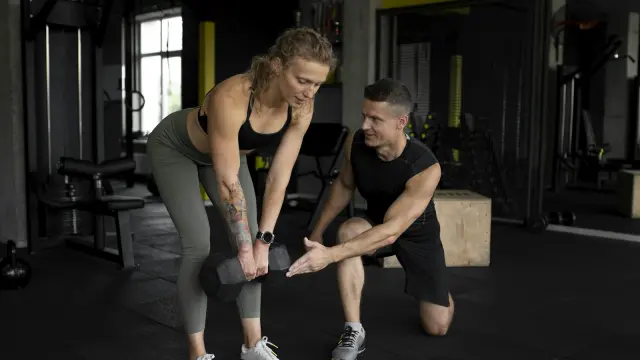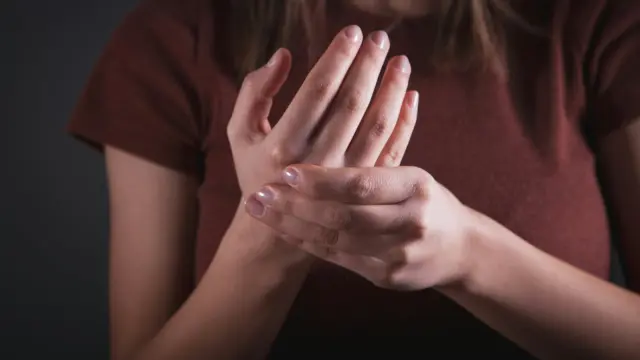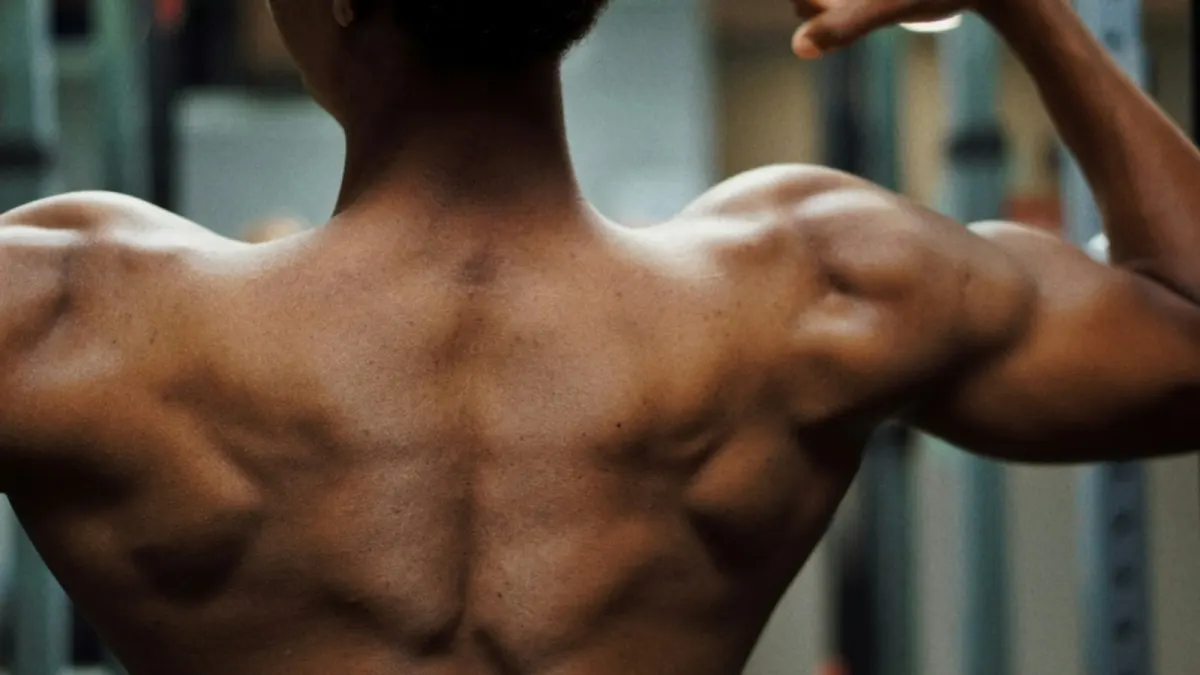
Muscle soreness after a workout, called DOMS (delayed onset muscle soreness), is the stiff, achy feeling that shows up a day or two after training something new or harder than usual. It’s caused by small-scale damage and inflammation in the muscle, mainly from the lowering part of each rep. It’s normal and harmless, but it’s not a reliable sign of growth: you can build plenty of muscle without being sore. You can usually train through mild soreness; time, movement, sleep and food help it fade.
What causes muscle soreness?
Not lactic acid. That’s gone within an hour of training. DOMS is the result of tiny disruptions in muscle fibres and the surrounding connective tissue, followed by an inflammatory repair process that sensitises nerve endings. That’s why it hurts when you move or press on the muscle, but not much at rest.
The review by Cheung, Hume and Maxwell (2003) describes the main triggers:
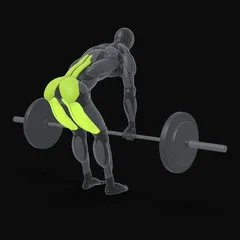
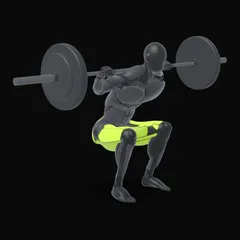
- Eccentric contractions, where the muscle lengthens under load: lowering into a squat, the stretch at the bottom of a Barbell Romanian Deadlift, lowering a dumbbell in a curl.
- New exercises or new ranges of motion. Your body isn’t adapted to them yet.
- A sudden jump in volume or intensity, or coming back after a break.
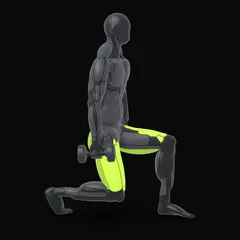
- Training muscles at long lengths, which is why deep lunges and RDLs are notorious.
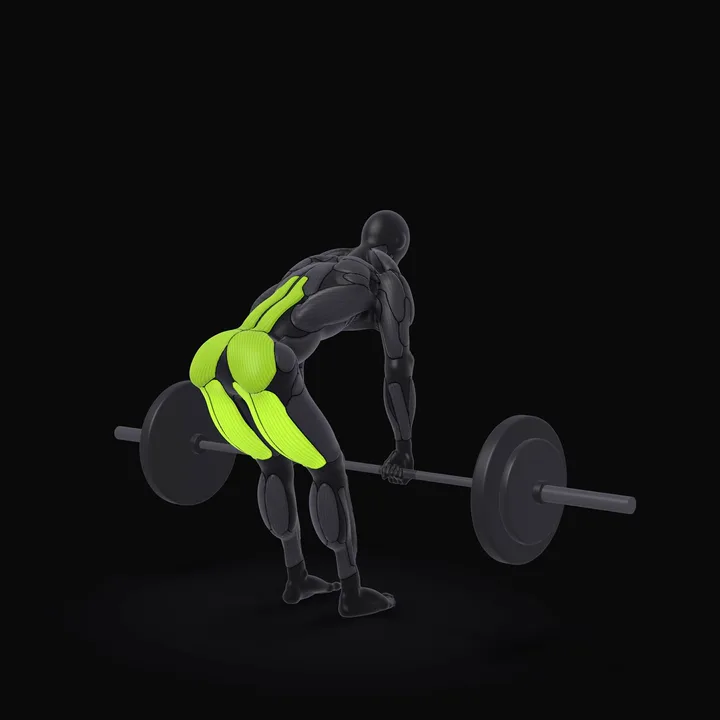 Barbell Romanian DeadliftStand holding the bar in front of your thighs with your knees slightly bent. Push your hips back and lower the bar close to your legs with a flat back.How to do the Barbell Romanian Deadlift →
Why the first week hurts the most
The first time you do a new exercise, the soreness can be intense. The second time, much less. This “repeated bout effect” means your muscles adapt quickly to protect themselves. It’s why beginners and people coming back to the gym after a break get so sore, and why experienced lifters on a stable program barely feel anything.
Is muscle soreness a sign of muscle growth?
Not really. Schoenfeld and Contreras (2013) reviewed the question and concluded that soreness is a poor indicator of muscular adaptation. Some reasons:
- You can be very sore without growing much. A thousand walking lunges after months on the couch will wreck you for days but isn’t an efficient hypertrophy session.
- You can grow without being sore. Experienced lifters make progress on familiar programs with little or no soreness.
- Different muscles get sore differently. Hamstrings and glutes tend to get sore easily; shoulders and calves less so, regardless of growth.
What actually tells you you’re on track is performance: are you doing more reps or more weight over weeks? That’s progressive overload.
Should you work out when sore?
It depends on how sore.
| Soreness level | What it feels like | What to do |
|---|---|---|
| Mild | Stiff when you start moving, fine after a few minutes | Train normally after a thorough warm-up |
| Moderate | Noticeable all day, tender to touch, warm-up helps partially | Train it lighter (fewer sets or less load), or train other muscles |
| Severe | Range of motion limited, clearly weaker, painful to move | Train other muscles; light movement for the sore area |
A good warm-up before lifting often makes mild soreness disappear for the session. Training a moderately sore muscle won’t damage it, but your performance will be lower, so the session is less productive.
If soreness keeps you from training properly several times a week, your program is probably increasing too fast. See how many rest days you need.
What actually helps muscle soreness
A meta-analysis by Dupuy and colleagues (2018) compared recovery techniques. The clearest winner for reducing soreness and perceived fatigue was massage. Compression garments and cold water immersion also helped somewhat. Many other popular methods had weak or no effects.
What helps (a bit):
- Light movement. Walking, easy cycling or light sets of the same exercise increase blood flow and reduce stiffness temporarily.
- Massage or foam rolling. Feels good and reduces perceived soreness for a while.
- Sleep. The basis of all recovery.
- Enough protein and calories. Supports repair.
- Heat (warm bath, shower) for comfort.
What doesn’t do much:
- Stretching to prevent or treat DOMS: research shows little to no effect. Stretch for mobility if you like it; see stretching before or after a workout.
- Supplements marketed for recovery: mostly weak evidence.
- Anti-inflammatory painkillers used routinely: they ease pain but aren’t recommended as a habit around training, and may blunt some adaptations at high doses. Use them only if needed and as directed.
How to get less sore in the first place
- Increase volume gradually. Add a set or two per muscle per week, not five.
- Ease into new exercises. First session with a new movement: 1–2 sets, not 4–5.
- Leave a rep or two in reserve on most sets when starting a program.
- Keep your program consistent for 4–8 weeks before changing exercises.
- Stay regular. Long gaps reset the repeated bout effect; training every week keeps soreness low.
A log makes this easy to manage. In Brick, the anatomical muscle map shows which muscles you’ve trained recently, so you can see at a glance that your hamstrings got hammered two days ago before planning another hinge-heavy session.
When soreness is something else
DOMS is a dull, diffuse ache in the muscle belly that comes on a day later and fades steadily. Be wary of:
- Sharp pain during a rep or a specific “pop”: possible strain.
- Joint pain rather than muscle pain.
- Pain that’s getting worse after 3 days, or still there after a week.
- Extreme soreness with swelling, major weakness, and dark urine after an exceptionally brutal session: possible rhabdomyolysis, a medical emergency.
For these, stop training the area and see a doctor or physiotherapist. Persistent fatigue, poor sleep and constant soreness for weeks are a different issue; see overtraining symptoms.
Frequently asked questions
How long does muscle soreness last?
Typical delayed onset muscle soreness starts 12–24 hours after training, peaks around 24–72 hours, and fades within five days. If pain lasts longer, gets worse, or is sharp rather than achy, it's probably not ordinary soreness.
Is it bad if I never get sore anymore?
No. Soreness drops a lot once your body adapts to a program. If your weights and reps are going up, you're making progress whether you feel sore or not.
Can I train the same muscle when it's still sore?
Mild soreness is fine; a warm-up usually eases it and you can train normally. If the muscle is so sore your range of motion or strength is clearly reduced, train something else or do a lighter session for it.
When is muscle soreness a reason to see a doctor?
If you have extreme pain and swelling, very weak muscles, or dark, cola-coloured urine after an unusually brutal workout, seek medical care urgently, as it can be a sign of rhabdomyolysis. Sharp or joint pain, or pain from a specific moment in a set, should also be checked.
Sources
- Cheung K, Hume PA, Maxwell L (2003). Delayed onset muscle soreness: treatment strategies and performance factors. Sports Medicine
- Schoenfeld BJ, Contreras B (2013). Is postexercise muscle soreness a valid indicator of muscular adaptations?. Strength and Conditioning Journal
- Dupuy O, Douzi W, Theurot D, Bosquet L, Dugué B (2018). An evidence-based approach for choosing post-exercise recovery techniques to reduce markers of muscle damage, soreness, fatigue, and inflammation: a systematic review with meta-analysis. Frontiers in Physiology