Most lifters need 1 to 3 rest days a week. The real rule is about muscles, not days: give each muscle about 48–72 hours before training it hard again. A beginner on three full-body sessions a week has four rest days; an intermediate on a six-day push/pull/legs split can get away with one, because each muscle still rests two to three days between sessions. Rest days can be completely off or include light activity like walking.
Why rest days matter
Training is the stimulus; recovery is when you adapt. After a hard session, muscle protein synthesis is elevated for roughly a day or two, while your muscles, nervous system and connective tissue repair. If you train the same muscles hard again before that has happened, you start the next session with less in the tank, and quality drops.
Rest days also serve things beyond muscles: tendons and joints, which adapt more slowly, your sleep, and your motivation. Many people who “need” more rest days actually need better sleep; see sleep and muscle growth.
How many rest days per week, by split
| Program | Training days | Rest days | Rest per muscle |
|---|---|---|---|
| Full body, 2×/week | 2 | 5 | 3–4 days |
| Full body, 3×/week | 3 | 4 | 48–72 h |
| Upper/lower, 4×/week | 4 | 3 | 48–72 h |
| Push/pull/legs, 3×/week | 3 | 4 | 7 days |
| Push/pull/legs, 6×/week | 6 | 1 | 72 h |
| Body-part split, 5×/week | 5 | 2 | ~7 days |
Frequency research supports hitting each muscle at least twice a week. A meta-analysis by Schoenfeld, Ogborn and Krieger (2016) found twice-weekly training produced more growth than once a week. For strength, Grgic and colleagues (2018) found that the benefit of higher frequency was mostly explained by higher total volume: spreading your sets over more sessions is a practical way to do more quality work. Neither found that you need to train every day.
For help picking a split, see the best workout split and how many days a week to work out.
Where to put your rest days
- 3 days a week: Monday, Wednesday, Friday is the classic. Each session is followed by a rest day.
- 4 days a week: Monday, Tuesday, Thursday, Friday. Rest on Wednesday and the weekend.
- 5 days a week: Train Monday to Friday, rest at the weekend, or rest Wednesday and Sunday.
- 6 days a week (PPL): push, pull, legs, push, pull, legs, rest.
Place rest days after your hardest sessions (often legs), and before sessions you want to feel fresh for.
Can you train the same muscle two days in a row?
Yes, with conditions:
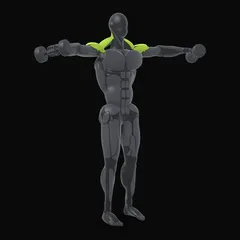
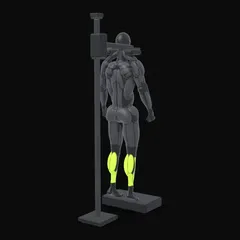
- Small muscles and low-fatigue exercises recover fast. Calves, forearms, abs, rear delts and side delts handle frequent work well. A few sets of lateral raises or calf raises on consecutive days is fine.
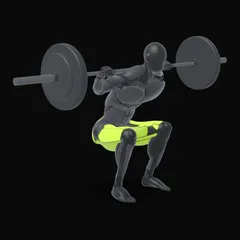
- Big, heavy compound lifts are a different story. Heavy squats or deadlifts two days in a row usually leave the second session worse.
- Different emphasis is OK. Heavy squats one day, a few light lunges or leg extensions the next works for many people.
- Total weekly volume still matters. Training a muscle daily with 2–3 sets is the same weekly work as 2 sessions of 6–8 sets; it’s just distributed differently.
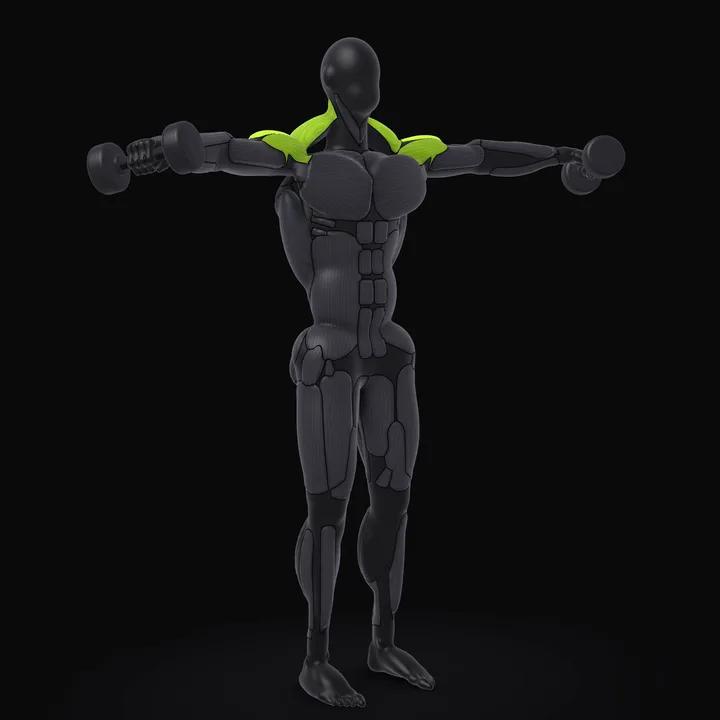 Dumbbell Lateral RaiseStand with a dumbbell in each hand at your sides and your elbows slightly bent. Raise the dumbbells out to the sides to shoulder height, leading with your elbows.How to do the Dumbbell Lateral Raise →
If a muscle is still clearly sore and weaker, give it another day; see muscle soreness after a workout.
Active vs passive rest days
| Type | What it looks like | When it’s best |
|---|---|---|
| Passive rest | Nothing structured; normal daily life | After very hard sessions, when tired or ill, during busy weeks |
| Active rest | 20–60 min of walking, easy cycling, swimming, mobility, a light yoga class | Most rest days; helps stiffness and mood |
Active rest should feel easy: you can talk comfortably, and you finish feeling better than you started. A hard spin class or a 10 km run isn’t a rest day; it’s a different kind of training day with its own recovery cost.
Sports and hobbies count too. A football match or a long hike uses your legs; plan your leg day around it.
Signs you need more rest days
One bad session means nothing. A pattern over two to three weeks means something:
- Your lifts stall or drop despite good effort.
- You wake up tired, or sleep worse than usual.
- Joints or tendons ache, not just muscles.
- You dread sessions you usually enjoy.
- Soreness lasts longer than usual or never quite clears.
- Resting heart rate is noticeably higher than normal in the morning.
The first fix is usually simpler than adding rest days: sleep more, eat enough, cut one or two sets per exercise for a week, or take a planned deload week. Real overtraining is rarer than people think; see overtraining symptoms.
Signs you could train more
The opposite problem is common too. If you’re fresh every session, never sore, sleep well and your lifts climb easily, you might benefit from an extra session or a few more sets per week. More recovery than you need won’t hurt, but it may slow progress if your weekly volume is low.
Making rest days work for you
- Keep eating protein. Your muscles are rebuilding; your protein target doesn’t drop on rest days.
- Move a bit. Daily steps help recovery and overall health.
- Sleep. The single most effective recovery tool.
- Don’t “make up” missed sessions by doubling up later. Just continue with the plan.
Consistency comes from a rhythm you can keep. Brick’s calendar and weekly streaks count weeks in which you hit your training target, not consecutive days, so rest days don’t break anything. The muscle map on your profile also shows which muscles you’ve trained in the last seven days, which helps you see what’s ready to go again.
Frequently asked questions
Is it OK to lift weights every day?
It can be, if you don't train the same muscles hard every day and your total weekly volume is sensible. Most people make better progress with at least one or two full rest days, because sleep, life stress and joints also need recovery.
Do muscles grow on rest days?
Muscle building continues for a day or two after each session, so part of the growth happens on rest days. But they don't grow because you rest; they grow because you trained and then recovered. Both halves matter.
How many rest days for a beginner?
Two to four per week. A beginner full-body program three times a week, with a rest day between sessions, is ideal: muscles get 48 hours between workouts and you learn the lifts quickly.
Is one rest day a week enough?
For many intermediate lifters on a push/pull/legs or upper/lower split, yes, because each muscle still gets 48–72 hours between sessions. If your lifts stall, sleep suffers or joints ache, add a second rest day.
Sources
- Schoenfeld BJ, Ogborn D, Krieger JW (2016). Effects of resistance training frequency on measures of muscle hypertrophy: a systematic review and meta-analysis. Sports Medicine
- Grgic J, Schoenfeld BJ, Davies TB, Lazinica B, Krieger JW, Pedisic Z (2018). Effect of resistance training frequency on gains in muscular strength: a systematic review and meta-analysis. Sports Medicine