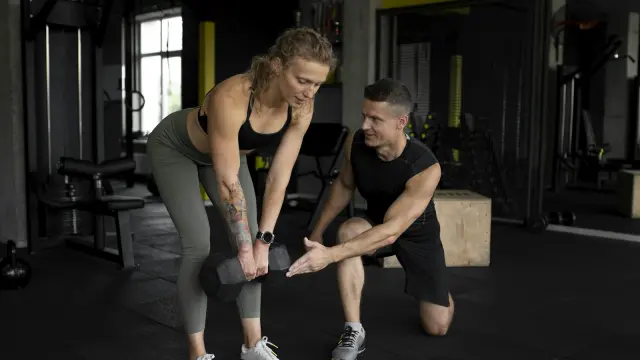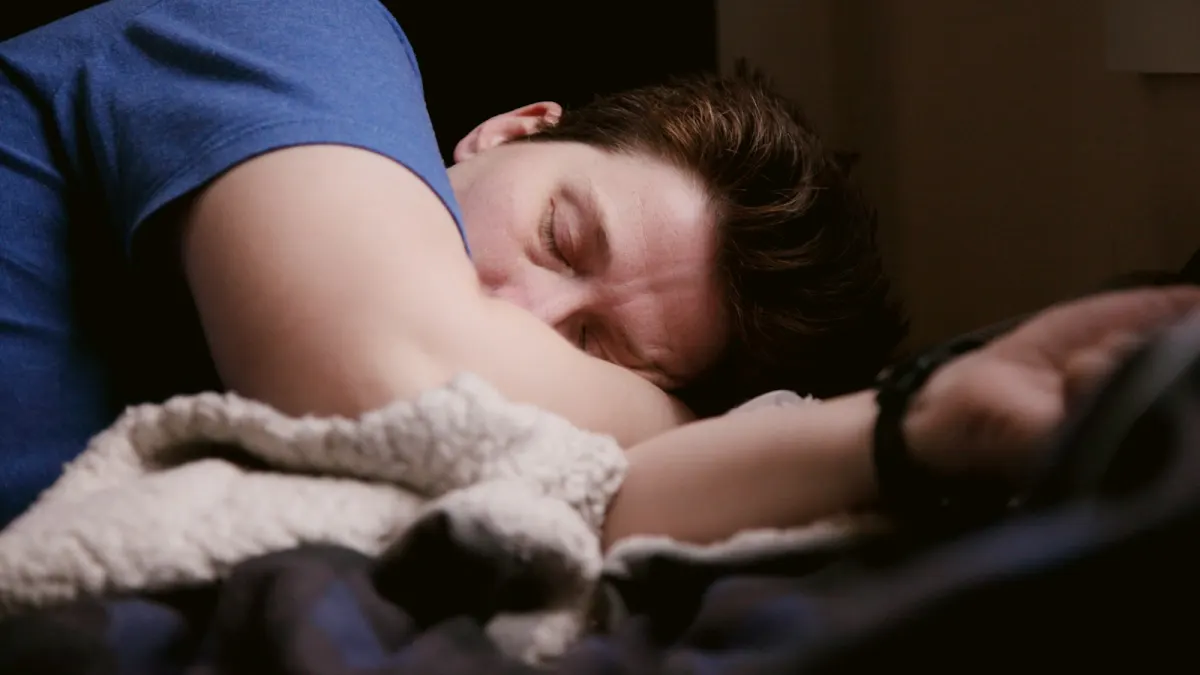
Sleep is part of your training program. To build muscle, most adults should aim for 7 to 9 hours a night, and lifters training hard often feel best at the upper end. Short or poor sleep lowers muscle protein synthesis, makes heavy sets feel harder, shifts hormones the wrong way and, during a diet, makes you lose more muscle and less fat. You won’t stop growing after one bad night, but chronically short sleep quietly caps your progress.
How much sleep do you need to build muscle?
The joint consensus of the American Academy of Sleep Medicine and Sleep Research Society (Watson et al., 2015) recommends 7 hours or more for adults on a regular basis, noting that people recovering from sleep debt or with heavy physical demands may need more. There’s no special “muscle-building number,” but if you train hard several times a week, 7.5–9 hours is a sensible target.
How do you know you’re getting enough? You wake up without an alarm on most days, you don’t need caffeine just to function, and you don’t crash in the afternoon.
What sleep loss does to muscle
Lower muscle protein synthesis
Lamon and colleagues (2021) kept young adults awake for a full night and measured what happened. Compared with normal sleep, muscle protein synthesis was about 18 % lower the next day. Cortisol (a catabolic hormone) went up and testosterone went down. One night isn’t a disaster, but it shows the direction regular short sleep pushes you in.
Weaker training sessions
A review by Knowles and colleagues (2018) found that inadequate sleep reduces maximal strength in compound movements like the squat and bench press, particularly when you’re not specifically motivated or warmed up. Isolated single-muscle tests were less affected. In real life, that’s the grim session where your top sets feel twice as heavy.
Since muscle growth depends on doing quality, challenging sets week after week, losing a few reps here and there adds up over months.
Hormones
Leproult and Van Cauter (2011) restricted young men to 5 hours of sleep for a week. Their daytime testosterone dropped by 10–15 %, similar to the effect of 10–15 years of ageing. Again: not dramatic in a single week, but a reason to take chronic short sleep seriously.
Muscle loss when dieting
The most striking study for lifters on a cut: Nedeltcheva and colleagues (2010) put dieters on the same calorie deficit with either 8.5 or 5.5 hours in bed. Both groups lost similar weight, but with short sleep, far less of it was fat and more of it was lean mass, and they felt hungrier. If you’re cutting, sleep is as important as protein.
What more sleep can do
The good news runs both ways. In a study by Mah and colleagues (2011), college basketball players extended their sleep to around 10 hours in bed for several weeks. Their sprint times and shooting accuracy improved, and they reported better well-being. You probably can’t spend 10 hours in bed, but adding 30–60 minutes to a short night is often the cheapest performance boost available.
Practical sleep habits for lifters
You don’t need a perfect routine. These have the biggest effect:
- Keep a regular schedule. Go to bed and wake up at similar times, weekends included, within about an hour.
- Cut caffeine 6–8 hours before bed. That includes pre-workout drinks; see does pre-workout work.
- Keep the room dark, cool and quiet. Around 16–19 °C (60–67 °F) works for most people. Blackout curtains or an eye mask help.
- Dim screens and lights in the last hour. Not because of magic blue light, but because scrolling keeps your brain busy.
- Go easy on alcohol. It helps you fall asleep but fragments the second half of the night; see alcohol and muscle growth.
- Don’t go to bed starving or stuffed. A moderate dinner and, if you like, a protein snack such as yoghurt or milk.
- Get daylight in the morning. It helps set your body clock, making it easier to fall asleep at night.
- Keep a wind-down routine. Shower, read, stretch lightly, whatever signals “day over.”
What to do after a bad night
You’ll have them. Kids, work, stress, travel. Some rules for training the next day:
| How you slept | What to do |
|---|---|
| One short night (5–6 h) | Train as planned, maybe leave an extra rep in reserve; skip PR attempts |
| Very little sleep (under 4 h) | Lighter session or rest day; avoid heavy max effort on squats and deadlifts |
| Several short nights in a row | Reduce volume for a few days, prioritise sleep, consider a rest day |
| Weeks of poor sleep plus stalled lifts | Look at the bigger picture: see overtraining symptoms |
A short nap (20–30 minutes) in the early afternoon can take the edge off.
Sleep and progress: see the connection yourself
Everyone’s sensitivity is different. The easiest way to see your own pattern is to compare your training on good and bad nights. Brick shows last time’s numbers on every set, so a session where everything moves slower stands out, and you can add a note to the workout (“slept 5 h”) to connect the dots later. Many people find this the best motivation to protect their sleep.
The bottom line
Training breaks muscle down; sleep is when much of the rebuilding happens. You can do everything else right and still underperform if you’re running on five or six hours. Before you look for a new program or supplement, make sure you’re sleeping enough. The rest of the foundations are in how to build muscle.
Frequently asked questions
Can you build muscle on 6 hours of sleep?
Yes, but probably less efficiently. Short sleep is linked to lower muscle protein synthesis, worse training performance and more muscle loss when dieting. If 6 hours is your reality, you'll still progress; aim to protect sleep quality and add a nap or longer nights when you can.
Do naps help muscle recovery?
They can help make up for a short night. A 20–30 minute nap improves alertness without grogginess; longer naps of about 90 minutes include deeper sleep but can interfere with night-time sleep if taken late in the day.
Is it bad to work out late at night?
For most people, evening training doesn't ruin sleep, as long as you avoid caffeine late in the day and give yourself an hour or so to wind down. Some people do sleep worse after very intense late sessions; if that's you, train earlier or keep evening sessions moderate.
Does sleeping more build more muscle?
Getting enough sleep supports muscle growth; sleeping beyond what you need won't add extra. The aim is to remove sleep as a limiting factor: most adults need 7–9 hours.
Sources
- Watson NF, Badr MS, Belenky G, et al. (2015). Recommended amount of sleep for a healthy adult: a joint consensus statement of the American Academy of Sleep Medicine and Sleep Research Society. Sleep
- Lamon S, Morabito A, Arentson-Lantz E, Knowles O, Vincent GE, Condo D, et al. (2021). The effect of acute sleep deprivation on skeletal muscle protein synthesis and the hormonal environment. Physiological Reports
- Knowles OE, Drinkwater EJ, Urwin CS, Lamon S, Aisbett B (2018). Inadequate sleep and muscle strength: implications for resistance training. Journal of Science and Medicine in Sport
- Leproult R, Van Cauter E (2011). Effect of 1 week of sleep restriction on testosterone levels in young healthy men. JAMA
- Nedeltcheva AV, Kilkus JM, Imperial J, Schoeller DA, Penev PD (2010). Insufficient sleep undermines dietary efforts to reduce adiposity. Annals of Internal Medicine
- Mah CD, Mah KE, Kezirian EJ, Dement WC (2011). The effects of sleep extension on the athletic performance of collegiate basketball players. Sleep