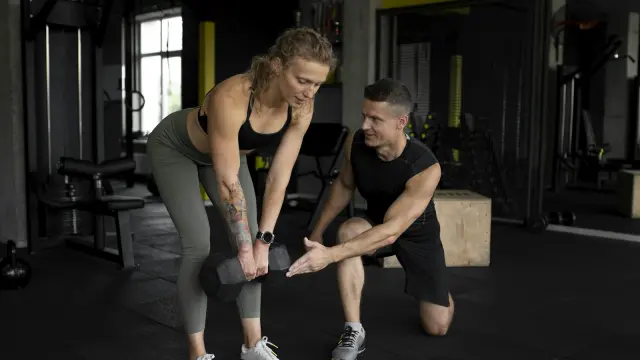
Working out when sick is usually fine if your symptoms are mild and above the neck: a runny nose, sneezing, a slightly sore throat. In that case, a lighter session is OK. If you have symptoms below the neck, such as fever, body aches, chest congestion, a heavy cough, or stomach upset, skip the gym and rest. Restart gradually once you’re better. A few days off won’t cost you any muscle; training through a fever can make you sicker and, rarely, be dangerous.
The neck rule
The “neck check” is a simple rule of thumb that doctors and coaches have used for decades:
| Symptoms | Examples | What to do |
|---|---|---|
| Above the neck only | Runny or blocked nose, sneezing, mild sore throat, no fever | Light to moderate training is fine if you feel OK |
| Below the neck | Fever, chills, body aches, chest congestion, productive cough, shortness of breath | Rest |
| Stomach | Nausea, vomiting, diarrhoea | Rest and rehydrate |
| Feeling very unwell, even without fever | Exhausted, dizzy, can’t concentrate | Rest |
It’s a guide, not a diagnosis. If in doubt, rest: you lose nothing by waiting a day or two.
Why a fever means no training
A fever means your body is fighting an infection systemically. Training hard with a fever:
- Puts extra strain on your heart, which is already working harder.
- Raises the risk of dehydration.
- Can, rarely, contribute to myocarditis (inflammation of the heart muscle) when viral infections and intense exercise combine. It’s uncommon, but it’s the main reason sports doctors are strict about fevers.
- Hurts performance anyway: you’ll be weaker, slower and less coordinated, so the session has little value.
Light training with a cold: how to do it
If you pass the neck check and want to train:
- Cut the intensity. Use 60–80 % of your usual weights, stop several reps short of failure.
- Cut the volume. Half your usual sets is plenty.
- Skip max attempts and very hard conditioning.
- Shorten the session to 30–45 minutes.
- Wipe down equipment and keep your distance; a cold is still contagious.
- Stop if you feel worse during the session.
Often a walk or a light home workout is a better choice than going to the gym at all.
Does exercise help your immune system?
In the long run, yes. A review by Nieman and Wentz (2019) describes regular moderate exercise as supporting immune function and being linked to fewer upper respiratory infections. The occasional very long, exhausting effort (like a marathon) may temporarily affect immune markers, but for normal gym training, being active is protective.
That’s about training regularly while healthy, though. Once you’re sick, rest helps recovery more than exercise does.
What to do while you’re ill
- Sleep and rest as much as you can; see sleep and muscle growth.
- Drink plenty, especially with fever or stomach bugs.
- Keep eating protein if your appetite allows; it helps limit muscle loss when you’re inactive for a while.
- Walk a little around the house or outside if you feel up to it, once the worst has passed.
- Don’t worry about losing gains. One to two weeks off has no meaningful effect on muscle. See getting back into the gym after a break.
How to restart after being sick
Wait until you’ve been fever-free for at least 24–48 hours without medication and your energy is mostly back. Then:
| Illness | When to restart | First session |
|---|---|---|
| Mild cold | When symptoms are fading | 70–80 % of usual, fewer sets |
| Flu, COVID or illness with fever | Several days after fever and major symptoms resolve | 50–60 % of usual, half the sets, short session |
| Stomach bug | 1–2 days after you’re eating normally | Light session, hydrate well |
| Chest infection, pneumonia | When your doctor says it’s OK | Very light; build over 1–2 weeks |
Over the following week, increase load and sets day by day as long as you feel fine. If you feel unusually breathless, exhausted or your heart races during sessions, stop and see a doctor.
Getting back into a routine
The trickiest part of being sick is often the restart, not the illness itself. A week off can turn into a month if you wait to “feel 100 %”. Plan your first session for the day you’re cleared, keep it easy, and focus on showing up.
Brick helps here in two ways. Your last weights and reps are on every set, so you can deliberately pick about 60–70 % of them for the first session back instead of guessing. And weekly streaks count weeks in which you met your training goal, so the week back counts as soon as you hit it. More habit tips in how to stay consistent at the gym.
Being sick often?
If you get sick every few weeks, look at the bigger picture: short sleep, a long aggressive diet, high stress, or training volume that keeps climbing. Frequent illness is one of the signs of under-recovery; see overtraining symptoms. Planned rest helps too; see how many rest days you need.
Quick decision guide
- Do I have a fever, aches, chest symptoms or a stomach bug? → Rest.
- Only a runny nose or mild sore throat, and I feel OK? → Light session, or a walk.
- Am I contagious? → Train at home or skip the gym.
- Better for 24–48 h? → Restart at 50–70 %, build back over a week or two.
Frequently asked questions
Will I lose my gains if I take a week off for a cold?
No. A week off has no meaningful effect on muscle or strength, and you often come back feeling fresher. Trying to push through a fever or chest infection is far more likely to set you back.
Can sweating out a cold help?
No. Exercise doesn't cure a cold or shorten it in any meaningful way. Light activity can make you feel better if your symptoms are mild and above the neck, but hard training while sick only adds stress.
Should I go to the gym if I'm contagious?
Please don't. Gyms are full of shared equipment and people breathing hard. If you have a fever, a heavy cough, a stomach bug, or you've tested positive for an infection like flu or COVID, train at home lightly or rest until you're no longer contagious.
Is it safe to lift weights after COVID or flu?
Wait until you've been free of fever and major symptoms for several days, then restart gradually. If you have chest pain, palpitations, unusual breathlessness or fainting when you restart, stop and see a doctor.
Sources
- Nieman DC, Wentz LM (2019). The compelling link between physical activity and the body's defense system. Journal of Sport and Health Science