To stay consistent at the gym, stop relying on motivation and build a system: fixed training slots in your calendar, a realistic weekly target you can hit even on a bad week, a minimum viable workout for low-energy days, and a way to track your sessions and progress so you can see it working. Expect it to take a couple of months before training feels automatic, and plan for missed sessions instead of letting one turn into a month off.
Why motivation isn’t enough
Motivation is high in January and after a good session, and low after a long day at work. If your training depends on it, it will be inconsistent. The people who keep training for years aren’t more motivated; they’ve made the gym a default part of their week, like brushing teeth.
That takes time. In a study of habit formation by Lally and colleagues (2010), people adopting a new daily behaviour took a median of about 66 days for it to become automatic, ranging from 18 to over 250 days depending on the person and the habit. Two useful findings: more complex habits (like exercise) took longer, and missing a single day didn’t derail the process.
1. Set a target you can hit on a bad week
The most common consistency mistake is an ambitious plan. Five sessions a week sounds great until work gets busy. Then you hit two, feel like you failed, and stop.
Choose the number of sessions you could manage on a normal-to-bad week. Two well-planned sessions every week for a year will build more muscle than five sessions a week for six weeks followed by nothing. See how many days a week to work out and the 2-day workout plan if your time is tight.
2. Decide when and where, in advance
“I’ll go three times this week” is a wish. “Monday, Wednesday and Friday at 18:30, straight from work, bag in the car” is a plan. Psychologists call these implementation intentions: if-then plans that specify when, where and how. In a meta-analysis by Gollwitzer and Sheeran (2006), forming them had a medium-to-large effect on actually reaching goals.
Practical ways to apply it:
- Put sessions in your calendar like meetings.
- Pack your gym bag the night before and leave it by the door.
- Link training to an existing routine: “after I drop the kids at school,” “on the way home from work.”
- Have a back-up slot: “If I can’t go Wednesday evening, I go Thursday morning.”
3. Keep a minimum viable workout
On days when energy is low, the choice shouldn’t be “full session or nothing.” Have a short version ready:
| Exercise | Sets × reps |
|---|---|
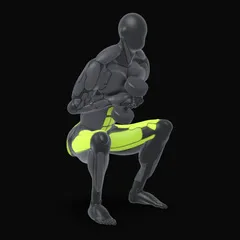
| Dumbbell Goblet Squat or your main squat | 2 × 8–10 |
| Push-up or bench press | 2 × 8–12 |
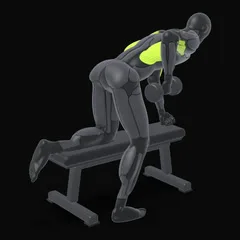
| Dumbbell Single-arm Row | 2 × 10 per side |
Twenty minutes, all major muscles covered, habit protected. Often you’ll feel better once you start and do more. For more time-efficient sessions, see the 30-minute gym workout.
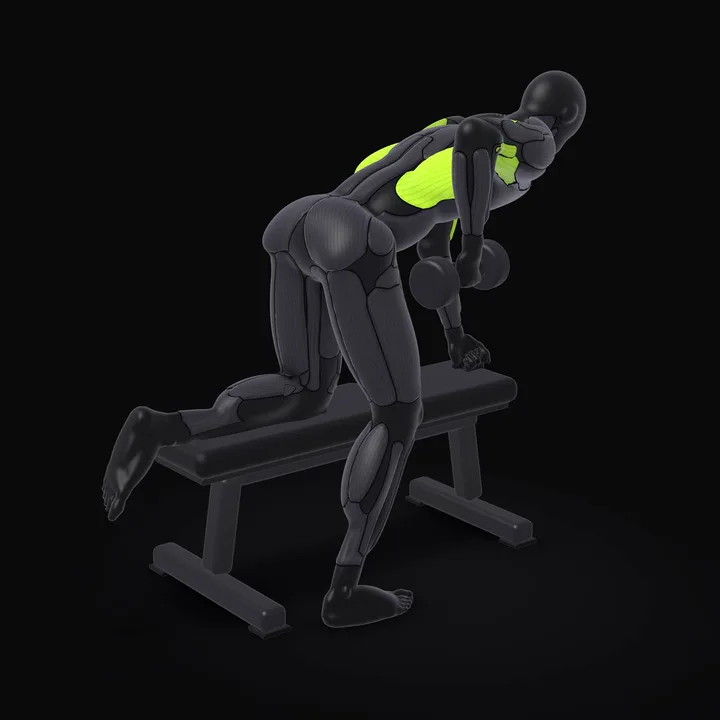 Dumbbell Single-arm RowPlace one knee and the same-side hand on a bench, back flat and parallel to the floor. Hold the dumbbell in your other hand, arm straight below your shoulder.How to do the Dumbbell Single-arm Row →
4. Make it easy to start
Friction kills habits. Remove it:
- Choose a gym on your commute or close to home.
- Have a plan ready so you don’t decide what to do on the spot.
- Keep a simple routine you know well, instead of a new program every week.
- Lay out your clothes the night before morning sessions.
5. Track your sessions and your progress
Seeing the work add up is powerful. A meta-analysis by Harkin and colleagues (2016) found that monitoring progress toward a goal improved the chances of reaching it, and the effect was larger when progress was physically recorded.
Track two things:
- Sessions: did you hit your weekly target?
- Performance: are your lifts going up?
The first keeps the habit alive; the second gives it meaning. That’s exactly what Brick is built around. The calendar shows every training day, and the weekly streak counts consecutive weeks in which you hit your goal, so rest days and a busy Wednesday don’t break anything as long as you reach your weekly number. Every set shows what you lifted last time, PRs are flagged automatically, and strength trends show the long-term picture. More in our guide to keeping a workout log.
6. Never miss twice
You’ll miss sessions. Illness, work, holidays, life. The rule that keeps habits alive: never miss twice in a row. If you miss Monday, Wednesday is non-negotiable, even as a minimum session. And don’t try to make up missed sessions by doubling up; just carry on with the plan.
After longer breaks, restart lighter rather than waiting for the “perfect” Monday. See getting back into the gym after a break.
7. Make it enjoyable
You stick with things you like:
- Choose exercises you enjoy (within reason) and a program that suits your goals.
- Train with a friend or join a class occasionally.
- Make a playlist you only listen to at the gym.
- Set performance goals that excite you: a first pull-up, a bodyweight bench, a 100 kg squat.
- Notice how training makes you feel afterwards: energy, mood, sleep.
8. Plan for the predictable obstacles
| Obstacle | Plan |
|---|---|
| Busy week at work | Minimum workout twice; full sessions next week |
| Travel | Hotel gym or bodyweight workout; keep the streak with 2 short sessions |
| Holiday season | Lower the target, don’t drop to zero |
| Feeling tired | Go anyway and decide after the warm-up |
| Bored with the program | Change exercises after a 6–12 week block, not every week |
| Feeling self-conscious | Go at quieter times; see gym anxiety |
The long game
Consistency is less about any single week and more about not quitting. Most people who’ve trained for years have had bad months, injuries and breaks. They just always came back. Set a sustainable target, protect it with a plan, track it, and forgive yourself the misses.
Frequently asked questions
How long does it take to make the gym a habit?
Longer than the popular 21 days. In a well-known study, simple daily habits took a median of about 66 days to become automatic, with a huge range between people. Expect two to three months of deliberate effort before the gym feels routine.
What should I do when I have zero motivation?
Lower the bar instead of skipping: do a 20-minute minimum session with your main lifts. Motivation often appears once you've started. Relying on motivation alone is the problem; systems and routines carry you through low days.
Is it OK to miss a workout?
Yes. Missing one session has almost no effect on results or on building the habit. What matters is not missing two in a row. Do the next planned session as normal; don't try to make it up by doubling up.
How many days a week should I aim for to stay consistent?
The number you can sustain on a bad week, not on your best week. For most people that's two to four sessions. Consistent twice-weekly training beats an ambitious five-day plan that collapses after a month.
Sources
- Lally P, van Jaarsveld CHM, Potts HWW, Wardle J (2010). How are habits formed: modelling habit formation in the real world. European Journal of Social Psychology
- Gollwitzer PM, Sheeran P (2006). Implementation intentions and goal achievement: a meta-analysis of effects and processes. Advances in Experimental Social Psychology
- Harkin B, Webb TL, Chang BPI, Prestwich A, Conner M, Kellar I, Benn Y, Sheeran P (2016). Does monitoring goal progress promote goal attainment? A meta-analysis of the experimental evidence. Psychological Bulletin