A good powerlifting program for beginners trains the squat, bench press and deadlift several times a week, mostly with moderately heavy sets of 3–6 reps, and builds toward heavier work over 10–12 weeks. Below is a complete 12-week block for three days a week, with percentages for every session, the accessory work that supports the three lifts, and a final week that works as a mock meet. If you’ve been lifting for six months or more and want to get strong on the big three, this is where to start.
What powerlifting is (and how it’s judged)
In a meet you get three attempts at each lift, in this order: squat, bench press, deadlift. Your best successful attempt of each counts toward your total, and you compete against lifters in your sex, weight class and often age group.
The rules most beginners need to know:
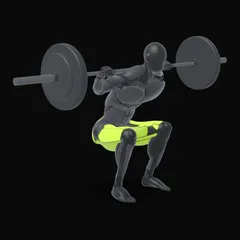
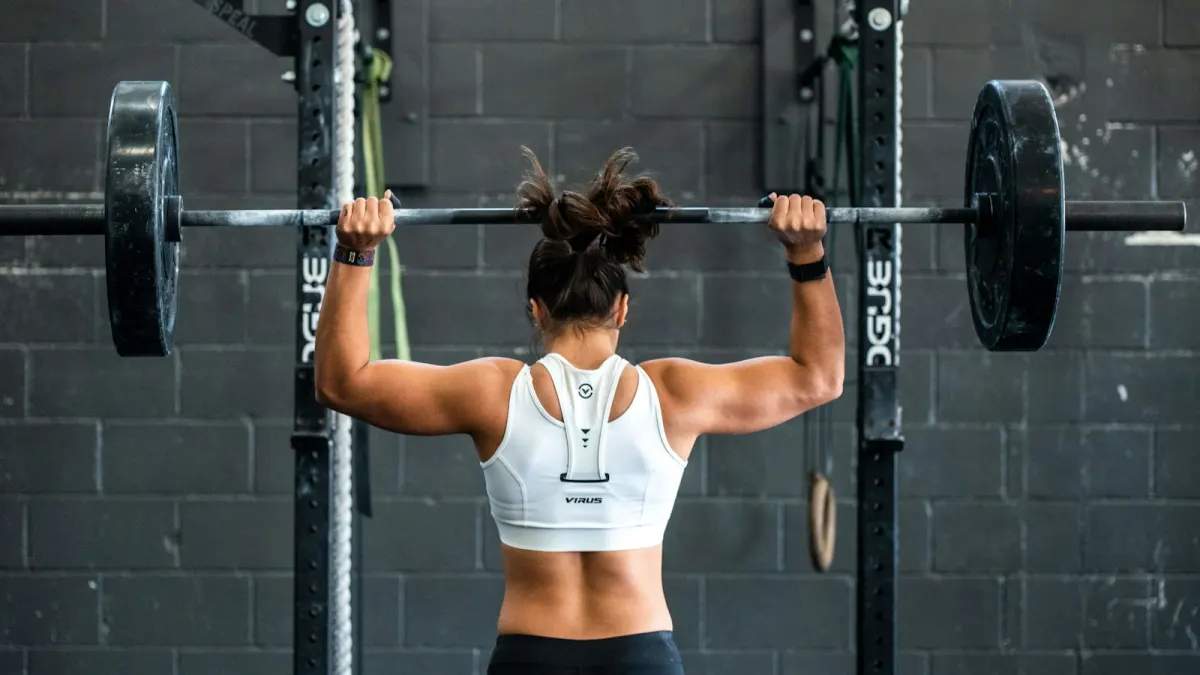
- Squat: after the “squat” command, descend until the crease of your hip is below the top of your knee, stand back up, and wait for the “rack” command.
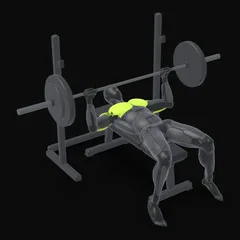
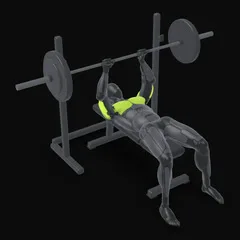
- Bench press: lower the bar to your chest, hold it motionless until the “press” command, press to lockout and wait for “rack”. Your head, shoulders and glutes stay on the bench, feet stay flat.
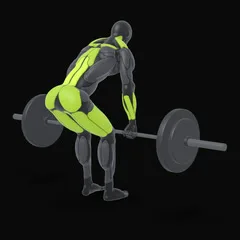
- Deadlift: pull to full lockout (knees and hips straight, shoulders back) and wait for the “down” command before lowering with control.
Rules vary a little between federations, so read your federation’s rulebook before your first meet. Train to the strictest version from the start; it’s easier than fixing habits later.
Why the program looks the way it does
Strength is specific to heavy loads. A review of the repetition continuum found that heavier loads produce bigger gains in maximal strength, while muscle growth occurs across a wide range (Schoenfeld et al., 2021). So most of your work on the big three is in the 2–6 rep range, with lighter, higher-rep accessory work to build muscle.
Frequency helps strength through practice. A meta-analysis found that training more often increased strength gains, largely because it allowed more total volume (Grgic et al., 2018). Squatting and benching three times a week gives you lots of practice without making any single session brutal.
Before you start: find your training maxes
You need a starting number for each lift. Don’t test a true one-rep max. Instead:
- Work up to a heavy set of 3–5 reps with perfect technique and about one rep left in the tank.
- Estimate your 1RM from it (a set of 5 is roughly 85–87 % of your max; a set of 3 is roughly 90–93 %).
- Your training max is 90 % of that estimate. All percentages below are based on the training max.
Using a slightly low training max is deliberate. You’ll finish the block stronger than the number suggests, and every session will be doable with good form. The one rep max calculator guide explains the estimate in more detail.
The weekly structure
| Day | Main lift 1 | Main lift 2 | Accessories |
|---|---|---|---|
| Mon | Squat (heavy) | Bench (volume) | Row, triceps, abs |
| Wed | Deadlift (heavy) | Bench (heavy) | Pull-ups or pulldowns, rear delts |
| Fri | Pause squat (light) | Close-grip or paused bench (volume) | Romanian deadlift, row, biceps |
The 12-week block
Percentages are of your training max. Rest 3–5 minutes on main lifts.
| Weeks | Mon squat | Mon bench | Wed deadlift | Wed bench | Fri pause squat | Fri close-grip bench |
|---|---|---|---|---|---|---|
| 1–4 | 4 × 6 at 70–75 % | 4 × 8 at 65–70 % | 3 × 5 at 70–75 % | 4 × 5 at 75 % | 3 × 5 at 60 % | 3 × 8 at 60–65 % |
| 5–8 | 5 × 4 at 77–82 % | 4 × 6 at 72 % | 4 × 3 at 80–85 % | 5 × 3 at 82 % | 3 × 4 at 65 % | 3 × 6 at 70 % |
| 9–11 | 4 × 3 → 3 × 2 at 85–90 % | 3 × 5 at 75 % | 3 × 2 at 87–92 % | 4 × 2 at 88 % | 3 × 3 at 65 % | 3 × 5 at 70 % |
| 12 | Mock meet | — | Mock meet | — | Rest | — |
Within each phase, climb from the bottom of the range to the top in steps of about 2.5 % a week (for example 70 %, 72.5 %, 75 %, then 75 % again in week 4). Round to the nearest 2.5 kg. If a session goes badly, repeat that week’s weights next week instead of pushing on.
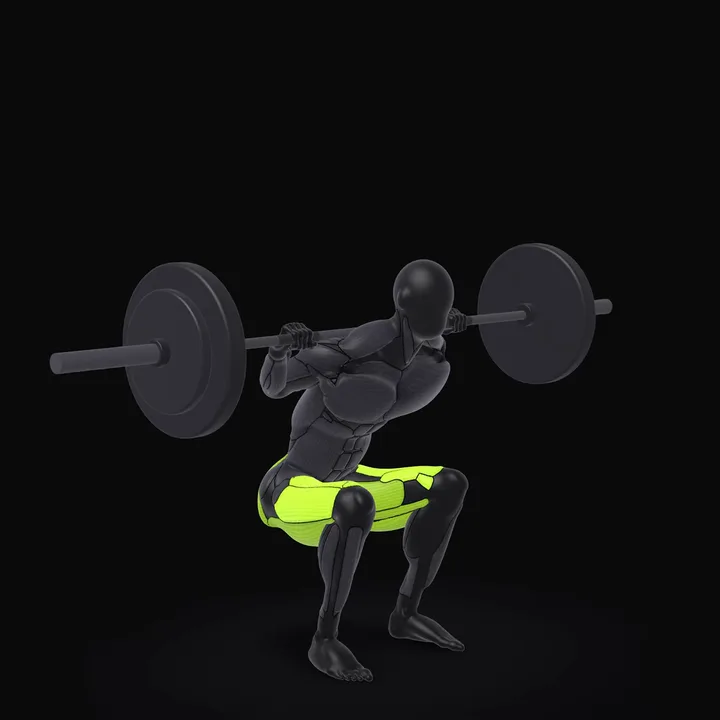 Barbell SquatPlace the bar on your upper back, not on your neck, and step out of the rack. Stand with feet slightly wider than shoulder width, toes turned out a little.How to do the Barbell Squat →
Warming up for the main lifts
Every main lift gets its own ramp-up, even if you already squatted that day. Use the same pattern each time so heavy days feel routine:
| Set | Load | Reps |
|---|---|---|
| 1 | Empty bar | 8–10 |
| 2 | About 40 % of training max | 5 |
| 3 | About 55 % | 3 |
| 4 | About 65 % | 2 |
| 5 (heavy days only, weeks 5–11) | About 75–80 % | 1 |
Rest a minute or two between warm-up sets and longer before your first work set. Before squats and deadlifts, spend 3–4 minutes on a bike and a few goblet squats or hip hinges. Don’t tire yourself out: the warm-up is there to rehearse the lift.
A worked example: weeks 1–4
Imagine a lifter who works up to a squat of 85 kg for 5 reps with one rep left. That estimates a max of about 100 kg, so the training max is 90 kg.
| Week | Mon squat 4 × 6 | Fri pause squat 3 × 5 |
|---|---|---|
| 1 | 62.5 kg (70 %) | 55 kg (60 %) |
| 2 | 65 kg (72.5 %) | 55 kg |
| 3 | 67.5 kg (75 %) | 55 kg |
| 4 | 67.5 kg, aiming for every set at 2–3 reps in reserve | 55 kg |
It looks light on paper, and that’s the point. Weeks 1–4 build volume and sharpen technique so that the 80–90 % sets later in the block move fast. By week 11 the same lifter is doing doubles at around 80 kg, and the mock meet usually lands above the starting estimate.
When you miss reps
- You miss the last rep of a set: finish the session as planned, then repeat that weight next week.
- You miss reps two weeks in a row on the same lift: lower that lift’s training max by 5 % and keep going with the percentages. It’s not a step back; the training max was a bit high.
- A whole session feels terrible: do the work sets at the previous week’s weights and skip the accessories. One flat day doesn’t mean anything.
- Joints ache or you feel run down for more than a week: take a deload week (same lifts, about 60 % for 3 easy sets) before continuing.
Rate every set
Percentages give the plan; effort ratings keep it honest. After each set, note how many reps you had left in reserve. That approach comes from a lifting-specific RPE scale (Zourdos et al., 2016). In weeks 1–8, most sets should feel like 2–3 reps in reserve. In weeks 9–11, the heaviest sets may reach 1. If a set rated as a “0” (couldn’t do another rep), lower the weight next time. RPE and RIR explained shows how to calibrate.
Accessories
Keep them simple and consistent:
| Day | Exercise | Sets × reps |
|---|---|---|
| Mon | Barbell row | 3 × 8–10 |
| Mon | Triceps pushdown | 3 × 10–15 |
| Mon | Ab wheel rollout | 3 × 8–12 |
| Wed | Pull-up or lat pulldown | 3 × 6–10 |
| Wed | Face pull | 3 × 15 |
| Fri | Romanian deadlift | 3 × 6–8 |
| Fri | Chest-supported row | 3 × 10 |
| Fri | Hammer curl | 2 × 10–12 |
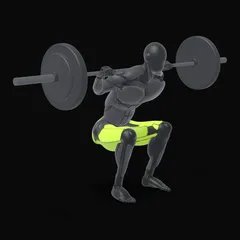
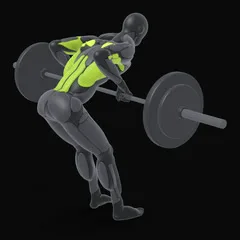
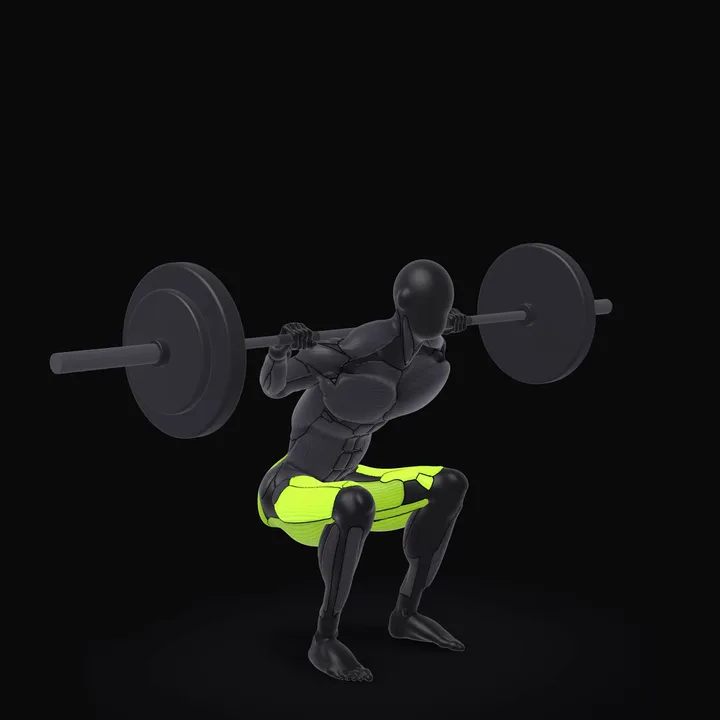 Barbell Pause SquatPlace the bar on your upper back and stand with feet slightly wider than shoulder width. Lower under control to the bottom of the squat with your back straight.How to do the Barbell Pause Squat →
Week 12: the mock meet
Treat it like the real thing. On Monday, warm up and take three squat attempts, then three bench attempts. On Wednesday, three deadlift attempts.
| Attempt | Target |
|---|---|
| Opener | About 90 % of your estimated max: a weight you could triple on a good day |
| Second | About 95–97 %: a confident, solid lift |
| Third | 100–103 %: a small PR if the second moved well |
Use competition commands (have a friend call them) and judge yourself honestly on depth and the pause. If you’re planning a real meet, put it a week or two after this block and taper by keeping the weights heavy but cutting volume in half.
Your first meet: practical basics
- Pick a beginner-friendly meet. Local or “novice” meets are relaxed and welcoming.
- Check the equipment rules. Most beginners compete “raw” or “classic”: belt, knee sleeves and wrist wraps allowed, supportive suits not.
- Weigh-in. Usually 2 hours before lifting. Don’t try to cut weight for your first meet. Just compete in whatever class you’re in.
- What to bring: singlet (required in most federations), a t-shirt, flat shoes or squat shoes, long socks for deadlifts, belt if you use one, chalk, food and water.
- Warm up by the clock. Start your warm-ups about 30 minutes before your flight. Take 5–6 warm-up sets with plenty of time between them.
- Go nine for nine. Conservative attempts and a full total beat one missed PR and a bombed lift.
Adapting the block
Can only train two days? Combine the sessions: day 1 is Monday’s squat and Wednesday’s bench, day 2 is Wednesday’s deadlift and Monday’s bench, each followed by two accessories. Skip the pause-squat day. Progress will be slower, but the percentages still work.
Four days available? Split the week into two squat-and-bench days and two deadlift-and-bench days, and move the Friday work and the Romanian deadlifts onto the extra day. This is also the natural next step after one or two runs of the 3-day version.
Training in a home gym? A rack with safeties, a barbell, a bench and plates cover the whole program. Swap cable pushdowns for close-grip bench or dips, and the pulldown for pull-ups.
Very new to lifting? If your squat, bench or deadlift technique still changes from week to week, spend two or three months on a simpler linear program first, such as the 5x5 workout program, and come back to this block after.
Common beginner mistakes
- Setting training maxes from a gym-day PR. Use a clean set of 3–5 with a rep in reserve, not a grinder with a spotter’s help.
- Squatting high. If depth isn’t there in training, it won’t appear on the platform. Film from the side.
- Touch-and-go bench every session. Pause at least the heavy sets so the meet command doesn’t surprise you.
- Adding extra heavy singles “to see where you’re at”. The plan already has them in weeks 11 and 12. Extra testing adds fatigue and teaches you nothing new.
- Skipping accessories. Rows and upper-back work are what keep the bar path stable when loads get heavy.
Technique matters more than any program
Your program only works if your lifts are consistent. These guides cover each one:
Film your top sets from the side every week. You’ll catch most problems yourself.
When this block is done
After the mock meet or a real competition, take an easy week. Then recalculate training maxes from your new results and run the block again, or move to a four-day program with more volume once three days stops working. Most lifters get several good runs out of a structure like this before they need something more advanced.
Frequently asked questions
How long should I train before doing a powerlifting meet?
There's no minimum. If you can squat to depth, pause the bench press and deadlift with control, you can compete. Many people do their first meet after six months to a year of lifting, using a 12-week block like this one to prepare.
How many days a week do powerlifters train?
Beginners do well on three days a week, squatting and benching two or three times and deadlifting once or twice. Advanced lifters often train four or five days, mostly to fit in more volume.
Do I need a belt and knee sleeves for powerlifting?
Not to start. A belt helps most lifters brace for heavy squats and deadlifts once the weights get serious, and sleeves keep knees warm. Learn to brace without them first, then add them when you're working regularly above 80 % of your max.
What should my first attempt be at a meet?
Something you could lift on a bad day, usually around 90 % of your current best. A successful opener settles your nerves and keeps you in the competition. Most first-time lifters do best going nine for nine with conservative jumps.
Is powerlifting safe for beginners?
Yes, for most healthy people, when technique is solid and loads build up gradually. The risks rise with maximal attempts done fatigued or with poor form, which is why this program spends most of its time well below your max.
Sources
- Schoenfeld BJ, Grgic J, Van Every DW, Plotkin DL (2021). Loading Recommendations for Muscle Strength, Hypertrophy, and Local Endurance: A Re-Examination of the Repetition Continuum. Sports
- Grgic J, Schoenfeld BJ, Davies TB, Lazinica B, Krieger JW, Pedisic Z (2018). Effect of Resistance Training Frequency on Gains in Muscular Strength: A Systematic Review and Meta-Analysis. Sports Medicine
- Zourdos MC, Klemp A, Dolan C, et al. (2016). Novel Resistance Training-Specific Rating of Perceived Exertion Scale Measuring Repetitions in Reserve. Journal of Strength and Conditioning Research