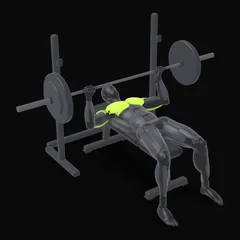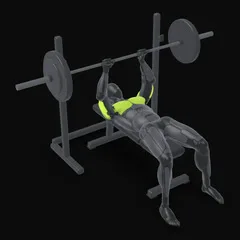
To break a strength plateau, first figure out why you’re stuck, then change one thing at a time. Most plateaus come from one of four causes: accumulated fatigue (fix: a deload), poor recovery from sleep or food (fix: the basics), a program that’s stopped working (fix: a new rep range, more volume or a variation), or a technique limit (fix: targeted work on the weak point). Below is a step-by-step diagnosis and the fixes that match each cause.
Step 1: confirm it’s really a plateau
Check your log. A real plateau looks like this: the same exercise, the same weight, and the same (or fewer) reps for three to four weeks or more. Common false alarms:
- One bad session after a short night or a stressful day.
- A change in technique, depth or tempo that makes the lift harder (that’s a good thing).
- Comparing different exercises or different machines.
- Slower progress that you’re reading as no progress. At intermediate level, a rep per week is normal.
Look at the trend of your estimated one-rep max over a couple of months rather than individual sessions. If it’s still slowly rising, you’re not stuck; you’re just past the beginner phase.
Step 2: check recovery
Before you blame the program, check the inputs.
Sleep
Sleep is the most underrated factor. In one study, a single night without sleep reduced muscle protein synthesis by about 18 % and shifted hormones in an unfavourable direction (Lamon et al., 2021). Weeks of 5–6 hour nights do far more damage than any program flaw. Aim for 7–9 hours.
Food
If you’re in a calorie deficit, strength gains can continue, but muscle gain is impaired, and larger deficits make it worse (Murphy & Koehler, 2022). If your weight has been dropping, a plateau may simply be the cost of dieting. If you’re trying to get stronger and your weight is flat or falling, eat a little more. Check protein too: around 1.6 g per kg of body weight per day.
Stress and life load
New job, exams, a newborn, travel: all of these reduce recovery. Sometimes the best move is to hold your numbers until life calms down.
Step 3: rule out fatigue
If you’ve been training hard for six weeks or more without an easier week, and you notice heavy warm-ups, achy joints or low motivation, fatigue is probably masking your strength. Take a deload week: same exercises, half the sets, slightly lighter weights. Many people set a PR within two weeks of returning.
Step 4: fix the program
If recovery is fine and a deload didn’t help, it’s time to adjust training. Change one thing at a time:
| Fix | How | Good when… |
|---|---|---|
| Change the rep range | Move from 3 × 5 to 4 × 8, or from 3 × 10 to 5 × 4 | You’ve used the same range for months |
| Add volume | +1–2 sets per week for the stuck lift or muscle | Your weekly volume is low (under about 10 sets) |
| Increase frequency | Train the lift twice instead of once a week | You only do the lift once a week |
| Use a close variation | Pause squats, close-grip bench, deficit deadlifts for 4–6 weeks | A specific sticking point |
| Switch progression model | From session-to-session to weekly or rep-based progression | Load jumps are too big to keep up |
| Strengthen the weak muscle | Triceps for bench lockout, quads for squat | The same muscle keeps failing |
 Barbell Pause SquatPlace the bar on your upper back and stand with feet slightly wider than shoulder width. Lower under control to the bottom of the squat with your back straight.How to do the Barbell Pause Squat →
Progress with reps, not just weight
If adding 2.5 kg every week has stopped working, progress with reps first. A study comparing load progression with repetition progression found similar muscle growth and strength gains in both groups (Plotkin et al., 2022). In practice: keep the weight, work from 6 to 10 reps over several weeks, then increase the weight and drop back to 6. That’s double progression, explained in how to apply progressive overload.
Reset and rebuild
Another classic fix: drop the weight on the stuck lift by about 10 %, then build back up week by week. The run-up often carries you past your old best within three or four weeks, with better technique.
Step 5: fix technique and sticking points
Film the lift. Where does it slow down or fail?
| Lift | Sticking point | Targeted work |
|---|---|---|
| Bench press | Off the chest | Paused bench, dumbbell or incline press |
| Bench press | Lockout | Close-grip bench, triceps work |
| Squat | Out of the hole | Pause squats, front squats |
| Squat | Hips shoot up | Front squats, leg press, quad work |
| Deadlift | Off the floor | Deficit deadlifts, front squats |
| Deadlift | Lockout | Hip thrusts, RDLs, grip work |
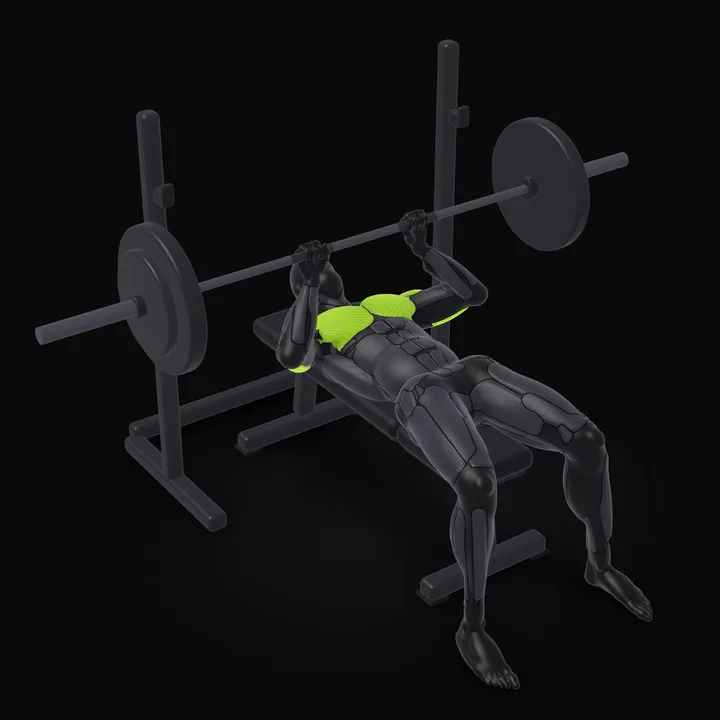 Barbell Close-grip Bench PressLie on the bench and grip the bar at shoulder width or slightly narrower. Lower the bar to your lower chest, keeping your elbows close to your body.How to do the Barbell Close-grip Bench Press →
Lift-specific plans are in how to increase bench press and how to increase squat.
Step 6: be patient and track
Give any change 3–6 weeks before judging it. Progress at intermediate level comes in small steps, and changing everything every two weeks makes it impossible to see what works. A log of every set, and the trend of your estimated max over time, are what separate a real plateau from normal fluctuation.
Quick checklist
- Has the lift really been flat for 3–4 weeks?
- Sleeping 7+ hours most nights?
- Eating enough, with about 1.6 g/kg protein? Is your weight stable or rising?
- Trained hard for 6+ weeks without a deload?
- Same rep range for months?
- Fewer than about 10 hard sets a week for that muscle?
- Technique consistent, or changing every session?
Most plateaus are solved by the answer to one of these.
Frequently asked questions
How long does a strength plateau last?
It depends on the cause. A fatigue-related plateau often lifts within one or two weeks after a deload. A plateau caused by the program or by eating too little can last months until you change something.
Is it a plateau or just a bad week?
One or two bad sessions aren't a plateau. A plateau is when a lift hasn't improved in weight or reps for three to four weeks despite consistent training. Your training log is the only reliable way to tell.
Should I change my whole program to break a plateau?
Usually not. Most plateaus break with smaller changes: a deload, a different rep range, more volume for the lagging lift or a close variation. Changing everything makes it hard to know what worked.
Can I break a plateau while cutting?
Strength can still improve in a moderate deficit, especially for less experienced lifters, but progress slows. If you're lean and in a deep deficit, holding your numbers is a realistic goal; push for new PRs after the cut.
Sources
- Lamon S, Morabito A, Arentson-Lantz E, Knowles O, Vincent GE, Condo D, Alexander SE, Garnham A, et al. (2021). The effect of acute sleep deprivation on skeletal muscle protein synthesis and the hormonal environment. Physiological Reports
- Murphy C, Koehler K (2022). Energy deficiency impairs resistance training gains in lean mass but not strength: A meta-analysis and meta-regression. Scandinavian Journal of Medicine & Science in Sports
- Plotkin D, Coleman M, Van Every D, Maldonado J, Oberlin D, Israetel M, et al., Schoenfeld BJ (2022). Progressive overload without progressing load? The effects of load or repetition progression on muscular adaptations. PeerJ