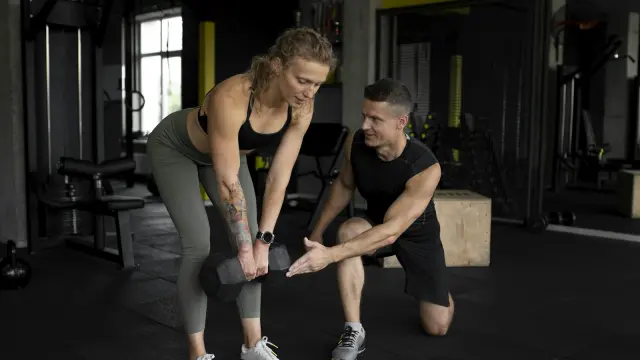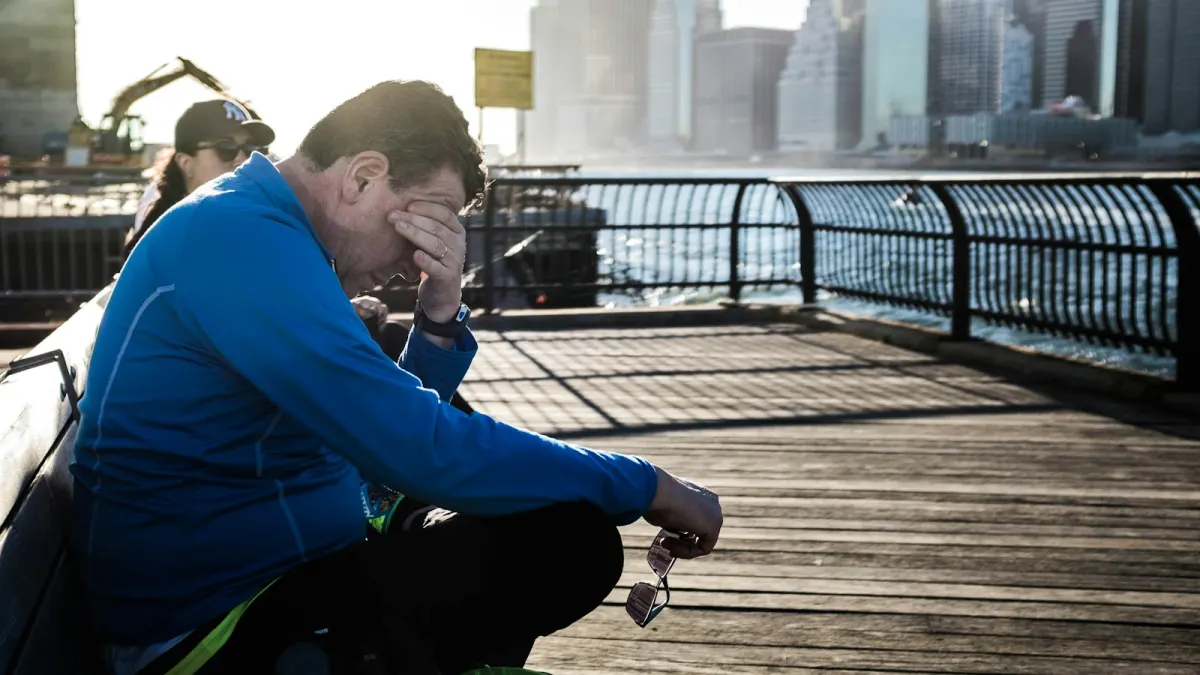
The real signs of overtraining are a drop in performance that lasts for weeks despite rest, combined with persistent fatigue, poor sleep, low mood or irritability, and frequent illness. Being tired or sore after a hard week is not overtraining. Full overtraining syndrome is rare in people who lift recreationally; what’s common is under-recovery, where training is fine but sleep, food or stress aren’t. The fix is usually a lighter week and better recovery habits, not months off.
Overreaching, under-recovery and overtraining: the difference
The joint consensus statement from the European College of Sport Science and the American College of Sports Medicine (Meeusen et al., 2013) describes fatigue as a continuum:
| Stage | What happens | Recovery time |
|---|---|---|
| Normal training fatigue | Tired after sessions, fine after rest days | Hours to a couple of days |
| Functional overreaching | A planned hard block; performance dips, then rebounds higher | Days to 2 weeks |
| Non-functional overreaching | Performance drops and stays down; you feel worn out | Weeks to months |
| Overtraining syndrome | Long-lasting performance decline plus physical and psychological symptoms | Months, sometimes longer |
Overtraining syndrome is mostly seen in endurance athletes with huge training loads. When Grandou and colleagues (2020) reviewed the research on resistance training, they found the literature mostly documented short-term overreaching; well-documented overtraining syndrome from lifting was rare.
Under-recovery isn’t a formal diagnosis, but it describes what most gym-goers experience: a reasonable program on top of 5–6 hours of sleep, a calorie deficit, a stressful job and maybe a new baby. The training isn’t “too much” in isolation; the total load is.
Real overtraining symptoms
The review by Kreher and Schwartz (2012) lists the common signs. In a lifter, they usually look like this:
Performance signs
- Lifts going down for two to three weeks or more, despite trying hard.
- Weights that used to be easy feel heavy from the first warm-up set.
- Loss of coordination or “feel” on lifts you know well.
- Needing more and more rest between sets for the same work.
Physical signs
- Persistent fatigue that rest days don’t fix.
- Muscles that stay sore and heavy for days longer than usual.
- Aching joints and tendons.
- Getting sick more often (colds, sore throats).
- Elevated resting heart rate in the morning compared with your normal.
- Loss of appetite, or unintended weight loss.
Psychological signs
- Sleeping badly despite being tired.
- Irritability, low mood, anxiety.
- Losing motivation for training you usually enjoy.
- Poor concentration.
One or two of these after a hard week is normal. Several of them together for weeks, with performance falling, is the warning sign.
Why lifters under-recover
Common causes, roughly in order of how often they’re the culprit:
- Sleep. Under 7 hours most nights. See sleep and muscle growth.
- Not eating enough. Especially long, aggressive diets.
- Life stress. Work, exams, relationships, a newborn. Your body doesn’t distinguish stress sources.
- Volume jumps. Going from 10 to 25 sets per muscle per week because a program said so.
- Every set to failure. Constant grinding takes longer to recover from than stopping a rep or two short.
- No planned easy periods. Months of hard training with no lighter weeks.
- Extra hard cardio or sport stacked on top of a full lifting program.
What to do if you think you’re overreaching
- Take a deload week now. Cut your sets by about half and stop 3–4 reps short of failure, keeping the weights moderate. Details in deload week.
- Sleep 8+ hours for a week. Go to bed earlier; nap if you can.
- Eat at least at maintenance. If you’re dieting, pause the diet for one to two weeks.
- Cut other stressors where possible, including hard cardio.
- Return gradually. Restart at your previous volume minus a few sets, then build back up.
Most people feel noticeably better within one to two weeks. If you don’t, take more time off and get a medical check.
How to prevent it
- Increase volume slowly: no more than one or two sets per muscle per week at a time.
- Plan lighter weeks every 4–8 weeks, or whenever performance dips for two sessions in a row.
- Leave 1–3 reps in reserve on most sets.
- Take at least one or two rest days a week; see rest days.
- Adjust training to life. During exam weeks or a hard stretch at work, maintain rather than push.
- Treat illness as a stop sign; see working out when sick.
Track your trends to catch it early
The earliest sign is in your numbers: reps dropping at the same weight, or weights you handled easily three weeks ago suddenly feeling heavy. That’s hard to spot from memory. Brick shows what you did last time on every set and draws an estimated 1RM trend per exercise, so a two- or three-week downward slide across several lifts is obvious. Brick Coach, on Premium, also reviews your week and adjusts the number of sets per muscle, so volume doesn’t keep climbing when your performance doesn’t.
Overtraining or plateau?
They’re easy to confuse. A plateau is when your lifts stop going up but you otherwise feel fine: energetic, sleeping well, motivated. That usually means the program needs adjusting, not more rest; see how to break a plateau. Overreaching is when your lifts go down and you feel worse. The treatment is opposite: more stimulus for a plateau, less for overreaching.
Frequently asked questions
How long does it take to recover from overtraining?
Short-term overreaching usually clears with a few days to two weeks of reduced training. True overtraining syndrome can take months, which is why it's important to catch the signs early. If you've had several weeks of rest and still feel exhausted, see a doctor.
Can you overtrain by lifting weights?
It's possible but rare in recreational lifters. Research on resistance training mostly documents short-term overreaching, not full overtraining syndrome. The usual problem is under-recovery: poor sleep, too little food and high life stress combined with a demanding program.
Is feeling tired after the gym a sign of overtraining?
No. Feeling tired after a hard session is normal. Overtraining is about performance and wellbeing declining over weeks, even after rest days, not about being tired after a workout.
Should I stop training completely if I think I'm overtrained?
Usually not straight away. Start by cutting volume and intensity sharply for a week and fixing sleep and food. If symptoms don't improve, or you feel unwell, take more time off and get checked by a doctor.
Sources
- Meeusen R, Duclos M, Foster C, Fry A, Gleeson M, Nieman D, Raglin J, Rietjens G, Steinacker J, Urhausen A (2013). Prevention, diagnosis, and treatment of the overtraining syndrome: joint consensus statement of the European College of Sport Science and the American College of Sports Medicine. Medicine & Science in Sports & Exercise
- Kreher JB, Schwartz JB (2012). Overtraining syndrome: a practical guide. Sports Health
- Grandou C, Wallace L, Impellizzeri FM, Allen NG, Coutts AJ (2020). Overtraining in resistance exercise: an exploratory systematic review and methodological appraisal of the literature. Sports Medicine