Time under tension (TUT) is how long a muscle works during a set. Lifting slower increases it, but slower doesn’t automatically mean more muscle: a meta-analysis found similar growth for repetitions lasting anywhere from about half a second to 8 seconds, with very slow reps looking less effective. What matters more is how hard your sets are and how much weight you can use. Tempo is still a useful tool, though: for technique, for control, and for making light weights harder. Below is how tempo notation works and when to use it.
Tempo notation explained
Tempo is written as four numbers, each in seconds:
| Position | Phase | Example (3-1-1-0) |
|---|---|---|
| 1st | Lowering (eccentric) | 3 seconds down |
| 2nd | Pause at the bottom (stretched) | 1 second pause |
| 3rd | Lifting (concentric) | 1 second up |
| 4th | Pause at the top (contracted) | No pause |
The first number is always the lowering phase, even for exercises like pull-ups where “lowering” means going down from the bar. An “X” in the third position means “as fast as possible”, for example 3-0-X-0.
So a set of 10 reps at 3-1-1-0 lasts about 50 seconds. The same 10 reps at 2-0-1-0 last about 30 seconds.
Does slower lifting build more muscle?
Not in any simple way. A meta-analysis of studies comparing repetition durations found that rep speeds from about 0.5 to 8 seconds per repetition led to similar muscle growth, and that very slow training (more than about 10 seconds per rep) appeared to be less effective (Schoenfeld et al., 2015).
Why doesn’t more time under tension mean more growth? Because slowing down forces you to use a lighter weight, and the total stimulus seems to depend more on how close to failure each set gets than on its duration. A 2023 meta-analysis found that muscle growth increased as sets were taken closer to failure (Refalo et al., 2023). A fast-ish set of 8 that ends near failure and a slow set of 8 that ends near failure both work; a slow set that ends far from failure doesn’t.
The “40–60 seconds” rule
You may have heard that sets should last 40–60 seconds for hypertrophy. It’s a rule of thumb from bodybuilding, not something research supports strongly. A set of 5 heavy squats and a set of 20 leg extensions can both build muscle if they’re hard.
When tempo is useful
Tempo isn’t magic, but it’s a useful tool in several situations:
| Situation | Suggested tempo | Why |
|---|---|---|
| General hypertrophy training | 2–3 seconds down, up with intent | Control and safety without wasting load |
| Learning a new exercise | 3-1-1-0 | Builds awareness and consistent technique |
| Light weights only (home, hotel) | 4-2-1-0 | Makes light loads hard enough to matter |
| Weak out of the bottom of a lift | 2-3-X-0 (pause squats, paused bench) | Removes the stretch reflex, builds strength in the weakest position |
| Isolation exercises | 2-1-1-1 | Helps you feel the muscle; see mind muscle connection |
| Returning from injury | Slow and controlled | Lets you load tissue with less weight |
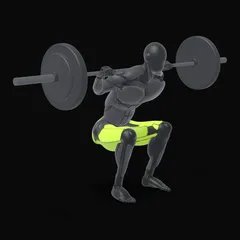
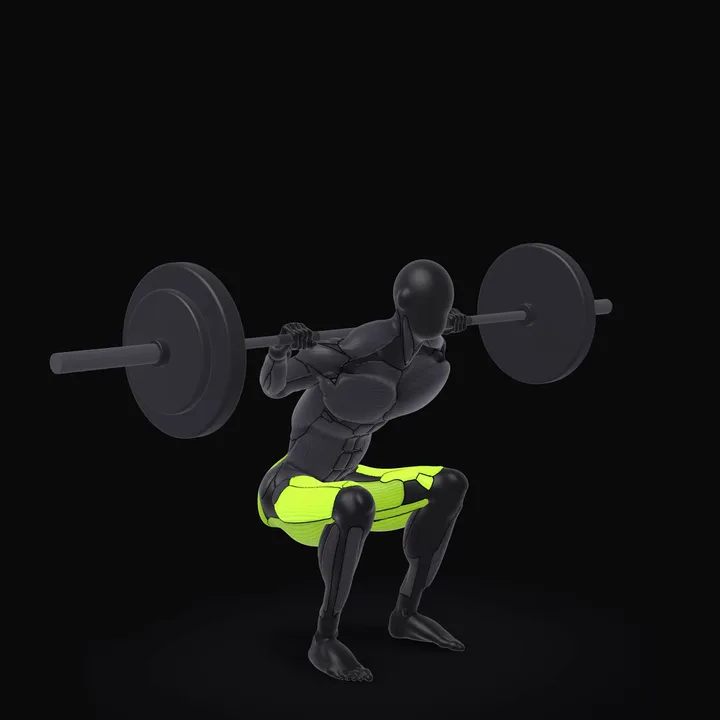 Barbell Pause SquatPlace the bar on your upper back and stand with feet slightly wider than shoulder width. Lower under control to the bottom of the squat with your back straight.How to do the Barbell Pause Squat →
The pause squat is a good example: a 2–3 second pause at the bottom removes the bounce, makes you stay tight and builds strength exactly where most people miss. Same idea for a paused bench press, which is also how competition bench is judged (more in how to bench press).
A sensible tempo for each main exercise
Not every lift benefits from the same tempo. Here’s a starting point for the exercises most people do:
| Exercise | Everyday tempo | Notes |
|---|---|---|
| Squat | 2-0-X-0 | Controlled descent, no dive-bombing; use pause squats as a separate variation |
| Bench press | 2-0-X-0 or 2-1-X-0 | Touch the chest without bouncing; a short pause builds control |
| Deadlift | 1-0-X-0, reset each rep | Lower under control but don’t do slow 4-second lowerings with heavy weight; your lower back takes the hit |
| Romanian deadlift | 3-0-1-0 | The slow lowering is the point: feel the hamstrings stretch |
| Pull-up | 2-0-1-0 | Full hang at the bottom; slow negatives (4–5 s) if you can’t do one yet |
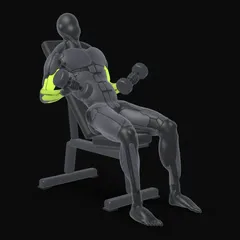
| Curls, lateral raises, extensions | 2-1-1-1 | Short squeeze at the top, no swinging |
The “X” for the lifting phase doesn’t mean the bar flies up. On a heavy set it will move slowly anyway. It means you try to move it fast, which is what gets the most muscle fibres working.
How to pick the weight when you add a tempo
Slowing down or pausing makes everything harder, so don’t load a tempo variation like your normal lift. Rough starting points:
- 3-second lowering: start around 10–15 % lighter than your usual weight for the same reps.
- 2–3 second pause at the bottom (squat, bench): start around 15–25 % lighter.
- 4-second lowering plus pause: start around 25–30 % lighter.
Then adjust from there. The first set should finish with about 2–3 reps left in the tank at the tempo you chose. If you can’t hold the tempo on the last reps, the weight is too heavy; if the set feels like a warm-up, go up next time. Once you’ve found the right weight, progress the tempo variation exactly like any other exercise: add reps, then add weight, and keep the tempo identical.
Example: four weeks of paused bench
Say your bench press is 80 kg for 5 and you keep failing just off the chest. You add paused bench (2-second pause on the chest) as your second bench exercise of the week:
| Week | Paused bench | Rule |
|---|---|---|
| 1 | 3 × 5 at 62.5 kg | Should feel controlled, 2–3 reps in reserve |
| 2 | 3 × 6 at 62.5 kg | Add a rep per set |
| 3 | 3 × 5 at 65 kg | Back to 5, add 2.5 kg |
| 4 | 3 × 6 at 65 kg | Same pause every rep, no sinking the bar |
The pause stays at a real 2 seconds the whole time. If you start cutting it short to hit the reps, that’s a sign to hold the weight for another week.
Slow eccentrics and soreness
Emphasising the lowering phase usually leaves you more sore over the next two or three days, especially the first time. That’s normal and fades as you repeat it. Two practical consequences:
- Introduce slow eccentrics gradually. Start with one exercise and 2–3 sets, not your whole program.
- Don’t add them right before a heavy session for the same muscles. Sore legs from 5-second Romanian deadlifts on Monday won’t help your squat on Wednesday.
Why controlling the lowering matters
There’s a difference between deliberately slow reps and controlled reps. Dropping the weight on the way down, or bouncing it off your chest or out of the bottom of a squat, takes tension off the muscle at the moment it’s being stretched, which may be one of the more productive parts of a rep. It also raises the risk of injury.
So the practical sweet spot is a controlled lowering of about 2–3 seconds and a lift that’s as fast as you can manage with good form. When the set gets hard, the lifting phase slows down by itself; that’s fine, and normal.
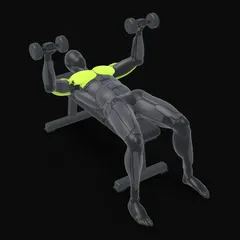
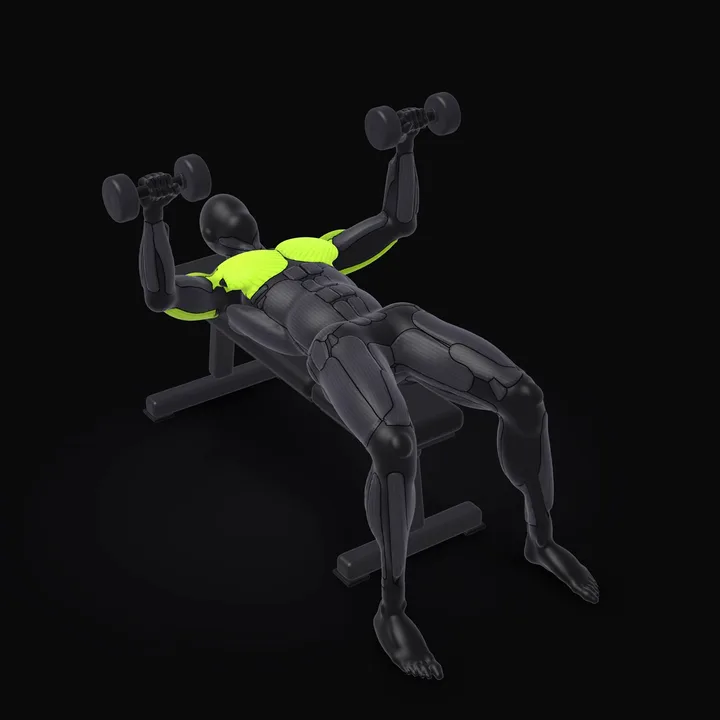 Dumbbell Bench PressSit on the end of the bench with the dumbbells on your thighs, then lie back bringing them beside your chest. Keep your feet on the floor and your shoulder blades pulled back.How to do the Dumbbell Bench Press →
Should you track tempo?
For most people, a consistent tempo matters more than a specific tempo. If you do your bench press with a 2-second lowering one week and drop the bar the next, comparing the numbers is meaningless. Pick a tempo style for each exercise and keep it, so that more reps or more weight on paper mean real progress. That’s the basis of progressive overload.
When you use deliberate tempo (like paused or 4-second variations), note it with the set, so you’re comparing like with like.
Using tempo to make light weights harder
If you train at home with limited weights, tempo is one of your best tools. A 20-rep set of goblet squats that feels easy at normal speed becomes brutal at 4-2-1-0. The home workout without equipment uses this exact approach to keep bodyweight exercises challenging.
Just remember the limit: very slow reps eventually make sets more about endurance and grit. Once a tempo variation is easy for 15–20 reps, move to a harder exercise or a heavier load.
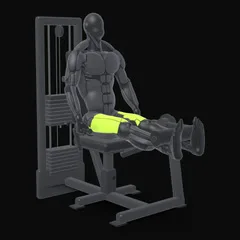
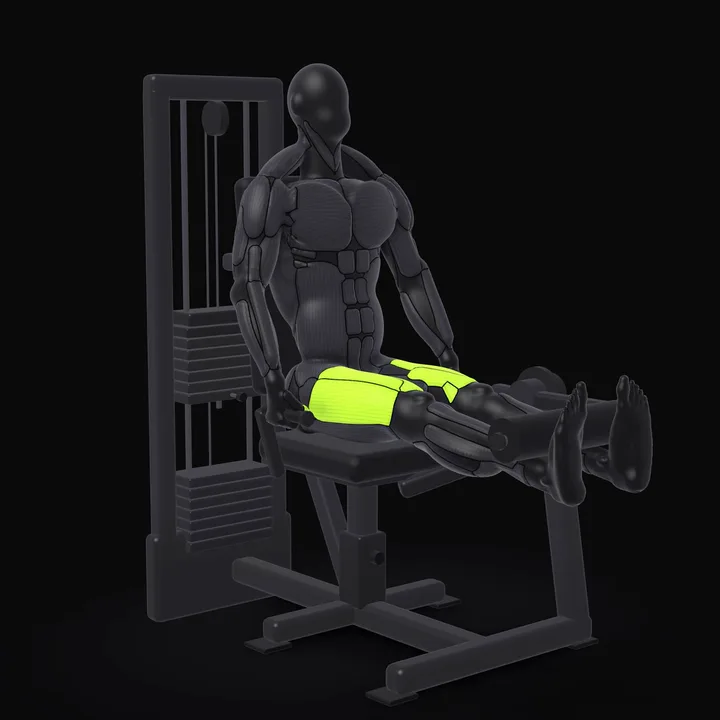 Leg ExtensionAdjust the seat so your knees line up with the pivot and the pad sits just above your ankles. Sit with your back against the pad and hold the handles.How to do the Leg Extension →
Common tempo mistakes
- Counting seconds instead of pushing effort. A slow set with 6 reps left in the tank does little.
- Super slow everything. 10-second reps mean very light weights and less growth.
- No control at all. Bouncing and dropping reduce tension and increase injury risk.
- Changing tempo from week to week and thinking you’ve progressed or regressed.
For how close to failure your sets should be, which matters more than tempo, see training to failure.
Frequently asked questions
Is time under tension important for muscle growth?
Less than many people think. Research found similar muscle growth with repetitions lasting anywhere from about half a second to 8 seconds. What matters more is how close to failure your sets are and how many hard sets you do.
What is a good tempo for hypertrophy?
A controlled lowering of about 2 to 3 seconds and a lift that's as fast as you can manage with good form is a practical default. It keeps tension on the muscle without making the weights so light that progress stalls.
What does 3-1-1-0 tempo mean?
It's four numbers in seconds: 3 seconds lowering, 1 second pause at the bottom, 1 second lifting, 0 seconds pause at the top. The first number is always the lowering (eccentric) phase.
Should I aim for 40 seconds per set?
There's no need. The '40 to 60 seconds under tension' rule isn't supported by strong evidence. A set of 8 controlled reps taken close to failure works whether it lasts 25 or 50 seconds.
Are super slow reps good for building muscle?
Very slow reps, beyond about 8 to 10 seconds per repetition, appear to be less effective for growth, mainly because they force you to use much lighter weights. Moderate tempos are a better choice.
Sources
- Schoenfeld BJ, Ogborn DI, Krieger JW (2015). Effect of Repetition Duration During Resistance Training on Muscle Hypertrophy: A Systematic Review and Meta-Analysis. Sports Medicine
- Refalo MC, Helms ER, Trexler ET, Hamilton DL, Fyfe JJ (2023). Influence of Resistance Training Proximity-to-Failure on Skeletal Muscle Hypertrophy: A Systematic Review with Meta-analysis. Sports Medicine