To strengthen your lower back, train it the way it works in real life: hold your spine steady (bracing and core stability), bend and stand up from your hips (hinges like Romanian deadlifts), and extend your back and hips against resistance (back extensions). Start with bodyweight versions, add load gradually over weeks, and train two or three times a week. This article is about building strength in a healthy back; if you’re currently in pain, read the safety note at the end first.
How your lower back works
The muscles of your lower back, mainly the erector spinae and the deeper multifidus, run along your spine. In most strength exercises their job isn’t to bend your spine a lot; it’s to keep it steady while your hips and legs produce force. When you deadlift, your glutes and hamstrings lift the weight, and your back muscles hold your torso in position so that force reaches the bar.
That’s why the best lower back training does three things:
- Resists movement (bracing, anti-rotation, anti-side bending).
- Holds a steady spine under load while you hinge at the hips.
- Builds the extensors directly through a controlled range.
Exercise in general is good for backs. A Cochrane review of 249 trials found that exercise therapy probably reduces pain in chronic low back pain compared with no treatment or usual care (Hayden et al., 2021). The best exercise is the one you’ll keep doing, and for a healthy back, regular strength training builds both strength and confidence.
Step 1: learn to brace
Bracing means creating firm tension all around your midsection, front, sides and back, so your spine stays steady under load.
- Stand tall, hands on your sides just above your hips.
- Take a breath into your belly and sides (not your chest).
- Tighten your midsection as if you’re about to be poked in the stomach. You should feel your sides push into your hands.
- Keep breathing shallowly while holding the tension, or hold the breath for a single heavy rep.
Practise this before every squat, hinge and carry.
Step 2: stability exercises
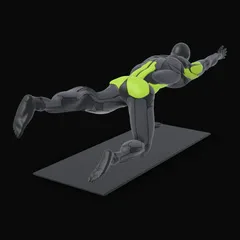
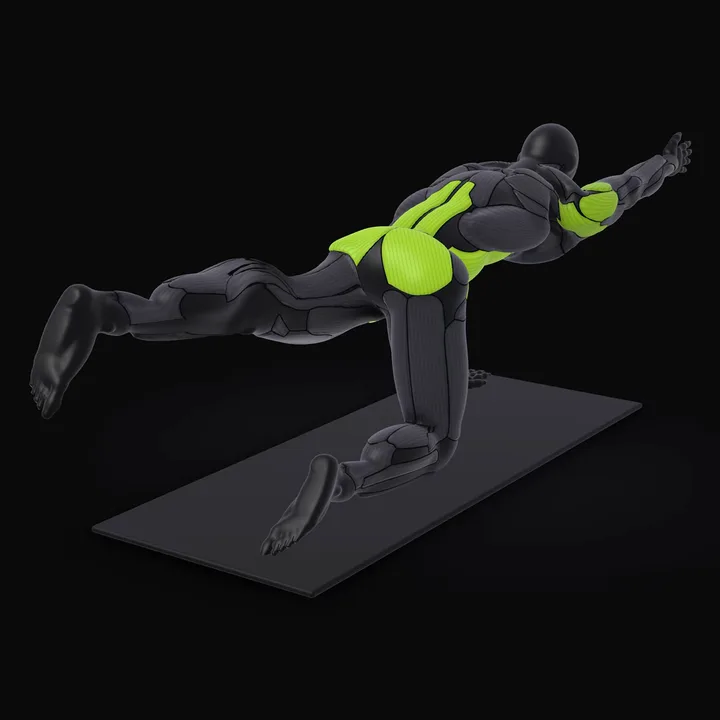 Bird DogGet on all fours with hands under your shoulders and knees under your hips. Extend one arm forward and the opposite leg back at the same time, level with your torso.How to do the Bird Dog →
| Exercise | What it trains | Dose |
|---|---|---|
| Bird dog | Keeping your spine still while limbs move | 2–3 × 6–8 per side, 3-second hold |
| Dead bug | Front of the trunk, pelvic control | 2–3 × 6–8 per side |
| Side plank | Side of the trunk (quadratus lumborum, obliques) | 2–3 × 20–45 s per side |
| Suitcase carry | Resisting side bending under load | 3 × 20–40 m per side |
| Pallof press | Resisting rotation | 2–3 × 10 per side |
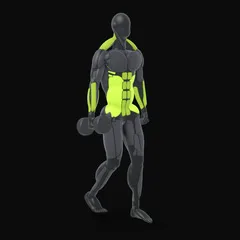
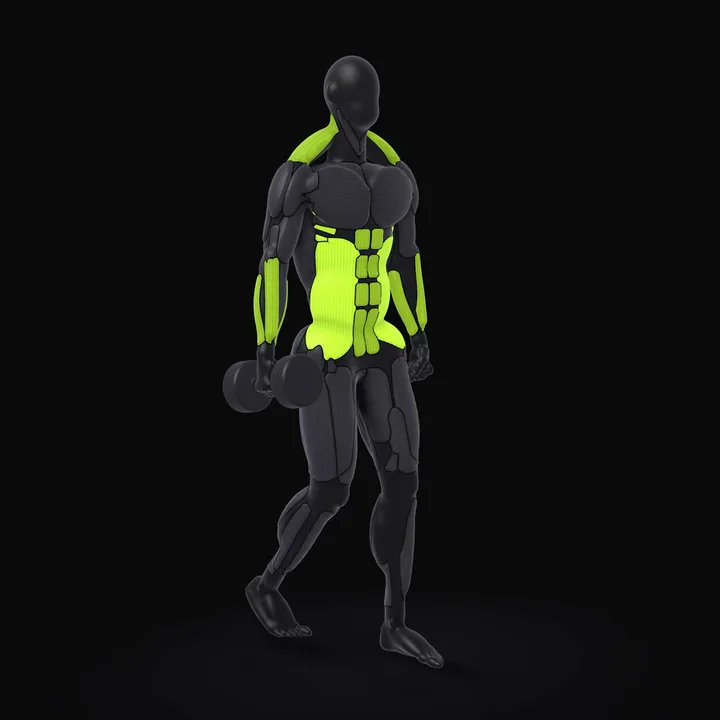 Dumbbell Suitcase CarryPick up a heavy dumbbell in one hand, lifting with a flat back. Stand tall with your shoulders level, without leaning toward the weight.How to do the Dumbbell Suitcase Carry →
These look easy, and that’s the point at the start. Done slowly with perfect control, they teach your trunk muscles to work together.
Step 3: hinges
The hip hinge (bending forward from your hips with a steady spine) is the movement your lower back needs to be strong in. Progress through these over weeks or months:
| Level | Exercise | Sets × reps |
|---|---|---|
| 1 | Glute bridge | 3 × 12–15 |
| 2 | Kettlebell deadlift (bell between the feet) | 3 × 8–12 |
| 3 | Dumbbell Romanian deadlift | 3 × 8–12 |
| 4 | Barbell Romanian deadlift | 3 × 6–10 |
| 5 | Deadlift or trap bar deadlift | 3 × 3–6 |
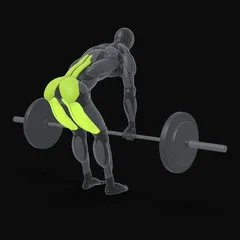
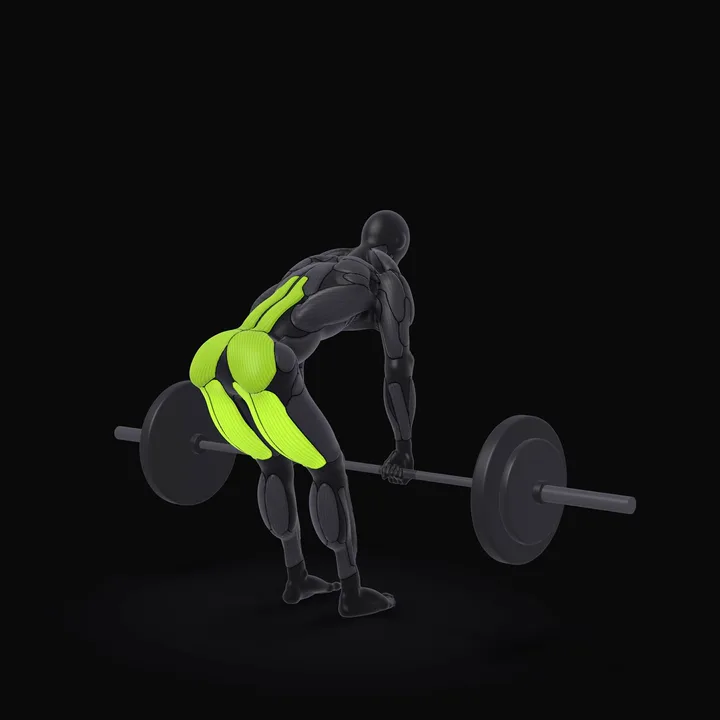 Barbell Romanian DeadliftStand holding the bar in front of your thighs with your knees slightly bent. Push your hips back and lower the bar close to your legs with a flat back.How to do the Barbell Romanian Deadlift →
Key points for every hinge: push your hips back, keep a slight knee bend, keep the weight close to your legs, and stop going down when your hamstrings are fully stretched, before your back starts to round. Detailed technique is in Romanian deadlift form and how to deadlift.
Step 4: back extensions
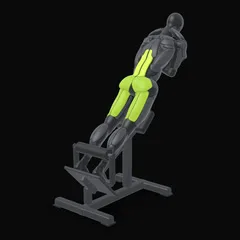
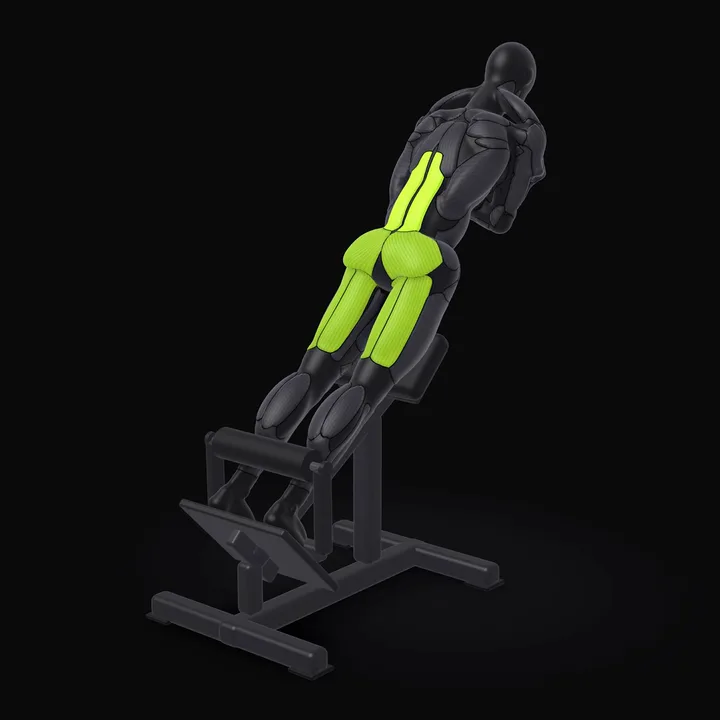 Back ExtensionSet the pad just below your hips and lock your feet in. Cross your arms over your chest and lower your torso with a straight back.How to do the Back Extension →
The 45° back extension trains the spinal erectors (and glutes and hamstrings) directly through a controlled range.
- For the lower back: let your spine round slightly at the bottom and extend it as you come up, slowly, with bodyweight or a light plate.
- For glutes and hamstrings: keep your spine neutral and move only at the hips.
Both are useful. Start with 2–3 sets of 10–15 bodyweight reps, then hold a plate at your chest. A back extension machine or reverse hyperextension are good alternatives.
A twice-weekly lower back routine
Add one of these to the start or end of two sessions a week.
Session A
| Exercise | Sets × reps |
|---|---|
| Bird dog | 2 × 6 per side (3 s hold) |
| Dumbbell Romanian deadlift | 3 × 8–12 |
| Side plank | 2 × 30 s per side |
Session B
| Exercise | Sets × reps |
|---|---|
| Dead bug | 2 × 8 per side |
| 45° back extension | 3 × 10–15 |
| Suitcase carry | 3 × 30 m per side |
Stay on each level for at least 2–3 weeks. Progress only when the current one feels easy and controlled. If you also squat and deadlift heavy, your lower back is already working hard; one session of direct work a week may be enough.
How to progress safely
Backs adapt well to gradual loading and poorly to sudden jumps. Some rules:
- Add load in small steps: 2–5 kg (5–10 lb) at a time on hinges.
- Keep sets 2–3 reps short of failure on hinges and back extensions. Grinding reps are where form slips.
- Warm up properly before heavy hinges. How to warm up before lifting has a quick routine.
- Track your numbers so progress is steady and deliberate, not a jump on a good day.
Common mistakes
- Endless supermans and crunches. Not wrong, but stability and hinge work carry over better to lifting and daily life.
- Rounding under heavy load. Light, controlled spinal movement is fine; heavy loads should be lifted with a steady spine.
- Skipping the glutes. Strong glutes take load off your back in every hinge. See how to grow glutes.
- Jumping straight to heavy deadlifts. Build the pattern first.
Frequently asked questions
What is the best exercise to strengthen the lower back?
There isn't one best exercise. A combination of hip hinges (Romanian deadlifts, kettlebell deadlifts), back extensions and trunk stability work (bird dogs, side planks, carries) builds a strong, resilient lower back. Start easy and progress the load slowly.
Are deadlifts bad for your lower back?
No. With good technique and sensible loading, deadlifts are one of the best ways to strengthen the back. Problems come from loads that are too heavy for your current technique, or from adding weight too quickly.
How often should I train my lower back?
Two or three times a week is enough. Your lower back also works during squats, rows and many other exercises, so count those when you plan direct work.
Should I train my lower back if it hurts?
For common, non-specific back pain, staying active and doing gentle exercise is usually recommended over rest. But if pain is severe, spreads down your leg, or comes with numbness, weakness or bladder or bowel changes, see a doctor first.
Sources
- Hayden JA, Ellis J, Ogilvie R, Malmivaara A, van Tulder MW (2021). Exercise therapy for chronic low back pain. Cochrane Database of Systematic Reviews