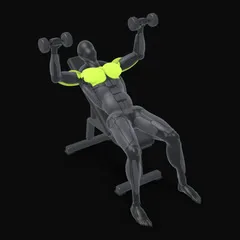
An upper lower split program trains your upper body on two days and your lower body on two days, so every muscle gets hit twice a week in just four sessions. Below are two complete versions: a strength-leaning one built around heavy bench, squat, deadlift and rows, and a hypertrophy-leaning one with more exercises and higher reps. Both use the same weekly layout, so you can switch between them from one training block to the next.
Why the upper lower split works so well
It hits the two things that matter most for a training split: each muscle twice a week and a manageable workload per session.
A meta-analysis on frequency found that training a muscle at least twice a week led to more growth than once a week (Schoenfeld et al., 2016). A 2024 meta-analysis comparing split and full-body routines found no meaningful difference in muscle or strength gains when volume was equal (Ramos-Campo et al., 2024). So the split itself isn’t magic. What makes upper lower practical is that four days fit most schedules, each session has room for 5–7 exercises, and you get a rest day after every two sessions. The best workout split guide compares it with the other options if you’re still choosing.
Weekly schedule
| Option | Mon | Tue | Wed | Thu | Fri | Sat | Sun |
|---|---|---|---|---|---|---|---|
| Classic | Upper 1 | Lower 1 | Rest | Upper 2 | Lower 2 | Rest | Rest |
| Spread out | Upper 1 | Rest | Lower 1 | Rest | Upper 2 | Lower 2 | Rest |
Either works. The classic layout gives you a free midweek day and full weekends. If you miss a session, just do it on the next free day and keep the order.
Version 1: strength-leaning upper lower
This version is for you if you care about getting stronger on the big barbell lifts while still building muscle. Day 1 of each pair is heavy; day 2 is moderate weight with more reps. Think of it as powerbuilding with the fluff removed.
Upper 1 (heavy)
| Exercise | Sets × reps | Rest |
|---|---|---|
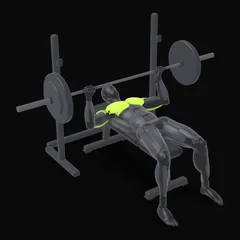
| Bench press | 4 × 4–6 | 3 min |
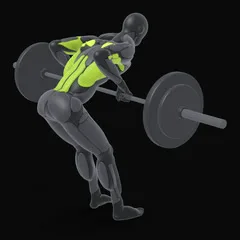
| Barbell row | 4 × 5–7 | 2–3 min |
| Overhead press | 3 × 5–7 | 2–3 min |
| Weighted pull-up (or pull-up) | 3 × 5–8 | 2–3 min |
| EZ-bar curl | 2 × 8–10 | 90 s |
| Close-grip bench press | 2 × 6–8 | 2 min |
Lower 1 (heavy)
| Exercise | Sets × reps | Rest |
|---|---|---|
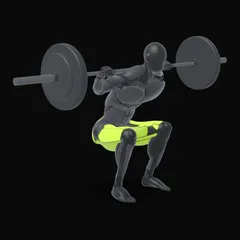
| Back squat | 4 × 4–6 | 3 min |
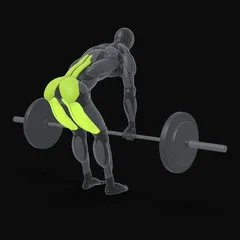
| Romanian deadlift | 3 × 6–8 | 2–3 min |
| Leg press | 2 × 8–10 | 2 min |
| Lying leg curl | 3 × 8–10 | 90 s |
| Standing calf raise | 3 × 8–12 | 90 s |
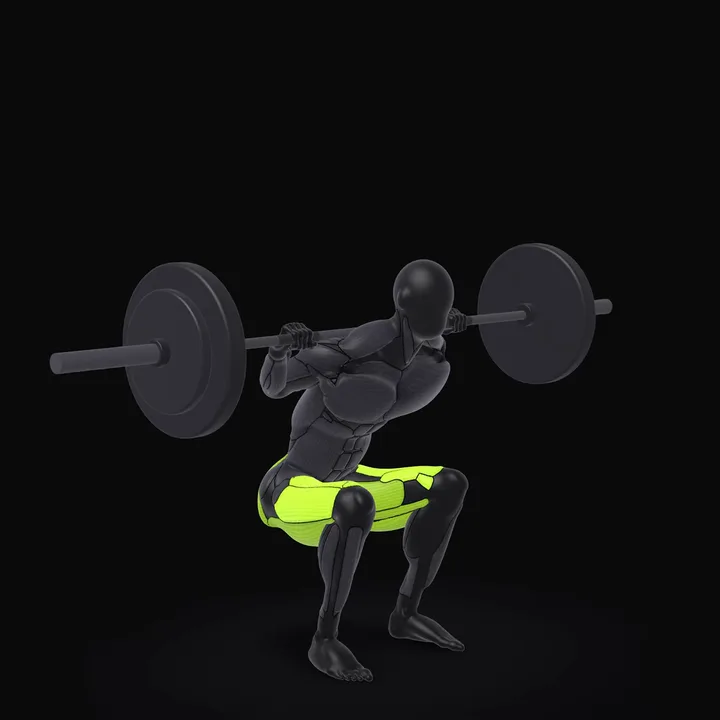 Barbell SquatPlace the bar on your upper back, not on your neck, and step out of the rack. Stand with feet slightly wider than shoulder width, toes turned out a little.How to do the Barbell Squat →
Upper 2 (volume)
| Exercise | Sets × reps | Rest |
|---|---|---|
| Incline bench press | 3 × 6–8 | 2–3 min |
| Chest-supported row | 3 × 8–10 | 2 min |
| Dumbbell shoulder press | 3 × 8–10 | 2 min |
| Lat pulldown | 3 × 8–12 | 2 min |
| Lateral raise | 3 × 12–15 | 60 s |
| Triceps pushdown | 2 × 10–12 | 60 s |
Lower 2 (volume)
| Exercise | Sets × reps | Rest |
|---|---|---|
| Deadlift | 3 × 3–5 | 3 min |
| Front squat or Bulgarian split squat | 3 × 6–8 / 3 × 8–10 | 2–3 min |
| Seated leg curl | 3 × 10–12 | 90 s |
| Seated calf raise | 3 × 12–15 | 60 s |
| Ab wheel rollout | 3 × 8–12 | 60 s |
How to progress the strength version
On the first two lifts of each heavy day, use load progression. When you complete every rep of every set with about 1–2 reps in reserve, add 2.5 kg (5 lb) to upper-body lifts and 2.5–5 kg (5–10 lb) to squats and deadlifts next week. If you miss reps, stay at that weight until you get them.
Everything else uses double progression: work from the bottom to the top of the rep range on all sets, then go up in weight.
Version 2: hypertrophy-leaning upper lower
This version trades a little heavy work for more exercises, more angles and more total sets. Pick it if your main goal is size.
Upper 1
| Exercise | Sets × reps | Rest |
|---|---|---|
| Bench press | 3 × 6–8 | 2–3 min |
| Seated cable row | 3 × 8–12 | 2 min |
| Incline dumbbell press | 3 × 8–12 | 2 min |
| Lat pulldown | 3 × 8–12 | 2 min |
| Cable lateral raise | 3 × 12–15 | 60 s |
| Incline dumbbell curl | 3 × 10–12 | 60 s |
| Overhead rope extension | 3 × 10–15 | 60 s |
Lower 1
| Exercise | Sets × reps | Rest |
|---|---|---|
| Back squat | 3 × 6–8 | 3 min |
| Romanian deadlift | 3 × 8–10 | 2–3 min |
| Leg press | 3 × 10–15 | 2 min |
| Seated leg curl | 3 × 10–12 | 90 s |
| Leg extension | 2 × 12–15 | 60–90 s |
| Standing calf raise | 4 × 10–15 | 60 s |
Upper 2
| Exercise | Sets × reps | Rest |
|---|---|---|
| Seated dumbbell press | 3 × 8–10 | 2 min |
| Pull-up | 3 × 6–10 | 2 min |
| Machine chest press | 3 × 10–12 | 90 s |
| Chest-supported row | 3 × 10–12 | 90 s |
| Cable fly | 2 × 12–15 | 60 s |
| Reverse pec deck | 3 × 12–20 | 60 s |
| EZ-bar curl + pushdown (superset) | 3 × 10–12 each | 60–90 s |
Lower 2
| Exercise | Sets × reps | Rest |
|---|---|---|
| Hack squat | 3 × 8–12 | 2–3 min |
| Hip thrust | 3 × 8–12 | 2 min |
| Bulgarian split squat | 2 × 10–12 per leg | 90 s |
| Lying leg curl | 3 × 10–12 | 90 s |
| Seated calf raise | 3 × 12–20 | 60 s |
| Cable crunch | 3 × 10–15 | 60 s |
How to progress the hypertrophy version
Every exercise uses double progression. Stay in the rep range, add reps session to session, and move up in weight once all sets reach the top of the range. Muscle grows across a wide range of loads as long as sets are taken reasonably close to failure (Schoenfeld et al., 2021), so the exact rep target matters less than beating your last performance. If you’re unsure how close to failure you are, RPE and RIR explained shows how to rate it.
If you’ve trained for a few years and recover well, you can add one set to the first two exercises of each session after week 4. Add volume gradually and watch whether your performance keeps improving.
Exercise swaps for your gym
Both versions use equipment found in almost any commercial gym, but crowded gyms and cranky joints happen. Swap within the same movement pattern and keep the swap for the whole block:
| If you can’t do… | Use instead |
|---|---|
| Barbell bench press | Dumbbell bench press or Smith machine bench |
| Barbell row | One-arm dumbbell row or T-bar row |
| Back squat | Hack squat, pendulum squat or goblet squat |
| Deadlift | Trap bar deadlift |
| Pull-up | Lat pulldown or assisted pull-up |
| Overhead press | Machine shoulder press |
For dumbbell exercises, note the weight the same way every time. In Brick, for example, a pair of 20 kg dumbbells is logged as 40 kg, the total in your hands.
Which version should you start with?
If you’ve never followed a structured program with heavy sets of 3–6, start with the hypertrophy version. The rep ranges are more forgiving while you learn to brace and control the bar, and you’ll still get stronger. Move to the strength version once your technique on squat, bench and deadlift holds up when the weight gets heavy.
If you’re coming off a long stretch of high-rep training and your big lifts haven’t moved in months, flip it: run the strength version for one block. Heavier work tends to bring strength back quickly, and that extra strength then lets you use more weight for your higher-rep sets in the next block.
Week-by-week: a 10-week block
| Weeks | What to do |
|---|---|
| 1 | Find your working weights. Stop every set with 3 reps in reserve. |
| 2–7 | Push progression. Main lifts at 1–2 reps in reserve, isolation work to 0–1 on the last set. |
| 8 | Optional deload if lifts have stalled: same exercises, half the sets. |
| 9–10 | Push again; aim for small rep PRs on your main lifts. |
After 10 weeks, switch versions or run the same one again with slightly higher starting weights. The principle behind all of this is progressive overload; the program is only a structure for it.
Tips to get more out of upper lower
- Order matters. Put the exercise you most want to improve first, when you’re fresh. If your back is lagging, swap the row and the press on Upper 1.
- Warm up properly for the first lift only. Two or three ramp-up sets for the bench or squat; one lighter set for each later exercise is enough.
- Keep sessions under about 75 minutes. If you run long, use the superset options or cut the last exercise.
- Don’t add a fifth “arm day” straight away. The two upper days already give biceps and triceps 5–6 direct sets each, plus all the pressing and pulling.
- Stick to the exercise choices for the block. Swapping lifts every week makes it impossible to see progress.
Upper lower vs other 4-day options
If four days is your number, upper lower is the default for good reason, but it’s not the only way. A 4-day workout split article compares it with four full-body sessions or a push/pull/legs hybrid. And if you can train six days and want even more volume, the push pull legs workout plan is the logical next step.
Frequently asked questions
Is an upper lower split good for building muscle?
Yes. It trains every muscle twice a week with enough sets per session to drive growth, which is what the research on frequency and volume points to. It's one of the most reliable splits for intermediates who can train four days a week.
Can I do an upper lower split 3 days a week?
You can rotate the four sessions over three days a week (upper, lower, upper one week; lower, upper, lower the next). Each muscle then gets trained about 1.5 times a week. It works, though a full-body plan is usually a cleaner fit for three days.
Which days should I train on an upper lower split?
Monday, Tuesday, Thursday, Friday is the classic layout, with Wednesday and the weekend off. Monday, Wednesday, Friday, Saturday also works. Try not to put the two lower days back to back.
Upper lower or push pull legs: which is better?
For four training days, upper lower. Push pull legs needs six days to hit every muscle twice a week. If you can and want to train six days, push pull legs gives you more room for volume per muscle.
How long should I run an upper lower program?
Run one version for 8 to 12 weeks, deloading when needed, then reassess. Many lifters switch between the strength-leaning and hypertrophy-leaning versions every block, which keeps progress coming for years.
Sources
- Schoenfeld BJ, Ogborn D, Krieger JW (2016). Effects of Resistance Training Frequency on Measures of Muscle Hypertrophy: A Systematic Review and Meta-Analysis. Sports Medicine
- Ramos-Campo DJ, Benito-Peinado PJ, Andreu-Caravaca L, Rojo-Tirado MA, Rubio-Arias JÁ (2024). Efficacy of Split Versus Full-Body Resistance Training on Strength and Muscle Growth: A Systematic Review With Meta-analysis. Journal of Strength and Conditioning Research
- Schoenfeld BJ, Grgic J, Van Every DW, Plotkin DL (2021). Loading Recommendations for Muscle Strength, Hypertrophy, and Local Endurance: A Re-Examination of the Repetition Continuum. Sports