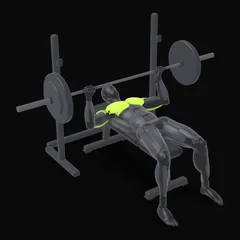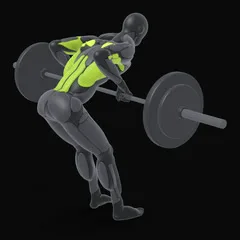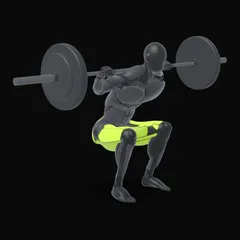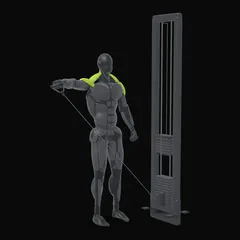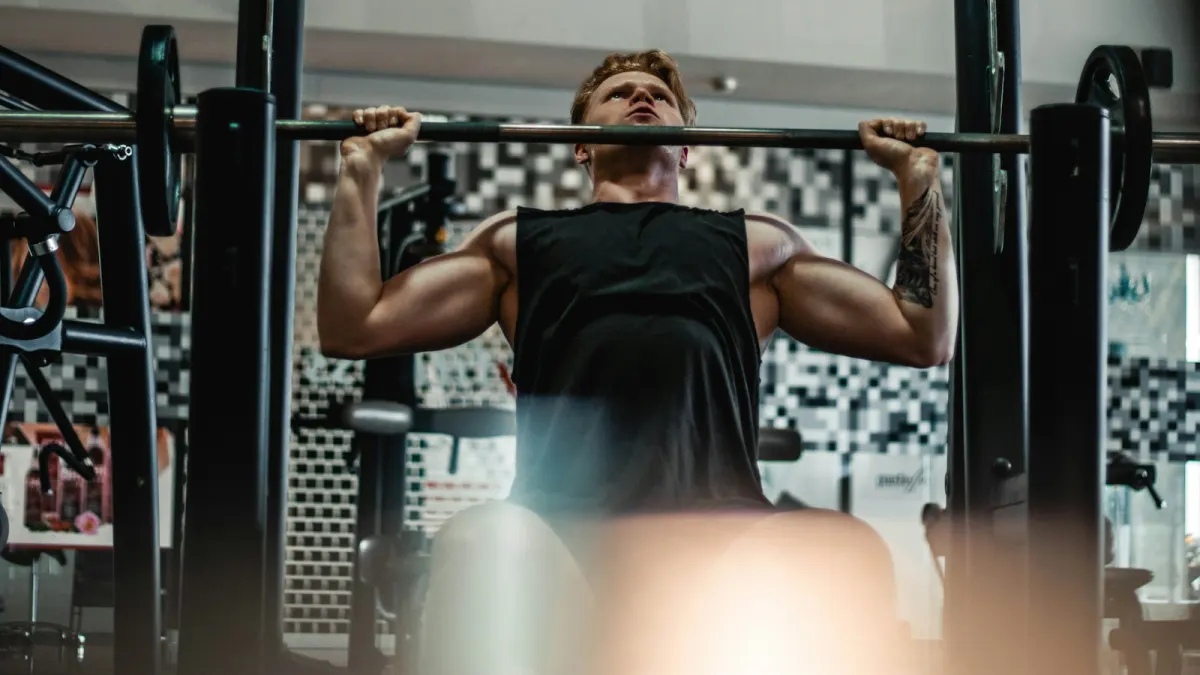
A good push pull legs workout plan trains every muscle twice a week over six sessions: push (chest, shoulders, triceps), pull (back, rear delts, biceps) and legs, each done twice with slightly different exercises. Below you get that full 6-day program with an A and a B version of every day, a 3-day version for busier weeks, and the rules for progressing on both. If you’re still deciding between splits, the best workout split comparison covers that; this article is the program itself.
How the push pull legs split works
The logic is simple: muscles that work together get trained together. Pressing movements use your chest, front delts and triceps, so they share a day. Pulling movements use your lats, upper back, rear delts and biceps. Legs get their own day because squats, hinges and lunges are tiring enough on their own.
The main advantage is that you can fit a lot of quality work for each muscle into a session without the session dragging on, because you aren’t trying to train your whole body at once. The main drawback is the time commitment: to train every muscle twice a week, you need six gym days.
Twice a week matters. A meta-analysis on training frequency found that hitting a muscle at least twice a week produced more growth than once a week when volume wasn’t matched (Schoenfeld et al., 2016). That’s why the 6-day version is the default here.
The 6-day push pull legs program
Run the six workouts in order, then take a rest day. The week looks like this:
| Mon | Tue | Wed | Thu | Fri | Sat | Sun |
|---|---|---|---|---|---|---|
| Push A | Pull A | Legs A | Push B | Pull B | Legs B | Rest |
“A” days lead with a heavy barbell lift in a lower rep range. “B” days use different angles and slightly higher reps. Same muscles, different stress, which keeps joints happier and covers more of each muscle.
Push A (chest focus)
| Exercise | Sets × reps | Rest |
|---|---|---|
| Barbell bench press | 4 × 5–8 | 2–3 min |
| Overhead press | 3 × 6–8 | 2–3 min |
| Incline dumbbell press | 3 × 8–12 | 2 min |
| Cable lateral raise | 3 × 12–15 | 60–90 s |
| Triceps pushdown | 3 × 10–12 | 60–90 s |
| Overhead rope extension | 2 × 12–15 | 60–90 s |
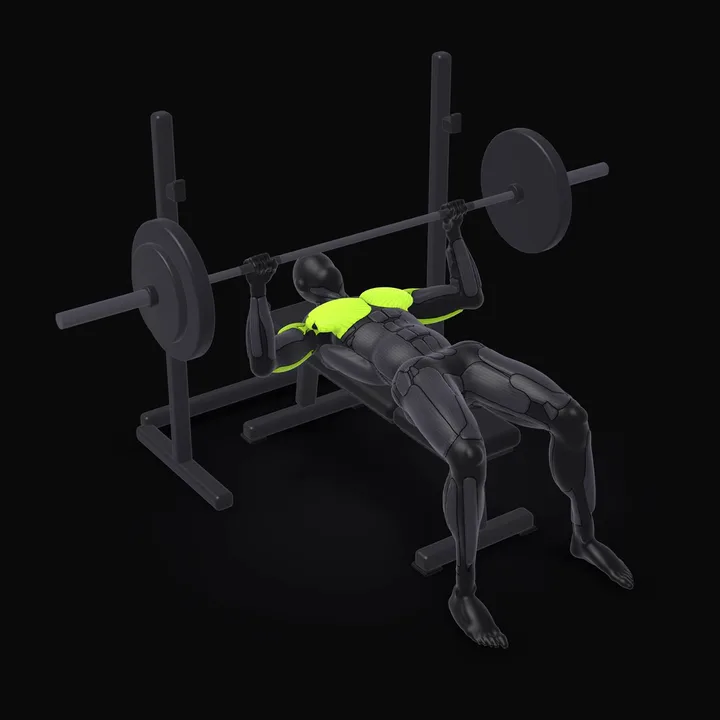 Barbell Bench PressLie on the bench with your eyes under the bar and your feet planted on the floor. Grip the bar slightly wider than shoulder width and pull your shoulder blades back and down.How to do the Barbell Bench Press →
Pull A (back thickness)
| Exercise | Sets × reps | Rest |
|---|---|---|
| Barbell row | 4 × 6–8 | 2–3 min |
| Lat pulldown | 3 × 8–12 | 2 min |
| Seated cable row | 3 × 10–12 | 90 s |
| Face pull | 3 × 12–15 | 60–90 s |
| Incline dumbbell curl | 3 × 10–12 | 60–90 s |
| Hammer curl | 2 × 10–12 | 60 s |
Legs A (squat focus)
| Exercise | Sets × reps | Rest |
|---|---|---|
| Barbell back squat | 4 × 5–8 | 3 min |
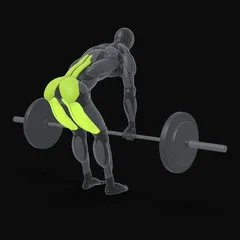
| Romanian deadlift | 3 × 8–10 | 2–3 min |
| Leg press | 3 × 10–12 | 2 min |
| Lying leg curl | 3 × 10–12 | 90 s |
| Standing calf raise | 4 × 10–15 | 60–90 s |
Push B (shoulder focus)
| Exercise | Sets × reps | Rest |
|---|---|---|
| Seated dumbbell shoulder press | 4 × 8–10 | 2 min |
| Incline barbell press | 3 × 8–10 | 2 min |
| Machine chest press | 3 × 10–12 | 90 s |
| Dumbbell lateral raise | 4 × 12–20 | 60 s |
| Dips | 3 × 8–12 | 2 min |
| Overhead dumbbell extension | 2 × 10–15 | 60–90 s |
Pull B (back width)
| Exercise | Sets × reps | Rest |
|---|---|---|
| Pull-up (weighted or assisted) | 4 × 6–10 | 2–3 min |
| Chest-supported dumbbell row | 3 × 8–12 | 2 min |
| Single-arm cable row | 3 × 10–12 per side | 90 s |
| Reverse pec deck | 3 × 12–15 | 60–90 s |
| EZ-bar curl | 3 × 8–12 | 90 s |
| Cable hammer curl | 2 × 12–15 | 60 s |
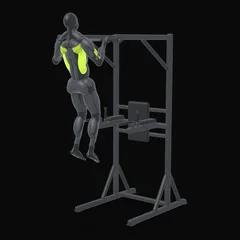
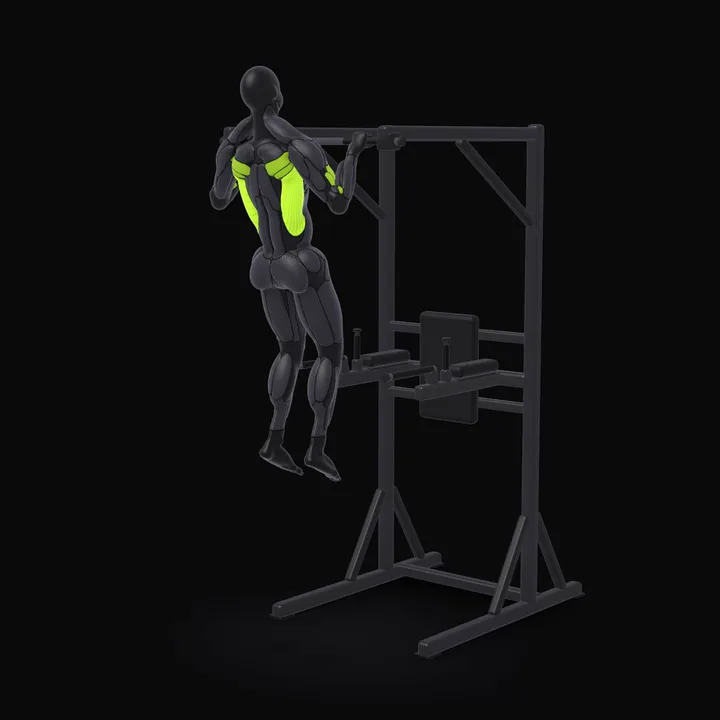 Pull-upGrab the bar with palms facing forward, hands slightly wider than your shoulders. Hang with straight arms and brace your core.How to do the Pull-up →
Legs B (hinge and single-leg focus)
| Exercise | Sets × reps | Rest |
|---|---|---|
| Deadlift or hack squat | 3 × 4–6 / 3 × 8–10 | 3 min |
| Bulgarian split squat | 3 × 8–12 per leg | 2 min |
| Leg extension | 3 × 12–15 | 90 s |
| Seated leg curl | 3 × 10–12 | 90 s |
| Seated calf raise | 3 × 12–20 | 60 s |
| Hanging knee raise | 3 × 10–15 | 60 s |
Pick the deadlift if you like it and recover well from it. If your lower back is still tired from Monday’s squats and Wednesday’s Romanian deadlifts, the hack squat gives your legs the same work with less spinal fatigue.
How much weekly volume this gives each muscle
Here’s what the 6-day plan adds up to, counting only the sets where a muscle is the main target:
| Muscle | Direct sets per week |
|---|---|
| Chest | 13 (+ 3 from dips) |
| Back (lats and upper back) | 20 |
| Side delts | 7 (+ pressing) |
| Rear delts | 6 |
| Biceps | 10 (+ rows and pulldowns) |
| Triceps | 10 (+ all pressing) |
| Quads | 13–16 |
| Hamstrings | 9–12 (+ deadlifts and split squats) |
| Calves | 7 |
Most muscles land in the 10–20 hard sets a week range that research associates with good growth for people past the beginner stage (Schoenfeld et al., 2017). A large 2025 meta-regression found that more volume keeps adding muscle, with diminishing returns as you go higher (Pelland et al., 2025). For the full picture of how to count sets, see how many sets per muscle per week.
If you’re new to this much training, cut the last exercise of each session for the first two or three weeks. That trims about 15 % of the volume and gives your joints time to adapt.
The 3-day push pull legs program
If you can only train three days, do one push, one pull and one leg day a week, for example Monday, Wednesday and Friday. Use a combined session that borrows from both A and B days:
| Push | Pull | Legs |
|---|---|---|
| Bench press 4 × 5–8 | Pull-up or pulldown 4 × 6–10 | Back squat 4 × 5–8 |
| Seated dumbbell press 3 × 8–10 | Barbell row 3 × 6–10 | Romanian deadlift 3 × 8–10 |
| Incline dumbbell press 3 × 8–12 | Chest-supported row 3 × 10–12 | Leg press or split squat 3 × 10–12 |
| Lateral raise 4 × 12–20 | Face pull 3 × 12–15 | Leg curl 3 × 10–12 |
| Pushdown 3 × 10–12 | Incline curl 3 × 10–12 | Calf raise 4 × 10–15 |
| Overhead extension 2 × 12–15 | Hammer curl 2 × 10–12 | Hanging knee raise 3 × 10–15 |
Be honest about the trade-off. Each muscle gets one session a week, and you can only do so many productive sets for a muscle in one sitting before the later ones get sloppy. Three days of PPL is a reasonable plan, but three days of full-body training, or a 4-day upper lower split program if you can add a day, will usually build more muscle for the same effort.
How to progress on push pull legs
Use double progression on every exercise. It’s the most practical form of progressive overload:
- Start each exercise with a weight you can lift for the bottom of the rep range on all sets, with 2–3 reps left in the tank.
- Add reps over the following sessions.
- Once you hit the top of the range on every set, add the smallest weight jump next time (2.5 kg / 5 lb on barbell upper-body lifts, 5 kg / 10 lb on squats and deadlifts, the next pair on dumbbells) and work back up.
On A days, the first lift is where you’re chasing strength, so take the full 2–3 minutes of rest. For isolation exercises, 60–90 seconds is enough; longer rest only matters where you’re chasing heavy weights.
Track every set. With six different sessions a week, nobody remembers what they lifted on Pull B ten days ago, and that’s exactly the number you need to beat.
How hard should each set be?
Most sets should end with 1–3 reps in reserve: you could have done a couple more with good form. Take isolation exercises (lateral raises, curls, pushdowns, leg extensions) closer to failure on the last set if you like, because the injury risk and the fatigue cost are low. Keep heavy squats, deadlifts and barbell rows a bit further from failure so your technique holds up.
When to deload
Six days a week accumulates fatigue. If your main lifts stall for two weeks in a row, joints feel achy, or motivation drops off a cliff, take a lighter week: same exercises, about half the sets, weights a little lower. Then resume. A deload week every 6–10 weeks is common on PPL, but let the signs decide rather than the calendar.
Common push pull legs mistakes
- Doing too much on push day. Three chest presses, two shoulder presses and four triceps exercises is a lot of pressing and not much extra growth. The sessions above cap each muscle at about 6–9 sets per day.
- Skipping leg days. Legs are half your muscle mass. If one session gets skipped, it shouldn’t always be the same one.
- Forgetting rear delts and side delts. Pressing hits the front of your shoulders hard. Lateral raises, face pulls and reverse flyes balance it out and are what make shoulders look wide.
- Six days on paper, four in reality. If you regularly miss two sessions, the 6-day plan turns into an unbalanced 4-day plan. A 4-day upper lower split program would serve you better.
- Changing exercises every week. Keep the same exercises for at least 6–8 weeks so you can tell whether you’re progressing.
Who should run push pull legs?
PPL is a great fit if you:
- have trained consistently for at least six months to a year,
- can train five or six days a week, and enjoy being in the gym that often,
- want more volume per muscle than a full-body session can hold.
If you’re newer, start with a full-body plan and come back to push pull legs once your progress on that slows down. Either way, the program only works with the basics in place: enough protein, enough sleep and patience. The pillar guide on how to build muscle covers the rest.
Frequently asked questions
Is push pull legs good for beginners?
The 3-day version works for beginners, but a full-body plan usually gets new lifters further because each muscle is trained three times a week instead of once. Push pull legs makes the most sense once you can train five or six days a week and need more volume per muscle than a full-body session can hold.
Should I do push pull legs 3 or 6 days a week?
Six days if you can recover from it and actually show up for all six; that hits every muscle twice a week. Three days is fine if that is all your schedule allows, but you get each muscle only once a week, so make every session count and consider a full-body or upper/lower plan instead.
Where do abs fit in a push pull legs split?
Add two or three sets of an ab exercise at the end of leg days, or at the end of any two sessions in the week. Abs recover quickly and don't interfere much with the rest of the program.
Can I do push pull legs 5 days a week?
Yes. Run the six workouts in order on five training days and let the cycle roll over into the next week (push, pull, legs, push, pull, rest, rest, then legs, push…). Each muscle is then hit about 1.7 times a week, which works well.
How long should a push pull legs workout take?
About 60 to 75 minutes with warm-up sets. The sessions below have five or six exercises and around 16 to 18 hard sets. If yours regularly run past 90 minutes, rest times or chatting between sets are usually the reason.
Sources
- Schoenfeld BJ, Ogborn D, Krieger JW (2016). Effects of Resistance Training Frequency on Measures of Muscle Hypertrophy: A Systematic Review and Meta-Analysis. Sports Medicine
- Schoenfeld BJ, Ogborn D, Krieger JW (2017). Dose-response relationship between weekly resistance training volume and increases in muscle mass: A systematic review and meta-analysis. Journal of Sports Sciences
- Pelland JC, Remmert JF, Robinson ZP, Hinson SR, Zourdos MC (2025). The Resistance Training Dose Response: Meta-Regressions Exploring the Effects of Weekly Volume and Frequency on Muscle Hypertrophy and Strength Gain. Sports Medicine