Weight training over 40 works the same way it does at 25: lift with good technique, get a little stronger over time, eat enough protein and recover. What changes is the margin for error. Joints and tendons need a longer warm-up and more patience, recovery between hard sessions takes a bit longer, and ego lifting costs more. Below is what research says actually changes after 40, what doesn’t, and a 3-day full-body plan built for lifters in their forties, fifties and beyond.
What really changes after 40
Some things do shift with age:
- Muscle and strength slowly decline if you don’t train. The NSCA’s position statement on resistance training for older adults describes how aging, even without disease, is linked to losses of muscle mass, strength and function, and how resistance training counters them (Fragala et al., 2019). The losses are gradual in your forties and speed up later, which is exactly why starting now pays off.
- Power declines faster than strength. The ability to produce force quickly (getting up from the floor, catching yourself when you trip) fades earlier than raw strength. Some fast, controlled movements in your program help.
- Recovery takes a bit longer. Not dramatically, but the session that left you fresh in 48 hours at 25 may need 72 now, especially for heavy lower-body work.
- Tendons and joints are less forgiving. Old injuries speak up. Sudden jumps in training volume or load are more likely to cause aches.
- Protein works a little less efficiently. A meta-analysis on protein supplementation found its benefit for muscle gain shrank with age, and that intakes of about 1.6 g per kg of body weight per day captured most of the effect (Morton et al., 2018). Older lifters benefit from hitting that target consistently.
What doesn’t change
The principles. The ACSM’s 2026 overview of resistance training research recommends training all major muscle groups at least twice a week for adults generally (Currier et al., 2026). Progressive overload, enough weekly sets and hard-but-controlled effort still drive results.
And you still respond. A meta-analysis of 49 studies in adults over 50 found an average lean mass gain of about 1.1 kg from resistance training, with higher-volume programs producing larger gains (Peterson et al., 2011). For someone in their forties, gains are typically closer to those of younger adults. For the bigger picture, see how long it takes to build muscle.
The 3-day program for lifters over 40
Three full-body sessions a week, with a rest day (or a walk) between each: Monday, Wednesday and Friday, for example. Each session takes about 60 minutes including a 10-minute warm-up.
Warm-up (every session, 10 minutes)
- 5 minutes of bike, rower or brisk incline walk.
- 10 bodyweight squats, 10 glute bridges, 10 band pull-aparts, 10 arm circles each way.
- 2–3 progressively heavier warm-up sets of your first exercise.
Day A
| Exercise | Sets × reps | Rest |
|---|---|---|
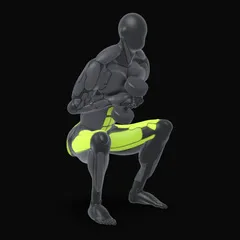
| Goblet squat or leg press | 3 × 8–12 | 2 min |
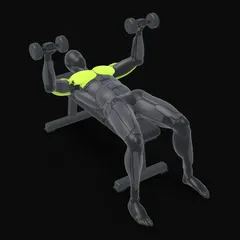
| Dumbbell bench press | 3 × 8–12 | 2 min |
| Chest-supported row | 3 × 10–12 | 90 s |
| Dumbbell Romanian deadlift | 3 × 8–12 | 2 min |
| Face pull | 2 × 12–15 | 60 s |
| Dead bug | 2 × 8 per side | 45 s |
Day B
| Exercise | Sets × reps | Rest |
|---|---|---|
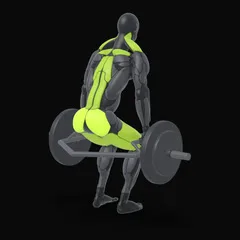
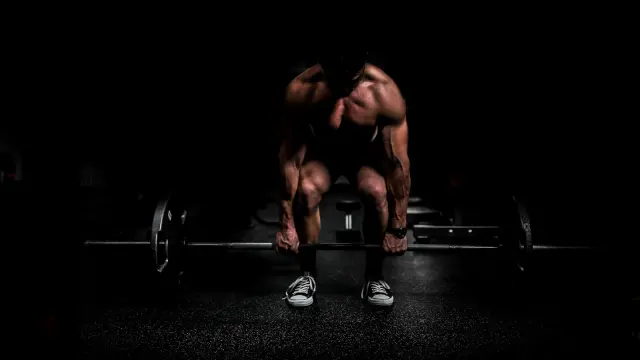
| Trap bar deadlift | 3 × 6–8 | 2–3 min |
| Seated dumbbell press (neutral grip) | 3 × 8–12 | 2 min |
| Lat pulldown | 3 × 10–12 | 90 s |
| Step-up | 2 × 10 per leg | 90 s |
| Hammer curl + pushdown | 2 × 10–15 each (superset) | 60 s |
| Farmer's walk | 3 × 30 m | 60 s |
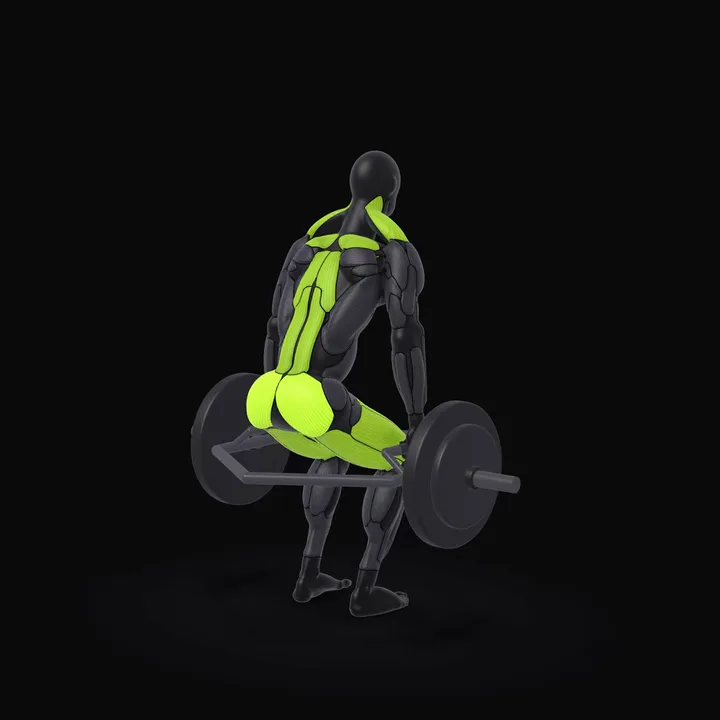 Trap Bar DeadliftStand in the middle of the trap bar with feet hip-width apart. Bend your knees and hips and grab the handles with a flat back and chest up.How to do the Trap Bar Deadlift →
Day C
| Exercise | Sets × reps | Rest |
|---|---|---|
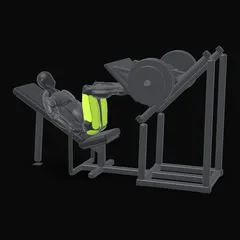
| Leg press | 3 × 10–15 | 2 min |
| Machine chest press or incline push-up | 3 × 10–12 | 90 s |
| Seated cable row | 3 × 10–12 | 90 s |
| Seated leg curl | 2 × 10–15 | 90 s |
| Lateral raise | 2 × 12–15 | 60 s |
| Kettlebell swing or medicine ball slam | 3 × 8–10 | 60–90 s |
| Side plank | 2 × 20–30 s per side | 45 s |
The swings or slams at the end of Day C are your power work: light enough to move fast, done crisply, stopped well before you get sloppy.
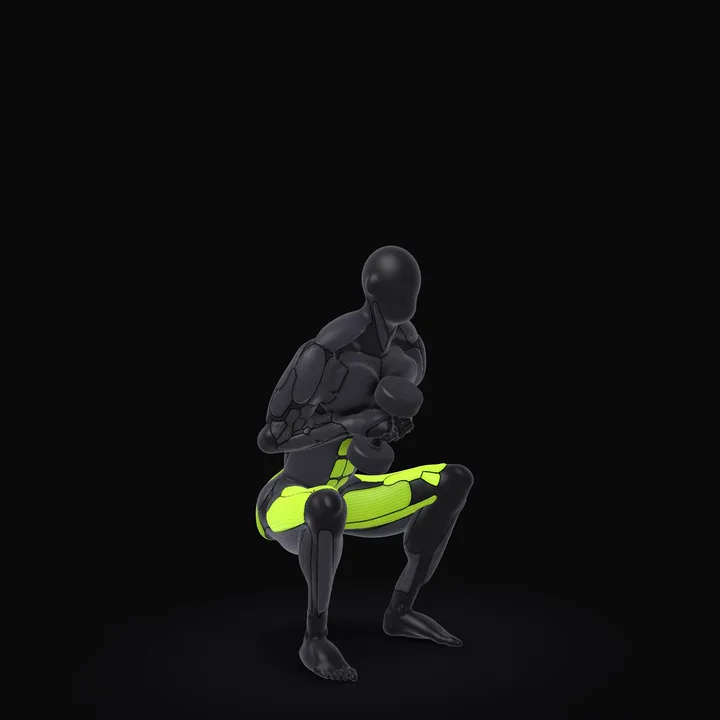 Dumbbell Goblet SquatHold one dumbbell vertically against your chest with both hands. Stand with feet slightly wider than shoulder width.How to do the Dumbbell Goblet Squat →
Why these exercise choices
- Trap bar instead of a straight-bar deadlift. It lets you stand inside the weight, keeps your back more upright and is easier to learn. You can still use a straight bar if it feels good.
- Dumbbells instead of a barbell for pressing. Your hands and shoulders find their own path, which tends to suit older shoulders better.
- Chest-supported rows. All the back work, no lower-back fatigue.
- Goblet squats and leg press before back squats. Fine to back squat if you’re experienced and it feels good; many people over 40 just get more out of the alternatives with fewer aches.
- Carries. Farmer's walks build grip, trunk strength and posture, all of which matter more each decade.
If a lift bothers a joint
Aches that fade during the warm-up are usually fine. Pain that builds set after set means you change the exercise, not grind through it. These swaps keep the same muscles working:
| If this hurts | Try this instead |
|---|---|
| Knees on goblet squats | Box squat to a height that feels fine, or leg press with a shorter range |
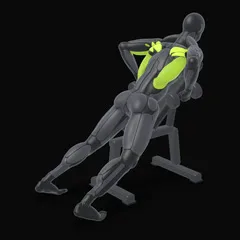
| Lower back on deadlifts | Cable pull-through or back extensions for a few weeks |
| Shoulders on pressing | Low-incline dumbbell press with a neutral grip, or the machine chest press |
| Elbows on pulldowns or curls | Neutral-grip handles and hammer curls; lighter weight, more reps |
| Wrists on push-ups | Push-ups on dumbbell handles, or the machine chest press |
| Hips or knees on step-ups | Split squats with a short range, holding onto something for balance |
How to pick your starting weights
The first two weeks are for finding your numbers, not testing yourself. For each exercise:
- Pick a weight you think you could lift 15 times.
- Do 10 reps. If they felt easy (you could have done 5+ more), go up one step next set. If the last 2 reps were a real effort, stay there.
- Your working weight is the one where your last reps slow down but your form doesn’t change, with 2–3 reps still in the tank.
Erring light costs you one week. Erring heavy can cost you a month. If you’re unsure about effort levels, RPE and RIR explained shows how to judge how many reps you have left.
How to progress (patiently)
Use double progression: reach the top of the rep range on every set with good form, then add the smallest available weight. Keep most sets 1–3 reps short of failure; going to failure on heavy compound lifts adds fatigue and injury risk without much extra gain.
Progress is slower than it was at 25, and that’s fine. Adding a rep a week across the board is excellent. The key is to always know what you did last time; that’s progressive overload at any age.
A worked example: the first four weeks
Here’s how Day A’s dumbbell bench press might go for a 47-year-old returning lifter who settled on 2 × 14 kg dumbbells (28 kg in total) in week 1. The target is 3 × 8–12.
| Week | Weight (total) | Reps per set | Next step |
|---|---|---|---|
| 1 | 28 kg | 10, 9, 8 | Same weight |
| 2 | 28 kg | 11, 10, 10 | Same weight |
| 3 | 28 kg | 12, 12, 12 | Top of the range: go up |
| 4 | 32 kg | 9, 8, 8 | Build the reps back up |
Every exercise moves at its own pace. Lower-body lifts often go up faster than pressing and arm work, and that’s normal.
When you miss your reps
- One bad session: repeat the same weight next time. Bad sleep or a stressful day explains most of them.
- Two sessions in a row with fewer reps: drop the weight by about 10 % and build back up over two or three weeks.
- A joint complains: swap the exercise for one from the table above for a few weeks, and keep the rest of the session the same.
- Everything feels heavy: that’s usually your cue to take the deload a little early.
A few adjustments that help over 40:
- Increase volume slowly. Add one set per exercise at a time, never several at once.
- Deload every 6–8 weeks, or sooner when joints ache: same exercises, half the sets. See deload week.
- Take an extra rest day if you slept badly for two nights in a row. A missed session costs nothing; a strained tendon costs weeks.
Recovery: where most of the difference is
- Sleep 7–9 hours. The single most underrated recovery tool.
- Protein at every meal, about 1.6 g per kg of body weight per day in total.
- Walk daily. Light activity on rest days helps you recover and keeps your heart healthy.
- Do some cardio. Two or three sessions a week of cycling, brisk walking or swimming. For how to combine it with lifting, read cardio and weight training.
Two or four days a week instead of three
Two days: do Day A and Day B, and add one set to the first three exercises of each. Leave two or three days between them (Monday and Thursday works well). It’s enough to build strength and muscle, especially in the first year.
Four days: switch to an upper/lower split, each twice a week. Use Day A’s and Day C’s upper-body exercises for the upper days, Day B’s and Day C’s lower-body work for the lower days, and keep the power work and carries on the lower days. Only make the jump once three days feels easy to recover from.
Lifting for women over 40
The program is the same. The NSCA position statement lists bone health among the benefits of resistance training as you age (Fragala et al., 2019), and the loads that build muscle are the same ones that help: weights that are genuinely challenging for 6–15 reps, not the lightest dumbbells in the rack for sets of 30. During perimenopause, sleep and energy can swing week to week. On bad days, keep the session but cut a set from each exercise rather than skipping it, and keep protein high.
If you’re coming back after years off
Start with two sessions a week for the first month, using weights that feel easy, and move to three once soreness stops lingering. The guide to getting back into the gym after a break has a week-by-week ramp-up.
Frequently asked questions
Can you still build muscle after 40?
Yes. A meta-analysis of adults over 50 found an average gain of about 1.1 kg of lean mass from resistance training programs lasting around five months, with bigger gains from higher-volume programs. At 40 you're well within the range where muscle responds clearly to training.
How many days a week should I lift after 40?
Two to four. Three full-body sessions is a great default. If you're returning after years off, start with two and build up over the first couple of months.
Should I lift heavy after 40?
Moderately heavy, yes: weights you can lift for about 6 to 15 reps, with good control. You don't need to test one-rep maxes. Heavy-ish loads keep your bones, tendons and strength in good shape; ego lifting is what hurts people.
Is it too late to start lifting at 45 or 50?
No. People start lifting in their sixties and seventies and still gain strength and muscle. Starting at 45 or 50 means you begin with lighter weights and progress patiently, but the results are very real.
How long should I rest between workouts after 40?
At least one day between full-body sessions. Many lifters over 40 feel best with a lighter session or a walk between hard days rather than back-to-back heavy training.
Sources
- Peterson MD, Sen A, Gordon PM (2011). Influence of Resistance Exercise on Lean Body Mass in Aging Adults: A Meta-Analysis. Medicine & Science in Sports & Exercise
- Fragala MS, Cadore EL, Dorgo S, Izquierdo M, Kraemer WJ, Peterson MD, Ryan ED (2019). Resistance Training for Older Adults: Position Statement From the National Strength and Conditioning Association. Journal of Strength and Conditioning Research
- Currier BS, D'Souza AC, Fiatarone Singh MA, et al. (2026). American College of Sports Medicine Position Stand. Resistance Training Prescription for Muscle Function, Hypertrophy, and Physical Performance in Healthy Adults: An Overview of Reviews. Medicine & Science in Sports & Exercise
- Morton RW, Murphy KT, McKellar SR, Schoenfeld BJ, Henselmans M, Helms E, Aragon AA, Devries MC (2018). A systematic review, meta-analysis and meta-regression of the effect of protein supplementation on resistance training-induced gains in muscle mass and strength in healthy adults. British Journal of Sports Medicine